Soups
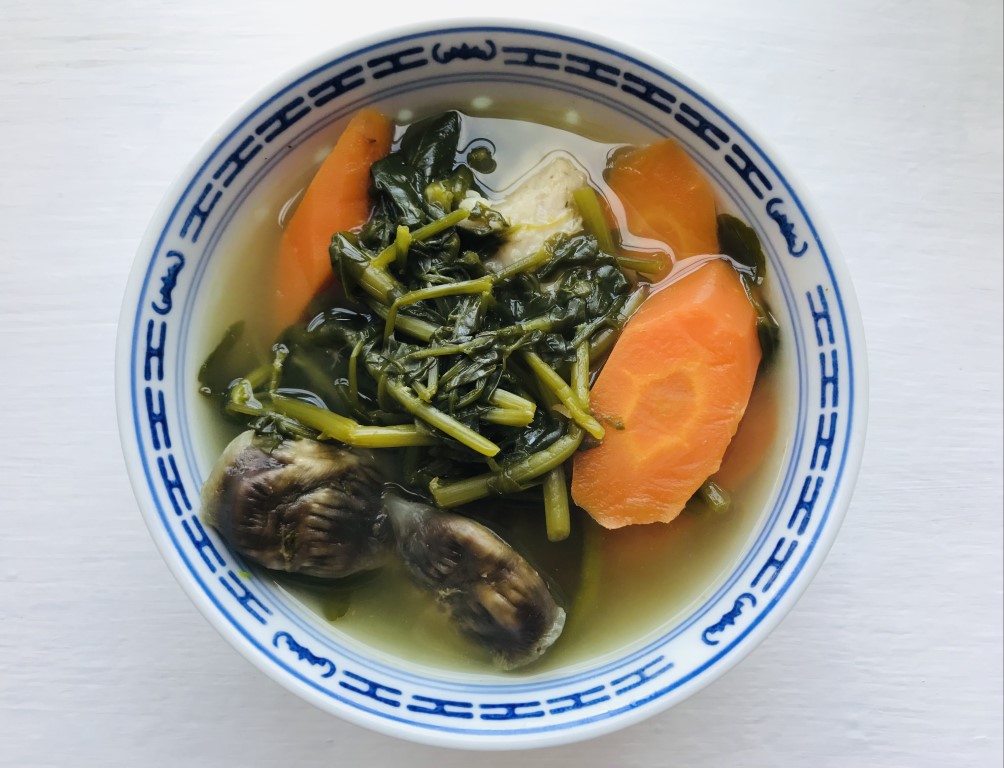
Watercress, Taro, Carrot & Chestnut Vegetable Soup
Traditionally supports lung moistening, smooth urination, and digestive comfort
Why people make this soup
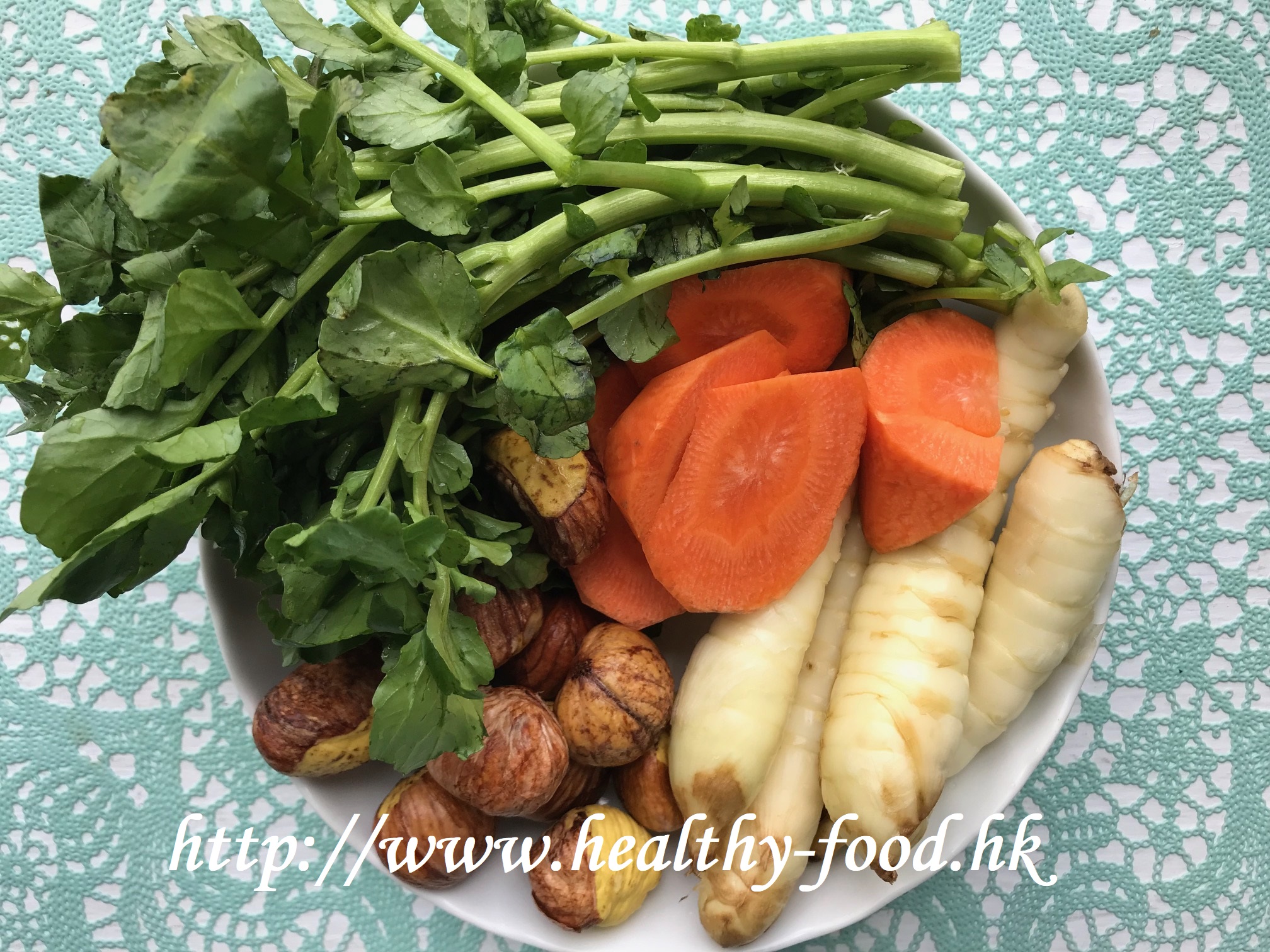
Watercress is one of the most versatile and nutritious greens in the Cantonese kitchen — widely available in autumn and a longstanding staple of southern Chinese food therapy. The tender tops work beautifully in dumplings; the rest goes straight into the pot. Paired with slender young taro stems (竹竽), carrot, and chestnuts, the result is a simple, clear-flavoured vegetable soup that needs no meat. Clean, sweet, and genuinely refreshing.
Who it suits / who should be cautious
- Suitable for the whole family including children; the soup is naturally sweet and mild
- Particularly good in autumn when dryness in the air can cause dry coughs or sluggish digestion
- Women experiencing menstrual discomfort or lighter periods may find regular watercress soups helpful for mild relief
- Pregnant women with gestational diabetes may consider replacing chestnuts with corn (corn is associated with supporting stable blood sugar)
Why these ingredients (the food-therapy logic)
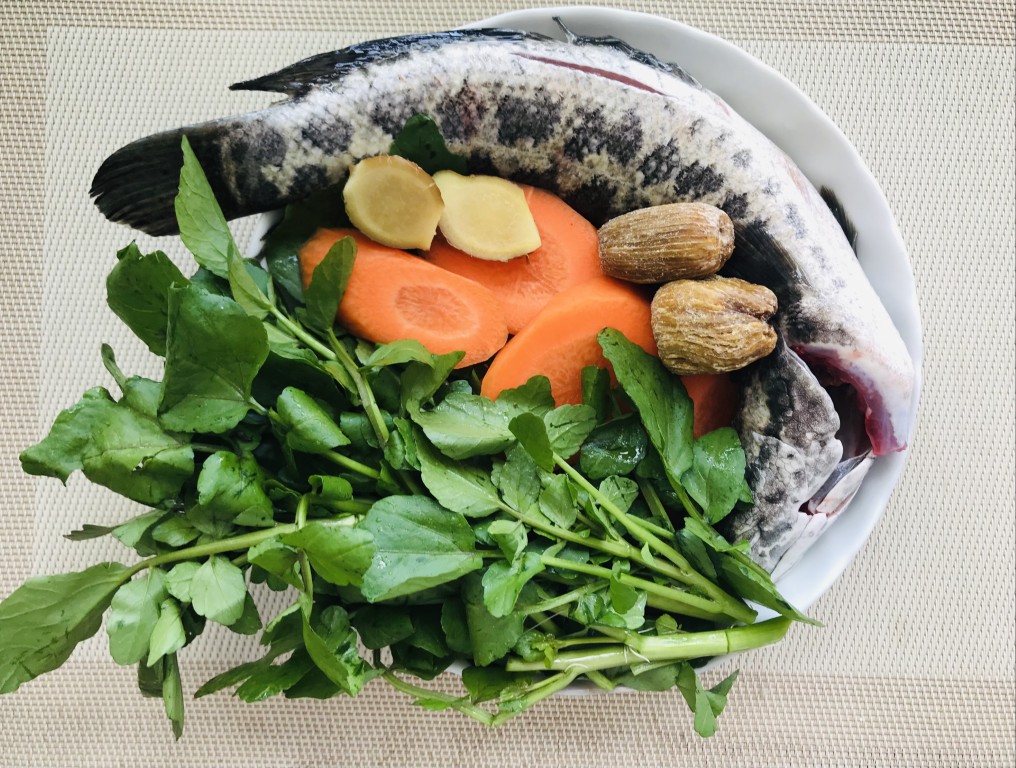
- Watercress (xi yang cai / 西洋菜): Rich in vitamins; in Cantonese food tradition, widely used to moisten the lungs, ease dry coughs, and support comfortable bowel movement; traditionally considered beneficial for children’s immunity
- Young taro stems (zhu yu / 竹竽): Traditionally regarded as clearing lung heat, promoting easy urination, and soothing discomfort from dry autumn coughs
- Carrot (hong luo bo / 红萝卜): Adds natural sweetness and beta-carotene; widely used in Cantonese soups to balance flavours and nourish the body gently
- Chestnuts (li zi / 栗子): Warm and sweet; traditionally associated with strengthening the spleen and stomach and providing sustained energy
Ingredients (3–4 bowls)
| Ingredient | Amount | Notes |
|---|---|---|
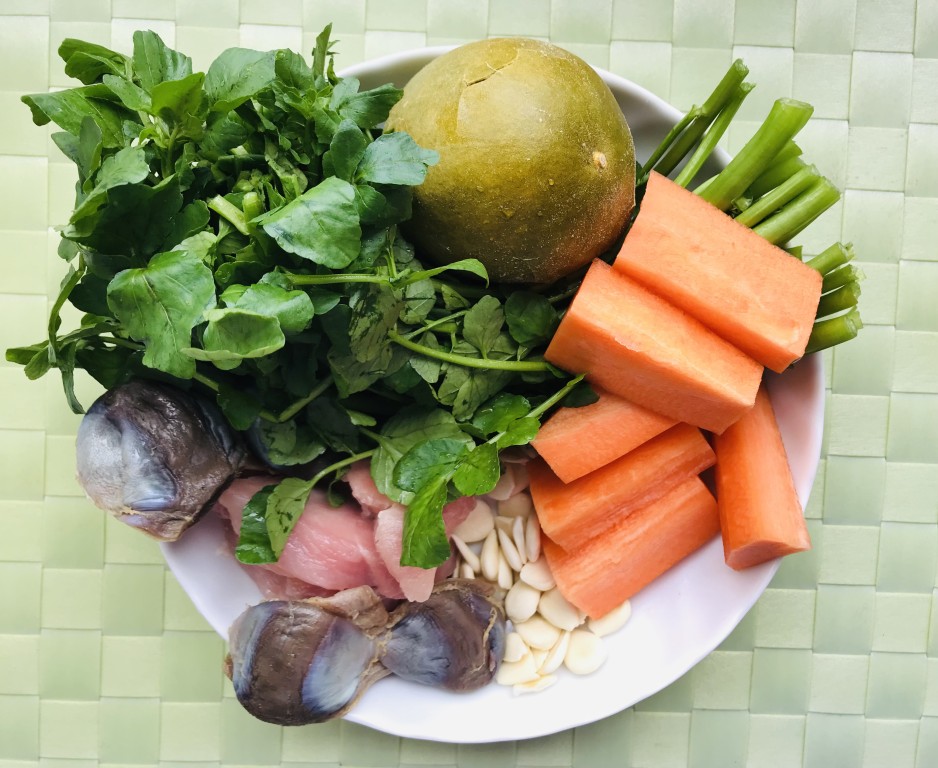
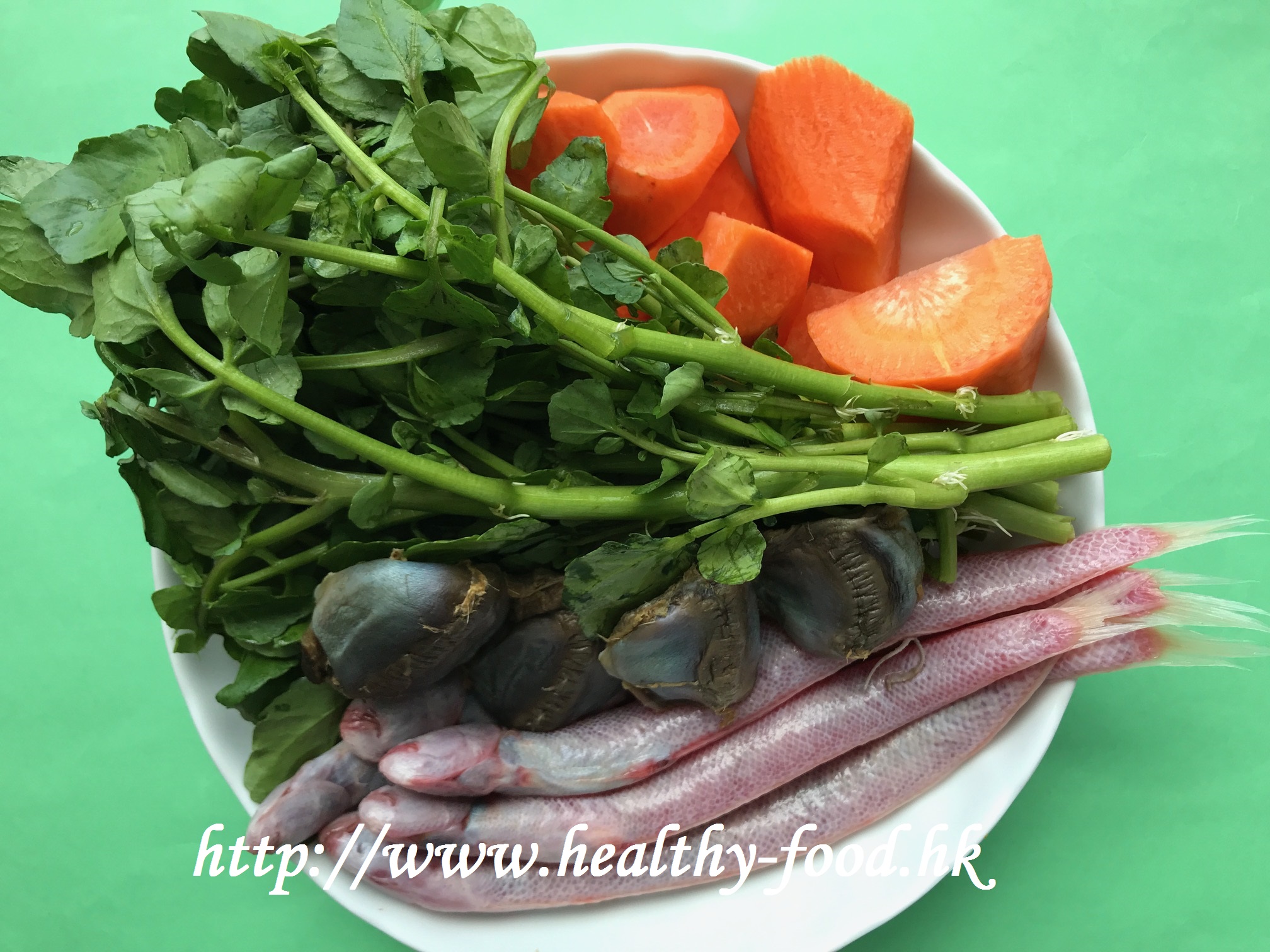
| Watercress (xi yang cai) | ~300 g | Washed well; use the whole bunch |
| Young taro stems (zhu yu) | ~150 g | Peel the outer skin; cut into pieces |
| Carrot | 1 medium | Peeled and cut into chunks |
| Chestnuts | ~150 g | Blanch briefly in boiling water to loosen and remove skins |
| Water | 8 bowls | Bring to a boil before adding ingredients |
Method
- Rinse the watercress thoroughly and drain.
- Peel the taro stems and cut into thick pieces.
- Peel and chop the carrot into large chunks.
- Blanch the chestnuts briefly in boiling water, then peel off the skin while still warm.
- Bring 8 bowls of water to a rolling boil. Add all the ingredients at once (important: start with boiling water for a clear, sweet broth).
- Cook over medium heat for about 30–40 minutes.
- Serve the soup together with the cooked vegetables — the chestnuts and taro stems are particularly delicious to eat.
Bro Niu’s tips
The key to a clear, naturally sweet vegetable soup is to put everything into already boiling water rather than starting with cold water. The soup is gentle enough for everyone at the table. Watercress is rich in vitamins and is particularly good for supporting children’s brain development and immunity — the tender tops work well for dumpling filling and the stems go into the soup pot.
Community questions answered (selected)
-
Q (Mai): Can this soup be drunk by someone eight months pregnant with gestational diabetes? Bro Niu: Yes, this soup is suitable. Simply reduce the amount of chestnuts, or swap them out for corn — corn is associated with supporting steadier blood sugar levels during pregnancy.
-
Q (Iris Leung): My sister is about to have retinal surgery. Is there a suitable soup for her recovery? Bro Niu: Abalone — known in Cantonese as the “eye-brightening fish” — is wonderful for post-eye-surgery recovery. Try a soup with fresh or dried abalone, Chinese yam, goji berries, carrot, red dates, dried tangerine peel, and pork shin. Fresh baby abalone works well; green-lipped abalone is especially good.
Published September 24, 2021 · Adapted and translated for Nourilo from a traditional home-kitchen recipe. Approx. 3 min read.