Soups
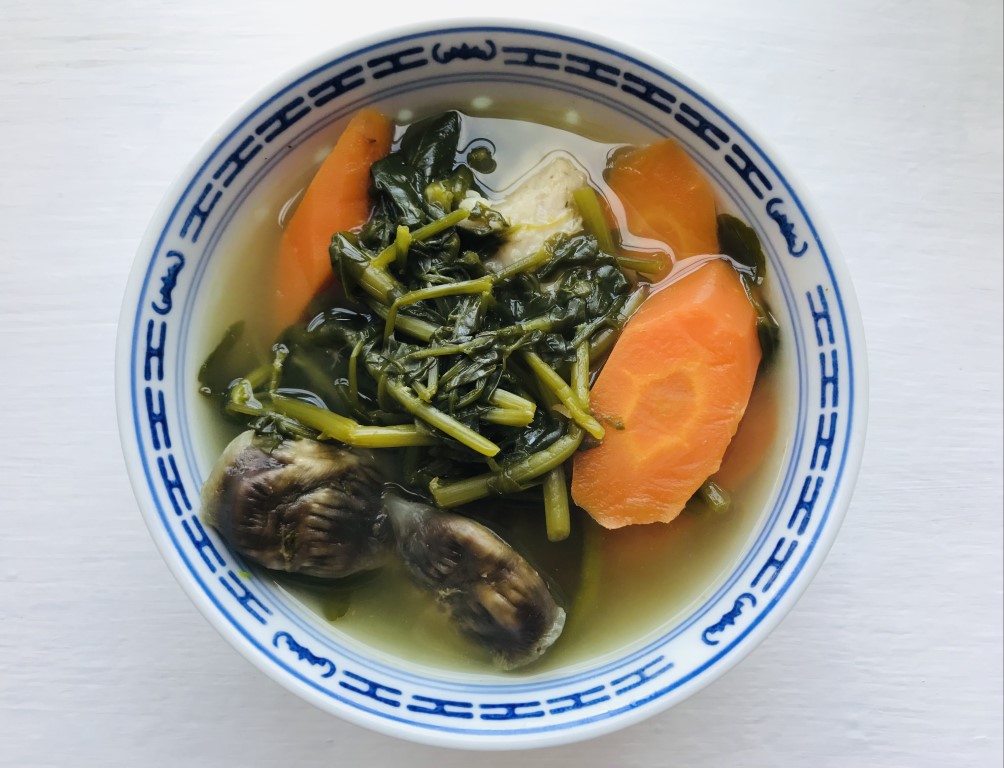
Watercress, Carrot, and Fresh Fish Soup
traditionally used to clear lung and stomach heat, support hydration, and ease dry throat or dry cough

Why people make this soup
When the weather turns dry, it shows up on your skin first: hands feel tight and rough no matter how much lotion you apply, and your throat starts to feel scratchy. In Cantonese cooking, watercress is a celebrated seasonal green for exactly this time of year. At its peak now, watercress has a clean, slightly peppery fragrance and is traditionally thought to be excellent for clearing heat that accumulates in the lungs and stomach.
Bro Niu notes that the key to this soup is adding the watercress to already-boiling water — drop it in cold and you’ll get a bitter, astringent taste instead of its natural sweet fragrance. Combined with carrot, preserved duck gizzard (which adds depth and a pleasant chewiness), and lightly pan-fried fish for richness, this is a soup that is as delicious to eat as it is helpful for the body.
Who it suits / who should be cautious
- Suits the whole family, elderly and children included — generally mild and pleasant
- Particularly suited to those experiencing dry throat, dry skin, mild dry cough, or difficulty with urination due to mild heat
- Suitable for those with yin deficiency with heat signs
- If watercress is unavailable in your area, other leafy greens with a mild bitter note (such as Chinese flowering cabbage or spinach) can be substituted, though the therapeutic profile will differ
Why these ingredients (the food-therapy logic)
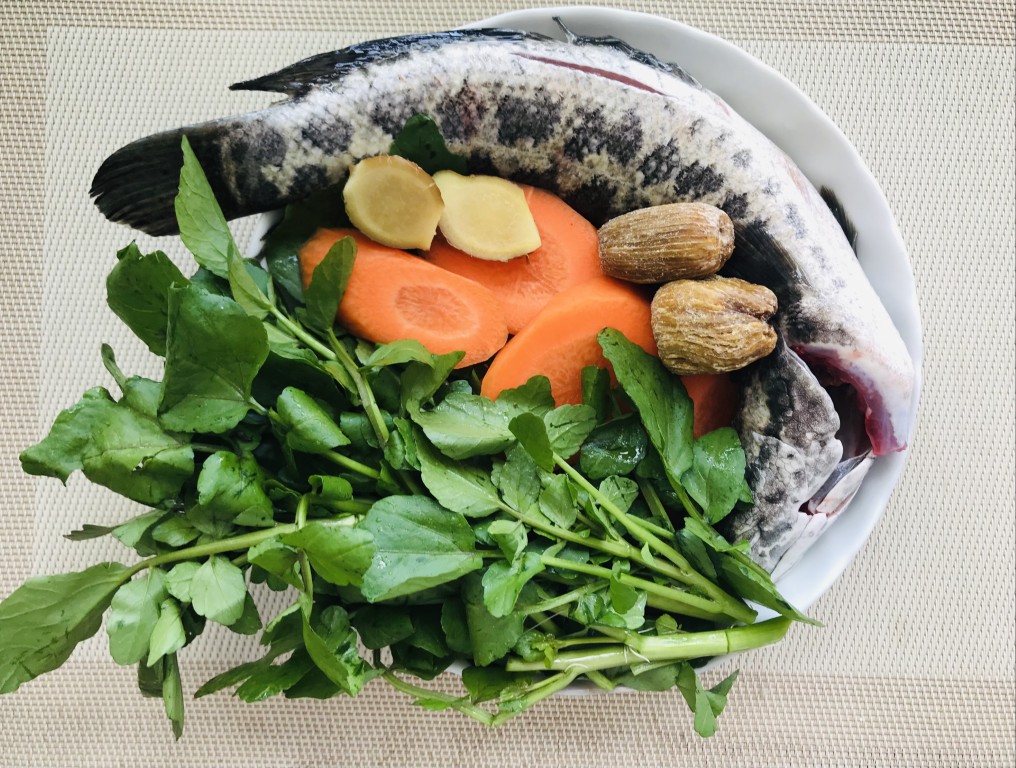
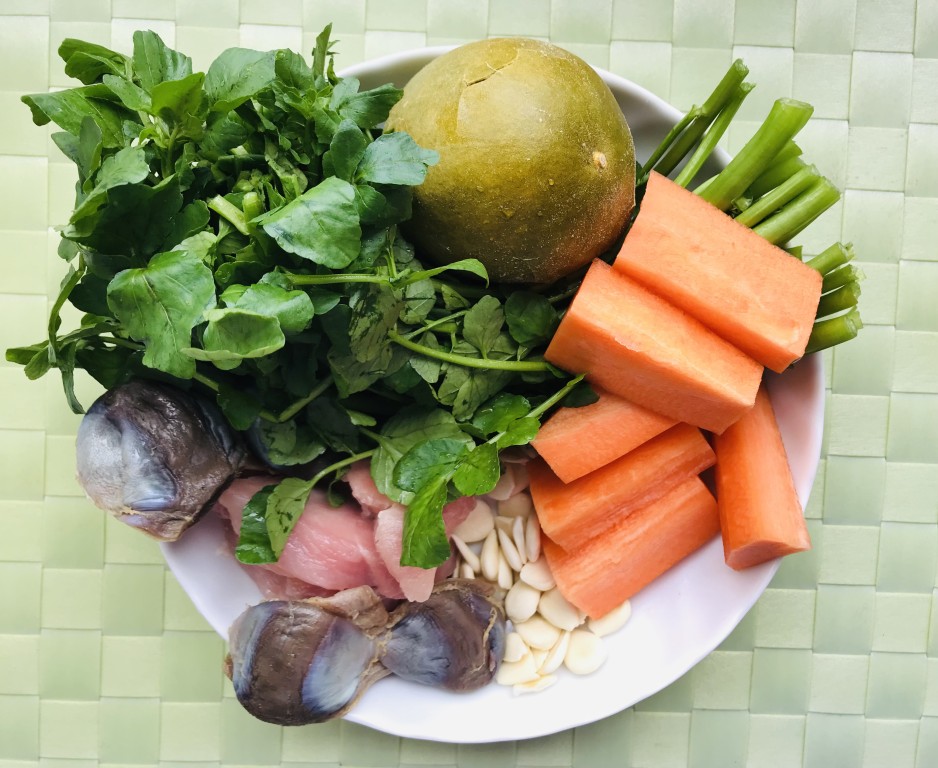
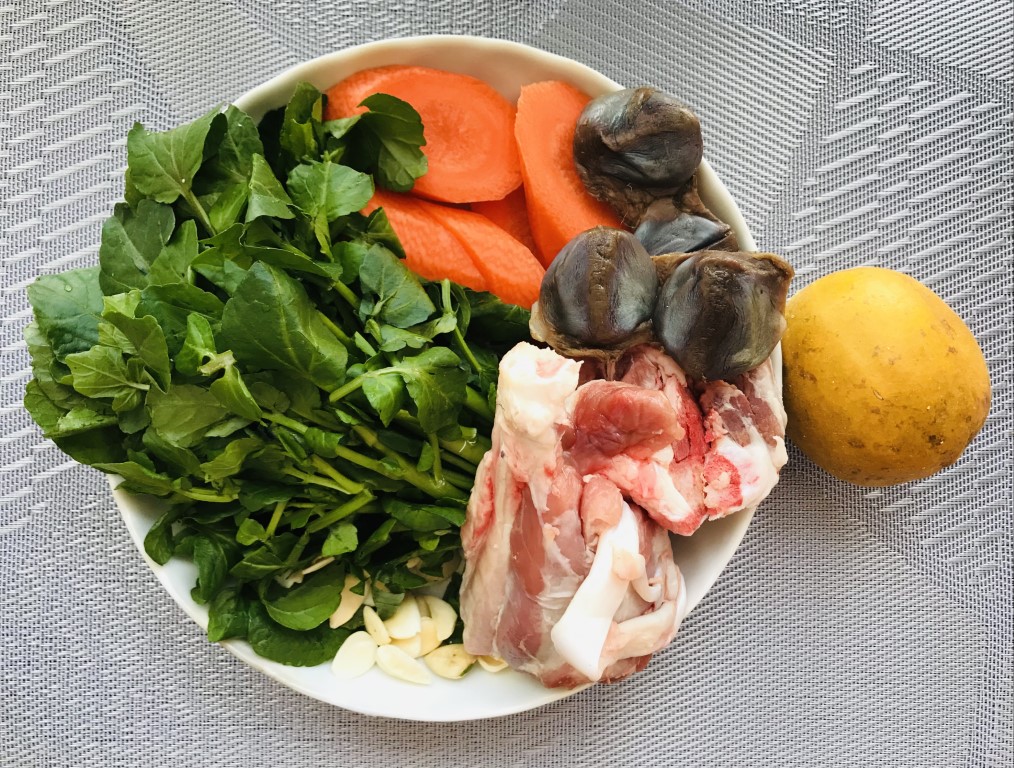
- Watercress (xi yang cai): Cool and slightly pungent; traditionally used to clear lung and stomach heat, ease phlegm, and support urinary flow — it is considered one of the best vegetables for respiratory health in Cantonese food therapy
- Carrot (hong luo bo): Sweet and warming; balances the cooling nature of the watercress and adds natural sweetness to the broth
- Preserved duck gizzard (chen ya shen): Aged and savoury; thought to support digestion and add complexity to the soup’s flavour
- Aged tangerine peel (chen pi): Aromatic and mildly bitter; traditionally supports qi circulation, aids digestion, and balances the cooling ingredients
- Fresh fish: Light protein that enriches the broth; pan-frying briefly before adding to the pot brings out the sweet, savory flavour
Ingredients (4 bowls)
| Ingredient | Amount | Notes |
|---|---|---|
| Watercress | 300 g (~half a jin) | Wash thoroughly; add only after soup is boiling |
| Carrot | 1 medium | Peel and cut into chunks |
| Preserved duck gizzard | 2 pieces | Soak and rinse |
| Fresh red snapper or white-fleshed fish | 300 g (~half a jin) | Clean, pan-fry briefly, then place in a fish bag |
| Aged dried tangerine peel | 1 piece | Soak and rinse |
| Water | 7–8 bowls (~1.75–2 L) |
Method
- Soak and rinse the preserved duck gizzard and tangerine peel.
- Peel and cut the carrot into chunks; wash the watercress.
- Clean and gut the fish. Heat a little oil in a pan and fry the fish briefly on both sides until lightly golden and fragrant. Place the fish into a muslin fish bag (this keeps the broth clear).
- Bring 7–8 bowls of water to a rolling boil in a large pot. Add the carrot, duck gizzard, tangerine peel, and fish bag.
- Once boiling again, add the watercress. Cook over medium-high heat for about 1.5 hours until the soup reduces to approximately 4 bowls.
- Serve warm. Drink the broth and eat the ingredients.
Bro Niu’s tips
- The golden rule: watercress must go in only after the water is already at a full rolling boil. Adding it to cold water results in a bitter, unpleasant taste. When added to boiling water, it releases its natural sweetness and aroma.
- If red snapper is unavailable, any fresh white-fleshed fish or lean pork can be substituted — the soup will still be delicious.
- This soup suits the whole family, from children to elderly.
Community questions answered (selected)
-
Q (Claris): I have yin deficiency with heat. I tried your herb formula for three days and feel much better — but I still have teeth marks on my tongue, white coating, and slight fatigue in the morning. What else can I do? Bro Niu: Tongue coating with teeth marks does not form overnight, so it cannot be reversed in just a few days. Continue with spleen-strengthening, damp-clearing soups and teas — for example, a brew of poria mushroom (fu ling), white atractylodes (bai zhu), and hyacinth bean skin (bian dou yi), or a “four gods” spare rib soup. Consistent practice over time brings the real results.
-
Q (reader on G6PD): Can children with G6PD deficiency eat green flat beans, red flat beans, string beans, and kidney beans? Bro Niu: Children with G6PD (favism) should minimize flat beans, red flat beans, kidney beans, and broad beans, as these are similar to fava beans in composition. Red beans, green peas, and string beans (long beans) are fine.
Published November 4, 2020 · Adapted and translated for Nourilo from a traditional home-kitchen recipe. Approx. 4 min read.