Soups
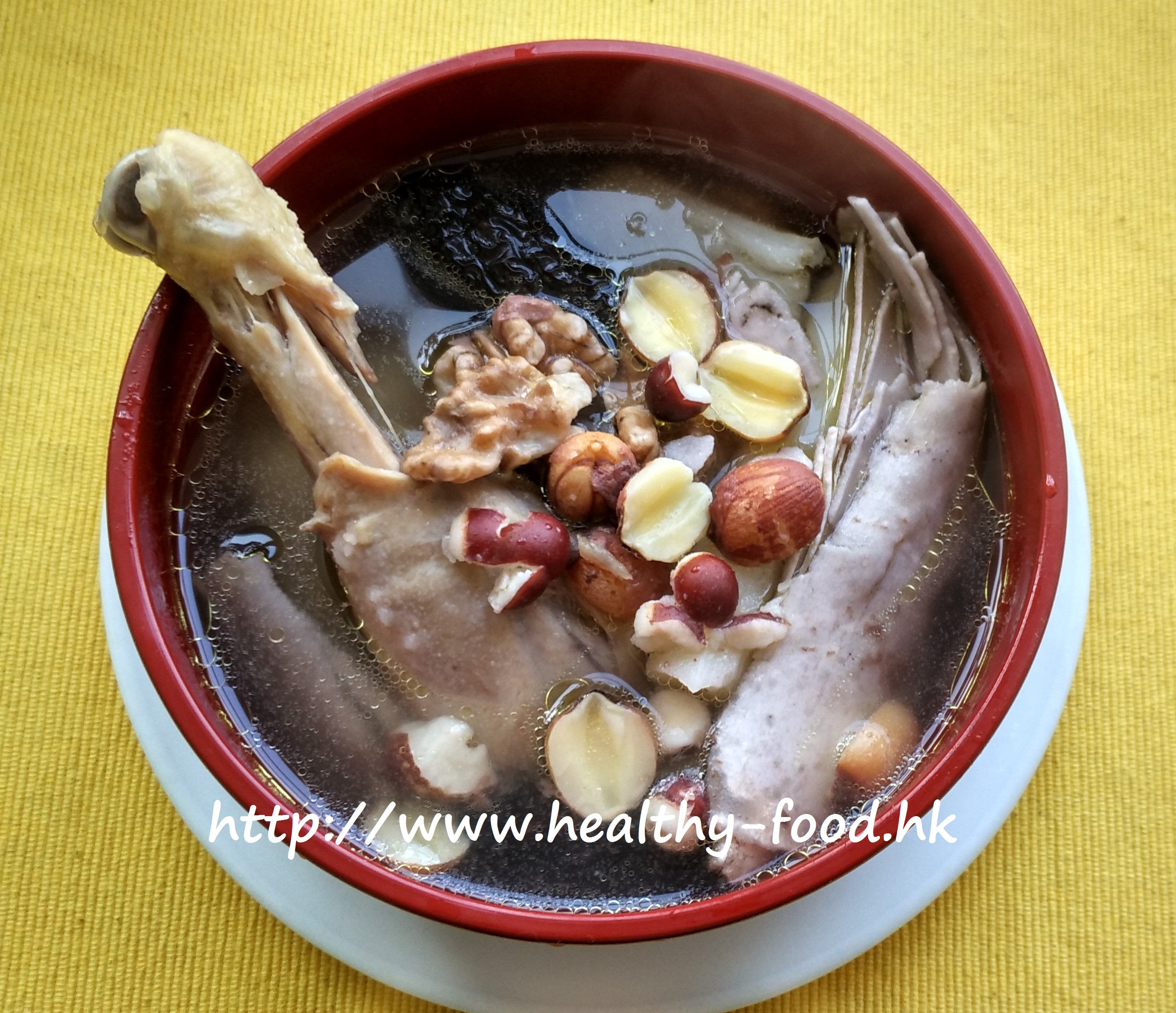
Yam, Lotus Seed, Barley and Red Bean Soup
traditionally used to support spleen function and help clear internal dampness
Why people make this soup
When the air turns humid and heavy, many people notice their energy dipping, their limbs feeling puffy, or their digestion running sluggish. In traditional Chinese dietary wisdom, these sensations are often attributed to an excess of internal “dampness” — a state where the body’s fluid metabolism is a little out of balance. This simple five-ingredient soup has been used for generations as a mild, everyday remedy to bring things back into equilibrium. Because every ingredient is classified as neutral in nature, it suits the whole family — not just one constitution type.
Who it suits / who should be cautious
- Suits adults and children experiencing low appetite, loose stools, feelings of heaviness, mild puffiness, or excessive fatigue in humid weather
- Those with white, greasy tongue coating or frequent flatulence may also find it helpful
- Pregnant women should omit Job’s tears (yi mi), as it has traditionally been considered too downward-moving during pregnancy; substitute a piece of dried tangerine peel (chen pi) and extra lotus seeds instead
- Not recommended during an active cold or fever — address the acute illness first, then use this soup for recovery
Why these ingredients (the food-therapy logic)
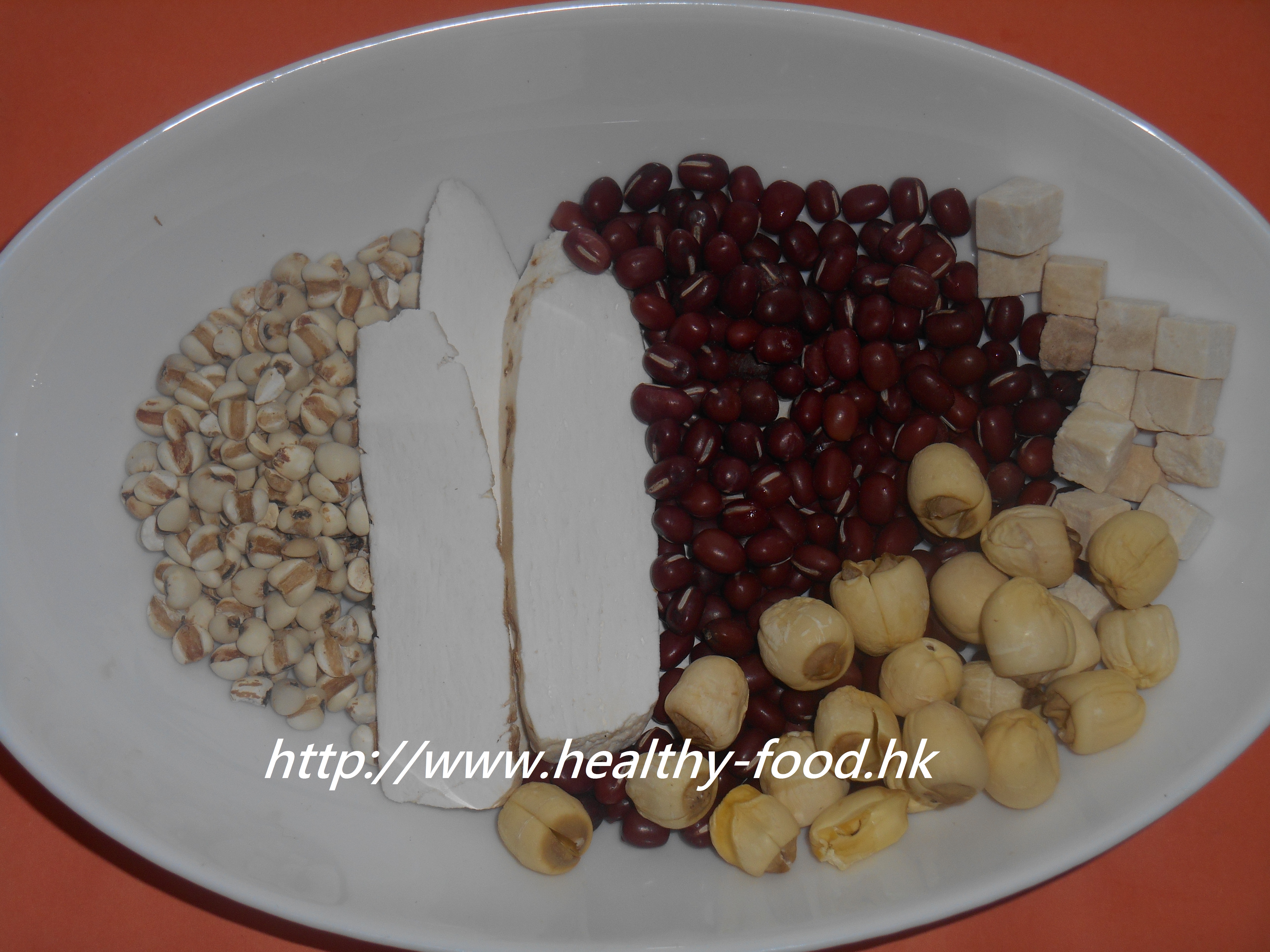
- Chinese yam (huai shan): Sweet and neutral; traditionally associated with supporting the spleen and stomach, tonifying lung qi, and nourishing kidney essence — a foundational ingredient in countless everyday soups
- Poria mushroom (fu ling): A calming, bland fungus traditionally used to support the spleen, calm the mind, and assist in draining dampness gently
- Lotus seeds (lian zi): Sweet and astringent; traditionally valued for supporting the spleen, calming the heart, and helping the body consolidate excess fluids
- Job’s tears / barley (yi mi): One of the best-known dampness-clearing grains in Chinese food therapy; light and slightly cool, it is traditionally used to support the body’s water metabolism
- Red adzuki beans (hong dou): Mildly sweet; traditionally associated with strengthening the spleen and supporting the body in clearing dampness and reducing mild puffiness
Ingredients (4–5 bowls)
| Ingredient | Amount | Notes |
|---|---|---|
| Chinese yam (huai shan) | 37 g (1 liang) | Dried slices from a Chinese herb shop |
| Poria mushroom (fu ling) | 37 g (1 liang) | Dried pieces; sometimes labelled yun ling |
| Lotus seeds (lian zi) | 37 g (1 liang) | Dried or fresh; remove the bitter green core if whole |
| Job’s tears / barley (yi mi) | 37 g (1 liang) | Use raw (sheng yi mi), not toasted |
| Red adzuki beans (hong dou) | 37 g (1 liang) | Distinct from larger red kidney beans |
| Water | 6 bowls (~1.4 L) |
Method
- Rinse all ingredients well. Soak in cold water for 1 hour to soften (this shortens cooking time and improves the final texture).
- Drain the soaking water. Place all ingredients in a pot with 6 bowls of fresh water.
- Bring to a boil over high heat, then reduce to a gentle simmer.
- Simmer uncovered (or with a lid slightly ajar) for 1 hour 30 minutes, until the beans and barley are tender and the broth is lightly thickened.
- Serve warm. You may add a pinch of salt if serving as a savoury soup, or a small piece of rock sugar if you prefer it lightly sweet.
Bro Niu’s tips
- Meat is optional: add a few pieces of pork spare ribs or lean pork at step 2 for a heartier, more savoury soup — it does not change the food-therapy effect.
- If you have no red adzuki beans, substitute one piece of dried tangerine peel (chen pi) to help the qi move and reduce bloating.
- If someone in the family sweats heavily, add 15 g floating wheat (fu xiao mai) to the pot — it will not interfere with the dampness-clearing action.
- This soup is gentle enough to drink 2–3 times per week when dampness is a recurring issue. Once symptoms ease, once a week for maintenance is plenty.
- Not suitable during a cold or fever; people recovering from a cold with lingering weak digestion can use this soup to rebuild.
Community questions answered (selected)
-
Q (reader): Can a 2-year-old child drink this soup? Bro Niu: Yes, this soup is fine for children.
-
Q (Don, reader): I am 30 and male. I pass a lot of wind and have loose stools regularly. What soup can help? Bro Niu: You can use Chinese yam, poria, lotus seeds, and fox nut (qian shi) — 37 g each — with 5 red dates and one piece of dried tangerine peel, cooked with spare ribs in 8 bowls of water down to 4 bowls. Drink over two days; repeat for 3 rounds (6 days total).
-
Q (珊, reader): I am 2 months pregnant and sometimes feel a damp, uncomfortable bloating. Can I make this soup without Job’s tears? Bro Niu: Yes — just leave out the Job’s tears, and add a little more ginger and dried tangerine peel to help move the qi.
Published March 22, 2016 · Adapted and translated for Nourilo from a traditional home-kitchen recipe. Approx. 4 min read.