Soups
Soybean Sprout, Tofu and Fresh Fish Slow-Cooked Soup
Traditionally associated with clearing internal heat, reducing inflammation in the mouth and gums, and calming irritability
Why people make this soup
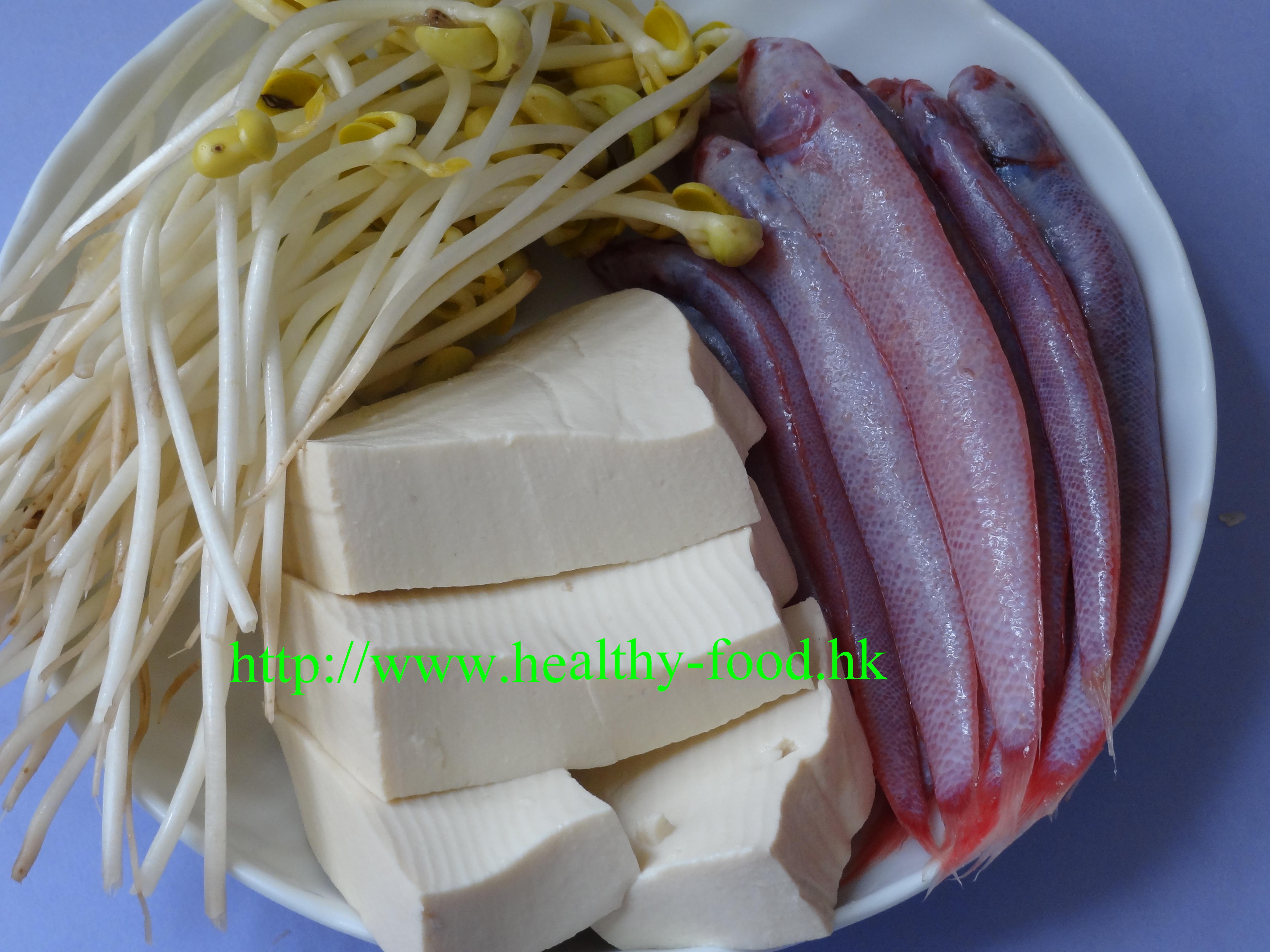
Soybean sprouts, tofu, and fresh fish come together to make a humble but beautifully effective slow-cooked soup. In Chinese food therapy, this combination is considered particularly well-suited for clearing internal heat — the dull, uncomfortable kind that shows up as mouth ulcers, swollen gum tissue, lip sores, or the irritability and restlessness common during hot weather or menopausal transitions. Smaller fresh fish such as red perch or red tilapia work wonderfully here: they make a milky, flavourful broth and are more readily available than large ocean fish during the summer fishing rest season.
Who it suits / who should be cautious
- Well suited for people prone to mouth sores, gum swelling, lip ulcers, or heart and stomach heat
- Also helpful for menopausal women experiencing emotional irritability or restlessness from internal heat
- Soybean sprouts are traditionally associated with supporting the removal of warts — this soup may benefit those with wart-prone skin
- Black cloud ear fungus (yun er) and large amounts of black wood ear mushrooms are mildly blood-activating; pregnant women should use caution and avoid excessive amounts
- If you have gout, choose a fish lower in purines — the tofu and sprouts are fine
Why these ingredients (the food-therapy logic)
- Soybean sprouts (da dou ya cai): In Chinese food therapy, soybean sprouts are considered to have a clearing, detoxifying action, particularly useful for internal heat conditions; traditionally also associated with helping the body manage warts
- Tofu (dou fu): Cooling and gentle on the stomach; adds protein while supporting the yin-nourishing, heat-clearing function of the soup
- Fresh fish: Provides protein and makes the broth rich and milky; fish-based soups generally have a lighter, less heating quality than pork-bone broths
- Fresh ginger (sheng jiang): Balances the cooling nature of the other ingredients and prevents stomach chill; also reduces any fishiness
Ingredients (4 bowls)
| Ingredient | Amount | Notes |
|---|---|---|
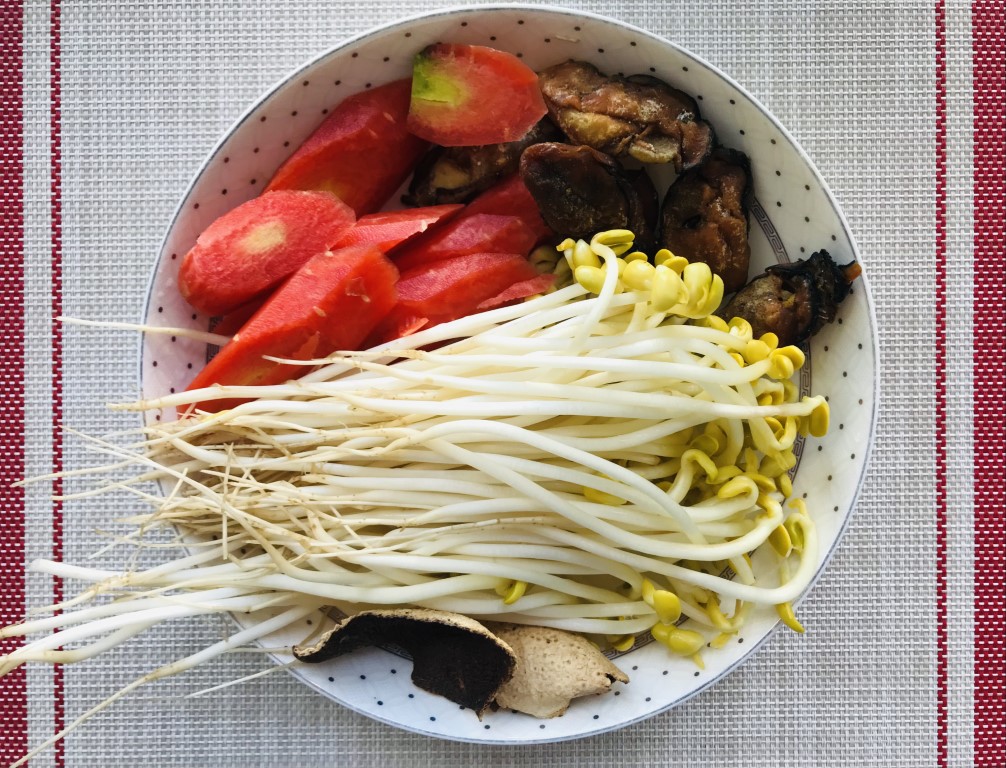
| Soybean sprouts (da dou ya cai) | ~300 g (half jin) | Pinch off the root tips |
| Firm tofu (dou fu) | 1 block | Cut into large pieces |
| Fresh whole fish (red tilapia or similar) | ~600 g (1 jin) | Gut and remove head; pan-sear before adding |
| Fresh ginger slices (sheng jiang) | 2 slices | |
| Cooking oil | a little | For pan-searing fish |
| Water | 8 bowls | Reduces to about 4 bowls |
Method
- Pinch off the root tips from the soybean sprouts; rinse well.
- Cut the tofu into large chunks. Use firm tofu designed for soups — it holds its shape better.
- Clean the fish: gut it and remove the head. Pat dry.
- Heat a little oil in a pan over medium-high heat. Pan-sear the fish with the ginger slices until both sides are lightly golden. This reduces fishiness and helps create a milky, flavourful broth.
- Transfer the fish to a pot. Add the soybean sprouts, tofu, and 8 bowls of water. Bring to a boil.
- Reduce to a gentle simmer and cook for about 2 hours, until the liquid reduces to roughly 4 bowls.
- Serve the broth and eat the tofu and sprouts alongside. The fish can be enjoyed too, though it will be very soft after this length of cooking.
Bro Niu’s tips
This soup has a clean, refreshing character that makes it useful beyond just the heat-clearing purpose — it is a good everyday family soup in warm weather. When simmering tofu for a long time, use soup-grade firm tofu and cook on a low, gentle heat after the initial boil to keep it from falling apart. If red perch is unavailable, red snapper, tilapia, or other small whole fresh fish work well. Bro Niu notes that you can also add century egg (pi dan) and lean pork to make a porridge version — this also calms internal heat. A commenter shared that soybean sprouts cooked and eaten on their own (even for several days as a folk remedy) was traditionally claimed to help dissolve flat warts.
Community questions answered (selected)
-
Q (Angel): My 18-month-old baby has swollen gums. What soup is suitable? Bro Niu: For a young child, try cooking a simple soup with winter melon, tofu, and sliced fish — use ingredients in whatever quantities are practical, and the soup will have a gentle heat-clearing effect. You can also use warm diluted salt water on a cotton swab to gently wipe the child’s gum area a few times a day to help reduce inflammation.
-
Q (connie): I have many flat warts on my face. Can eating soybean sprouts help clear them? Bro Niu: There is a traditional folk recipe that involves eating only plain boiled soybean sprouts (and nothing else) for three consecutive days. Several food therapy books mention this approach. I once tried it myself when I developed two flat warts on my face — I managed two days before giving up, but oddly, the warts disappeared on their own about a week later. You could also try applying a paste made from coix (yi ren) powder mixed with a little honey and water to the affected area, rinsing after half an hour; or rubbing the area with a raw water chestnut (ma ti). All inexpensive things worth trying.
-
Q (Babi): Can pregnant women drink this soup? Can pregnant women eat black wood ear mushrooms? Bro Niu: The fish (red perch / hong bian yu) is a shallow-water fish with blood-nourishing and spleen-supporting qualities — it is suitable for pregnant women. Regarding pig liver: modern farming practices often involve the use of hormones and drugs that accumulate in the liver, so I would not recommend eating large amounts, especially during pregnancy. Black wood ear mushroom has a blood-activating effect and should be eaten only in small amounts during pregnancy. Cloud ear fungus (yun er) falls into the same family and carries the same caution. After delivery, however, both are excellent for supporting recovery and building blood.
Published June 13, 2012 · Adapted and translated for Nourilo from a traditional home-kitchen recipe. Approx. 5 min read.