Herbal & Flower Teas
Scrophularia, Ophiopogon & Monk Fruit Tea
Traditionally used to nourish yin, clear internal heat, and support relief from mouth ulcers and throat discomfort
Why people make this tea
Mouth ulcers — known as “aphthous ulcers” in Western medicine, and called “fei zi” in Cantonese — are small but genuinely painful: they interfere with eating, speaking, and sleeping. In traditional Chinese food therapy, they are often linked to excess internal heat combined with yin deficiency, and are made worse by stress, late nights, and a diet heavy in fried or spicy foods. Bro Niu recommends this simple three-ingredient tea as an ongoing support for people who find themselves getting mouth ulcers again and again — not a quick fix, but a gentle way to help the body stay in better balance. Children from school age upward can also drink it.
Who it suits / who should be cautious
- Suitable for adults and children prone to recurring mouth ulcers, sore throat, or dry, hoarse voice from overuse (including from smoking or drinking)
- Menstruating women can drink it in the amounts used here — the quantity is small enough to be safe
- Those with a cold constitution (always feeling cold, prone to loose stools) should add a small piece of dried tangerine peel or a few dried figs to moderate the cooling nature of the tea
- Not recommended during active fever or acute external illness
Why these ingredients (the food-therapy logic)
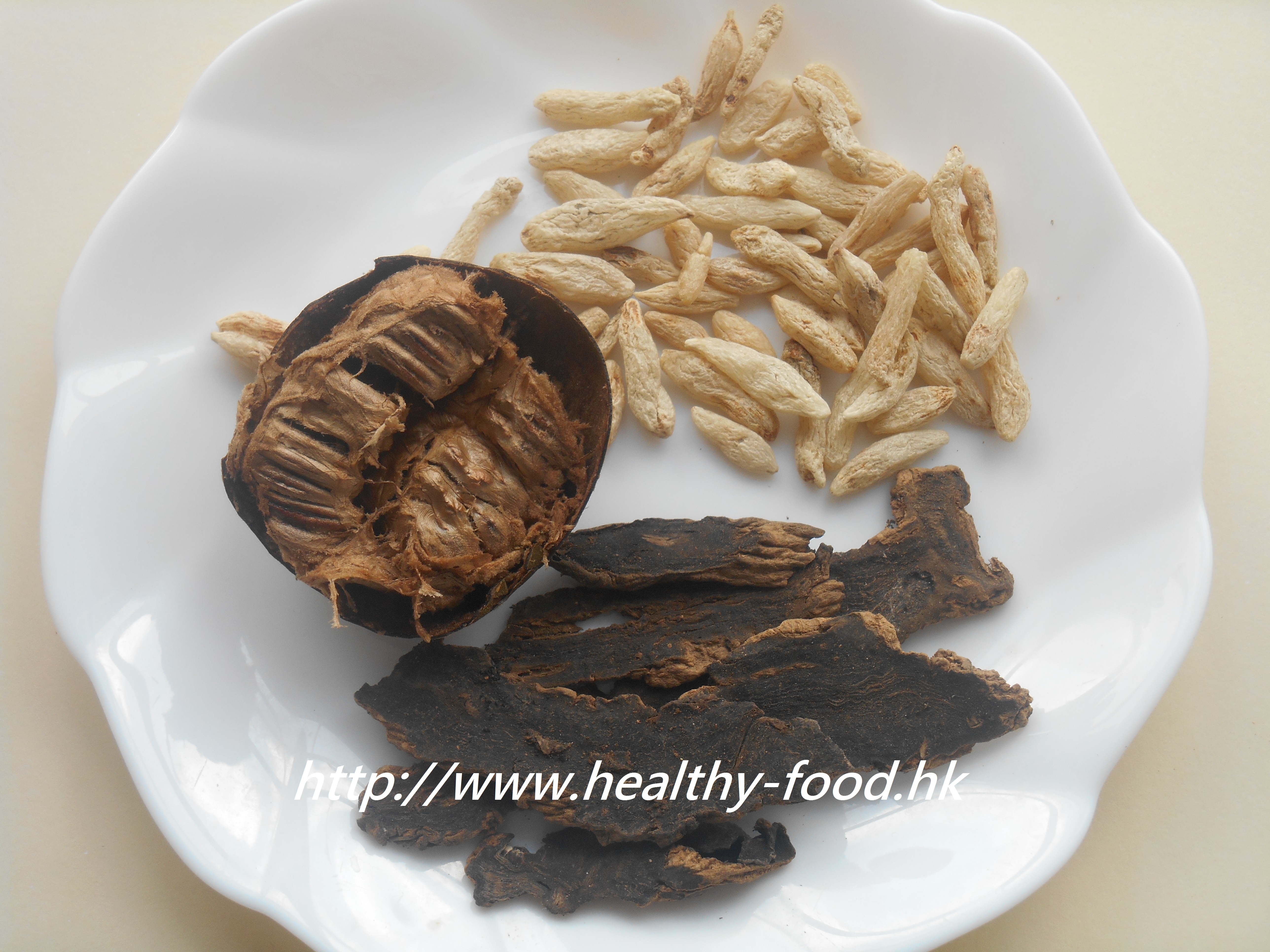
- Scrophularia root (xuan shen): Considered one of the stronger yin-nourishing herbs that also clears heat and “drains fire”; particularly associated in Chinese tradition with supporting the throat and mouth when there is internal heat
- Ophiopogon tuber (mai dong): Prized for moistening the lungs and heart meridian; classically paired with xuan shen to deepen the yin-nourishing effect
- Monk fruit (luo han guo / Siraitia grosvenorii): A naturally sweet fruit used in southern Chinese cooking and herbal teas; associated with clearing lung heat and moistening the throat; also naturally sweet so it makes the tea pleasant to drink; choose fruits that do not rattle when shaken and have an even, bright skin colour
Ingredients (2 cups)
| Ingredient | Amount | Notes |
|---|---|---|
| Scrophularia root (xuan shen) | ~11 g (3 qian) | Rinse |
| Ophiopogon tuber (mai dong) | ~11 g (3 qian) | Rinse |
| Monk fruit (luo han guo) | 1/4 fruit | Break open |
| Water | 4 bowls (~1 L) |
Method
- Rinse all ingredients briefly.
- Combine with 4 bowls of water in a pot and bring to a boil.
- Reduce to a gentle simmer and cook for 30 minutes.
- Strain and drink warm. This makes roughly 2 cups.
Bro Niu’s tips
This tea is also effective for hoarse voice or dry throat caused by excessive talking, smoking, or drinking alcohol. When choosing monk fruit, look for one that does not rattle when gently shaken and whose skin is uniformly coloured and glossy — that indicates good quality. If you cannot find scrophularia root, American ginseng (hua qi shen / American ginseng) is a reasonable substitute, but do not add it during the main cooking — instead, steep it in the finished tea for about 5 minutes, since American ginseng contains volatile compounds that dissipate with prolonged heat. If you have a cold constitution, Bro Niu suggests adding 4 dried figs and a piece of tangerine peel to soften the tea’s cooling nature. You can also store the previous day’s tea in the fridge (remove the herbs first), then reheat to drink the next day.
Community questions answered (selected)
-
Q (Mandy): My 5-year-old has mouth ulcers. Can she drink this tea? Bro Niu: Yes, children can drink this tea.
-
Q (reader, anonymous): I experience mouth ulcers every time my period comes and goes — this has been going on for five or six years. What is happening? Bro Niu: You are likely have a yin-deficiency pattern with flaring internal heat. That said, if you also notice unusual discharge that is yellow-green, please see a doctor without delay.
-
Q (Wong): I have mouth ulcers but no throat discomfort, and my stools are slightly hard. Would replacing the monk fruit with rehmannia root (sheng di) be better? Bro Niu: You can replace the monk fruit with rehmannia root. And change the scrophularia to 4 dried figs (sliced) — that will also help with the constipation.
Published September 6, 2015 · Adapted and translated for Nourilo from a traditional home-kitchen recipe. Approx. 3 min read.