Home-Style Dishes
Safflower Braised Pork Belly
traditionally used to activate blood circulation and help clear microscopic bruising after head trauma, with particular attention to supporting cerebrovascular health
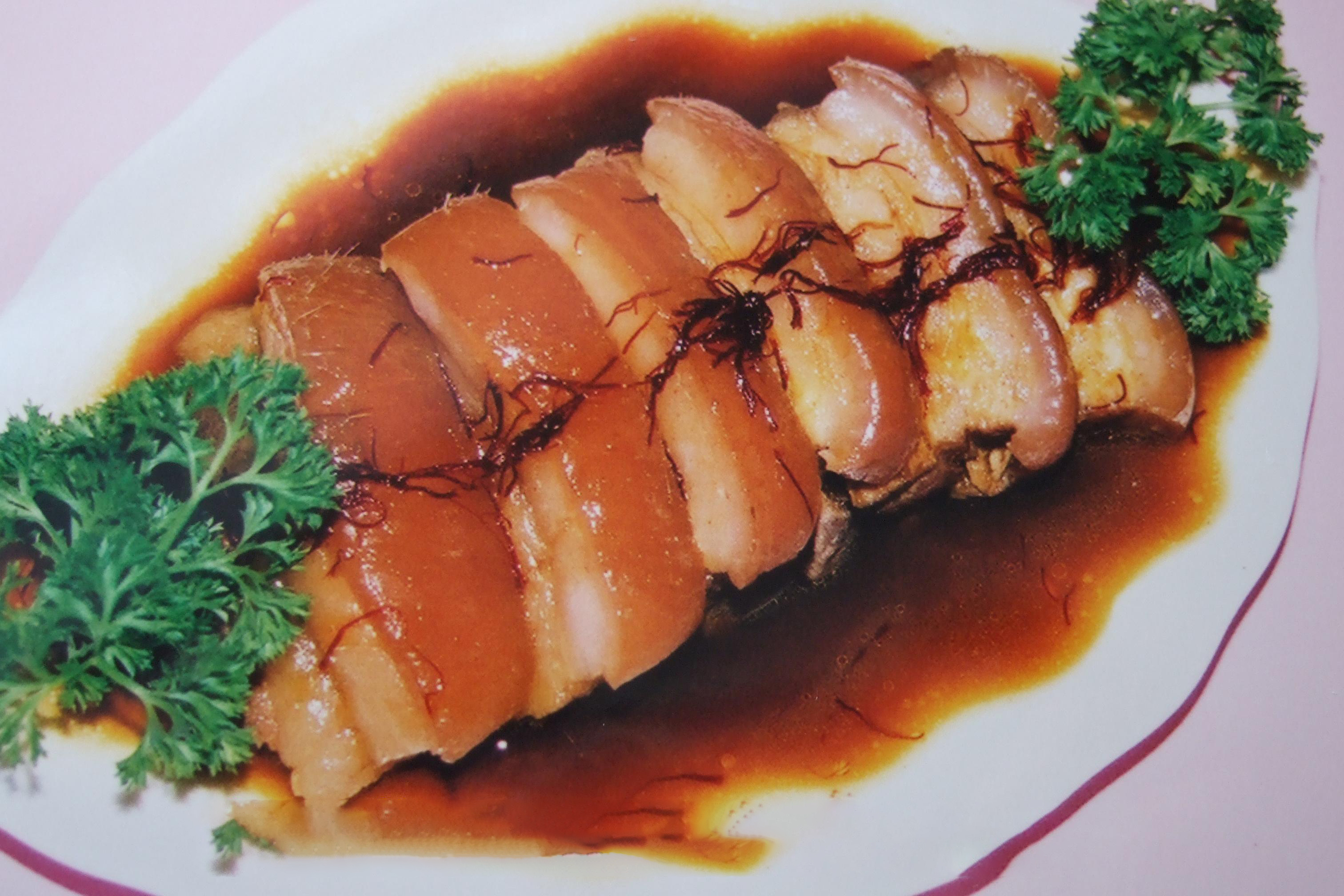
Why people make this dish
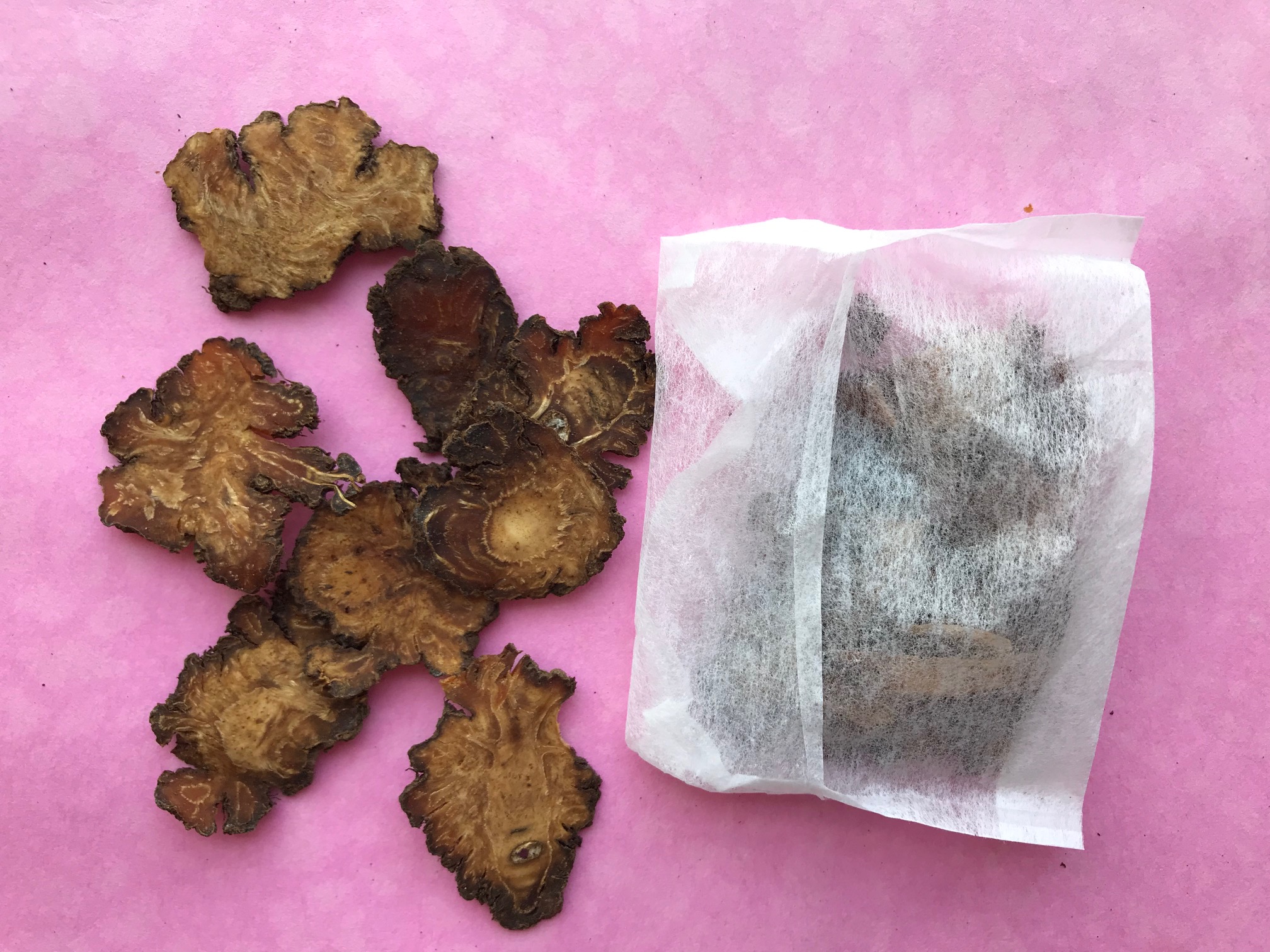
Safflower — particularly the Tibetan variety (saffron, Crocus sativus) — has been used as both a spice and a medicinal herb across cultures for centuries. In Chinese traditional food therapy, safflower (both the Tibetan and the more affordable Chinese variety, Carthamus tinctorius, called chuan hong hua) is valued for its ability to activate blood circulation and dissolve very fine stagnation in the vessels.
Bro Niu explains a specific traditional rationale for this dish: the brain has a blood-brain barrier that prevents many substances from entering, but cholesterol — found in fatty pork — acts as a carrier molecule that can help convey the active compounds of safflower across that barrier. This is why the dish specifically uses fatty pork belly rather than lean meat. It is traditionally used after head bumps in children or adults, on the theory that even minor head trauma can produce microscopic bleeding or bruising that may not show up on a scan, and that safflower can help clear this before it causes longer-term issues.
Who it suits / who should be cautious
- Traditional use: children or adults after a bump to the head, especially where there is concern about lingering effects.
- Also used in food therapy for older adults with general cerebrovascular concerns (prevention of blood vessel blockage).
- Pregnant women must not use this dish at all — safflower powerfully activates blood movement and is strongly contraindicated in pregnancy.
- Women during menstruation should avoid it.
- People with low blood pressure should not use safflower — it may further lower blood pressure.
- Those on anticoagulant medications (blood thinners) should consult their doctor.
- Cancer patients: those without active bleeding conditions may use safflower according to Bro Niu.
Why these ingredients (the food-therapy logic)
- Safflower (hong hua / chuan hong hua): Strongly activates blood circulation and dissolves stagnation. Even very fine microscopic bleeding points that a CT scan might miss are traditionally believed to be within the reach of safflower’s action. The Tibetan variety (藏红花) is far more expensive and potent; the Chinese variety (川红花) is much more affordable and is what Bro Niu recommends for this recipe. A general principle in traditional use: a smaller amount (about 1 qian) activates circulation; a larger amount (2–3 qian) dissolves stagnation.
- Pork belly (wu hua nan): Provides the cholesterol-carrier effect described above. The fat content is integral to the traditional rationale for the dish. Those who want to reduce fat intake can drink the braising sauce and eat less of the meat itself.
Ingredients (3–4 servings)
| Ingredient | Amount | Notes |
|---|---|---|
| Safflower (chuan hong hua) | 2 tablespoons (approx. 1 qian dried) | Very light; 1 qian from herbalist is sufficient |
| Pork belly (wu hua nan) | 450 g | With skin |
| Fresh ginger | 3 slices | |
| Spring onion | 2 stalks | |
| Shaoxing rice wine | A splash | For braising |
| Light soy sauce and seasoning | To taste |
Method
- Place the safflower in a small pot with 1 bowl of water. Bring to a gentle boil and simmer for about 5 minutes. Strain out the safflower and keep the reddish liquid.
- In a wok, heat a small amount of oil. Add the minced or sliced ginger and stir-fry until fragrant.
- Add the pork belly pieces and pan-fry until lightly golden on the outside.
- Add a splash of Shaoxing wine, then pour in the safflower liquid.
- Add the spring onion and seasoning to taste. Braise over medium-low heat, covered, until the pork is tender — approximately 30–35 minutes.
- Slice the pork belly and arrange on a plate. Pour the braising sauce over the top.
- Serve with steamed rice, using the sauce as a topping for the rice. Both meat and sauce are eaten.
Bro Niu’s tips
The braising sauce is the most important part — use it over rice. The meat provides the carrier function; even if you or a child cannot eat much of the pork itself, the sauce captures the safflower’s active qualities. For young children after a minor head bump, 1–2 tablespoons of the sauce stirred into soft congee is sufficient — repeat for 2–3 meals total. Tibetan saffron (藏红花) can be substituted but is extremely expensive; authentic Chinese safflower (川红花) from a reputable herbalist is perfectly effective and costs a fraction of the price. When buying, look for the characteristic fragrant aroma — counterfeit products made from corn silk or other fibres will not have this.
Community questions answered (selected)
-
Q (jenny1010): Bro Niu, I cooked this dish — when it was done, most of what was left was pork fat/oil. Is that the braising sauce? How many times can a child have it per week? Bro Niu: Two to three servings is sufficient — there is no need for long-term use. The action of this dish depends on the cholesterol in the pork fat acting as a carrier for the safflower compounds. Women during menstruation and during pregnancy should not use safflower.
-
Q (JX): Bro Niu, I hit my head in June 2022. I have tried this dish, the tian ma fish head soup, and acupuncture — but my head still hurts. What else can I try? Bro Niu: Try gastrodia (tian ma) 3 qian, solomons seal (huang jing) 5 qian, and red dates 5 pieces, simmered in lean pork or fish head soup. Three servings per week; if it helps, continue for another two weeks.
-
Q (Canis): I was injured as a child and have had headaches ever since. I have severe low blood pressure — can I use safflower? Bro Niu: With severe low blood pressure, safflower is not suitable for you. Instead, try angelica root (bai zhi) 3 qian, codonopsis (dang shen) 3 qian, red dates 8 pieces, and 3 slices of fresh ginger, simmered with a large fish head — twice a week. This helps ease headaches and supports blood pressure.
Published April 20, 2010 · Adapted and translated for Nourilo from a traditional home-kitchen recipe. Approx. 5 min read.