Soups
Codonopsis, Ophiopogon and Schisandra Berry Stewed Chicken (Sheng Mai San Chicken)
traditionally used to support cardiac qi, nourish yin, and ease mild palpitations and fatigue
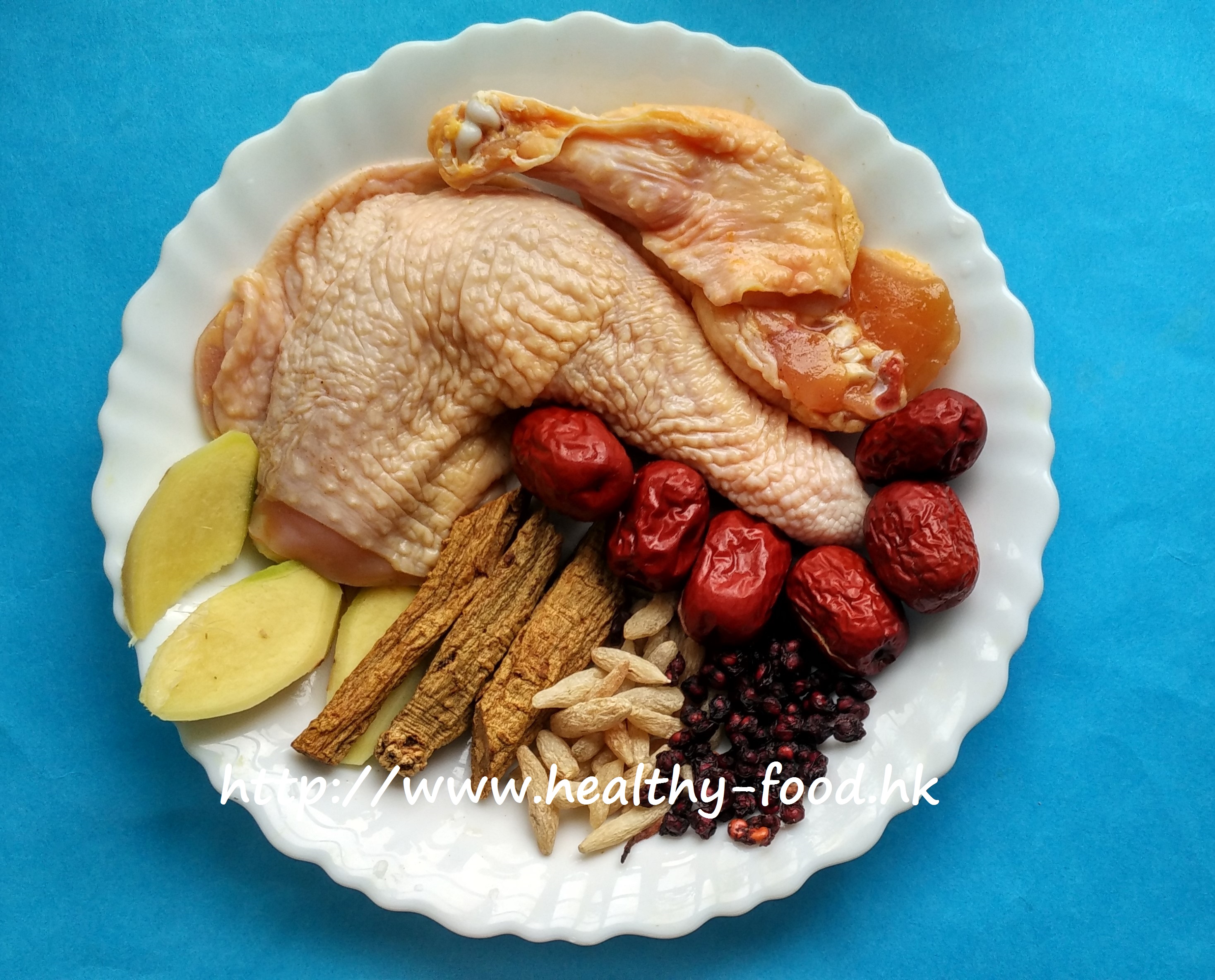
Why people make this soup
The classical Chinese herbal formula behind this soup is called Sheng Mai San — “Generate the Pulse Powder” — a three-herb combination that has been used in Chinese medicine for centuries. Its aim is to replenish the heart’s energy and nourish its yin so the heart can beat steadily and the pulse remains strong.
In modern terms, mild palpitations and arrhythmia can arise from various causes: coronary disease, hypertension, stress, or simply the gradual depletion that comes with ageing, illness, chronic dieting, or overwork. Bro Niu notes that some people develop palpitations not from structural heart disease but from a sustained blood and qi deficiency — perhaps a woman who has eaten very little for years in an attempt to stay thin, surviving on cold drinks and raw vegetables until her circulatory system simply becomes underpowered.
The original Sheng Mai San uses ginseng as the primary herb. Bro Niu substitutes codonopsis (dang shen) here, because ginseng is more forceful and better suited to acute, severe deficiency, whereas codonopsis is gentler — better matched to the mild, chronic fatigue and deficiency that everyday life tends to produce. Codonopsis is also associated in research with increasing red blood cell count and haemoglobin, so it both nourishes qi and supports blood.
Who it suits / who should be cautious
- Suitable for people with mild, chronic fatigue, mild palpitations, breathlessness on exertion, excessive sweating, or dizziness associated with qi and blood deficiency
- Suitable during the menstrual period
- Suitable for elderly people with low energy and mild heart function decline
- This soup is a long-term, gentle support — not for acute cardiac events
- Anyone with an active cold, fever, or acute illness should not take tonifying soups until the illness has passed
- If you are on prescription heart medication, drink this soup at least 2 hours apart from your medication
- Food therapy is a complement only — persistent palpitations must be evaluated by a doctor
Why these ingredients (the food-therapy logic)
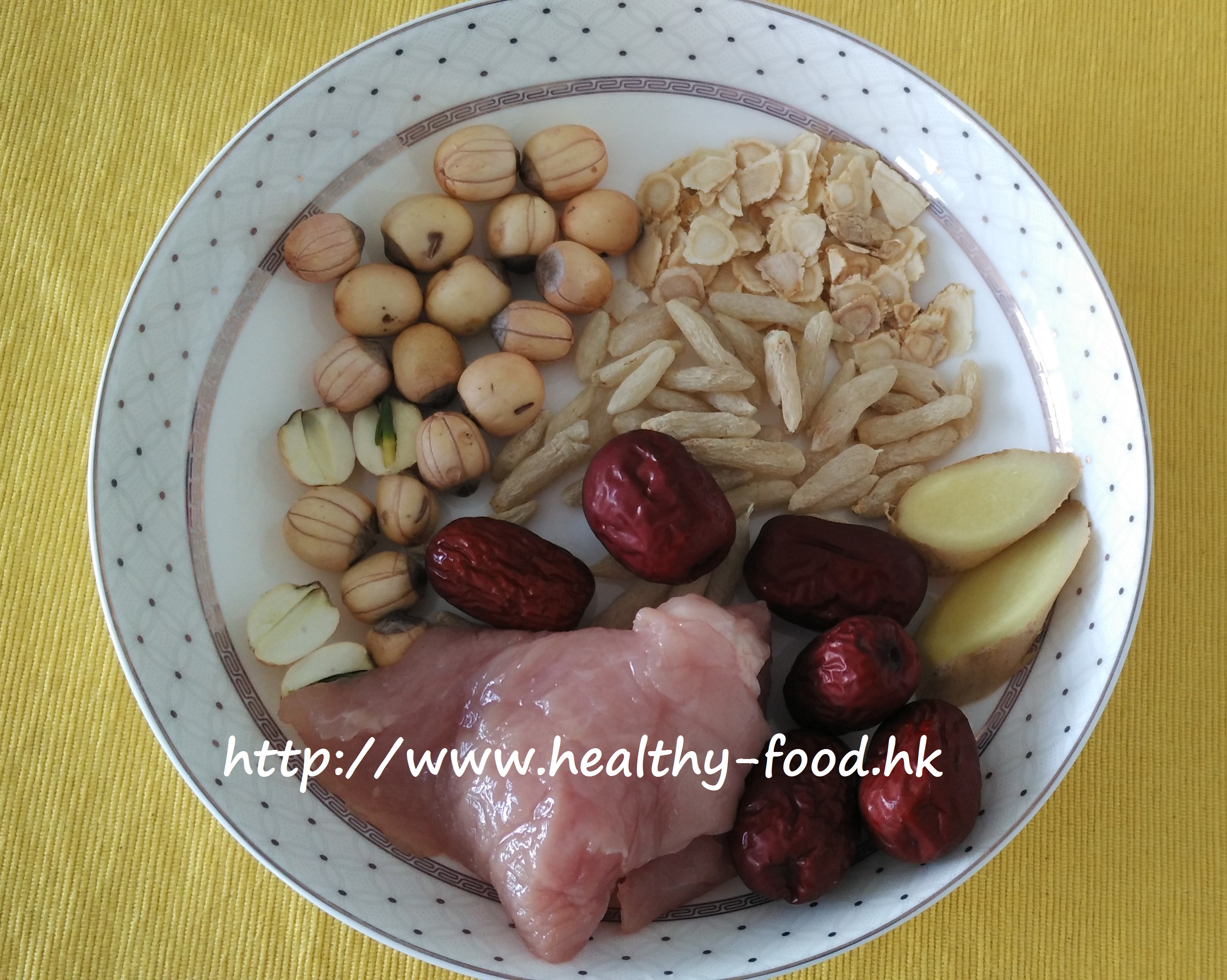
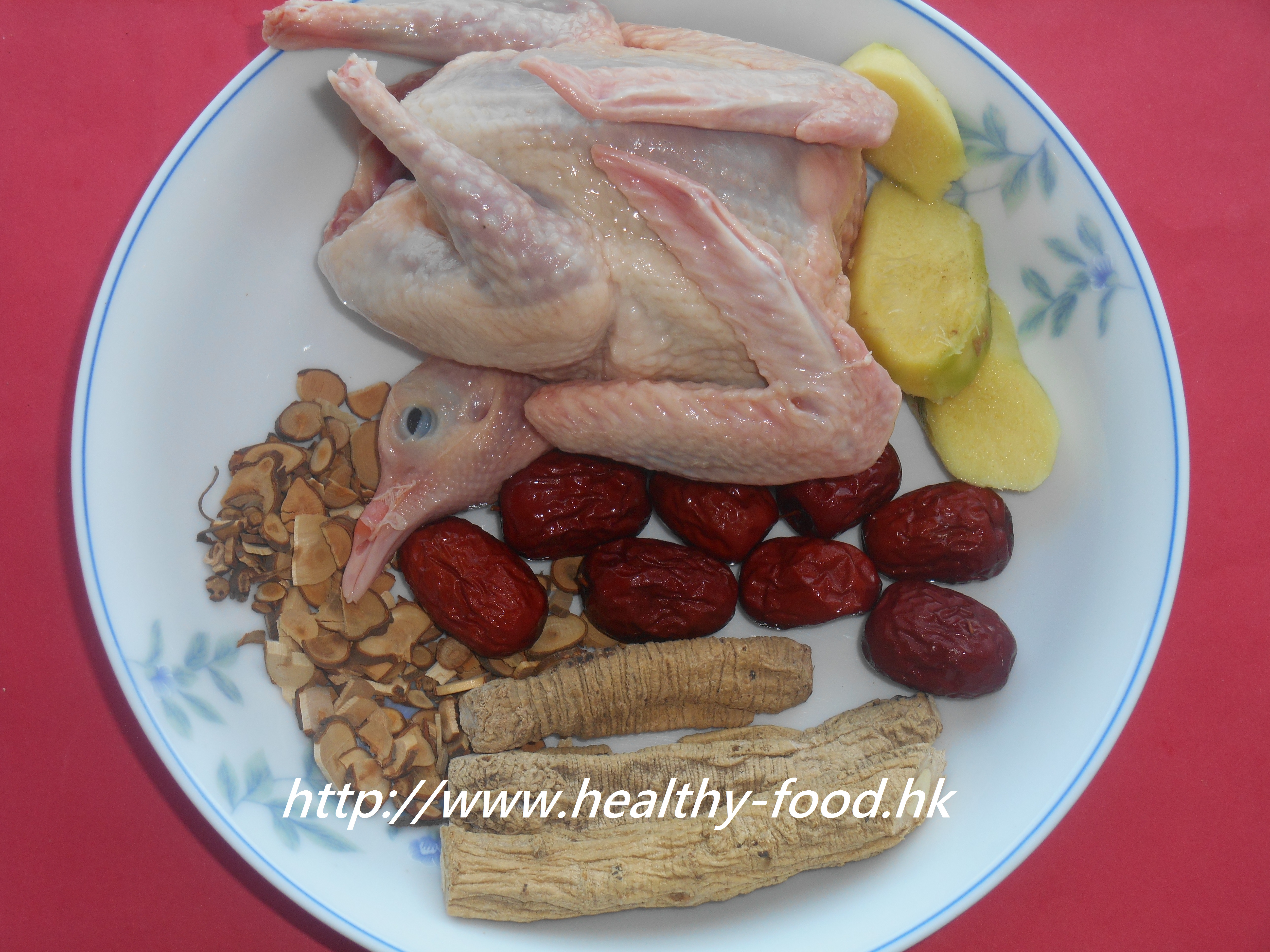
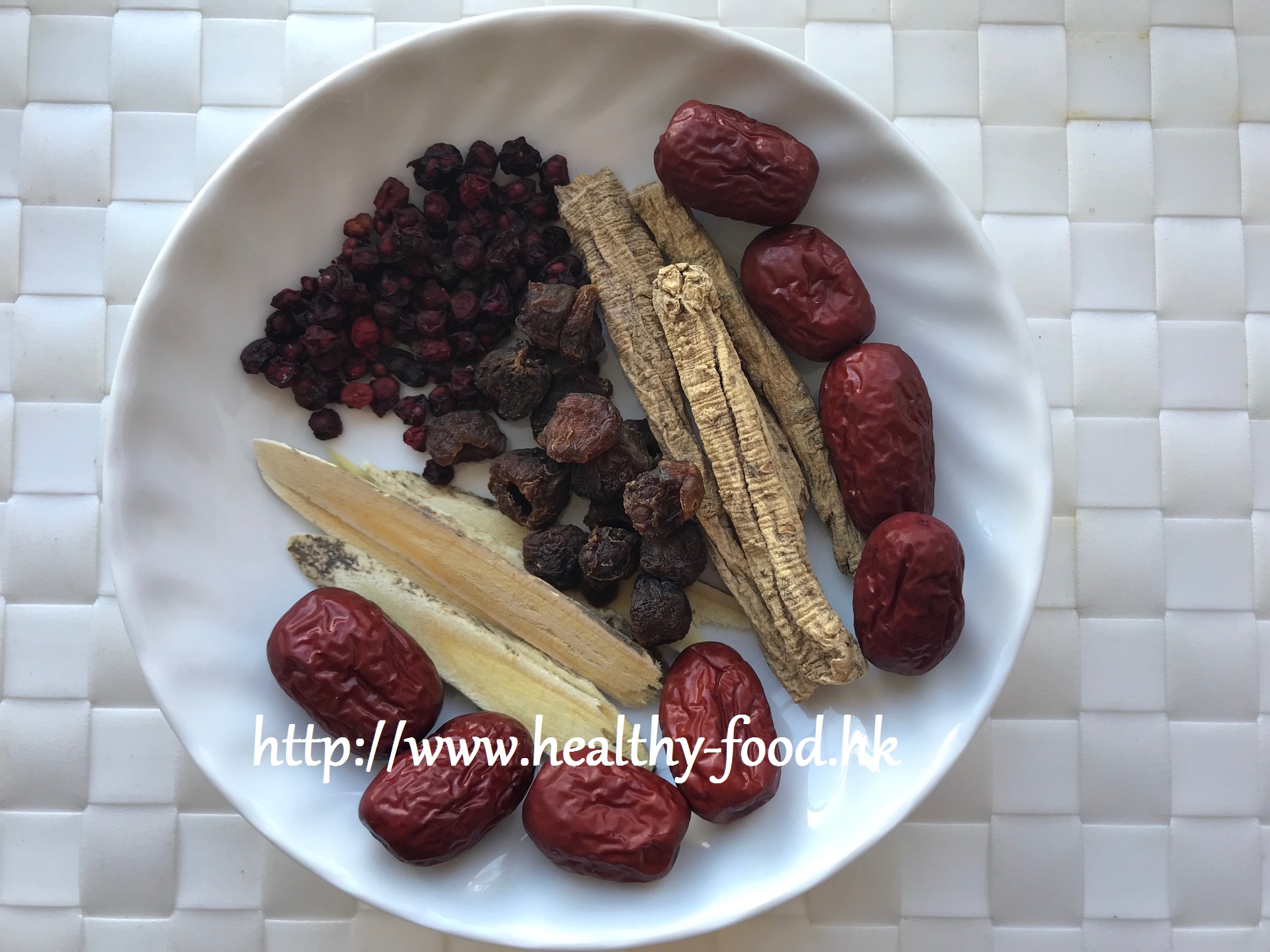
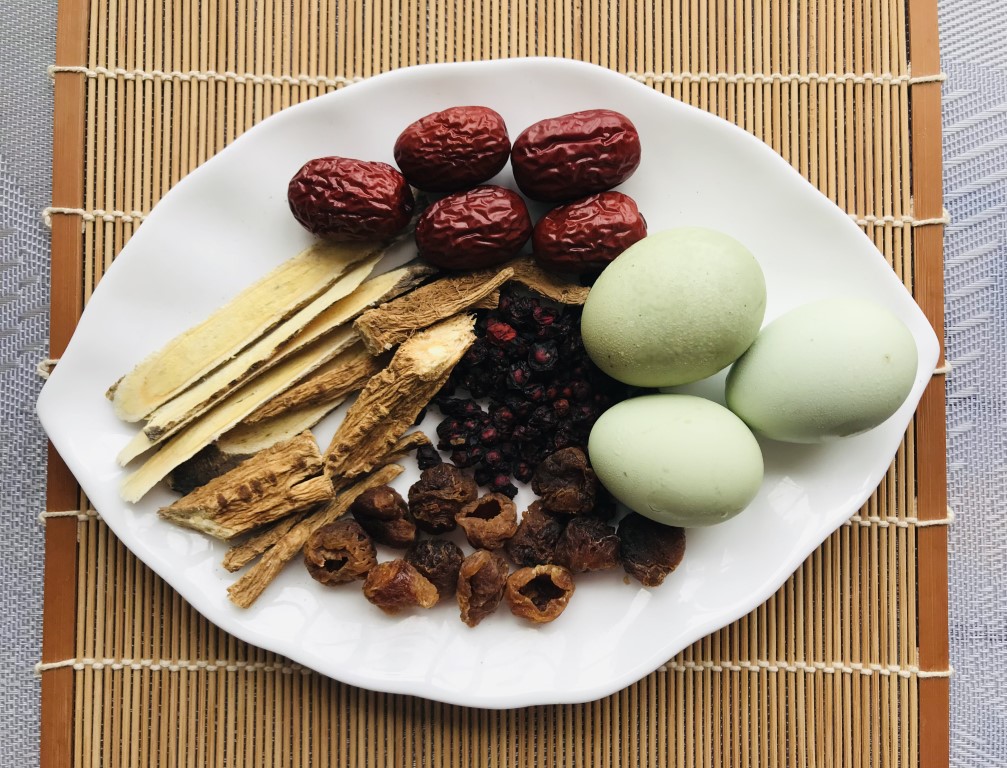
- Codonopsis root (dang shen): The main qi-tonifying herb; associated with supporting the spleen and lung, increasing red blood cells and haemoglobin; a gentler substitute for ginseng
- Ophiopogon root (mai dong): Nourishes heart and stomach yin; clears mild internal heat; keeps the body from becoming too dry when tonified
- Schisandra berries (wu wei zi): “Five-flavour berry”; astringes and consolidates — prevents qi and fluids from leaking away as sweating; associated with calming the nervous system and supporting liver function; used in research for supporting recovery from hepatitis and for reducing fatigue
- Red dates (hong zao): Warm, sweet; nourish blood and harmonise the formula
- Fresh ginger: Warms the stomach; aids digestion; prevents the formula from sitting heavily
- Chicken: Neutral protein base; stewing concentrates the essence into the broth
Ingredients (1 pot / 1–2 servings)
| Ingredient | Amount | Notes |
|---|---|---|
| Codonopsis root (dang shen) | ~20 g (5 qian) | Rinse and soak briefly |
| Ophiopogon root (mai dong) | ~12 g (3 qian) | Rinse and soak briefly |
| Schisandra berries (wu wei zi) | ~12 g (3 qian) | Rinse |
| Fresh ginger | 3 slices | |
| Red dates | 6 pieces | Pitted |
| Chicken | 1/4 whole chicken | Washed, cut into pieces, blanched |
| Water | 2 bowls (for stewing — approximately 400 ml) | Added boiling hot |
Method
- Wash and cut the chicken into pieces. Blanch briefly in boiling water to remove impurities, then rinse.
- Pit the red dates.
- Rinse the codonopsis, ophiopogon root, and schisandra berries; soak briefly.
- Place all ingredients in a stewing pot (a ceramic or clay double-boiler insert works well). Pour in 2 bowls of boiling water.
- Set the stewing pot inside a larger pot of water (double boiler). Steam-stew for 3 hours.
- Serve the broth and eat the chicken. Consume over the course of one day.
Bro Niu’s tips
This soup supports the nervous system and is associated in Chinese medicine with regulating the heartbeat and calming the spirit. However, food therapy is only a supportive measure — anyone with a diagnosed cardiac condition must see a doctor and follow prescribed treatment. Do not rely on this soup alone.
If you have a cough but no fever, you can still drink this soup. If you are on heart medication, leave at least a 2-hour gap between the medication and the soup.
Community questions answered (selected)
-
Q (Qchan): My friend’s grandmother is 90 and her doctor says her mild heart irregularity is just natural ageing. She gets dizzy when she moves around. What can she eat regularly? Bro Niu: You can make a lighter version without stewing — simmer codonopsis 3 qian, ophiopogon 5 qian, schisandra 3 qian, and red dates 4 pieces in 5 bowls of water until reduced to 2 bowls. Take 3 doses in a row, then 2 doses per week if it seems to help.
-
Q (rainbowlam): My mother feels her heart is weak, gets breathless walking and talking, and often sighs. She has low blood pressure. What can I make? Bro Niu: Try codonopsis, ophiopogon, schisandra, and licorice root (zhi gan cao), 3 qian each, in 5 bowls of water simmered to 2 bowls. Take 3–4 doses in a row. If she improves, once or twice a week is fine going forward.
-
Q (reader): What exactly is wu wei zi (schisandra)? Bro Niu: Schisandra (wu wei zi) means “five-flavour berry” — it contains all five tastes. It nourishes the lungs and kidneys, generates fluids, and stops sweating. In recent years it has also been found useful for supporting recovery from hepatitis, reducing elevated liver enzymes, and improving sleep and stamina.
Published December 26, 2017 · Adapted and translated for Nourilo from a traditional home-kitchen recipe. Approx. 4 min read.