Soups
Potato, Fresh Lotus Seed and Chicken Breast Soup
Traditionally associated with warming and supporting the spleen and stomach, easing stomach pain, and improving appetite
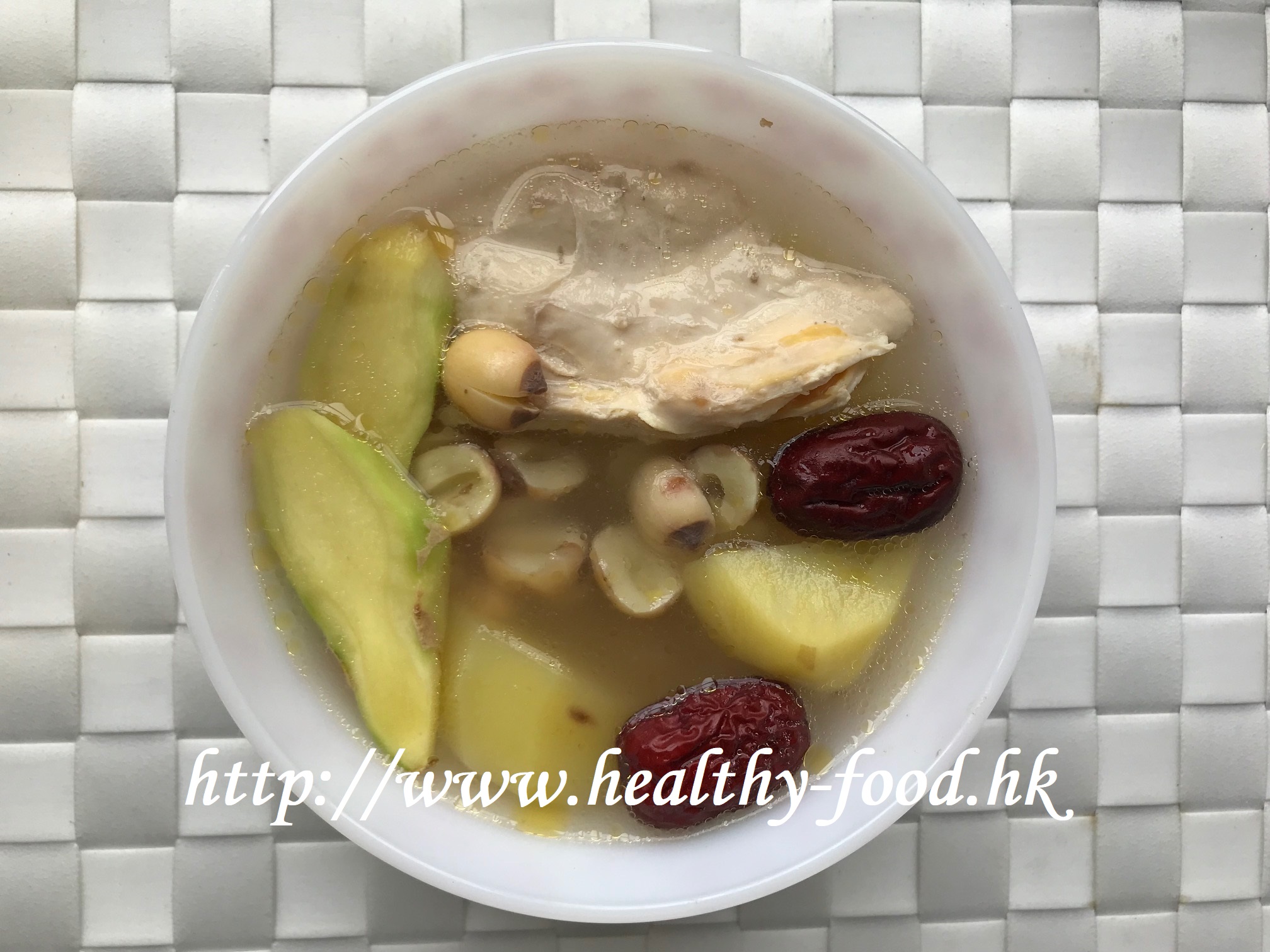
Why people make this soup
In busy modern life, eating irregularly, skipping breakfast, and habitually drinking large iced drinks can gradually weaken what traditional food therapy calls the “spleen and stomach” system — the body’s digestive center. The early signs are mild: reduced appetite, a cold sensation in the stomach area, some bloating. As the pattern continues, the stomach pain becomes a recurring dull ache that worsens when hungry or when cold or raw food is eaten, accompanied by loose stools, fatigue, and cold hands and feet. The everyday potato — often overlooked as a therapeutic ingredient — is one of the most accessible stomach-tonifying foods in the tradition. It is associated with building spleen energy, easing stomach cramping, and nourishing the body gently. Paired with fresh lotus seeds (which support the spleen and kidney), warming ginger, red dates, and lean chicken breast, this soup delivers targeted support in a form that is easy for even a compromised stomach to handle.
Who it suits / who should be cautious
- Particularly well-suited to people with a cold, weak stomach: those who often feel cold in the stomach, have a dull recurring ache, loose stools, poor appetite, or fatigue
- Also helpful for people who drink cold beverages habitually and notice digestive decline
- Suitable for most adults and children with the same pattern
- If you are running a fever or have an acute infection with significant internal heat, this warming soup is best postponed until you recover
Why these ingredients (the food-therapy logic)
- Potato (shu zai): Although we think of it as simply a starch, potato is associated in traditional food therapy with tonifying the spleen and qi, easing cramp-like stomach pain, and building energy — a gentle tonic for a weakened digestive system
- Fresh lotus seeds (xian lian zi), cored: Support spleen and kidney function; the core (lotus heart) is removed here because it has a cooling effect that works against the warming intent of this soup
- Fresh ginger (sheng jiang): A warming ingredient that supports stomach function, eases nausea, and disperses cold from the digestive system
- Red dates (hong zao): Warm, sweet, and associated with tonifying qi and blood, calming the mind, and supporting spleen and stomach function
- Chicken breast: Lean, mild protein that gently nourishes without being difficult to digest or overly heating
Ingredients (4 bowls)
| Ingredient | Amount | Notes |
|---|---|---|
| Potato | 3 medium | Peel and cut into chunks |
| Fresh lotus seeds (xian lian zi) | 75 g | Remove the inner bitter core |
| Fresh ginger | 3 slices | |
| Red dates (hong zao) | 5 pieces | Pit before use |
| Chicken breast | 1 whole | Blanch before use |
| Water | 7–8 bowls (approx. 1.5 L) | Simmered down to about 4 bowls |
Method
- Peel potatoes and cut into chunks.
- Shell fresh lotus seeds and remove the inner bitter green core from each seed.
- Pit the red dates.
- Blanch the chicken breast in boiling water for 2 minutes; drain, rinse, and set aside whole or cut into pieces.
- Place all ingredients in a pot with about 7–8 bowls of cold water. Bring to a boil.
- Lower heat and simmer for 1.5 hours until liquid reduces to approximately 4 bowls.
- Serve warm. Eat the soup and the solids.
Bro Niu’s tips
Fresh lotus seeds are in season during summer and can be found at Chinese or Asian grocers — their flavor is sweeter and more delicate than dried. When removing the core, the small, bitter green center of each seed pops out easily with a toothpick or skewer. In this recipe, the core is removed because its cooling nature would counteract the soup’s warming intent. However, the cores need not be wasted — steep them in boiling water as a tea, which traditionally supports calming the heart and lowering blood pressure.
If fresh lotus seeds are not available, 37 g (1 liang) of dried lotus seeds works well as a substitute.
People with a cold-constitution stomach are encouraged to also make a warming habit of drinking brown sugar or black sugar ginger tea regularly — simple to make and effective for gradually warming and settling the stomach over time.
Community questions answered (selected)
-
Q (芝): Can I substitute black-bone chicken and leave the lotus seed core in? Bro Niu: Yes, black-bone chicken works well here. As for the core — leaving it in gives the soup a mildly bitter note and adds a heart-heat-clearing quality; that slight bitterness is quite acceptable once it is cooked.
-
Q (Ming): I just finished my period and have stomach gas and low blood, red swollen gums, occasional dizziness, and dry eyes. I am full of energy in the mornings but lose all energy by midday. What can I take? Bro Niu: Try a congee made with century egg and salted lean pork to calm deficiency heat. Or simmer bean sprouts (half a jin), snow fungus (xue er, 2 qian), tofu (1 block), and dried oysters with lean pork for 1.5 hours — eat the solids and drink the soup. This nourishes yin, reduces deficiency fire, and is generally strengthening. Take 2–3 times a week.
Published August 14, 2021 · Adapted and translated for Nourilo from a traditional home-kitchen recipe. Approx. 4 min read.