Soups
Plantain Herb, Coix Seed and Lean Pork Soup
traditionally used to clear heat, support urination, ease eye discomfort, and reduce dampness
Why people make this soup
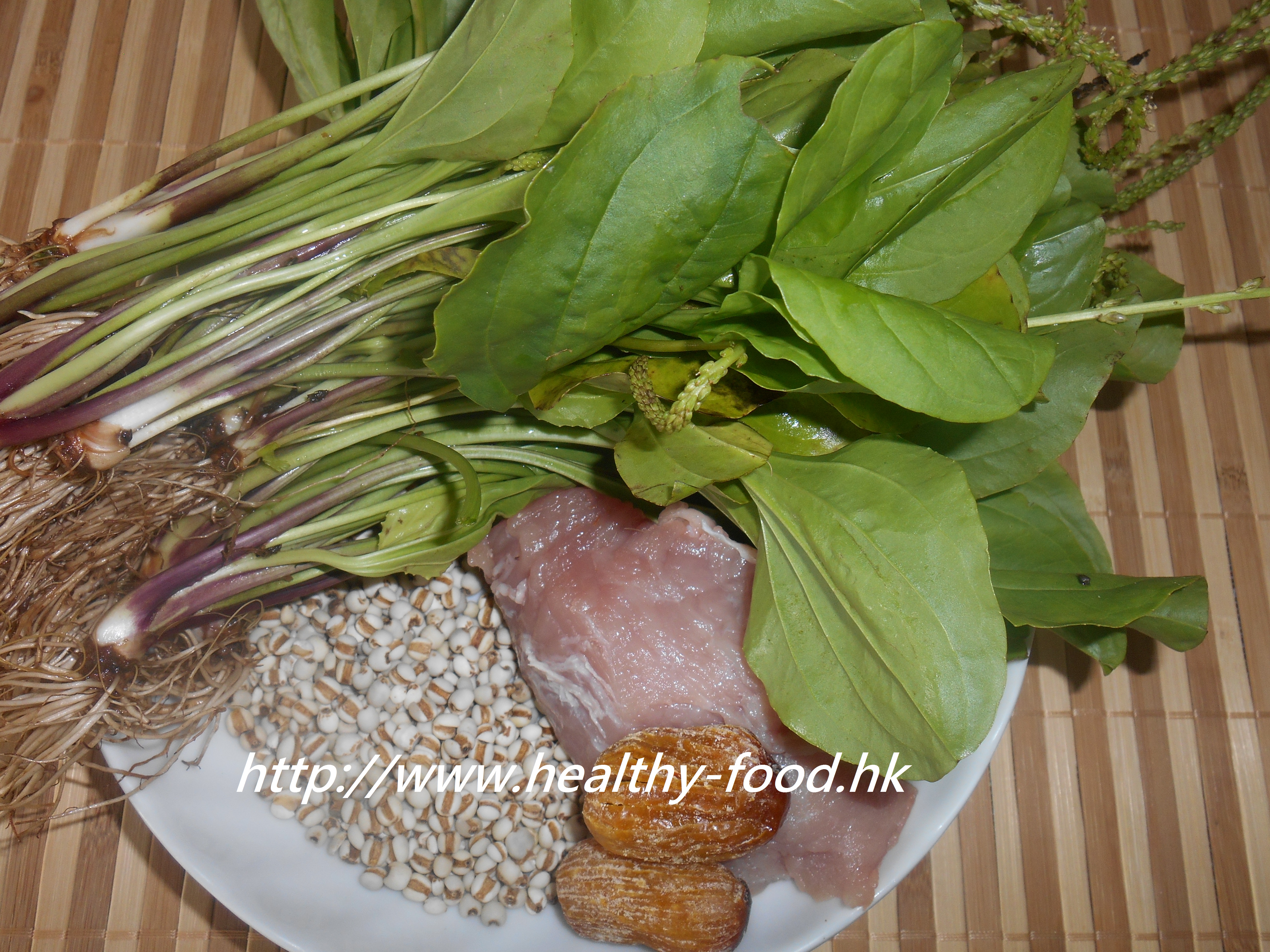
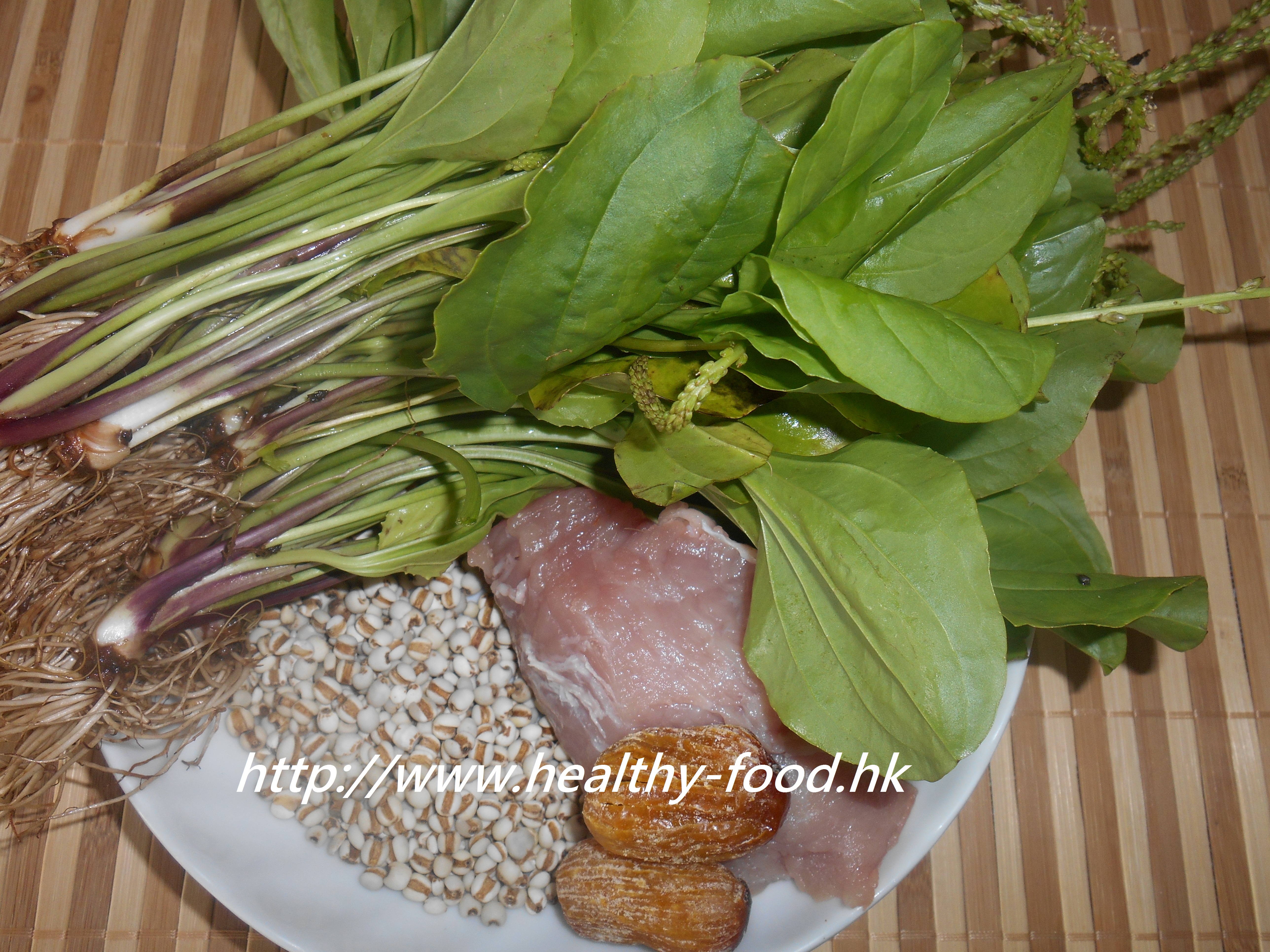
Plantain herb (Plantago asiatica, called che qian cao in Chinese) is a common wild green that grows along roadsides, river banks, and field edges. You might recognise it as the low-growing rosette plant with oval ribbed leaves and thin flower spikes that appears in lawns all over the world. In Chinese food therapy, it has a long history as a cooling, diuretic herb.
Bro Niu pairs it with coix seed and lean pork for a clear, light soup that is traditionally used during hot and humid weather, or whenever someone in the family has signs of excess heat — foggy or gritty eyes, scanty or uncomfortable urination, or general summer heaviness. The soup is mild enough to serve to children and was particularly appreciated for “golden urine” (a sign of concentrated, heated urine) in little ones. Fresh plantain herb is available at Chinese or Asian grocers; dried herb works equally well as a substitute.
Who it suits / who should be cautious
- Suitable for most adults and children (infants from about 15 months onwards can have half a bowl)
- Good for summer dampness and heat, scanty urination, eye heat and discharge, and general heaviness
- Also traditionally noted for people with excessive vaginal discharge (dampness-type)
- Plantain herb is cooling and mildly laxative; suitable for those with constipation
- People with a cold constitution or weak spleen and stomach should not use this soup regularly
- Pregnant women should avoid — this is listed as a caution in Bro Niu’s notes
- If urinary symptoms are severe or accompanied by blood, fever, or pain, please see a doctor rather than relying on food therapy alone
Why these ingredients (the food-therapy logic)
- Plantain herb (che qian cao, 車前草, Plantago asiatica): Cool and sweet in nature. Traditionally associated with clearing heat, promoting urination, resolving phlegm and coughs, clearing liver heat to brighten the eyes, and relieving joint dampness. Fresh is ideal; dried can be substituted.
- Raw coix seed (sheng yi mi, 生薏米): Drains dampness and heat, supports the spleen, and eases water retention. Raw (uncooked) coix seed has a stronger dampness-clearing action than the cooked/roasted variety.
- Honey dates (mi zao, 蜜棗): Added for gentle sweetness to balance the cooling, bland ingredients and make the soup more palatable.
- Lean pork: Provides protein and a savoury base for the broth; helps the body sustain itself during a heat-clearing protocol.
Ingredients (4 bowls)
| Ingredient | Amount | Notes |
|---|---|---|
| Fresh plantain herb | 3–4 liang (~115–150 g) | Trim roots; wash and cut into sections |
| Raw coix seed | 2 liang (~75 g) | Rinse and soak briefly |
| Honey dates | 2 pieces | |
| Lean pork | 6 liang (~225 g) | Cut into thick slices; blanch in boiling water, rinse |
| Water | 8 bowls (~2 litres) |
Method
- Trim the roots off the fresh plantain herb. Wash thoroughly and cut into sections.
- Rinse and briefly soak the coix seed.
- Slice the lean pork into thick pieces. Blanch in boiling water for 1–2 minutes, then rinse to remove impurities.
- Place the coix seed, honey dates, and blanched pork in a large pot. Add 8 bowls of water. Bring to a full boil over high heat.
- Once boiling, add the plantain herb sections.
- Reduce heat to medium-low and simmer for about 1.5 hours.
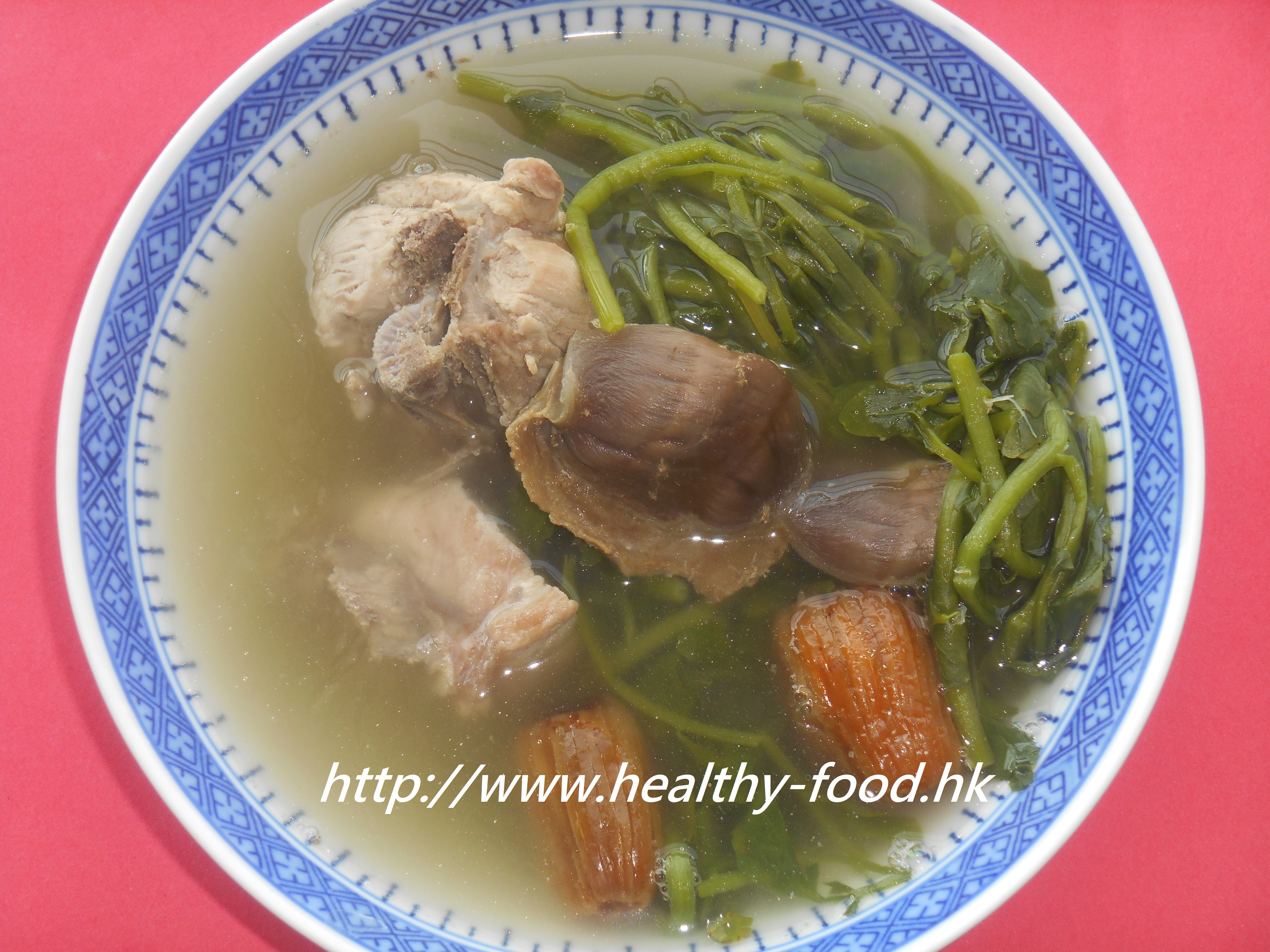
- Serve warm. The soup should be pale and clear with a mild, slightly sweet flavour.
Bro Niu’s tips
- Remove the roots before cooking; all remaining parts of the plant (stems, leaves, seed heads) can be used.
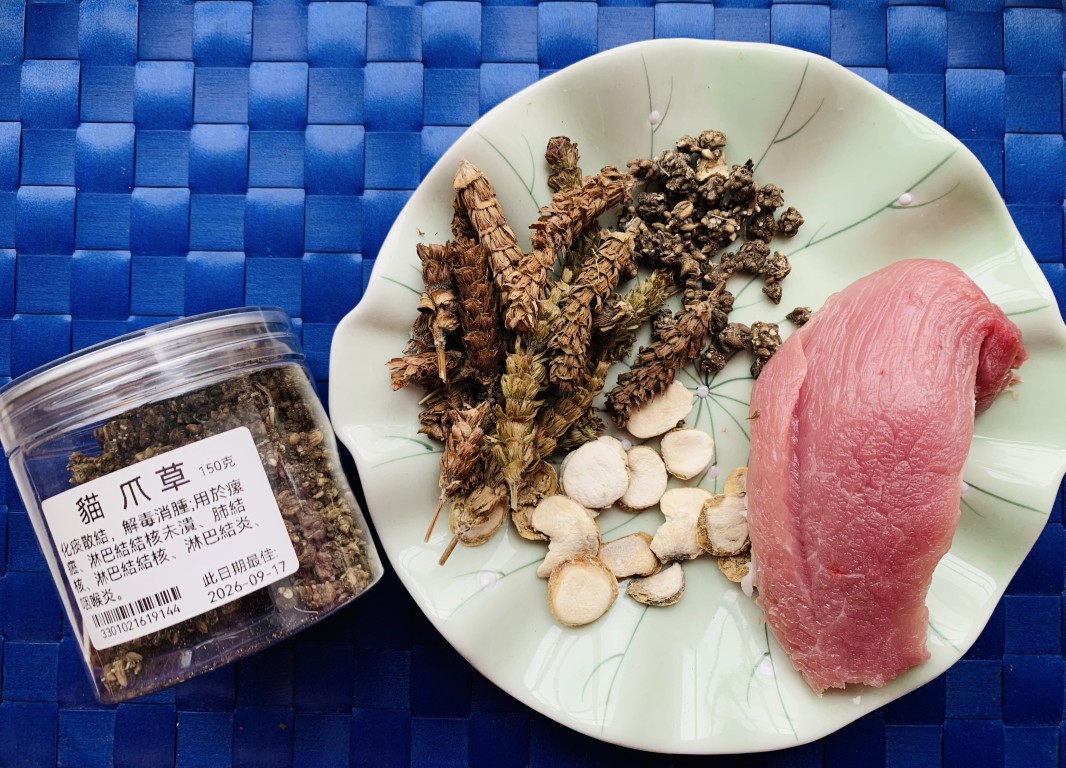
- If fresh plantain herb is unavailable, dried plantain herb works too. It is available at Chinese or Asian grocers and online. Alternatively, 2 liang of fresh corn silk (su mi xu) makes a good substitute — it is also diuretic and anti-inflammatory.
- When taking alongside antibiotics, wait at least 2 hours after the medication before drinking the soup — no conflict.
- The tender young leaves of plantain are especially effective as a gentle laxative, so constipation sufferers can benefit too.
- People with a cold or weak spleen and stomach, and pregnant women, should not drink this soup.
Community questions answered (selected)
-
Q (小玲): I have a urinary tract infection with fever, blood in urine, and I am taking antibiotics. Can I drink this soup alongside the antibiotics? Bro Niu: For a urinary tract infection it is important to treat it properly and fully. You can drink this soup alongside antibiotics — wait about 2 hours after the medication before drinking. Also avoid triggering foods: bamboo shoots, shellfish, scaleless fish, goose, mango, pineapple, and pork jowl. Drink plenty of water daily and avoid fried or spicy food.
-
Q (Suisuki): My baby is 15 months old. Can she drink this soup? Bro Niu: From about 15 months, a baby can have half a bowl.
-
Q (黄太): My child is 4 years old and has a urinary tract infection. I can only find dried plantain herb — can I use that, and is it okay to drink while on antibiotics? Bro Niu: Dried plantain herb works fine. You can also substitute fresh corn silk (about 2 liang) — both help urination and have anti-inflammatory properties. It is safe to drink alongside antibiotics.
Published May 28, 2016 · Adapted and translated for Nourilo from a traditional home-kitchen recipe. Approx. 4 min read.