Soups
Pepino Melon, Carrot, Water Chestnut and Goji Berry Soup
traditionally associated with generating fluids, relieving thirst and dryness, and supporting blood sugar and blood pressure balance
Why people make this soup
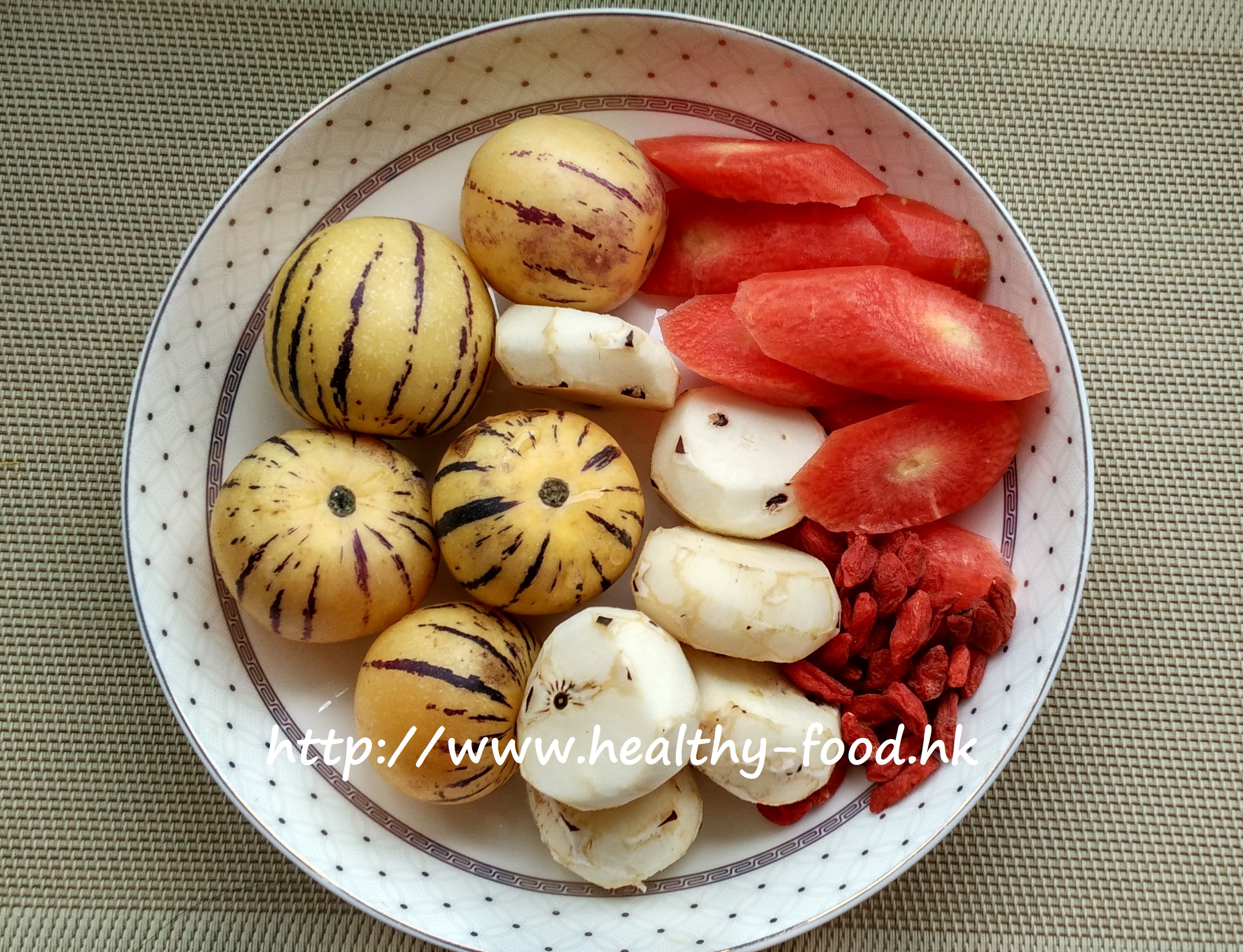
Pepino melon (ren shen guo, literally “ginseng fruit”) is a South American fruit — Solanum muricatum — that is sometimes mislabelled in shops as a different exotic variety. One thing worth knowing when selecting it: look for fruits that have just started to show a slight yellow tinge on the skin. Fully pale or white fruits are underripe and will taste bland, but once the skin begins to yellow, the fruit becomes genuinely sweet and pleasant.
In Chinese food therapy, pepino melon is considered to nourish the spleen, moisten the stomach, generate fluids, and relieve thirst. Modern nutritional research has highlighted its relatively high selenium content — a trace mineral with well-documented antioxidant properties. This, combined with its traditional associations with blood sugar and blood pressure regulation, makes it an interesting ingredient for a supportive soup during recovery or for those managing chronic conditions.
Who it suits / who should be cautious
- Suitable for all ages — meat or vegetarian; just omit the meat if keeping it plant-based
- Particularly valued as a supplementary drink for those undergoing chemotherapy or radiotherapy
- Associated with supporting those who have high blood pressure, diabetes, or are prone to dryness and thirst
- Mild and gentle; Bro Niu notes the whole family can enjoy this regularly
Why these ingredients (the food-therapy logic)
- Pepino melon (ren shen guo): Traditionally associated with generating fluids, tonifying the spleen, easing mental fatigue, and calming the nerves. Its high selenium content is associated with antioxidant protection and immune support. Some traditional sources associate regular consumption with anti-ageing effects and support for blood glucose stability.
- Carrot (hong luo bo / gan sun): Adds natural sweetness to the broth; high in beta-carotene (provitamin A), which supports eye health and immune function.
- Water chestnut (ma ti): Cool and moistening; traditionally used to clear heat, generate fluids, and relieve thirst — balances the soup and provides a refreshing quality.
- Goji berries (gou qi zi): Rich in antioxidants (particularly zeaxanthin and beta-carotene); traditionally used to nourish liver and kidney yin, brighten the eyes, and tonify blood. A classic wellness ingredient used across all age groups.
Ingredients (3 bowls)
| Ingredient | Amount | Notes |
|---|---|---|
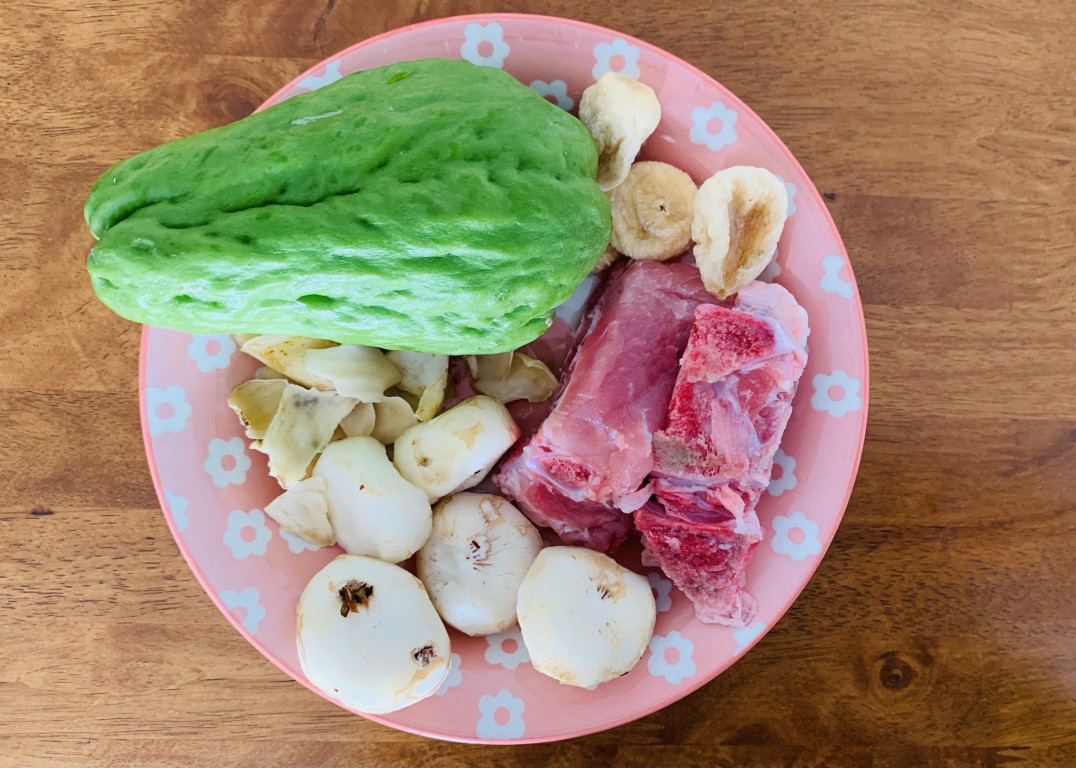
| Pepino melon (ren shen guo) | 5–6 pieces | Wash, halve; choose ones with slight yellow colouring for best flavour |
| Carrot (hong luo bo) | 1 medium | Peel and cut into chunks |
| Water chestnuts (ma ti) | 6 pieces | Peel, rinse, and halve |
| Goji berries (gou qi zi) | ~11 g (3 qian) | Rinse briefly |
Method
- Wash the pepino melons and cut each in half.
- Peel the carrot and cut into chunks; peel and rinse the water chestnuts.
- Rinse the goji berries briefly.
- Combine all ingredients in a pot with 6 bowls of water.
- Bring to a boil, then reduce heat and simmer for 1 hour until reduced to about 3 bowls.
- Serve the broth and eat the ingredients — both are nutritious.
Bro Niu’s tips
When selecting pepino melons, choose ones that have just started to show a slight yellow tinge on the skin — fully pale or white fruits are underripe and will taste bland. Pepino melon is available at Chinese or Asian grocers and some specialty supermarkets. This soup works well as both a hot soup and as a room-temperature drink after it has cooled. For those undergoing radiotherapy who experience digestive upset or loose stools, the soup is still suitable. Scallops (dried) can be added to almost any soup as a flavour-enhancing ingredient, but sea cucumber (hai shen) is more suited to soups designed around nourishing-type ingredients like Chinese yam and goji berries, rather than this more refreshing blend.
Community questions answered (selected)
-
Q (Cindy): My brother is having his first round of chemotherapy for oesophageal cancer. He has very poor appetite and cannot chew or swallow solid food. How can he take in nutrition? Bro Niu: You can make a small millet and goji berry congee, then blend it smooth in a blender for him to take — it supports the spleen and has some anti-cancer properties. Also try cooking sea cucumber every day — blend it smooth after cooking. Sea cucumber can be combined with Chinese yam, goji berries, shiitake mushrooms, and lean pork for a nourishing, blendable soup. Sea cucumber has well-supported cancer-inhibiting properties; a good quality one soaked at home will not have a strong smell.
-
Q (Miss Mok): I am undergoing radiotherapy and have been experiencing diarrhoea. Can I still have this soup? I have also been making it as a stewed dish — is that fine? Bro Niu: Yes, this soup is fine during radiotherapy. Also, dendrobium (shi hu) is gentle and neutral in nature, nourishes yin, and supports qi — it is well suited for use during radiotherapy.
Published January 23, 2018 · Adapted and translated for Nourilo from a traditional home-kitchen recipe. Approx. 4 min read.