Home-Style Dishes
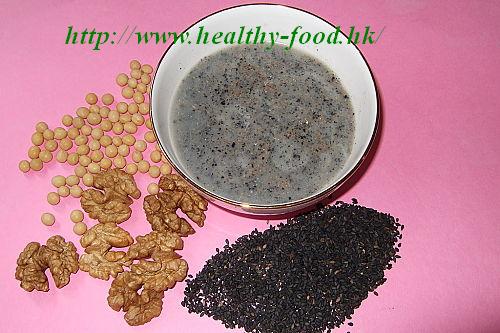
Black Sesame & Walnut Paste
traditionally associated with supporting bone density, nourishing the kidneys, and moistening the intestines
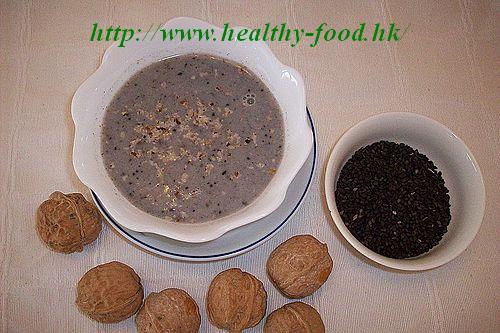
Why people make this paste
Bone density loss is something that quietly accelerates with age — and for women after menopause, that process speeds up considerably. Chinese food therapy has long valued black sesame seeds for their remarkable mineral content: calcium, phosphorus, and iron, along with vitamins A, D, and E, make them one of the most nutritionally dense plant foods in the traditional diet. Walnuts bring their own set of benefits: in Chinese medicine, their kidney-strengthening reputation is backed up by a surprisingly good mineral profile, including calcium, iron, and phosphorus, which are exactly the minerals that maintain bone density and slow age-related bone loss. Together, ground into a warm, silky paste, these two ingredients make a dessert that is genuinely pleasurable and quietly supportive of long-term bone health.
Who it suits / who should be cautious
- Especially well suited for older adults concerned about bone density, and for women approaching or past menopause
- Also beneficial for anyone with habitual constipation, dry skin, or a tendency toward lower-back weakness
- Can be eaten by pregnant women and during the postpartum period — black sesame is considered safe and nourishing in these phases
- Walnuts are high in healthy fats; those monitoring fat intake should enjoy in moderate portions
- People who are prone to heat or who have a warm constitution can add a splash of fresh milk, which slightly moderates the warming nature of the walnuts
Why these ingredients (the food-therapy logic)
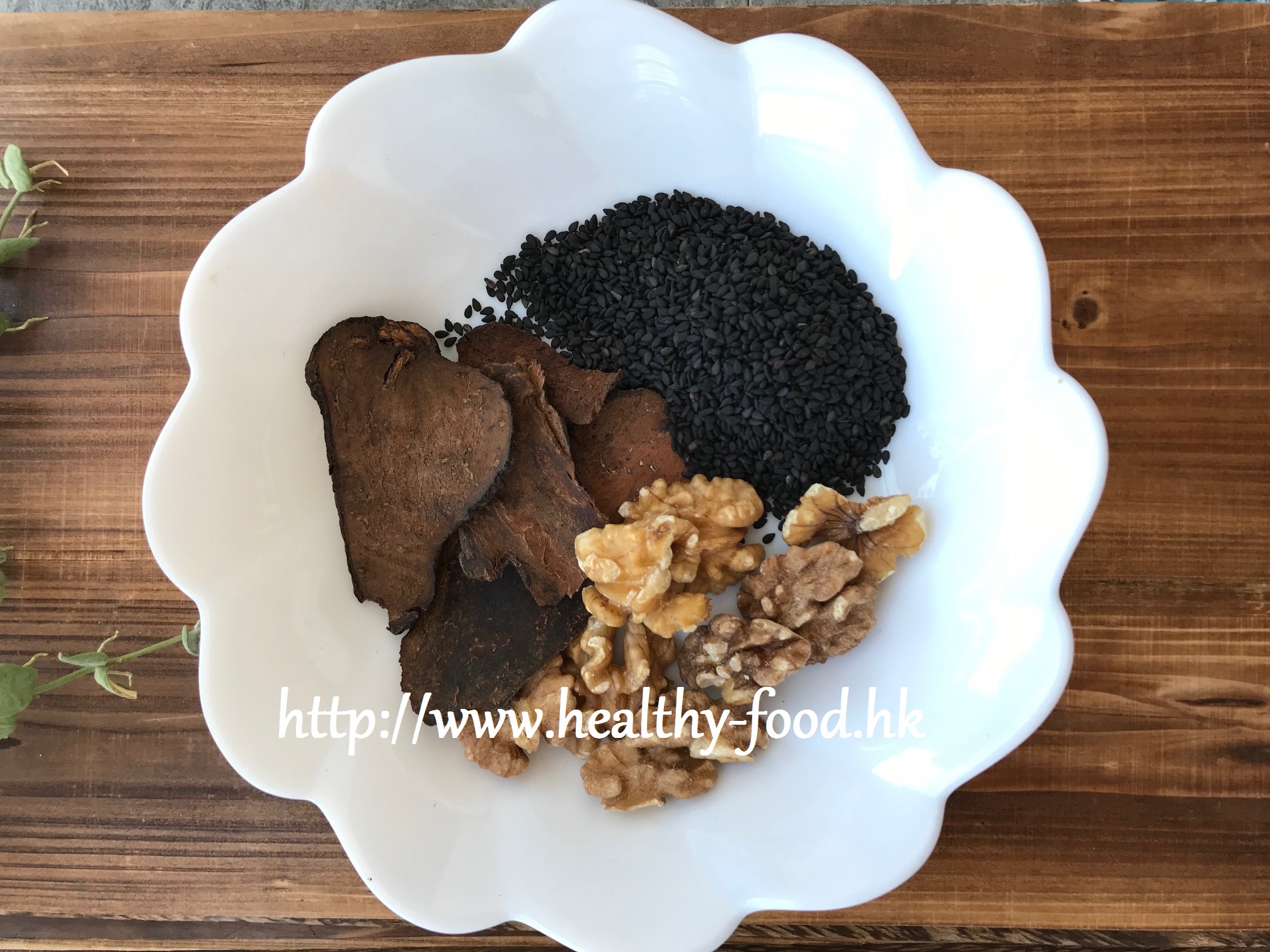
- Black sesame seeds (hei zhi ma): Rich in calcium, phosphorus, iron, and fat-soluble vitamins; in Chinese food therapy, associated with nourishing the kidneys and liver, supporting hair health, lubricating the intestines, and — according to modern nutritional analysis — directly contributing to bone mineral density maintenance
- Walnut kernels (he tao): Associated in Chinese medicine with tonifying the kidneys and strengthening the lower back; from a nutritional standpoint, contain meaningful amounts of calcium, iron, and phosphorus; their healthy fats also support brain function and skin elasticity
- Cornstarch: Gives the paste its characteristic smooth, slightly gelatinous texture — the kind that coats the tongue warmly and makes this feel like proper Cantonese tong sui (sweet soup dessert)
- Fresh milk (optional): Adds creaminess and extra calcium; also slightly moderates any warming quality
Ingredients (4–6 servings)
| Ingredient | Amount | Notes |
|---|---|---|
| Black sesame seeds (hei zhi ma) | 150 g | Sort for debris; toast in dry pan until fragrant |
| Walnut kernels (he tao rou) | 150 g | Toast lightly in dry pan until fragrant |
| Cornstarch (su mi dian fen) | ~2 tablespoons | Mix with a little cold water before adding |
| White sugar (bai tang) | To taste | Add gradually |
| Fresh milk (optional) | A splash | For extra creaminess |
| Water | ~4–5 cups | Adjust for desired thickness |
Method
- Pick through the black sesame seeds to remove any debris. Toast them in a dry (ungreased) pan over medium heat, stirring constantly, until fragrant and just beginning to pop. Transfer to a plate and allow to cool.
- Toast the walnut kernels in the same dry pan until lightly golden and fragrant. Allow to cool.
- Place the cooled sesame seeds and walnuts in a blender or food processor. Add a little water and blend to a fine paste. Add more water gradually until you achieve a smooth, pourable consistency.
- Pour the blended mixture into a pot. Bring to a boil over medium heat, stirring constantly to prevent sticking.
- Mix the cornstarch with a small amount of cold water until smooth. While stirring the paste, pour in the cornstarch mixture gradually until the paste reaches your preferred thickness.
- Add white sugar to taste and stir through. If using milk, add it now and stir well.
- Serve warm in bowls.
Bro Niu’s tips
The toasting step is non-negotiable — both the sesame seeds and walnuts taste significantly better when properly roasted. The transformation is remarkable: raw sesame has almost no flavour, but toasted sesame is one of the most fragrant things in the kitchen. Adding a splash of fresh milk at the end makes the paste extra smooth and silky. Beyond being a lovely autumn and winter dessert, this paste genuinely supports skin moisture — so it is worth considering as a regular treat in dry or cold seasons. For best results, eat it a few times a week over a sustained period rather than once and forgetting about it.
Community questions answered (selected)
-
Q (苏太): I am in my first trimester of pregnancy. Can I eat sesame paste? I also enjoy red bean soup. Are these safe during pregnancy? Bro Niu: Black sesame paste is beneficial and perfectly safe during pregnancy and postpartum recovery. Red bean soup is also fine — just keep it from being too sweet to avoid gestational diabetes. During pregnancy, enjoy the foods you naturally crave, as long as you avoid papaya, barley (yi mi), and hawthorn (shan zha), which can cause uterine contractions.
-
Q (mimi): This recipe uses 150 g each of sesame and walnut — how many servings does that make? And if I find it too heaty, what can I add to balance it? Bro Niu: This makes 4–6 servings depending on portion size. If you find it warming, adding a splash of fresh milk will moderate the warming nature nicely.
Published March 6, 2010 · Adapted and translated for Nourilo from a traditional home-kitchen recipe. Approx. 4 min read.