Soups
Mulberry Goji Quail Soup
traditionally associated with nourishing the liver and kidneys to support vision
Why people make this soup
Bro Niu points out that many young children today have weakening vision simply because they spend so much time with eyes fixed close to a phone or tablet screen. Traditional food therapy has long drawn on red, yellow, and deep-purple foods to support the visual system: mulberries, blueberries, tomatoes, pumpkin, carrots, and beetroot are all on the list. When fresh mulberries come into season in spring, it is a good time to make this soup as a seasonal treat. The combination of mulberry, goji berry, red date, and quail is said in traditional food therapy to tonify the liver and kidneys — organs that, in Chinese medicine, are strongly associated with eye function. Those who experience blurry vision, lower-back aching, light-headedness, or ringing ears may find this soup a pleasant addition to a regular menu.
Who it suits / who should be cautious
- Suitable for the whole family; serves 3–4 people.
- Particularly associated with those experiencing screen fatigue, blurry vision, early signs of age-related visual decline, or hearing discomfort.
- Quail is sometimes called “the ginseng of the animal world” in Chinese food tradition — a gentle, all-round tonic.
- If quail is unavailable, silkie chicken or lean pork makes a suitable substitute.
Why these ingredients (the food-therapy logic)
- Mulberry (sang shen zi): Rich in anthocyanins; traditionally associated with tonifying yin and blood, supporting the eyes, and slowing age-related decline.
- Goji berry (gou qi zi): One of the most widely used eye-supporting foods in Chinese tradition; associated with nourishing the liver and kidney and brightening vision.
- Red jujube (hong zao): Traditionally used to tonify qi, nourish blood, and harmonise the formula.
- Quail (an chun): Traditionally described as tonifying the five internal organs; considered a gentle, nourishing protein source suitable for regular use.
Ingredients (3–4 bowls)
| Ingredient | Amount | Notes |
|---|---|---|
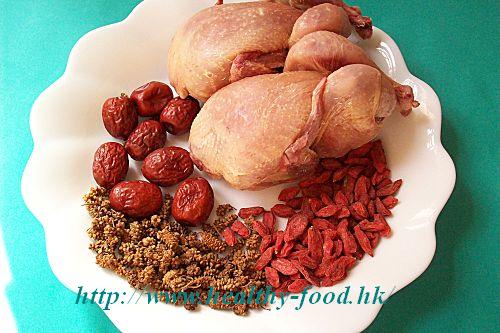
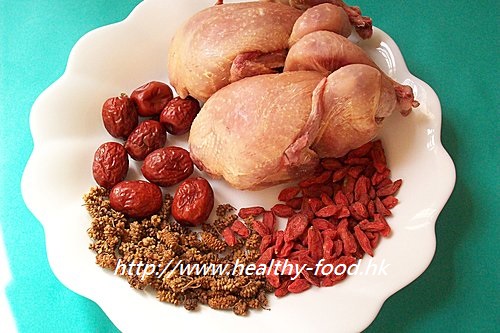
| Dried mulberries | 19 g (5 qian) | Or 75 g fresh in season |
| Goji berries | 19 g (5 qian) | Rinse before use |
| Red jujube dates, pitted | 8 pieces | |
| Frozen quail | 2 birds | Defrost fully first |
| Water | about 1.5 litres |
Method
- Defrost the quail completely, then blanch in boiling water for 2–3 minutes, drain and rinse.
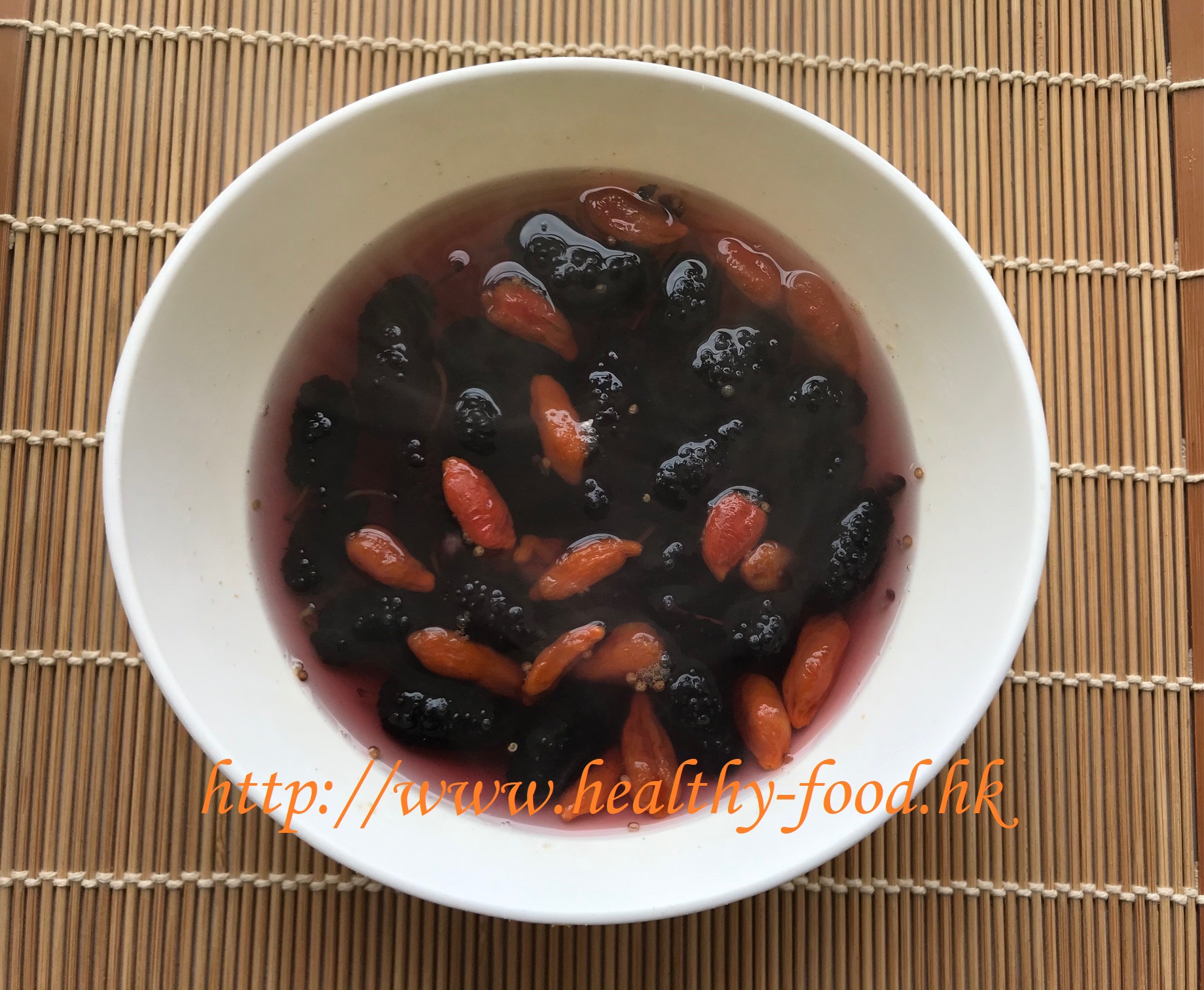
- Rinse the mulberries, goji berries, and pitted dates.
- Place all ingredients together in a pot and cover with about 1.5 litres of water.
- Bring to a boil, then reduce to a gentle simmer and cook for about 2 hours.
- Serve with the soup and eat the quail and softened berries.
Bro Niu’s tips
Fresh mulberries in season give the best flavour and colour — if you can find them, use about 75 g (2 liang) instead of the dried version. Quail is Bro Niu’s preferred choice here, but silkie chicken or a good piece of lean pork both work well if quail is hard to find.
Community questions answered (selected)
-
Q (reader): How many people does this recipe serve? Bro Niu: This recipe is for 3–4 people.
-
Q (阿宝): I have had ringing in my ears for four or five years, recently getting worse, and my vision is a little blurry — what might help? Bro Niu: You might try a prepared medicine called Ming Mu Di Huang Wan from a Chinese herb shop — take it for a few bottles. For food therapy, a soup of he shou wu (5 qian), goji berries and mulberries (3 qian each), black beans (1 liang), and south jujube dates (6 pieces) cooked with lean pork twice a week may be helpful.
-
Q (杰仔妈咪): My daughter is 7 and has had astigmatism since age 3. Can I cook this soup for her regularly? And is lean pork as effective as quail? Bro Niu: Yes, she can have this soup as a regular dish. Lean pork is a reasonable substitute. For stronger eye support, I would also suggest a soup with jin chan hua (cicada flower fungus, 3 qian), goji berries (4 qian), rui ren rou (3 qian), and carrot — this combination has been showing very good results for eye health.
Published April 2, 2014 · Adapted and translated for Nourilo from a traditional home-kitchen recipe. Approx. 3 min read.