Tonic Drinks & Waters
Mulberry, Southern Date, and Goji Berry Rice Wine
traditionally associated with nourishing blood, supporting eye health, calming the mind, and maintaining dark hair
Why people make this wine
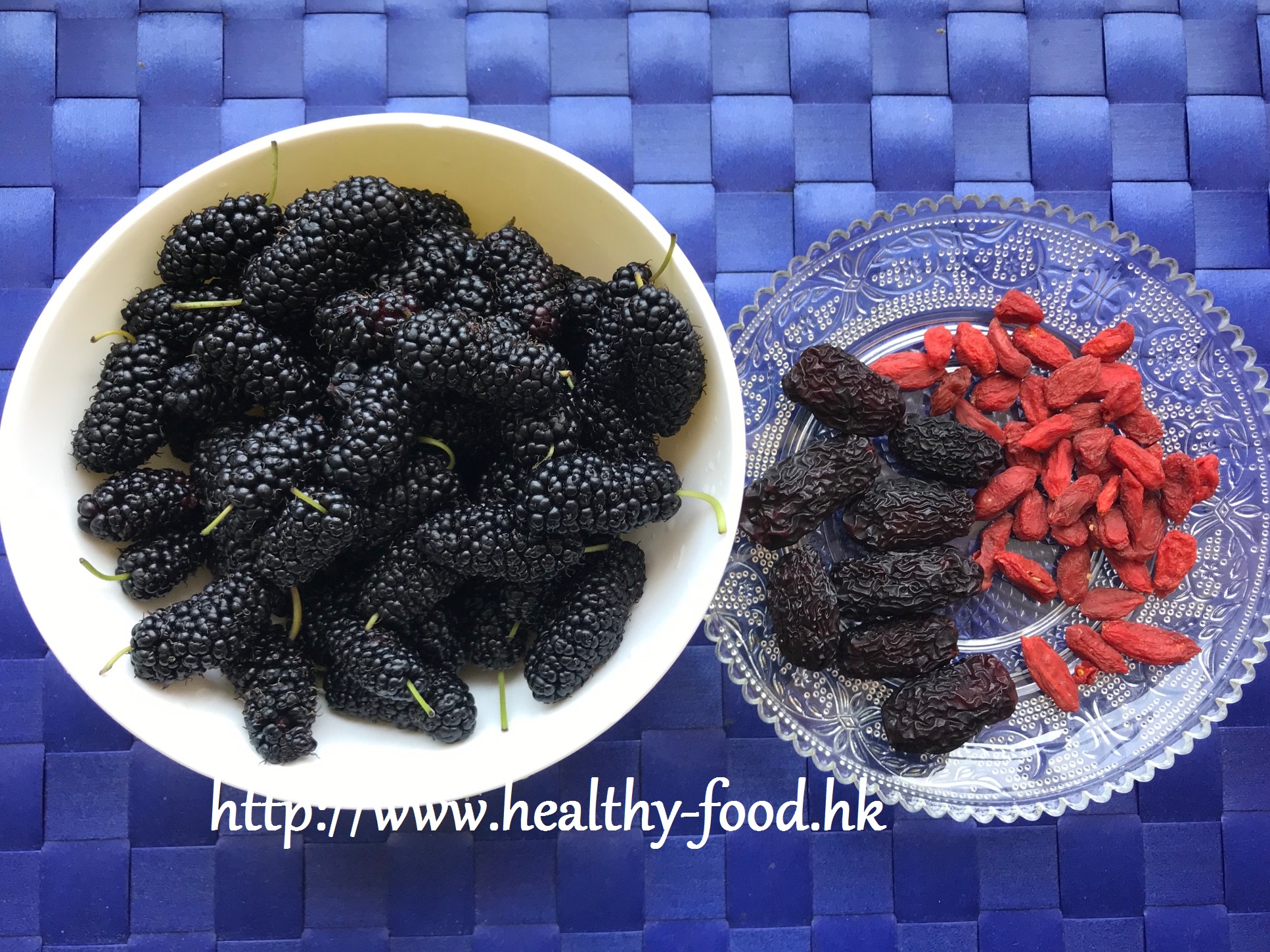
The entire mulberry tree has something to offer in Chinese food-therapy — the leaves, the branches, the root bark, and the fruit are all used. The fruit (mulberry berries) is particularly prized for its ability to nourish the liver and kidneys, support blood production, and brighten the eyes. Fresh mulberries make a wonderfully fragrant base for this tonic wine — steep them with goji berries and southern dates in rice wine and, after a month of quiet maturing in a glass jar, the result is a flavourful drink that makes a useful small tipple before dinner for those who experience blood deficiency patterns: tired eyes, dizziness, early-greying hair, restless sleep, or generalised fatigue.
Who it suits / who should be cautious
- Suitable for adults who can consume alcohol in small amounts; especially associated with benefit for those with eye fatigue, premature greying, mild anaemia, dizziness, poor sleep, or rheumatic joint discomfort
- Drink in small amounts before dinner — a small shot glass is sufficient; this is not a beverage to drink freely
- Avoid if you do not consume alcohol, are pregnant, or have liver disease
- Those who prefer a non-alcoholic version can brew mulberries, goji berries, and southern dates as a tea or soup instead
Why these ingredients (the food-therapy logic)
- Mulberries (sang shen zi): Rich in anthocyanins (the deep purple pigment) and antioxidants; in food-therapy, associated with nourishing the liver and kidneys, supporting blood formation, improving cognitive function, maintaining hair colour, and even traditionally noted as a support for male fertility (historically included in formulas for oligospermia). Both fresh and dried versions work in this recipe.
- Goji berries (gou qi zi): Nourish the liver, brighten the eyes, and support kidney function; add natural sweetness to balance the wine.
- Southern dates (nan zao): A mildly warming blood tonic; gentler and less heating than red dates, good for nourishing the heart and calming the mind.
- Rice wine (mi jiu): Acts as a natural extractant for the beneficial compounds in the fruit; also traditionally considered to warm the channels and support circulation.
Ingredients (1 bottle; ready after 1 month)
| Ingredient | Amount | Notes |
|---|---|---|
| Fresh mulberries | ~150 g (1 basket) | Or use dried mulberries (~75 g / 2 liang) |
| Goji berries | ~38 g (1 liang) | Soak and rinse |
| Southern dates | 8–10 pieces | Rinse well |
| Rice wine | ~600 ml (1 jin) | Glutinous rice wine (nuo mi jiu) for best flavour |
Method
- Wash the fresh mulberries gently. Soak and rinse the goji berries. Rinse the southern dates.
- Arrange all the fruit together on a plate and steam over boiling water for 5–7 minutes.
- Remove from heat and allow to cool completely — this is important: placing warm fruit into the wine will cause it to turn sour and spoil.
- Once fully cooled, transfer the steamed fruit into a clean glass jar.
- Pour rice wine over the fruit until the jar is approximately 90% full.
- Seal and store in a cool, dark place. The wine will be ready to drink after approximately 1 month.
- Serve a small amount before dinner as a tonic.
Bro Niu’s tips
This wine has a lovely natural sweetness and fruity aroma. The key step to get right is letting the steamed ingredients cool completely before adding the wine — warm fruit will cause the wine to ferment and turn sour. Drink only a small amount before meals; this is not meant to be consumed like a regular beverage. If fresh mulberries are out of season, use dried mulberries (about 2 liang) with the same method.
Community questions answered (selected)
-
Q (reader): Can I use dried mulberries instead of fresh? Bro Niu: Yes, use about 2 liang of dried mulberries (choose the deeply black-coloured variety). The method is the same.
-
Q (Ming): Can I make this in winter? I have a cold constitution, and my complexion is a little yellow. Bro Niu: You can use dried mulberries in winter — choose the darkest-coloured dried berries you can find, about 2 liang.
-
Q (Karen ho): What type of alcohol should be used and how much alcohol content? Bro Niu: Glutinous rice wine (nuo mi jiu) or plain rice wine works well. Glutinous rice wine has a better flavour.
Published May 3, 2020 · Adapted and translated for Nourilo from a traditional home-kitchen recipe. Approx. 3 min read.