Soups
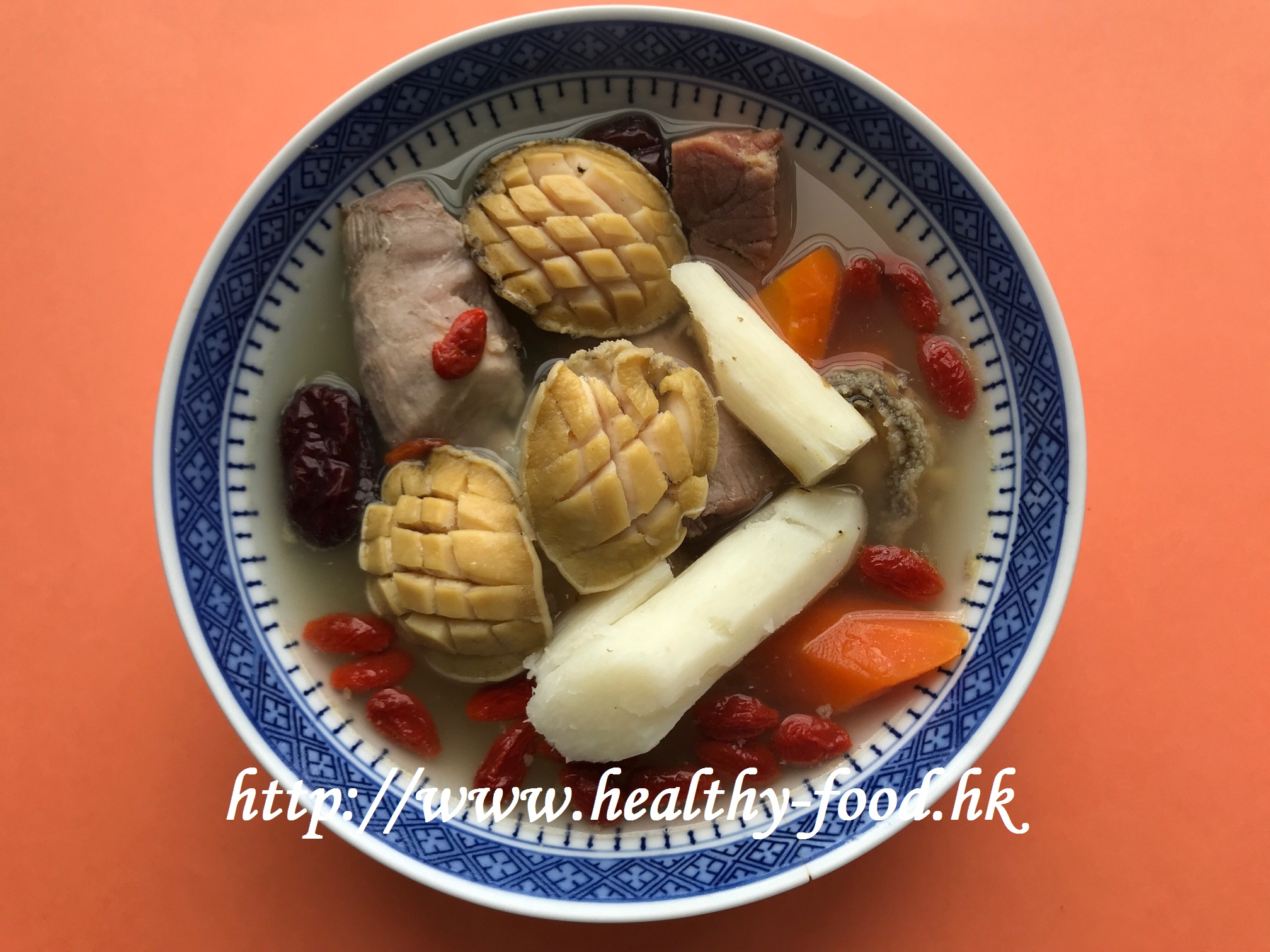
Fresh Yam, Goji and Abalone Soup
Traditionally nourishes the liver, brightens the eyes, supports complexion, and may help with blood pressure management
Why people make this soup
Fresh abalone — particularly the small nine-hole variety (jiu kong xian bao) — is considered one of the most potent yin-nourishing, liver-supporting ingredients in Chinese food therapy. Its traditional association with eye health is so strong that it is sometimes called “the eye-brightening fish” (ming mu yu). Even the shell has a use: in traditional Chinese medicine, the cleaned abalone shell is called shi jue ming, and is used as a medicine to help calm liver yang, ease dizziness, and support blood pressure regulation.
Paired with fresh Chinese yam, goji berries, and sweet carrot, this soup is both deeply nourishing and naturally attractive in colour. The optional addition of a little Jinhua ham gives the broth remarkable depth of flavour without any heaviness.
Who it suits / who should be cautious
- Suitable for the whole family; particularly good for those with declining vision, rough or dull skin, high blood pressure, or diabetes
- Excellent post-surgery recovery soup for those who are physically depleted
- If Jinhua ham is unavailable, simply omit it — or substitute a small piece of dried scallop (yao zhu) for a similar umami effect
- Goji berries can be added at the end of cooking if you prefer to eat them intact
Why these ingredients (the food-therapy logic)
- Fresh abalone (xian bao yu): Nourishes liver and kidney yin; traditionally associated with cooling heat in the liver, brightening vision, and supporting skin quality; rich in iodine, zinc, and omega-3 fatty acids
- Abalone shell (shi jue ming): Cleaned and simmered, the shell traditionally “calms the liver and anchors yang” — used in Chinese medicine to ease dizziness and support blood pressure regulation in people with liver-yang rising
- Fresh Chinese yam (xian huai shan): Supports the spleen, stomach, and kidneys; helps generate fluids; a gentle tonic safe for daily use
- Goji berries (gou qi zi): Nourish liver and kidney yin; strongly associated with supporting eye health and vision; add natural sweetness
- Carrot (hong luo bo): Rich in beta-carotene; traditional and modern perspectives both connect it to eye health and antioxidant support
- Jinhua ham: Adds savoury depth and a rounded flavour to the broth without heaviness; a classic Cantonese soup flavour enhancer
Ingredients (4 bowls)
| Ingredient | Amount | Notes |
|---|---|---|
| Fresh Chinese yam (xian huai shan) | 4 liang (~150 g) | Peel and cut into pieces |
| Goji berries (gou qi zi) | 3 qian (~9 g) | Soak briefly; add towards end if you want to eat them |
| Carrot | 1 medium | Peel and cut into pieces |
| Small fresh abalone | 6–8 pieces | Ask your fishmonger to clean, gut, and shell them |
| Fresh ginger | 2 slices | |
| Red dates | 4 | Pit them |
| Lean pork or pork shin | To taste | Blanch before adding to soup |
| Jinhua ham | A small piece | Optional; adds umami; dried scallop works as an alternative |
Method
- Peel the fresh yam and carrot; cut into chunks.
- Rinse the goji berries briefly and soak in water.
- Pit the red dates.
- Blanch the lean pork and Jinhua ham together in boiling water; drain.
- Combine all ingredients (except goji berries if adding later) with 8 bowls (~2 litres) of water.
- Bring to a boil, reduce heat, and simmer for 1.5 hours until reduced to about 4 bowls.
- Add goji berries in the final 10 minutes if you prefer them soft but intact.
- Serve with the soup solids.
Bro Niu’s tips
If you want the additional benefit for blood pressure, scrub the abalone shells thoroughly and add them to the pot together with the other ingredients — they will contribute their traditionally calming properties to the broth. This soup is gentle enough for the whole family and also suitable for people recovering from surgery. If Jinhua ham is unavailable, a small piece of dried scallop (yao zhu) gives a similar depth of flavour. This soup can also be slow-simmered in a clay pot or slow cooker for 2–3 hours.
Community questions answered (selected)
-
Q (Jess): Does this soup need to be cooked in a pot, or can it be steamed? Bro Niu: Yes, this soup can be steamed — about 2–3 hours in a covered pot works well.
-
Q (reader): What if I have no Jinhua ham? Bro Niu: No problem — just leave it out. The soup will still be delicious. Adding a small piece of dried scallop (yao zhu) gives a similar savoury depth.
-
Q (Elain): What are the benefits of mulberry-goji-chrysanthemum tea? I have organic goji berries that have been sitting unused for six months — what can I do with them? Bro Niu: Mulberry-goji-chrysanthemum tea clears the liver and brightens the eyes — better suited to those with a warm constitution, though not considered overly cooling. Drink about three times a week. For goji berries, you can pair them with American ginseng (hua qi shen) and ophiopogon root (mai dong) for a nourishing tea, or with red dates and longan (yuan rou) for a warming blood-building drink. Browse the flower tea section for more ideas.
Published February 28, 2021 · Adapted and translated for Nourilo from a traditional home-kitchen recipe. Approx. 4 min read.