Soups
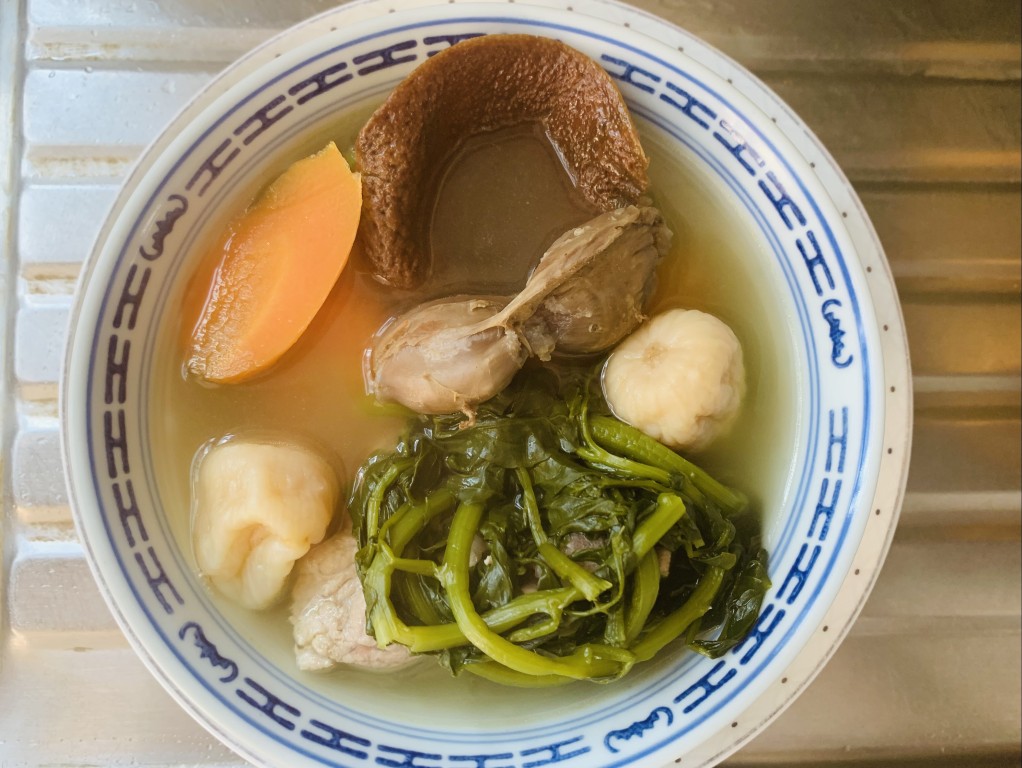
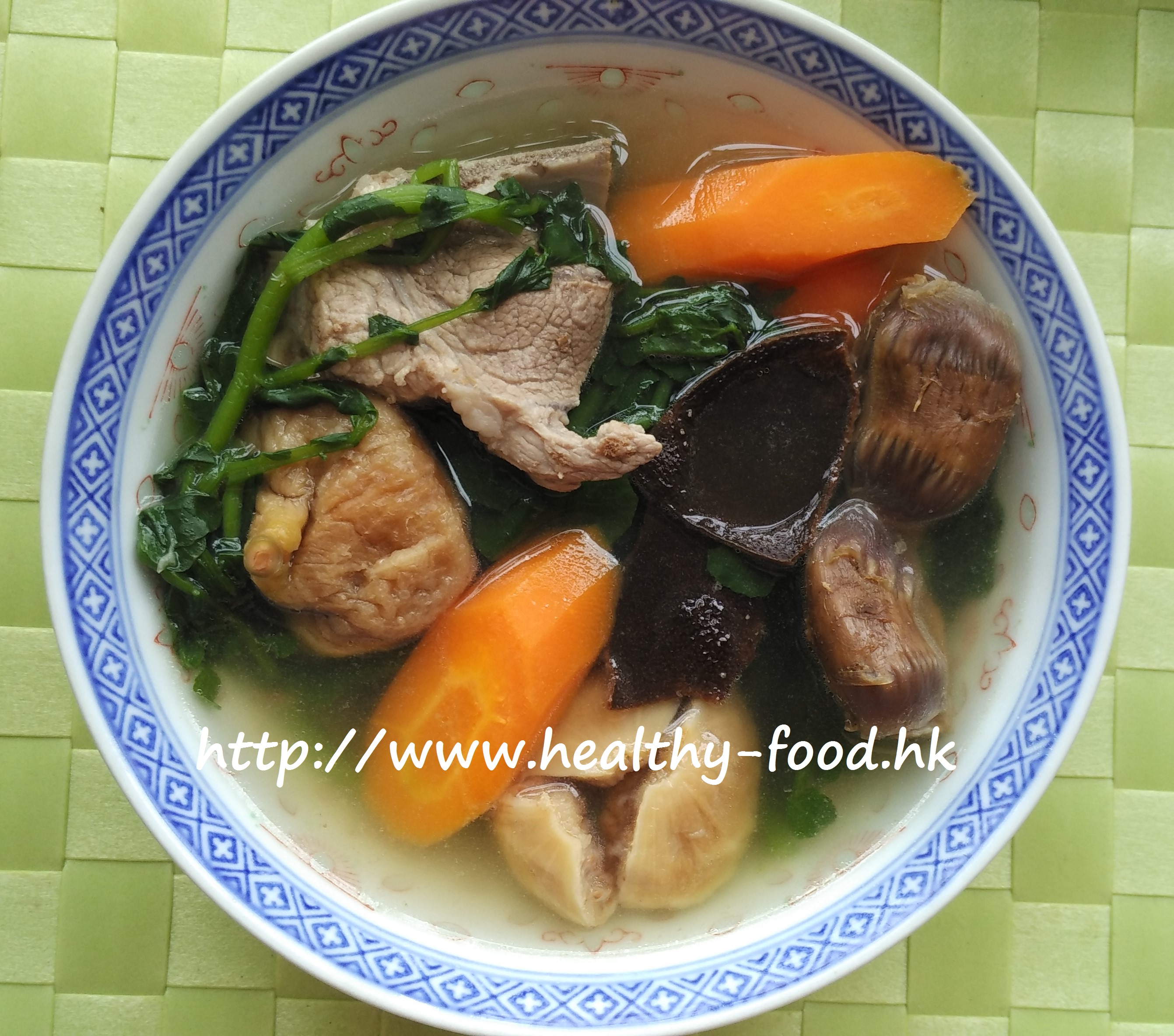
Watercress, Carrot, Dried Duck Gizzard & Pork Bone Soup
traditionally used to clear lung heat, ease coughs, and support healthy bowel function
Why people make this soup
Watercress (xi yang cai) has peak season in spring and early summer, and Cantonese families have long considered it one of the finest vegetables for clearing heat from the lungs. When you have been eating too much fried or grilled food and find yourself feeling hot, irritable, and coughing with a dry or phlegmy sensation, this soup is the traditional go-to remedy. The key technique is to add the watercress only when the broth is already boiling — adding it too early can make the soup taste bitter and astringent. Cooked for the right amount of time with dried duck gizzard (a digestive tonic) and carrot (which supports the bowel), this soup becomes a genuine all-round family broth: clear, sweet, nourishing, and safe even for pregnant women.
Who it suits / who should be cautious
- Suitable for the whole family, including children and pregnant women (provided it is simmered for the full 1.5–2 hours)
- Best for heat-type coughs — with yellow or thick phlegm, dry throat, irritability after hot food
- If dried duck gizzard is unavailable, dried scallops (yao zhu) make a good substitute and add a different but pleasant flavour
- Fresh duck gizzard can also be used; oyster mushrooms (hao chi) are another substitute
Why these ingredients (the food-therapy logic)
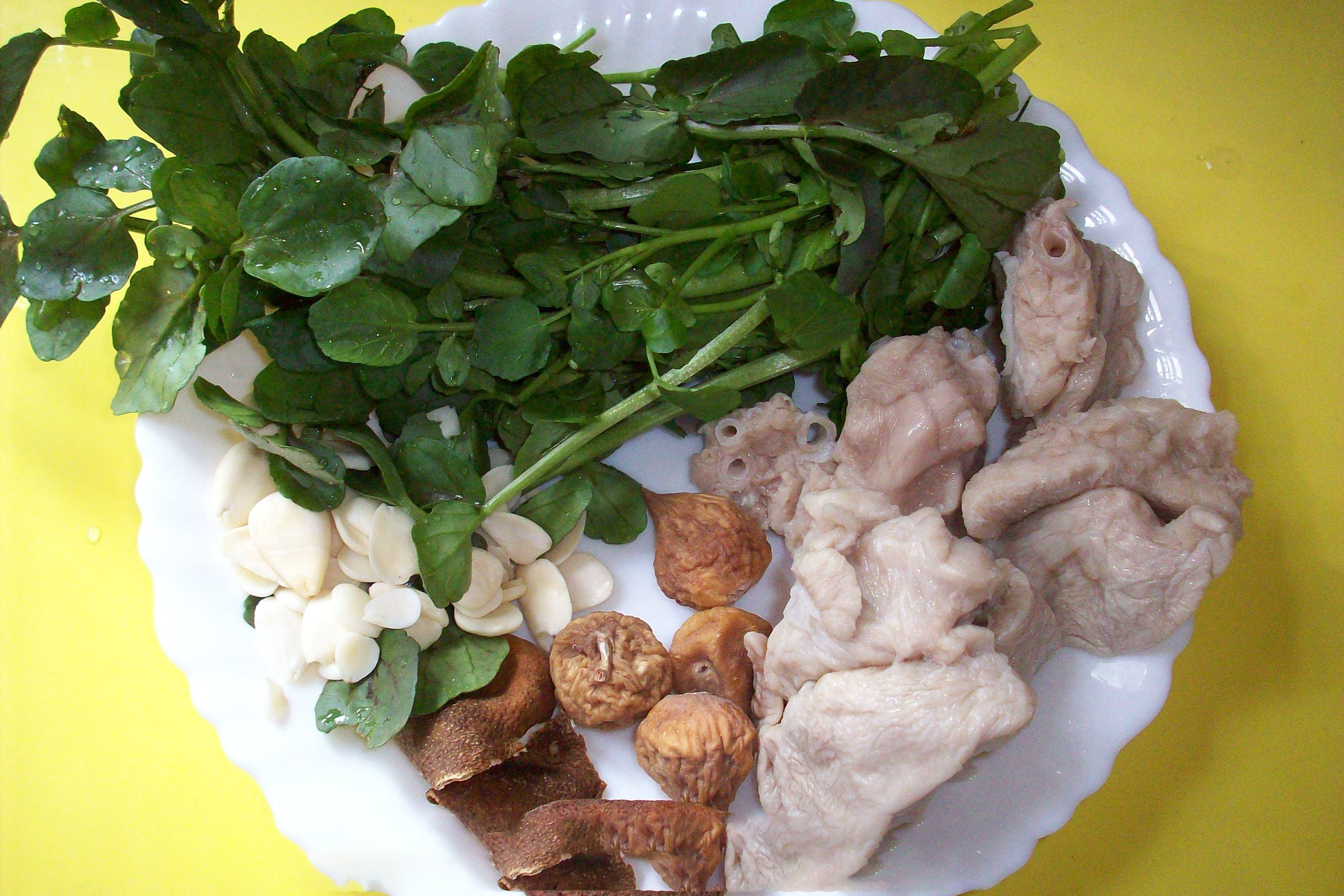
- Watercress (xi yang cai): A leafy green considered in Chinese food therapy to clear heart and lung heat, moisten the lungs, and support digestion and bowel regularity. Its natural cooling nature is moderated by long cooking, making it suitable for a broader range of constitutions.
- Dried duck gizzard (chen ya shen): Aged preserved duck gizzard is a classic digestive tonic in Cantonese food therapy. It supports the spleen’s digestive function and helps transform food stagnation.
- Carrot (hong luo bo): In Chinese food therapy, carrot is associated with supporting the bowel, clearing heat gently, and nourishing the eyes. It also adds natural sweetness to the broth.
- Dried figs (wu hua guo): Moisten the lungs, ease coughs, and support healthy bowel function. They add a natural sweetness and deepen the flavour of the broth.
- Dried tangerine peel (chen pi): Regulates qi, eases bloating, and helps the body process the other ingredients more comfortably.
- Pork neck bones (xi shi gu): A bony, collagen-rich cut that forms the savoury base of the broth without making it overly greasy.
Ingredients (about 4–5 bowls)
| Ingredient | Amount | Notes |
|---|---|---|
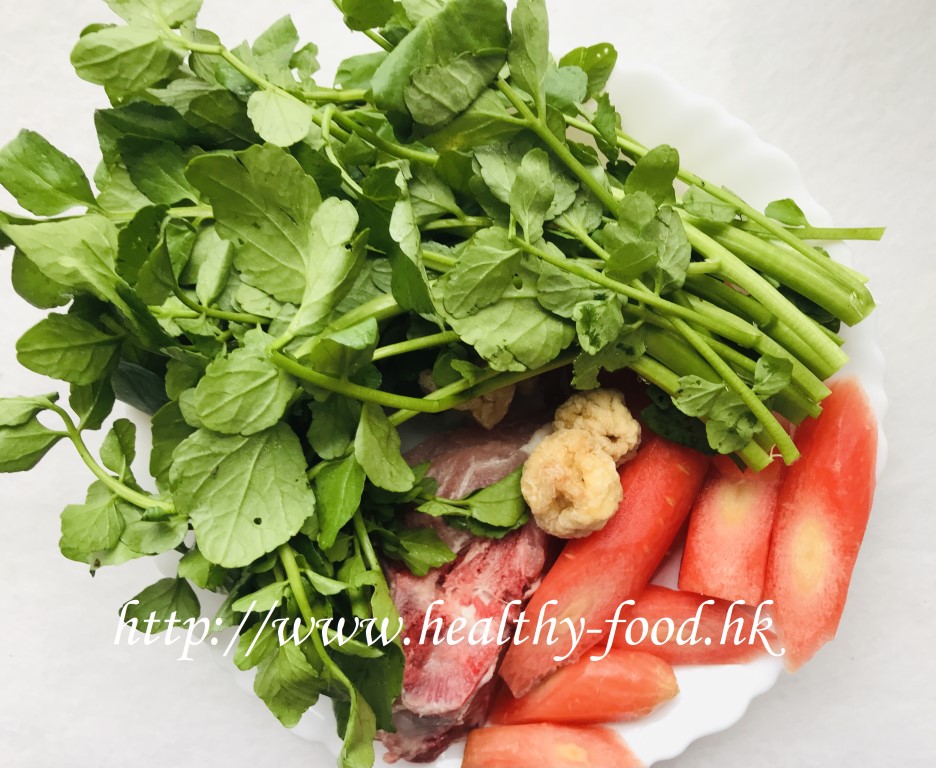
| Watercress (xi yang cai), fresh | ~300 g (half jin) | Rinse well; add only when broth is boiling |
| Carrot | 1 medium | Peel and cut into chunks |
| Dried duck gizzard (chen ya shen) | 2 pieces | Soak and rinse |
| Dried tangerine peel (chen pi) | 1 piece | Soak to soften; rinse |
| Dried figs (wu hua guo) | 3 pieces | Rinse; cut open for more flavour |
| Pork neck bones (xi shi gu) | ~450 g | Blanch in boiling water first |
| Water | 8 bowls (~2 L) | — |
Method
- Blanch the pork neck bones in boiling water for 3 minutes; drain and rinse.
- Peel and chunk the carrot. Soak and rinse the dried duck gizzard, tangerine peel, and dried figs.
- Place the pork bones, carrot, duck gizzard, tangerine peel, and figs in a large pot with 8 bowls of water.
- Bring to a strong boil, then add the watercress (do not add it before the water is boiling — adding it to cold or warm water causes bitterness).
- Once the watercress goes in and the pot returns to a boil, reduce to a medium-low simmer.
- Cook for 1.5 hours. The liquid should reduce to about 4–5 bowls.
- Serve warm. Can be enjoyed regularly as a household wellness soup.
Bro Niu’s tips
The single most important technique with this soup is adding the watercress only to already-boiling water — this is the key to a sweet, clear broth rather than a bitter one. When washing the watercress, soak it briefly in lightly salted water; any small insects will float to the surface and can be rinsed away. Cooking for at least 1.5–2 hours also neutralises the vegetable’s natural cooling nature, making it suitable for people who are sensitive to cold foods and for pregnant women. If dried duck gizzard is hard to find, dried scallops work well as a substitute.
Community questions answered (selected)
-
Q (QQ): Fresh duck gizzard is available where I live (Canada) — can I use it instead of dried? Bro Niu: Yes, fresh duck gizzard can replace the dried version. (If neither is available, dried scallops are a good substitute and add a different but pleasant flavour.)
-
Q (anonymous): Should the dried figs be cut open before adding? Bro Niu: Yes — cutting the figs open helps more flavour and nutrition release into the broth.
-
Q (Angela): I am 9 weeks pregnant and have a cold constitution — can I have this soup? Bro Niu: Yes, if the soup is cooked for 2–3 hours it is no longer cold in nature and is suitable for pregnant women.
Published May 13, 2017 · Adapted and translated for Nourilo from a traditional home-kitchen recipe. Approx. 4 min read.