Herbal & Flower Teas
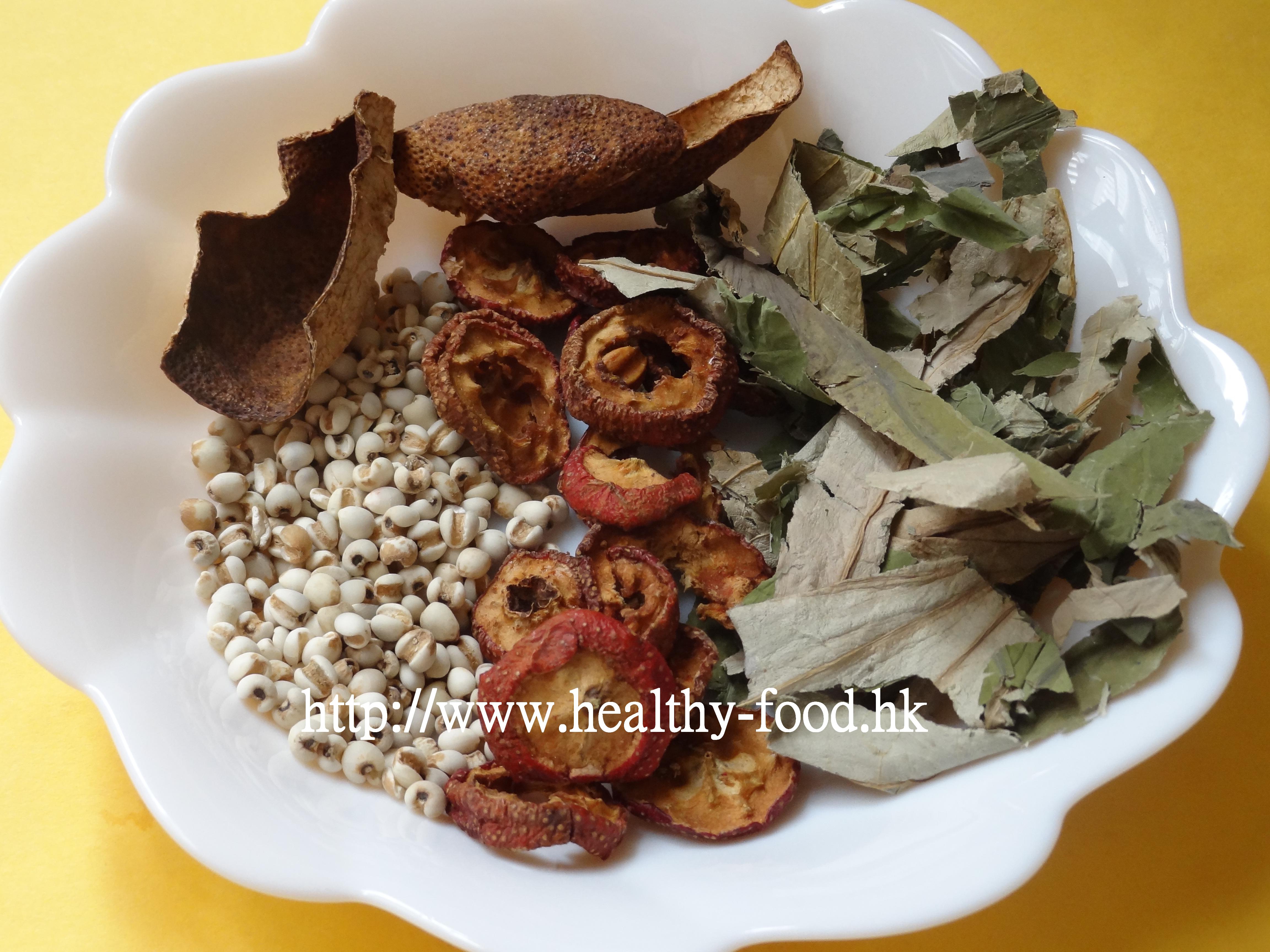
Lotus Leaf, Hawthorn and Tangerine Peel Tea
traditionally supports fat digestion, weight management, and cholesterol balance
Why people make this tea
After a holiday season of rich eating — or frankly, after any period of indulgence — many people look for a gentle dietary reset. This tea is a classic approach in Cantonese food therapy: lotus leaf, hawthorn berries, coix seed, and tangerine peel work together to help the body process accumulated fats and ease digestive stagnation. It is not a dramatic “detox” in the marketing sense, but it is genuinely useful — each ingredient has a well-understood traditional role and a growing body of modern nutritional research behind it. The tea is pleasant to drink, mild enough for everyday use, and can be prepared as a brew or as ready-to-use tea bags for convenience.
Who it suits / who should be cautious
- Suitable for most adults, particularly those with a tendency toward weight gain, high blood lipids, high cholesterol, high blood pressure, fatty liver, or diabetes
- The hawthorn berries provide a pleasant tartness and also stimulate appetite — if your goal is purely weight management, note that hawthorn may increase appetite for small snacks; stick to light, non-fatty snacks if this happens
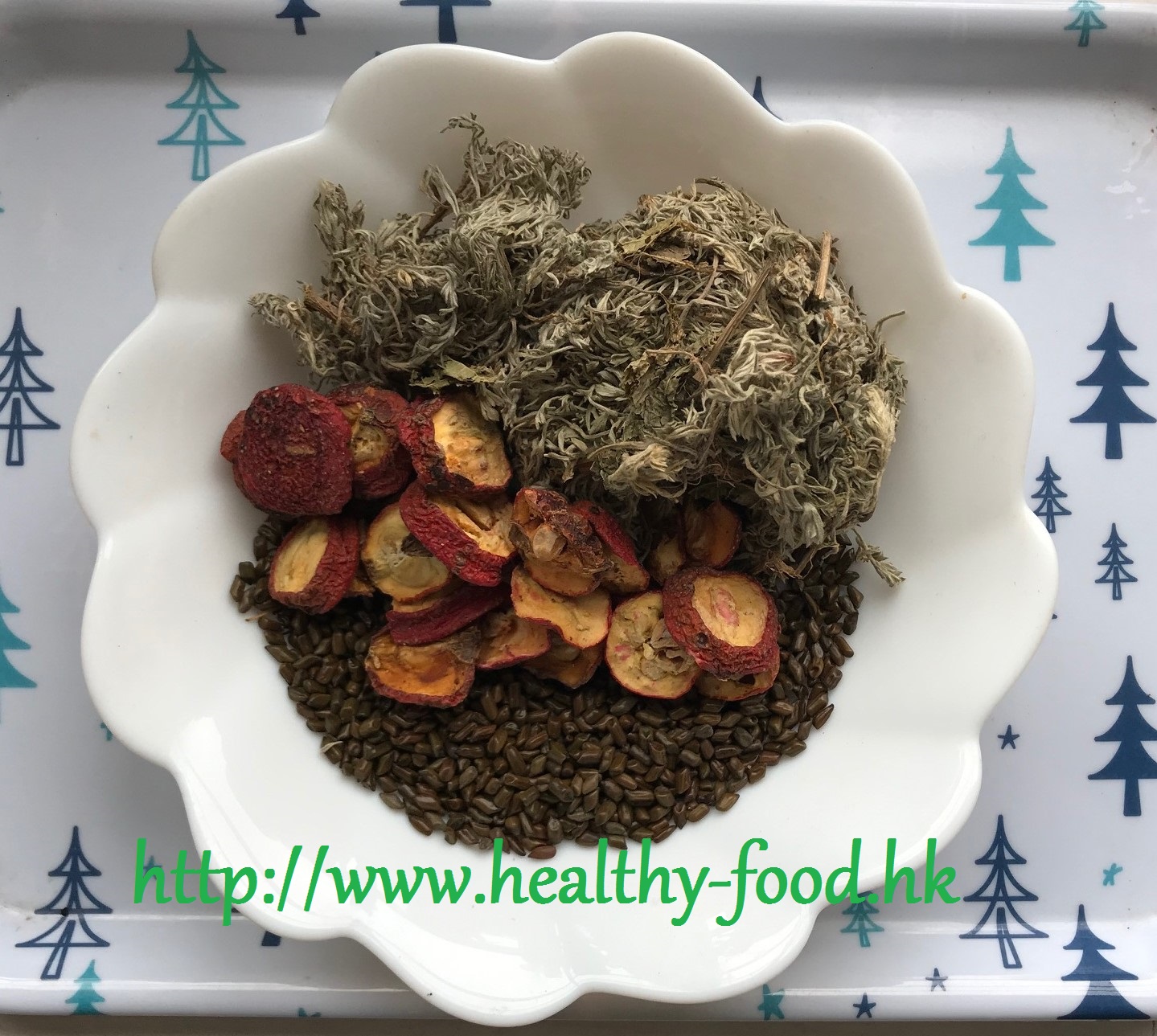
- People trying to conceive should avoid hawthorn (shan zha) — it is considered to have a contracting effect on the uterus; swap it for jue ming zi (cassia seed) 3 qian instead, or use du zhong ye (eucommia leaf) which is safe during pregnancy and also helps lower cholesterol
- Pregnant women should avoid hawthorn; please see a doctor before using herbal formulas during pregnancy
Why these ingredients (the food-therapy logic)
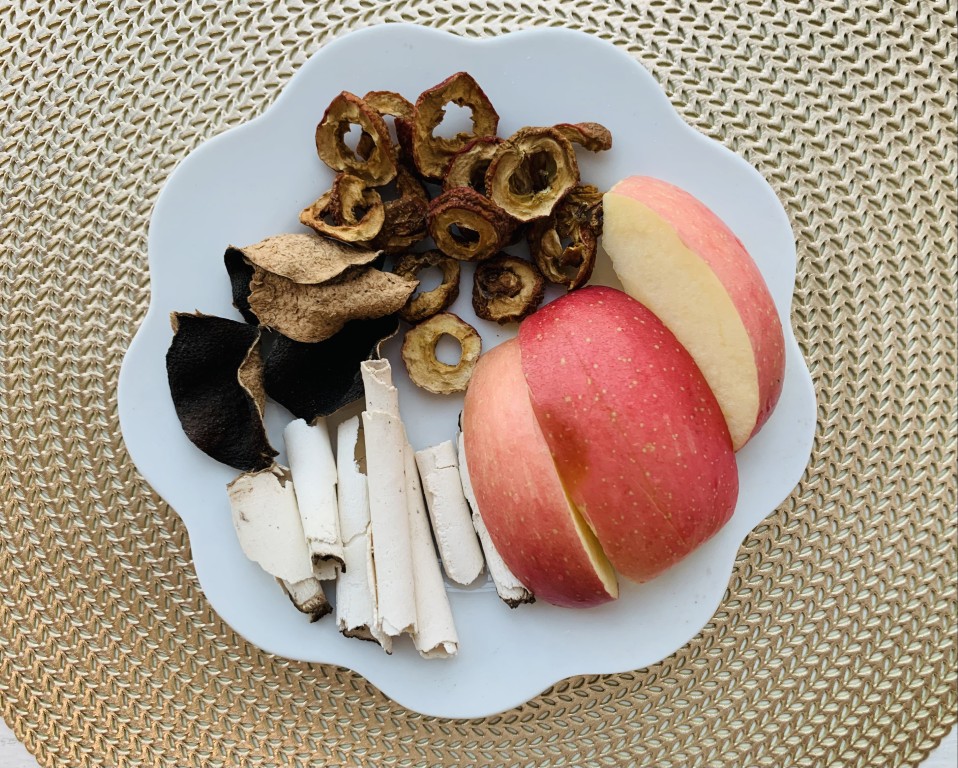
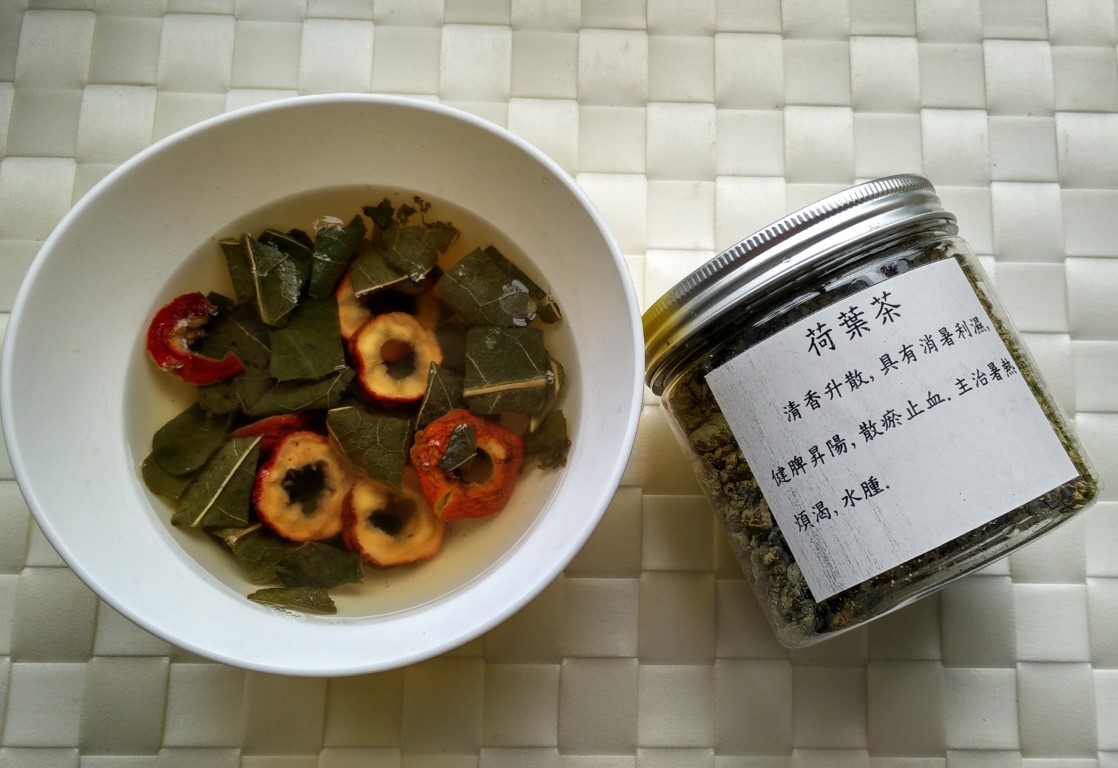
- Lotus leaf (he ye, Nelumbo nucifera): Considered cooling and bitter; traditionally associated with draining dampness, reducing water retention, and supporting fat metabolism; a staple ingredient in Chinese slimming teas; also useful for summer heat and as a mild diuretic
- Hawthorn berry (shan zha, Crataegus pinnatifida): One of the most important digestive herbs in Chinese food therapy; well-studied for its effects on fat digestion and lipid levels; traditionally essential for breaking down accumulated meat and fatty foods; also has mild cardiovascular benefits
- Coix seed / pearl barley (sheng yi mi): Clears dampness and supports fluid metabolism; associated with reducing water retention; also has mild blood sugar-supportive properties
- Dried tangerine peel (chen pi): Moves qi, aids digestion, and prevents the other herbs from causing bloating; the aromatic oils help disperse stagnation
Ingredients (2 cups)
| Ingredient | Amount | Notes |
|---|---|---|
| Dried lotus leaf | ~37 g (1 liang) | Dried form, available at herb shops |
| Raw coix seed (pearl barley) | ~19 g (5 qian) | Use raw (sheng), not pre-cooked |
| Dried hawthorn berries | ~9 g (3 qian) | |
| Dried tangerine peel | 1/3 of a piece | Break into smaller pieces |
| Water | 5 bowls (~1 L) |
Method
- Rinse all ingredients briefly.
- Place all ingredients in a pot with 5 bowls of water.
- Bring to a boil, then reduce to a gentle simmer for 1 hour until reduced to about 2 bowls (2 cups).
- Strain and drink. Can be taken warm or at room temperature.
Alternative tea-bag method (for daily use):
- Dry-toast all ingredients in a clean wok (no oil) over medium-low heat for 5–6 minutes, stirring constantly, until lightly aromatic. Allow to cool.
- Grind or crush into a coarse powder, or simply crumble the toasted ingredients.
- Pack into tea bag sachets (available at supermarkets) — about 1 tablespoon per sachet.
- To serve: steep 1 sachet in hot water for 5–7 minutes. Can be re-steeped until pale. Drink daily.
Bro Niu’s tips
- For people with fatty liver, this is a particularly suitable daily tea. Regular use (at least 3 months) is recommended to see meaningful benefit.
- To add liver-enzyme-lowering support, include 1 tablespoon of wu wei zi (schisandra berries, Schisandra chinensis) — toast and add to the tea bag mix. Note that some people find schisandra causes a burning sensation in the stomach; if so, take it after meals.
- The dry-toast method allows you to prepare a larger batch and use it as tea bags every day without cooking.
- Hawthorn stimulates appetite somewhat — this is intentional for digestive support, but if you are primarily trying to lose weight, avoid snacking on fatty foods after the tea.
Community questions answered (selected)
-
Q (karen): I want to use this tea to support weight loss, but will the hawthorn make me hungrier? Bro Niu: Hawthorn does have an appetite-stimulating effect. As long as you are not eating high-fat foods as a result — for example just some crackers, oats, or fruit as a light snack — there is no problem with using this tea for weight management.
-
Q (Anita): My husband has elevated liver enzymes. Would this tea help? How does the dry-toasting method work? Bro Niu: Add wu wei zi (schisandra) 1 tablespoon to the mix to help lower liver enzymes. Dry-toast all the ingredients, including the schisandra, before making into tea bags. Since the toasting process kills bacteria, there is no need to soak or wash the herbs again before using. This tea is safe for daily consumption and can be steeped until the flavor fades.
-
Q (t27): I have hereditary high cholesterol and am planning to try to conceive. Should I avoid the hawthorn? Bro Niu: Yes — remove the hawthorn and substitute jue ming zi (cassia seed) 3 qian, dry-toasted before use. Alternatively, try du zhong ye (eucommia leaf) as a daily tea — it supports cholesterol levels and is also safe during pregnancy.
Published February 7, 2013 · Adapted and translated for Nourilo from a traditional home-kitchen recipe. Approx. 4 min read.