Herbal & Flower Teas
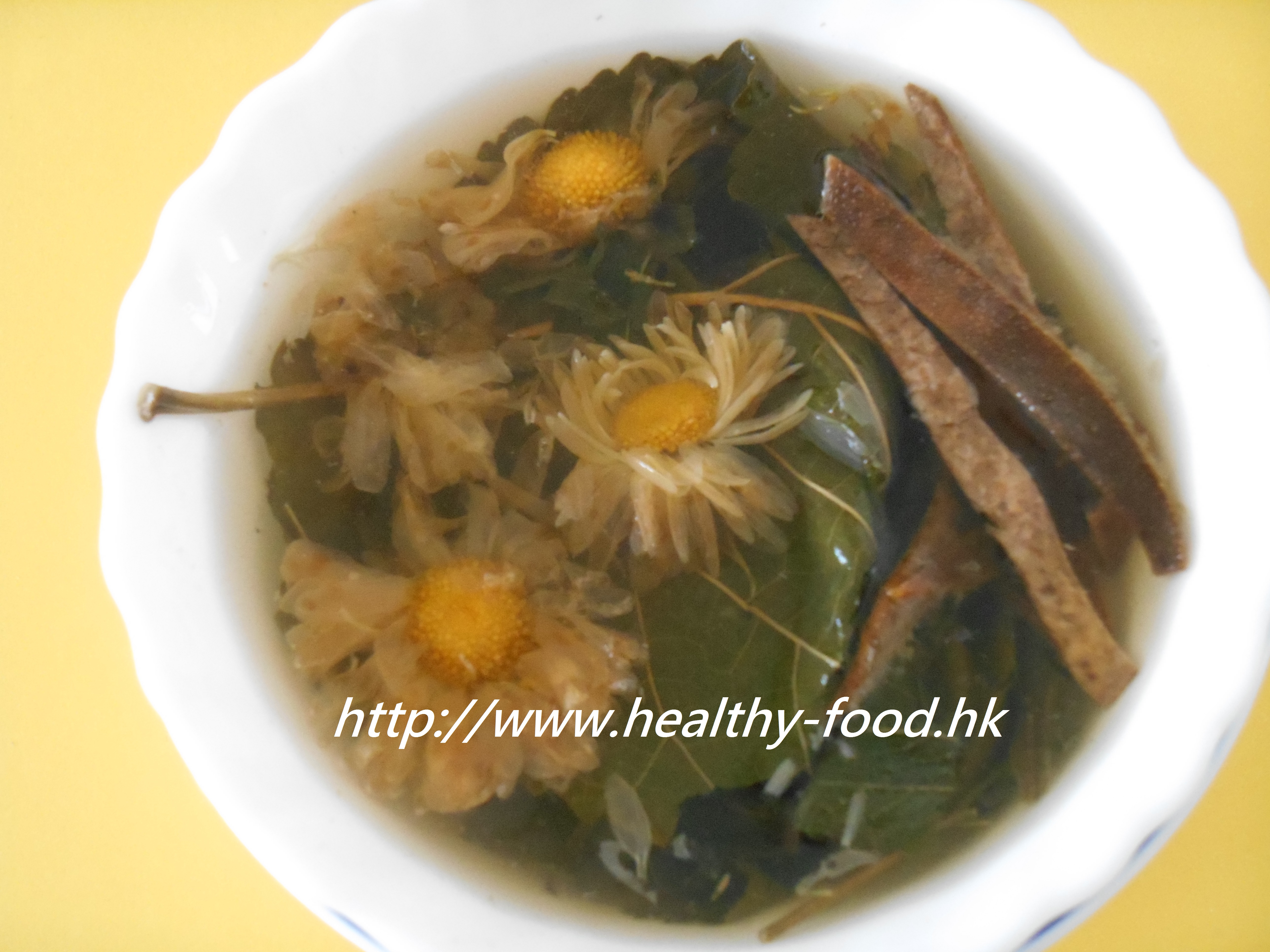
Mulberry Leaf, Chrysanthemum, and Stevia Leaf Tea
traditionally associated with calming liver heat, supporting clear eyesight, and benefiting blood sugar and blood pressure
Why people make this tea
Mulberry leaf is one of the most versatile and underappreciated ingredients in the Chinese herbal pantry, yet it remains widely available at Chinese herb shops at very reasonable prices. Stevia leaf, the natural zero-calorie sweetener, is equally accessible. Brewing these two together with chrysanthemum and a sliver of tangerine peel produces something genuinely useful — a pleasant daily tea that supports the eyes, calms liver heat, and needs no added sugar.
This tea is particularly popular with people who stare at computer screens all day, those who sleep too little, or anyone who notices their eyes looking red, feeling hot, or producing more discharge than usual. In the traditional Chinese framework, these signs are associated with what is called “liver heat” or “yin deficiency with rising fire” — and this gentle tea is a classic daily remedy for that pattern.
Who it suits / who should be cautious
- Well suited to middle-aged and older adults; suitable for long-term regular consumption
- Especially helpful for those with redness or irritation in the eyes, screen fatigue, mild headaches from heat rising to the head, or those with a tendency toward high blood pressure or blood sugar concerns
- Not recommended as a primary treatment — these are food-therapy companions to medical care
- Those with a strongly cold constitution (feeling perpetually chilly) should not rely on this cooling tea daily; warm it well or reduce frequency
- If pregnant, check with your practitioner first
Why these ingredients (the food-therapy logic)
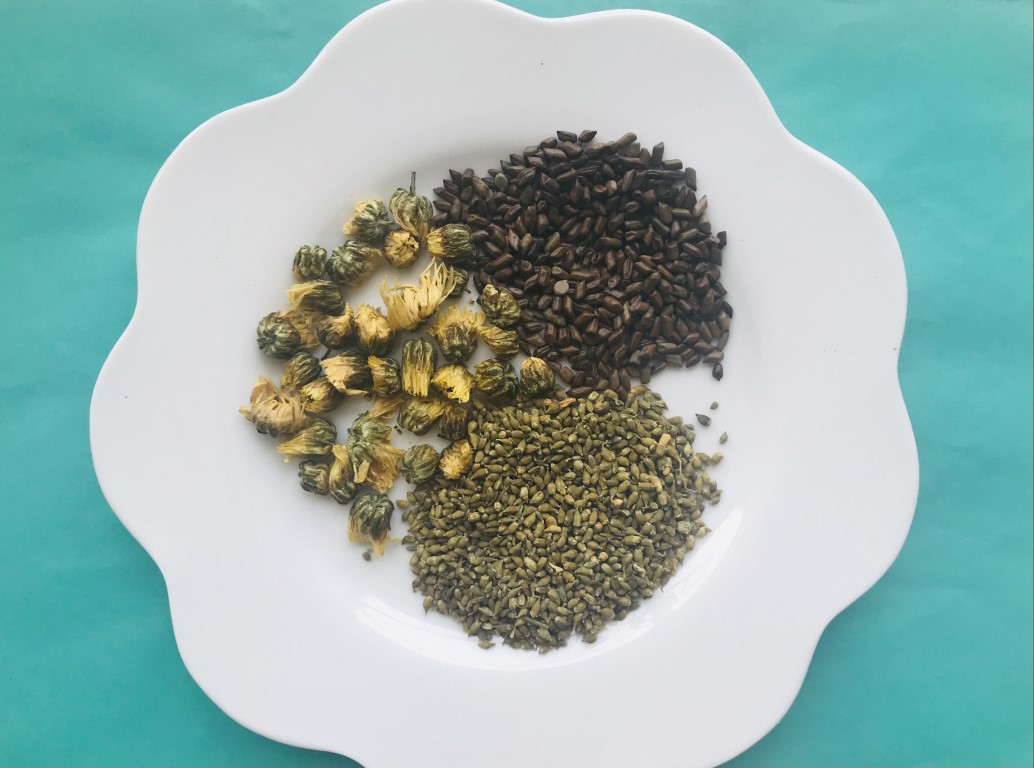
- Mulberry leaf (sang ye / Morus alba): One of the most respected eye-supportive herbs in Chinese dietary tradition. Traditionally associated with dispersing wind-heat, calming liver fire, and brightening the eyes. Winter-harvested leaves (dong sang ye) are considered to have stronger properties. Used for redness and irritation in the eyes associated with liver heat, as well as early signs of blurry vision from liver yin deficiency.
- Chrysanthemum (ju hua): A classic companion to mulberry leaf for eye and liver heat patterns. Traditionally used for red eyes, headaches, and rising heat. Many Westerners already enjoy chrysanthemum tea on its own.
- Stevia leaf (tian ju ye / Stevia rebaudiana): Known in Chinese as sweet leaf or tian ye ju. A natural sweetener with essentially no sugar impact — traditionally considered to support healthy blood vessels and blood sugar levels, and particularly valued for kidney-related hypertension. Completely different from refined stevia extract; the whole dried leaves have a pleasantly natural sweet flavour.
- Dried tangerine peel shreds (chen pi): A small amount adds aroma, aids digestion, and balances the cooling nature of the other ingredients.
Ingredients (1–2 servings)
| Ingredient | Amount | Notes |
|---|---|---|
| Mulberry leaf (sang ye) | ~6 g (2 qian) | Rinse briefly |
| Chrysanthemum flowers (ju hua) | ~6 g (2 qian) | Any good-quality variety |
| Dried tangerine peel shreds (chen pi si) | 1 small shredded piece | |
| Stevia leaf (tian ju ye) | 3 leaves | Natural sweetener — no added sugar needed |
| Water | 3 bowls (~750 ml) |
Method
- Rinse all ingredients briefly.
- Place in a small pot with 3 bowls of water.
- Bring to a boil, then simmer for 5 to 6 minutes.
- Pour into cups and drink warm over the course of the day — 2 bowls total. No additional sugar is needed; the stevia provides natural sweetness.
- This tea can be brewed in larger quantities: scale up to 5 qian of each ingredient and 2 qian of licorice root (gan cao) to serve 4 to 5 people. Do not refrigerate; drink at room temperature.
Bro Niu’s tips
There is no need to add sugar — stevia leaf makes the tea naturally sweet. Do not drink it chilled from the refrigerator; room temperature or warm is ideal. If you cannot find stevia leaf, licorice root slices (gan cao) at 4 to 5 slices work as a pleasant substitute. Those who enjoy it can add 2 to 3 pitted red dates for extra nourishment. All ingredients are available at Chinese or Asian grocers, or online.
Community questions answered (selected)
-
Q (May): I want to make a large batch for 8 litres of water — how much of each ingredient should I use? Bro Niu: For 4 to 5 people (about 1 litre), use 5 qian of each ingredient with 2 qian of licorice. Multiply everything by 8 for your 8-litre batch.
-
Q (May): Should I keep the leftover tea in the fridge? Bro Niu: Do not refrigerate it. Drink it at room temperature. If you want it cold, letting it cool naturally at room temperature is fine, but avoid storing it chilled.
-
Q (Autumn): My right eye has had a sticky discharge for about a year. Can this tea help? Bro Niu: Try mulberry leaf, honeysuckle (jin yin hua), and chrysanthemum, 3 qian each, simmered in 4 bowls of water for 15 minutes, three times a week. You can also use the cooled herb dregs wrapped in a cloth and applied warm over closed eyes — it may help reduce heat and inflammation. If the eye condition does not improve, please see a doctor.
Published September 27, 2014 · Adapted and translated for Nourilo from a traditional home-kitchen recipe. Approx. 4 min read.