Herbal & Flower Teas
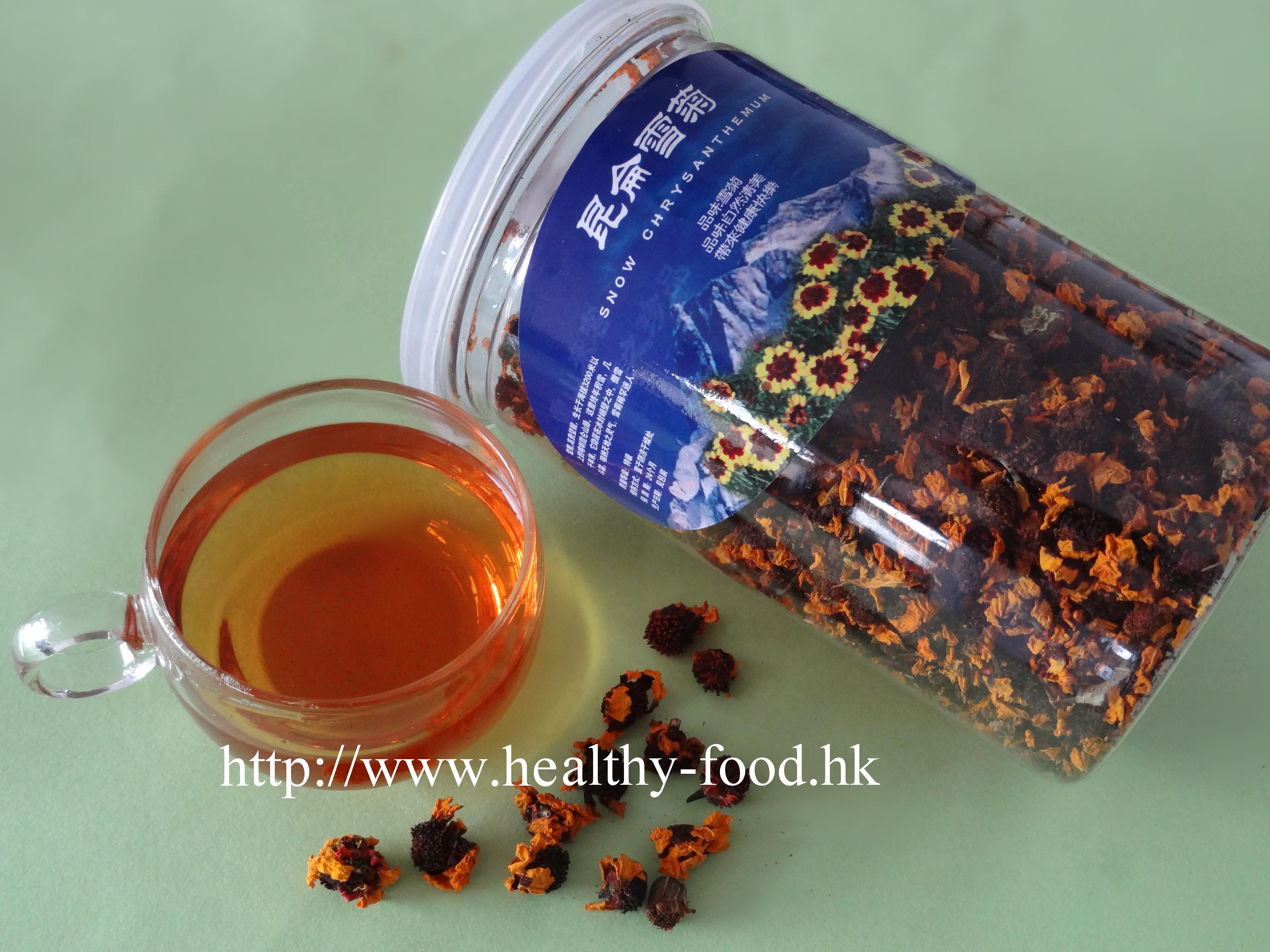
Kunlun Snow Chrysanthemum Tea
Traditionally associated with supporting healthy blood pressure, blood lipids, and blood sugar
Why people make this tea
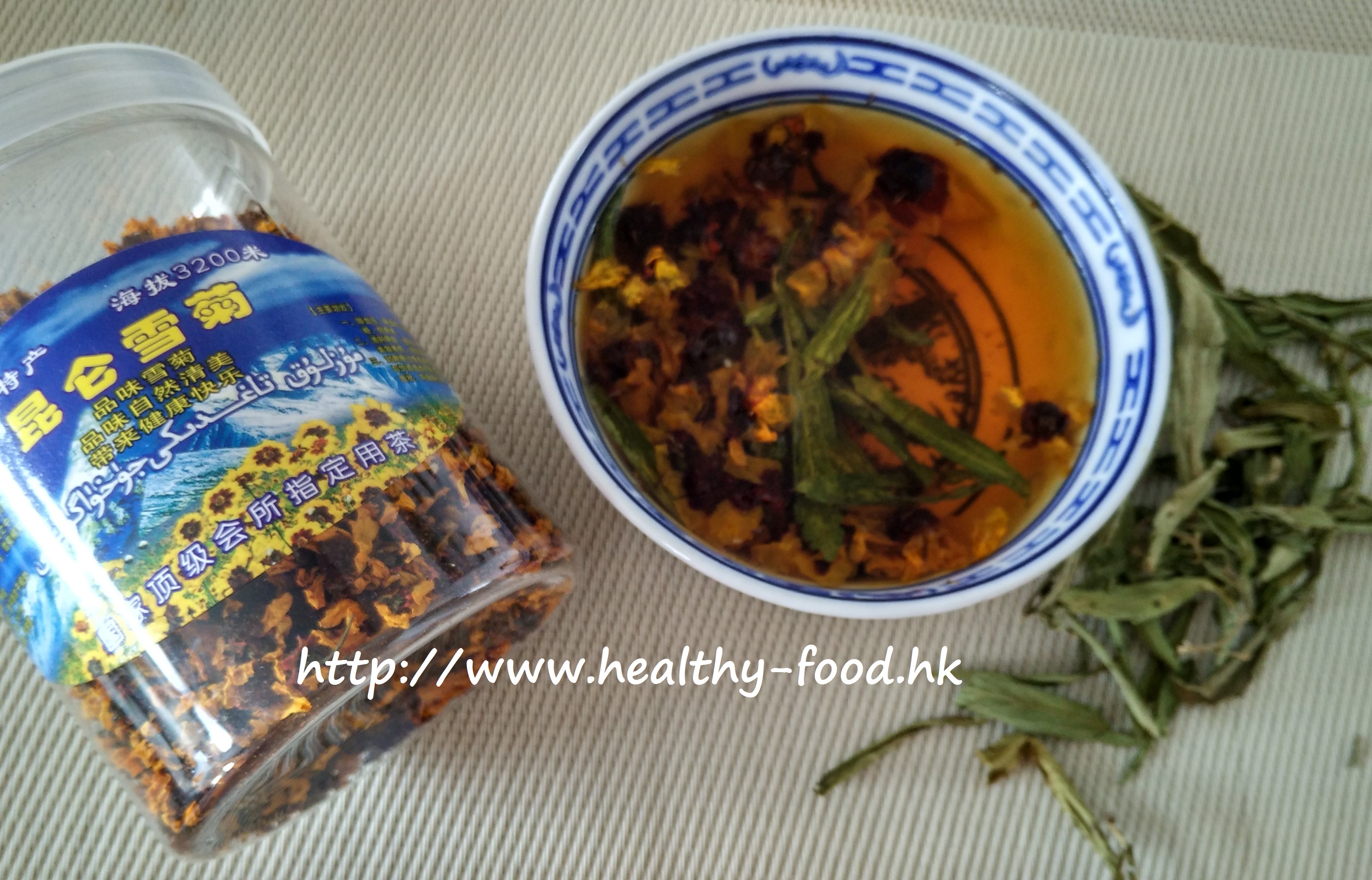
Snow chrysanthemum (xue ju) is harvested from the high-altitude cliffs of the Kunlun Mountains in China’s Xinjiang region, at elevations where few plants survive and human habitation is minimal. The flowers must be picked at first light, when they are fully intact, making harvesting particularly labor-intensive. The resulting tea is striking — it brews into a deep amber liquid that looks almost like aged pu-erh tea, but has a smooth, slightly sweet, almost honeyed flavor without any bitterness. In traditional food therapy, snow chrysanthemum is associated with a remarkable range of benefits: supporting healthy blood pressure, blood lipids, blood sugar, and even sleep quality. For anyone dealing with or concerned about the “three highs” (hypertension, high cholesterol, and elevated blood sugar), this is a tea worth knowing about.
Method
- Place 1 teaspoon of snow chrysanthemum flowers into a teapot or glass tea vessel.
- Pour a small amount of near-boiling water (95°C / 200°F) over the flowers, swirl briefly, and discard — this rinse cleans the flowers.
- Pour in fresh water heated to approximately 80°C / 175°F (just below boiling — this preserves the delicate flavor compounds better than fully boiling water).
- Cover and steep for 3 minutes.
- Pour and drink. The flowers can be re-steeped up to 3 times; add hot water each time until the tea becomes very pale.
Nourilo’s Tips
- Traditional guidance suggests that drinking snow chrysanthemum tea consistently for about a month is when benefits for blood pressure and metabolic health begin to be felt most clearly.
- The tea color is beautiful — a rich amber reminiscent of aged pu-erh — but unlike pu-erh, drinking this tea in the evening is said to support rather than interfere with sleep.
- If you find insects in the tea: place the flowers on a heat-proof dish in a steamer, steam on high heat for 10 minutes, then remove and allow to cool completely in fresh air until fully dry before returning to a glass jar for storage.
- Snow chrysanthemum can be combined with tea leaves for a more complex flavor. However, if you are also drinking qi-tonifying herbal teas (ginseng, codonopsis, astragalus), avoid pairing them directly with tea leaves as this may reduce their effect.
- Prices vary considerably depending on the source and vendor — it is worth shopping around, as quality at lower price points is often comparable to more expensive options.
Comments
Join the conversation — sign in or create a free account to comment.
Continue with GoogleLoading comments…