Herbal & Flower Teas
Arabian Jasmine and Hawthorn Tea (Su Xin Hua Shan Zha Cha)
traditionally associated with moving qi, easing emotional tension, and supporting digestion and menstrual regularity
Why people make this tea
Modern urban life — tight deadlines, long commutes, too much sitting — creates a particular kind of bodily tension that traditional Chinese medicine describes as “liver qi stagnation.” The liver is responsible for the smooth flow of energy and emotions; when it gets stuck, you might feel a tight sensation across the chest, emotional irritability, poor digestion, bloating after eating, or irregular and painful periods. Arabian jasmine flower (su xin hua) has a light, elegant fragrance and is traditionally associated with moving liver qi, clearing heat, and easing emotional tension. Hawthorn berries (shan zha) are familiar to many as a digestive aid — they are associated with resolving food stagnation, moving blood, and easing abdominal bloating and pain. Together they make a pleasant, mildly sour-floral tea that takes under 10 minutes to prepare and can be enjoyed daily. Adding rose petals or China rose deepens the period-regulating and mood-soothing effects.
Who it suits / who should be cautious
- Women experiencing bloating, poor digestion, or stomach discomfort from stress
- Women with liver qi stagnation patterns: emotional tension, irregular periods, period pain
- Suitable for regular daily drinking (outside of menstruation and pregnancy)
- NOT suitable during pregnancy — flower teas with blood-moving properties (including hawthorn) can mildly stimulate the uterus; please see a doctor if you are pregnant and concerned about menstrual symptoms
- NOT recommended during active menstruation, as hawthorn’s blood-moving properties can increase flow; resume after the period ends
- Children aged 12 and above can enjoy most flower teas in small amounts
- A small amount of honey can be added to improve the taste
Why these ingredients (the food-therapy logic)
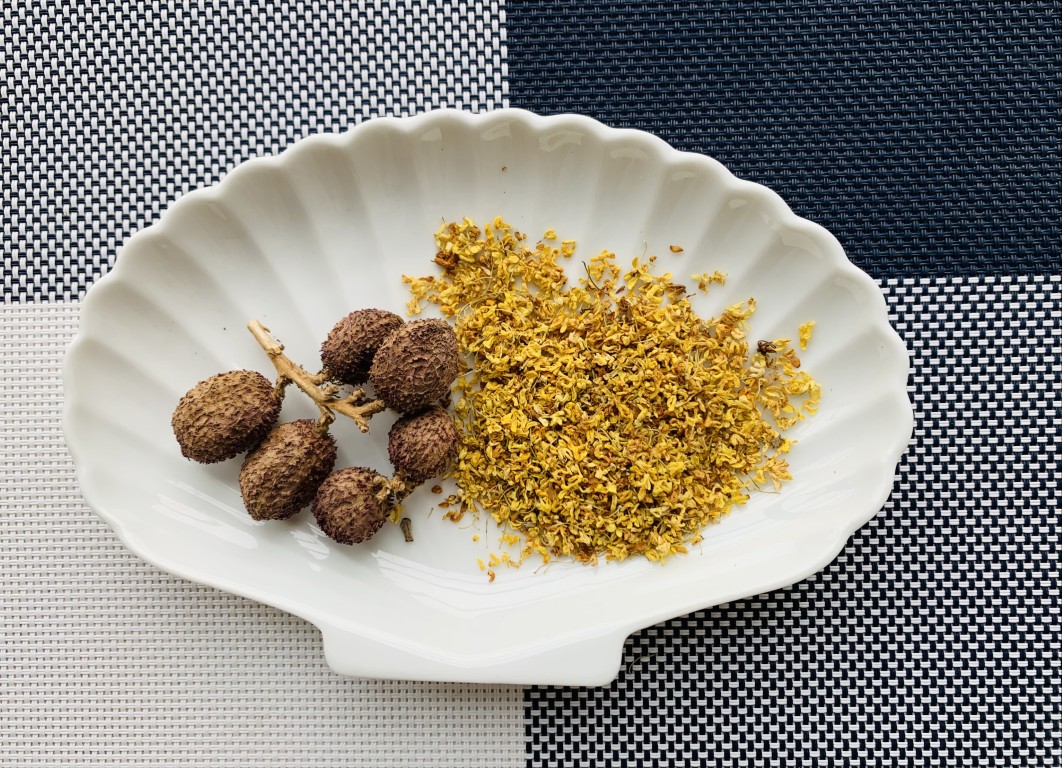
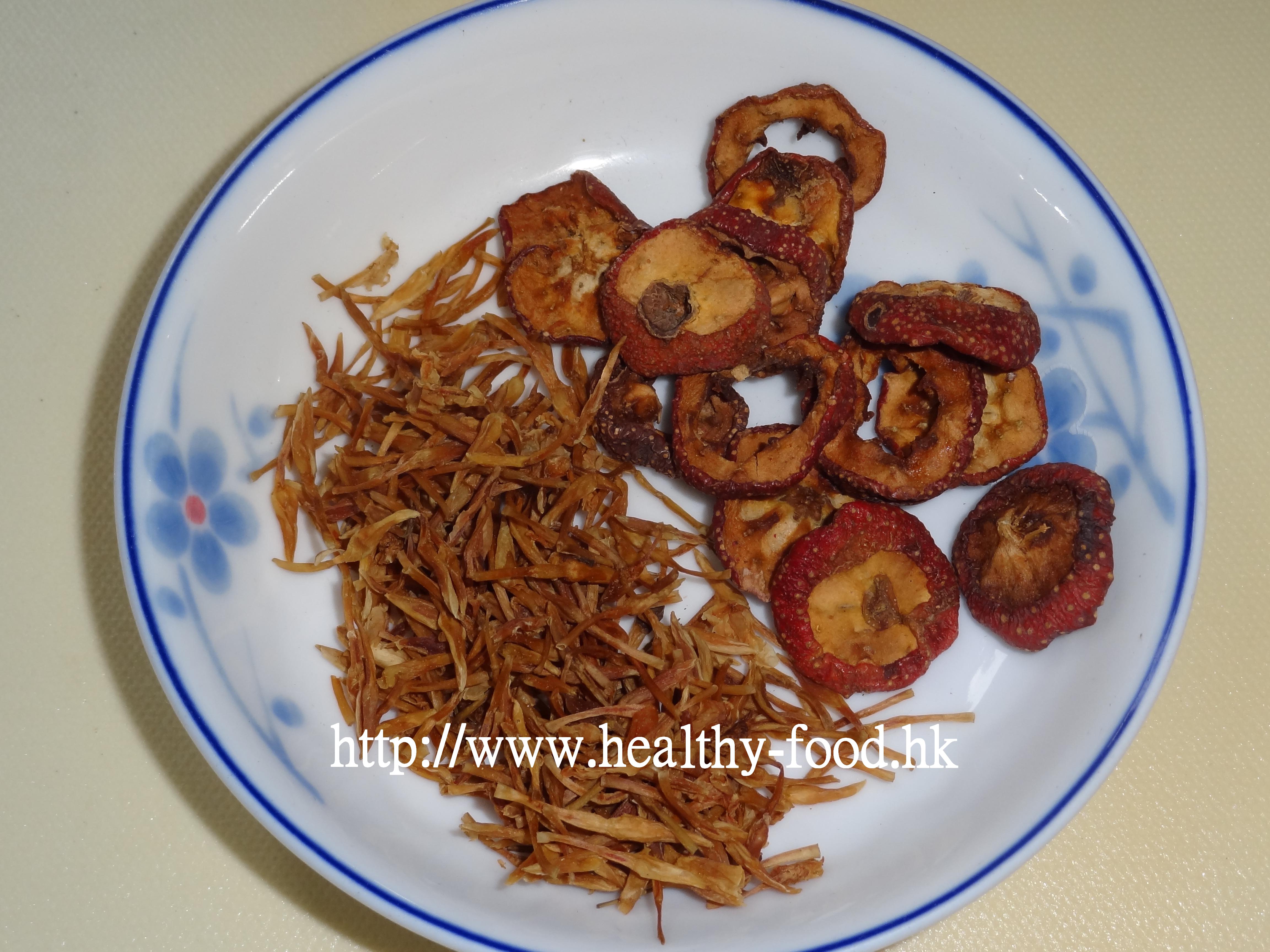
- Arabian jasmine (su xin hua): Available at specialist flower tea shops and some Chinese herb shops; traditionally associated with moving qi and dissolving emotional stagnation, clearing mild heat, regulating the menstrual cycle, and easing menstrual pain and stomach discomfort from qi blockage
- Hawthorn berries (shan zha): Widely recognised (even in Western research) as beneficial for cardiovascular function; in Chinese food therapy also associated with resolving food stagnation, moving blood and qi, and relieving bloating, abdominal pain, and diarrhoea
- Rose petals (mei gui hua) — optional: Enhance the liver-soothing, qi-moving, and mood-lifting properties; add warmth and fragrance
Ingredients (1–2 cups)
| Ingredient | Amount | Notes |
|---|---|---|
| Arabian jasmine dried flowers (su xin hua) | ~11 g (3 qian) | From flower tea shops or some herb shops |
| Dried hawthorn slices (shan zha) | ~7.5 g (2 qian) | |
| Rose petals or China rose (optional) | ~11 g (3 qian) | Enhances menstrual and mood benefits |
| Honey (optional) | to taste | Add after brewing |
Method
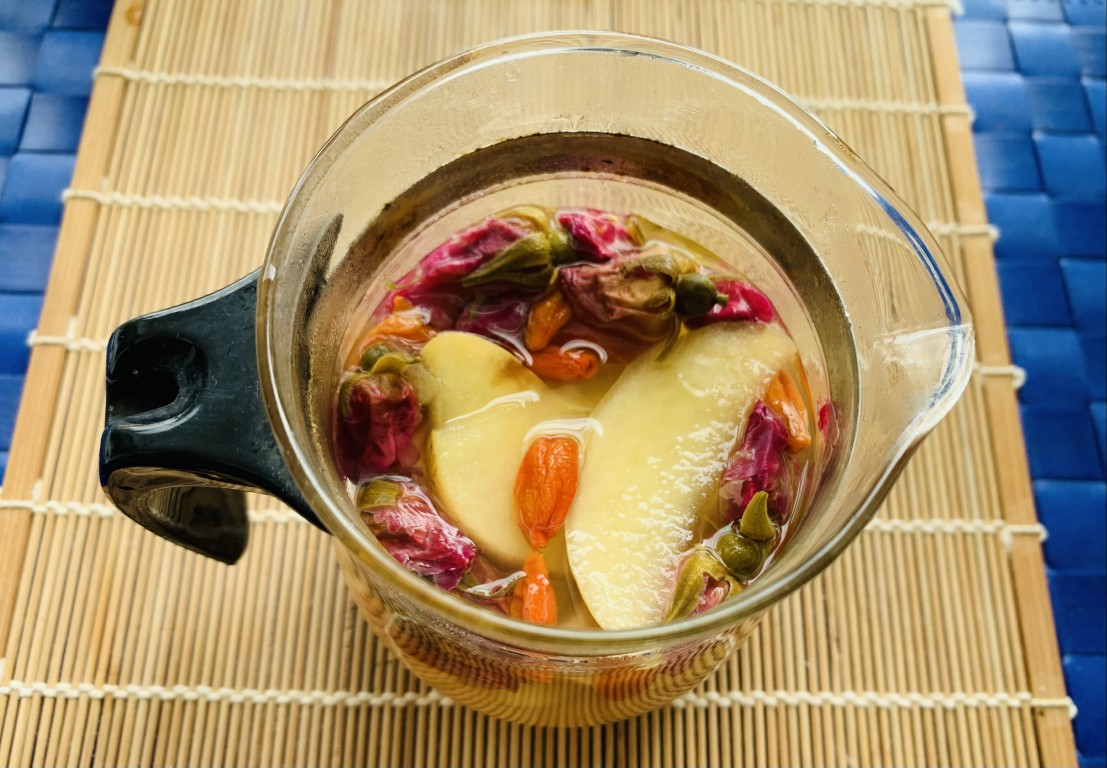
- Place the su xin hua and hawthorn slices (and optional rose petals) in a teapot or large cup.
- Pour in a small amount of boiling water, swirl briefly, and discard this first rinse.
- Pour in fresh boiling water.
- Steep for 5 minutes with the lid on.
- Pour and enjoy. Add honey if desired.
- This can be re-steeped 1–2 times.
Bro Niu’s tips
This tea can be enjoyed daily. Just remember: during active menstruation, set it aside — hawthorn moves blood and can increase flow. During pregnancy, avoid all flower teas. For women with a history of irregular periods and liver qi stagnation, this tea paired with a simple four-substance soup (si wu tang) taken after the period ends can be a gentle long-term support.
Community questions answered (selected)
-
Q (reader): Can this tea be drunk regularly? Or only around the menstrual cycle? Bro Niu: This tea can be enjoyed regularly. Just skip it during the menstrual period itself, as hawthorn has blood-moving properties. Any other time is fine. (During pregnancy, avoid all flower teas.)
-
Q (yee): My husband has a lot of bloating and stomach gas. Can he use this tea? He has high blood pressure. Bro Niu: For stomach gas and bloating, the su xin hua tea alone, or a bergamot and rose flower tea (fo shou, mei gui hua), would be better suited than the hawthorn version. Adding lotus leaf (he ye) also suits high blood pressure.
-
Q (Luci): Can my 12-year-old daughter drink flower teas? Bro Niu: A 12-year-old can drink most flower teas — they are generally calming and suitable for the stress of modern city life. Adding a little honey makes them more pleasant. Just remember: pregnant women should avoid all flower teas as most have mild blood-moving properties.
Published March 1, 2013 · Adapted and translated for Nourilo from a traditional home-kitchen recipe. Approx. 3 min read.