Congee & Porridge
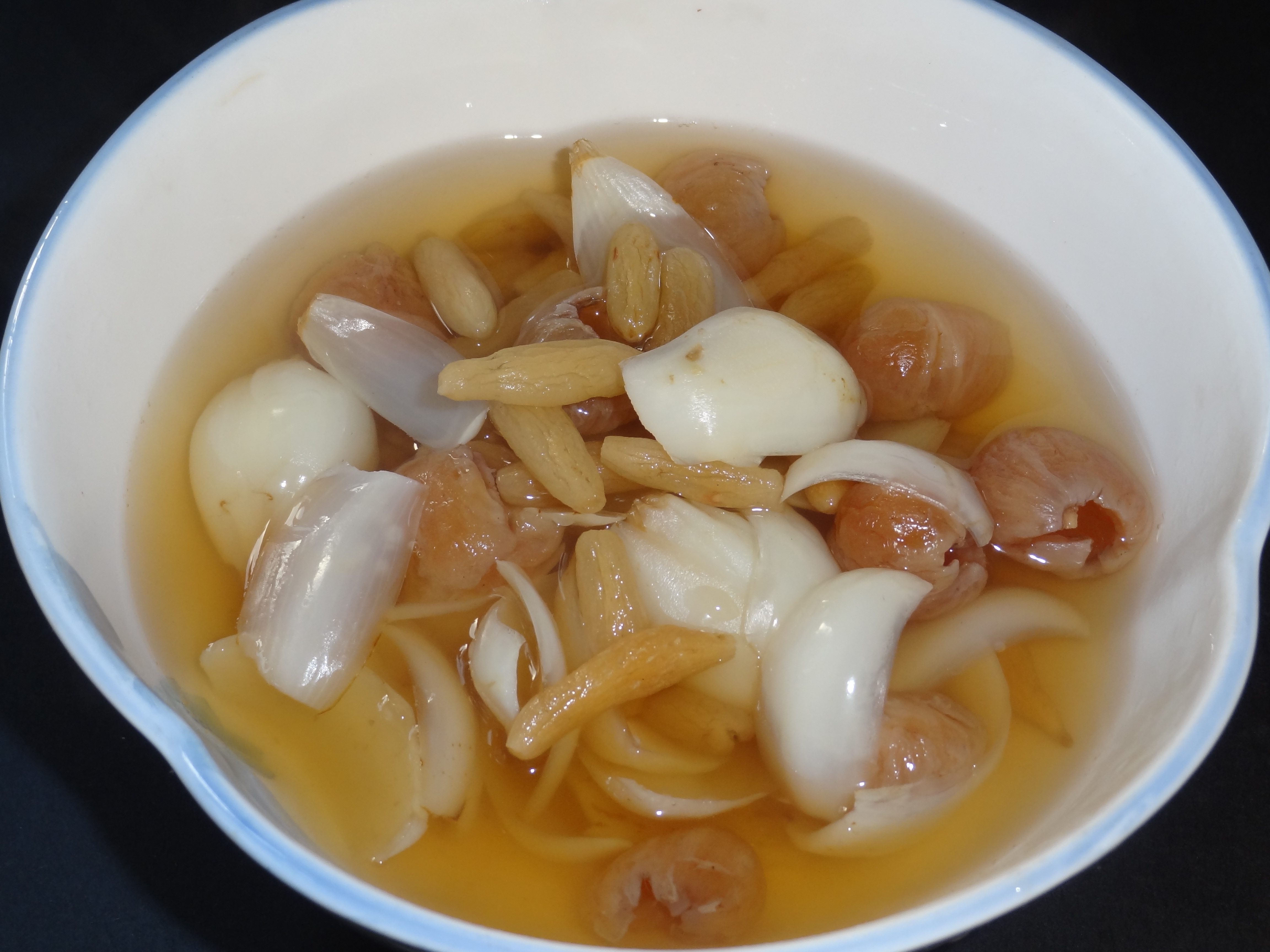
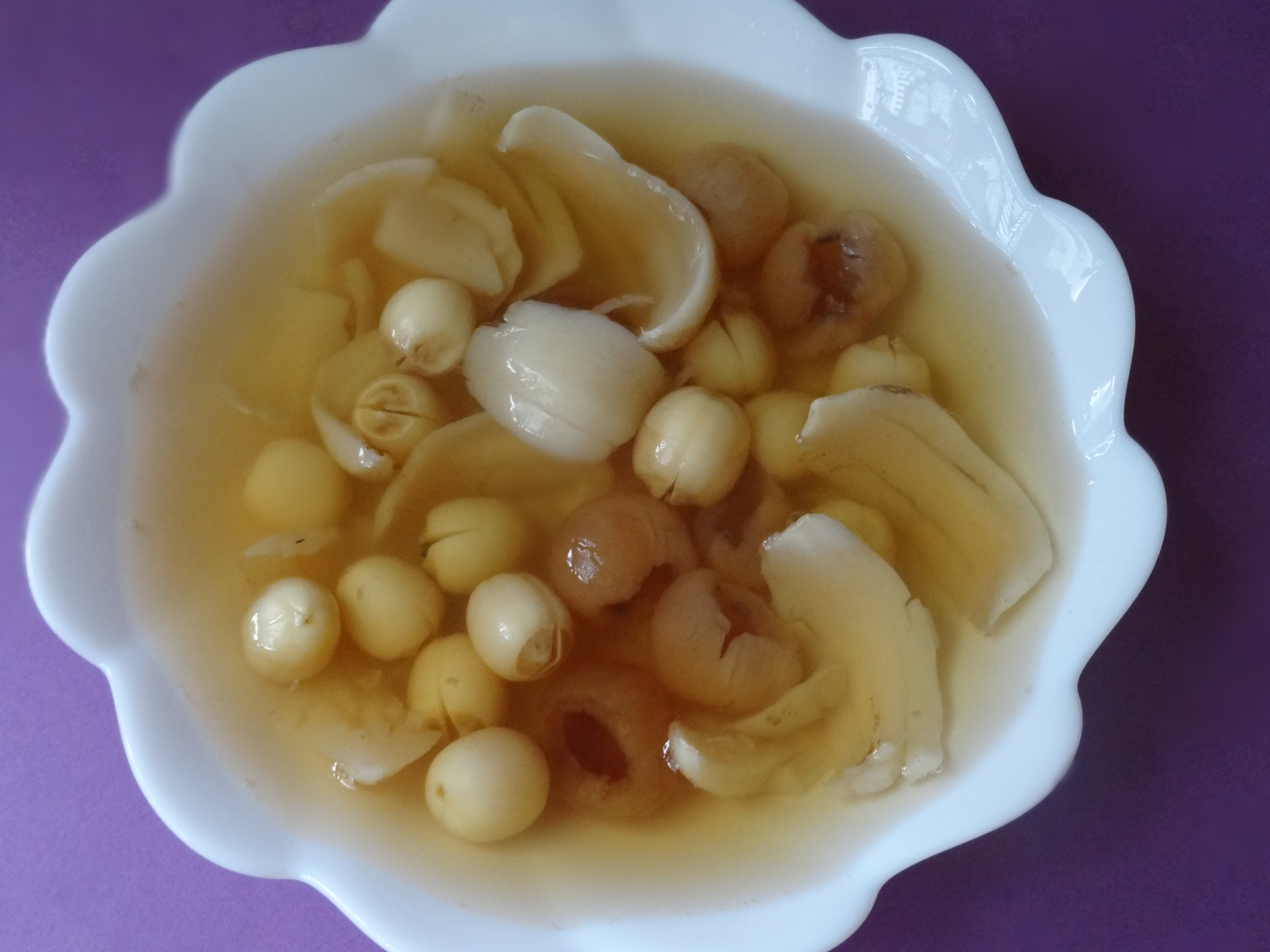
Fresh Lotus Seed, Lily, Ophiopogon and Millet Congee
traditionally used to nourish the heart and mind, support restful sleep, and ease anxiety and mild forgetfulness
Why people make this congee
Sleep in traditional Chinese food therapy is often described like recharging a battery — the quality of rest determines the quality of waking. When anxiety, stress, or overthinking prevent that recharge from happening properly, a different kind of nourishment is needed: not a sedative, but a gentle, slow-building support for the heart and mind. This congee is one of Bro Niu’s go-to preparations for that purpose. Millet — one of the oldest cultivated grains in East Asia — is considered especially nourishing for the spleen and stomach, with a light, warming quality that supports the whole digestive system. Combined with lotus seed (which calms the heart), lily bulb (which nourishes the lungs and settles the mind), and ophiopogon (which replenishes fluids and cooling energy in the body), it creates a peaceful, slightly sweet porridge that is appropriate for the whole family.
Who it suits / who should be cautious
- Suits people who have trouble falling asleep, wake frequently, have vivid dreams, or feel anxious or mentally restless.
- Also helpful for people with mild forgetfulness, low appetite, or nervous exhaustion.
- Suitable for the whole family, including children and the elderly.
- If fresh lotus seeds and lily bulb are not available, dried equivalents work well at roughly half the weight.
- This dish is gentle and without strong contraindications, though those with very loose stools may want to moderate portion size.
Why these ingredients (the food-therapy logic)
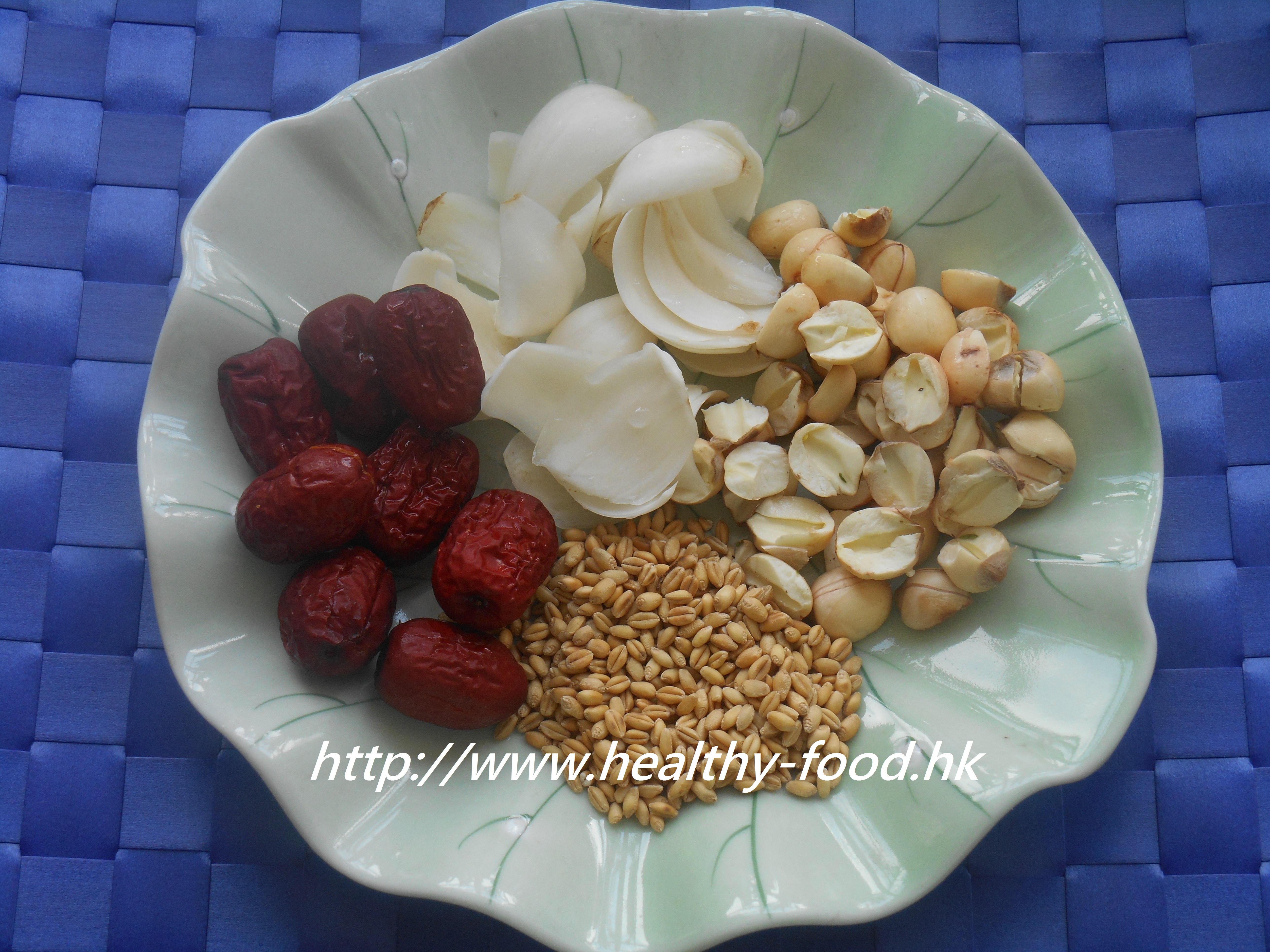
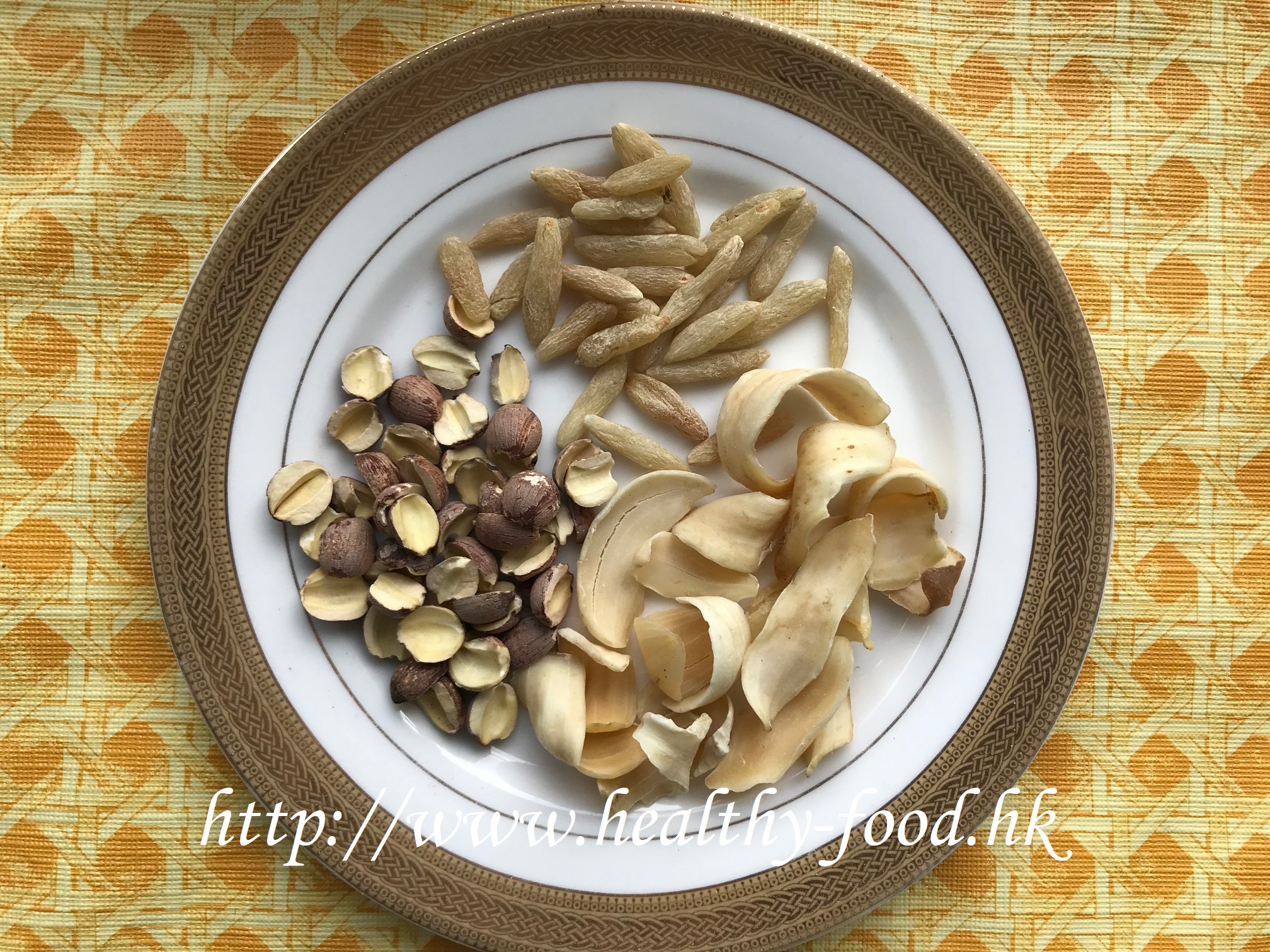
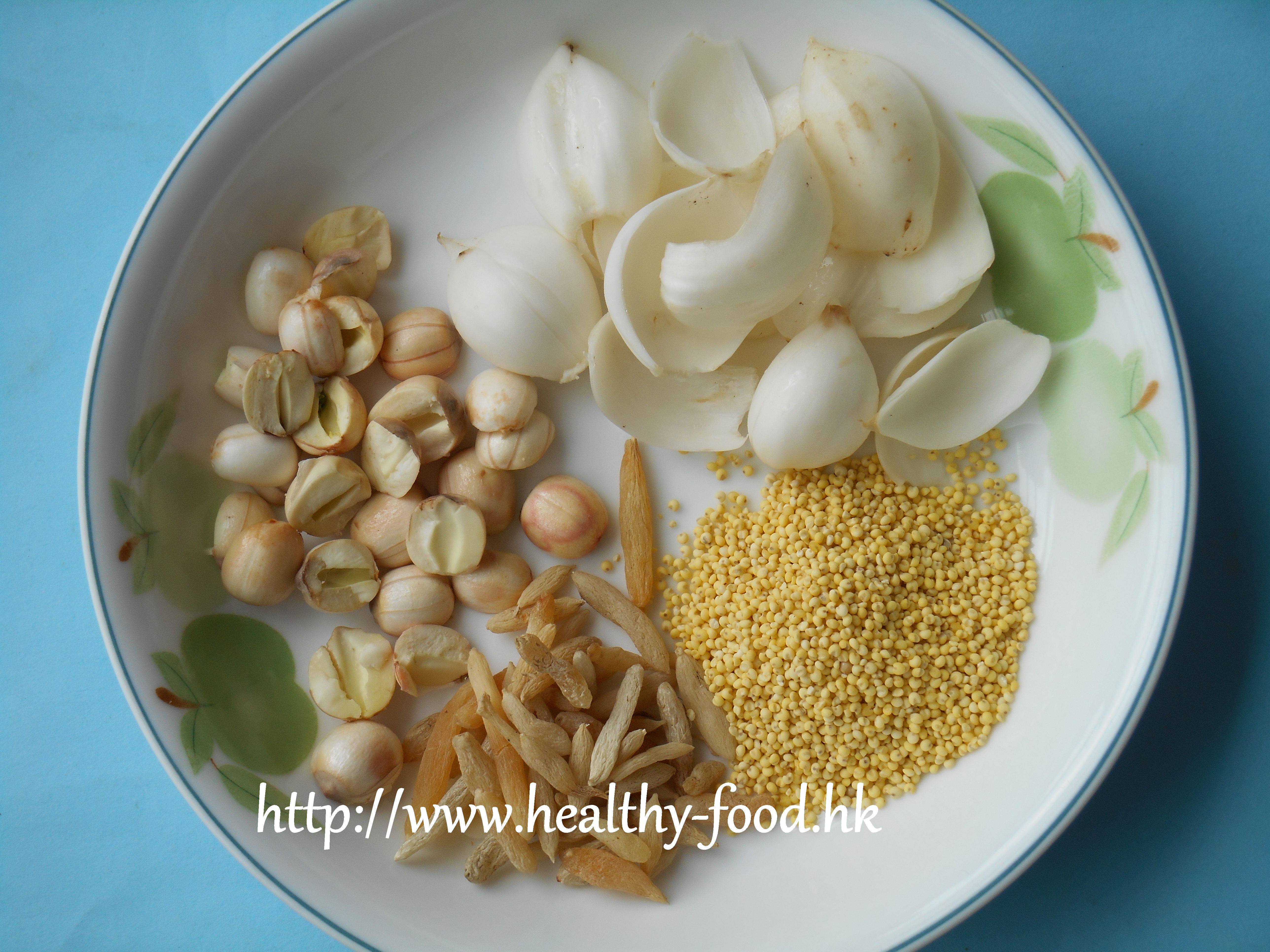
- Fresh lotus seeds (xian lian zi): Lotus seeds with the green pith removed are considered to calm the heart and support the spleen in traditional food therapy. If a stronger calming effect is desired, leave the pith in — it has a more bitter taste but is associated with clearing heat from the heart channel.
- Fresh lily bulb (xian bai he): Used for centuries to nourish the lungs, calm the mind, and support sleep quality. The fresh bulb has a soft, almost nutty flavour when cooked.
- Ophiopogon root (mai dong): A deeply moistening herb associated with nourishing yin (the cooling, fluid aspect of the body’s energy) and supporting the heart and lungs. It complements the lotus seed and lily bulb beautifully, addressing the internal dryness and restlessness that often underlies insomnia.
- Millet (xiao mi): The foundational grain in this recipe; considered the most supportive grain for the spleen and stomach in traditional food therapy. Millet’s gentle warmth and light texture make it ideal for those with sensitive digestion.
- Rock sugar: Added at the end to sweeten gently; considered easier on the digestive system than refined sugar.
Ingredients (4–5 bowls)
| Ingredient | Amount | Notes |
|---|---|---|
| Fresh lotus seeds, pith removed | 75 g (2 liang) | Or dried lotus seeds: ~38 g (1 liang) |
| Fresh lily bulb | 2 bulbs | Or dried lily bulb: ~38 g (1 liang) |
| Ophiopogon root (mai dong) | ~19 g (5 qian) | |
| Millet | 75 g (2 liang) | Rinse gently before cooking |
| Rock sugar | to taste | Add at the end |
Method
- Rinse all ingredients. If using fresh lotus seeds, remove the green pith. Rinse millet gently.
- Place all ingredients in a pot with 7 bowls (about 1.4 litres) of water.
- Bring to a boil, then reduce to a low simmer.
- Cook for 45 minutes, stirring occasionally, until the congee has thickened and the volume has reduced to approximately 4–5 bowls.
- Stir in rock sugar to taste and dissolve. Serve warm.
- This can also be made as a savoury congee by adding lean pork and omitting the rock sugar.
Bro Niu’s tips
This congee is naturally fragrant and mild — the kind of dish that works just as well for breakfast as it does for a light evening meal. If neither fresh lotus seeds nor fresh lily bulbs are available, the dried versions work well; use roughly 1 liang (38 g) of each. When Bro Niu gets messages from readers with more severe insomnia or those who overthink constantly, he often recommends adding fu shen (poria heartwood) 5 qian or replacing ordinary poria with fu shen for stronger heart-calming support. Consistent practice — eating this congee 3–4 times per week — tends to yield better results than occasional use.
Community questions answered (selected)
-
Q (Ivy): I have chronic insomnia, poor sleep quality, and vivid dreams all night. What soups are suitable? Bro Niu: You can try: millet (xiao mai mi) 1 liang, poria heartwood (fu shen) 5 qian, honey-prepared licorice (zhi gan cao) 2 qian, longan flesh 4 qian, lily bulb 5 qian, and red dates 6 pieces, simmered in 5 bowls of water to 2 bowls. Drink for 3 servings. Note: xiao mai mi here means floating wheat / prepared wheat, not the same as millet in this congee recipe — ask your herb supplier to clarify.
-
Q (Ying): Can I add lean pork and make this a savoury congee? Bro Niu: Yes, lean pork can be added for a savoury version.
-
Q (shirenny): I have severe insomnia and overthink constantly. I also recently developed shingles. What can I eat to improve sleep quality? Bro Niu: Overthinking leads to insomnia — learning to relax is the real treatment, though it is easier said than done. For the shingles, try green bean and barley porridge with 1 liang of lily bulb — it has a heart-cooling and mind-calming effect. Regularly brewing soothing flower teas like rose, jasmine, or silk tree flower can also help to ease emotional tension.
Published October 19, 2018 · Adapted and translated for Nourilo from a traditional home-kitchen recipe. Approx. 4 min read.