Home-Style Dishes
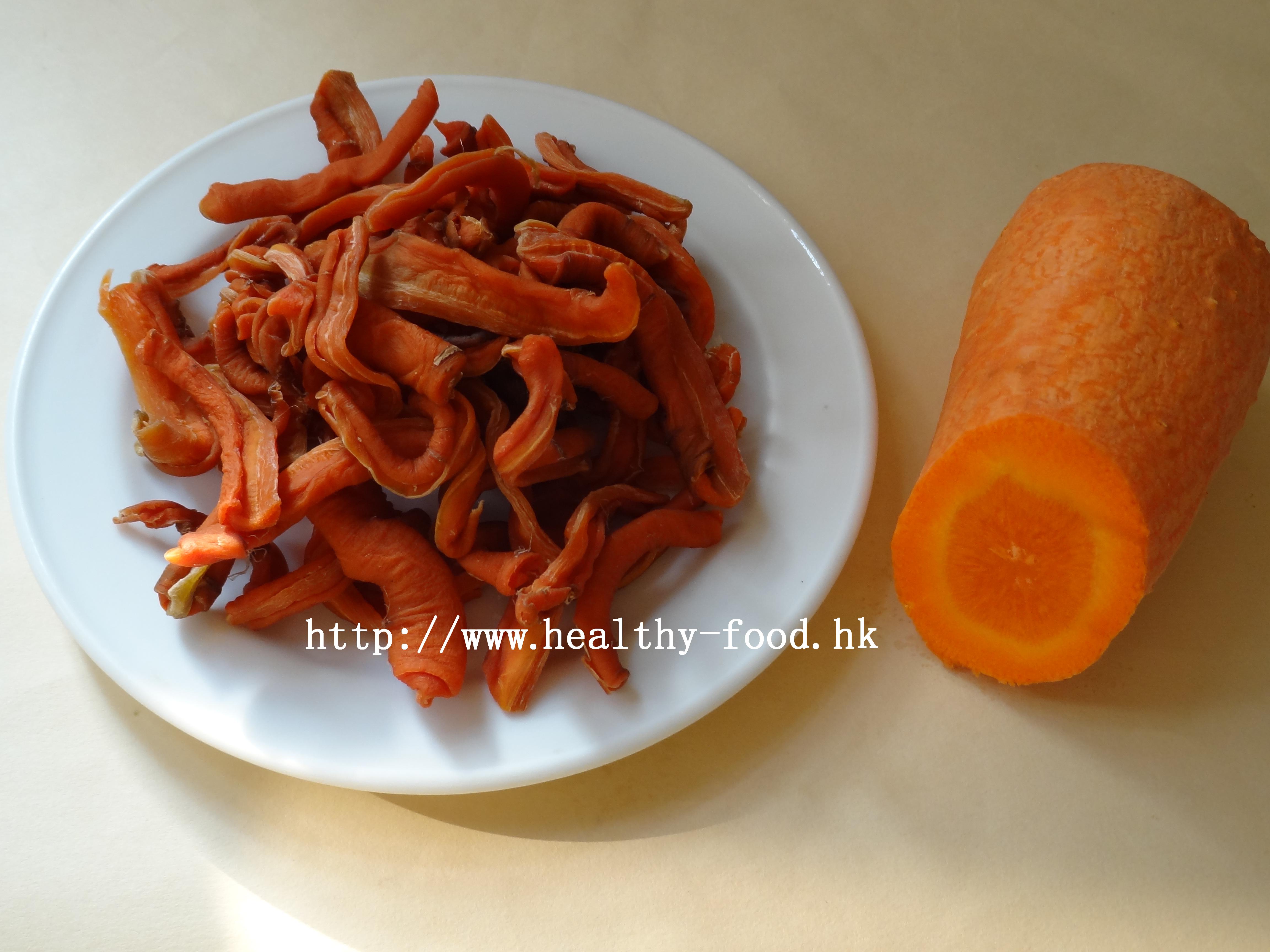
Sun-Dried Carrot Strips
A naturally nutritious preserved snack rich in beta-carotene; traditionally associated with supporting vision and respiratory health
Why people make this snack
Bro Niu was reminded of this old-fashioned village snack when a family friend brought back a bag of home-dried carrot strips from their hometown — soft, chewy, vibrantly coloured, and far tastier than fresh carrot alone. The friend explained the secret: as long as the strips are dried in direct sunlight, they stay bright orange without any colouring or preservatives. What struck Bro Niu most was how this humble village food combines genuine palatability with real nutritional value. Carrots are among the most researched vegetables in terms of beta-carotene content; the body converts beta-carotene into vitamin A, which is associated with healthy vision, respiratory tract protection, and children’s growth. Drying concentrates those qualities and creates a shelf-stable snack that can be enjoyed any time.
Who it suits / who should be cautious
- Suits: everyone as a healthy snack; children, elderly, and those looking for a naturally sweet, preservative-free snack option
- Requires a sunny, dry location — this recipe is not practical in humid or rainy climates without a dehydrator
- The finished product contains salt from the curing step; those watching sodium intake should enjoy in moderation
Why these ingredients (the food-therapy logic)
- Carrot (hong luo bo): Rich in beta-carotene, which the liver converts to vitamin A; associated in both Chinese and Western nutritional traditions with supporting vision, protecting the respiratory mucosa, and promoting healthy growth in children; the fibre-rich pectin also has a mild detoxifying effect and helps reduce constipation
- Coarse salt: Used for drawing out moisture and preserving; helps the strips hold their colour during drying
Ingredients
| Ingredient | Amount | Notes |
|---|---|---|
| Fresh carrots | 2.5 kg (5 jin) | Washed, peeled, cut into strips |
| Coarse sea salt | 2 tablespoons | For initial salting |
Method
- Wash, peel, and cut carrots into even strips.
- Toss the carrot strips with coarse salt and mix well until evenly coated.
- Place in a colander or sieve and leave to drain for approximately 1 day — the salt will draw out significant moisture.
- The following day, steam the drained strips over boiling water for 15 minutes.
- Remove and spread the strips out in a colander or on a rack in a well-ventilated spot with good sun exposure.
- Air-dry in sunlight until the strips are completely dry and no longer moist.
- Store in an airtight container once fully dried. Eat as a snack.
Bro Niu’s tips
The secret to vivid colour without any additives is simple: adequate direct sunlight. If the drying location is too shaded or humid, the strips may turn brownish. This recipe works best in dry autumn or winter weather when humidity is low — summer drying requires excellent ventilation or the strips can spoil. The finished dried carrot tastes richer and more intense than fresh carrot, which Bro Niu finds quite enjoyable.
If you live in a climate without reliable sun, a food dehydrator set at a low temperature (around 55–60°C) can replicate the drying step, though the character is slightly different.
Community questions answered (selected)
-
Q (angel): Is it better to dry them in summer or in dry weather? Do they still taste like fresh carrot? Bro Niu: Dry weather gives better results — if you dry them in summer, the location must be very well-ventilated or they can easily spoil. I find dried carrot actually tastes better than fresh — more concentrated and flavourful.
-
Q (心烦人 / Restless reader): I feel irritable and unsettled. What food therapy is there for that? Bro Niu: Try wheat berry (xiao mai mi, 38 g), lily bulb (bai he, 38 g), and lotus seeds with their inner shoot (lian zi lian xin, 38 g), plus rush pith (deng xin cao, 11 g) in 5 bowls of water simmered to 2 bowls. Take for 3 consecutive batches — it supports heart calming and mental ease.
Published February 20, 2012 · Adapted and translated for Nourilo from a traditional home-kitchen recipe. Approx. 3 min read.