Herbal & Flower Teas
Hawthorn, Lotus Leaf and Cassia Seed Tea
Traditionally associated with supporting liver health, reducing blood lipids, and aiding weight management
Why people make this tea
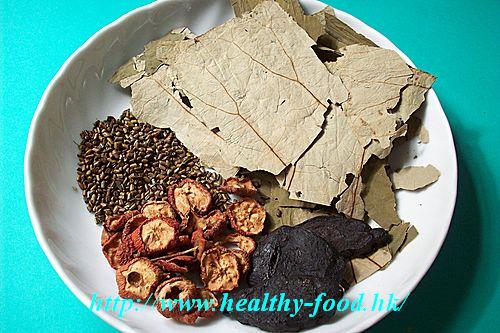
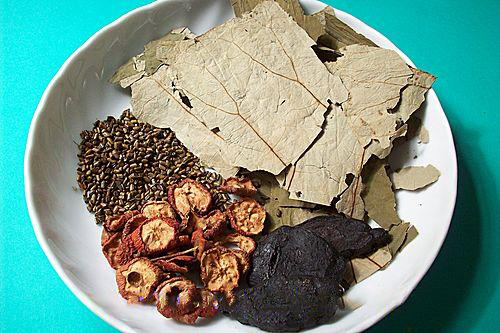
Fatty liver is one of those conditions that creeps up quietly — many people discover it incidentally during a routine health check, because mild cases often produce no obvious symptoms beyond occasional fatigue. Traditional Cantonese food therapy treats the early stages of fatty liver as an opportunity: if you adjust your diet while the condition is still mild, you may be able to support the liver before the situation worsens. This tea brings together several ingredients that have a long track record in that tradition. Hawthorn (shan zha) is particularly well-regarded for its relationship with digestion and blood fats; lotus leaf (he ye) is associated with clearing heat and dampness; cassia seed (jue ming zi) with supporting the liver and easing the bowels; and prepared he shou wu (zhi shou wu) with tonifying without causing excessive heat.
Who it suits / who should be cautious
- Suited to adults with mild fatty liver, elevated blood lipids, high blood pressure, or those trying to manage weight
- Also suitable for people with diabetes who want a supportive daily tea
- Avoid if you have loose stools or chronic diarrhea — cassia seed has a laxening effect; in that case, substitute chrysanthemum flowers (3 qian) for the cassia seed
- Not suitable during menstruation or pregnancy without guidance
- Drink this tea after meals, not on an empty stomach — hawthorn on an empty stomach combined with milk may cause nausea
- This tea supports, but does not replace, medical treatment. Please see a doctor if fatty liver has been clinically confirmed.
Why these ingredients (the food-therapy logic)
- Hawthorn (shan zha): One of the most widely used food-therapy ingredients for digestion and blood fat management; warm in nature, associated with resolving food stagnation and supporting blood circulation
- Lotus leaf (he ye): Cooling and drying in nature; associated with clearing summer heat, reducing dampness, and supporting a healthy weight
- Cassia seed, dry-roasted (jue ming zi): Associated with supporting liver function, clearing heat, and promoting bowel regularity; should be dry-roasted in a pan first to draw out its flavor
- Prepared he shou wu (zhi shou wu): The processed (not raw) form; traditionally associated with nourishing the liver and kidneys without the harsh properties of the raw root
- Rock sugar: Balances the slight astringency of the herbs; adjust to taste
Ingredients (2–3 bowls, 1 daily serving)
| Ingredient | Amount | Notes |
|---|---|---|
| Dried hawthorn berries (shan zha) | 18 g (5 qian) | |
| Dry-roasted cassia seeds (jue ming zi) | 7 g (2 qian) | Dry-roast in a pan before use to release flavor |
| Prepared he shou wu (zhi shou wu) | 7 g (2 qian) | Use the processed form, not raw |
| Dried lotus leaf (he ye) | 11 g (3 qian) | The same large leaves used to wrap sticky rice |
| Rock sugar | To taste | Add after brewing |
| Water | 5 bowls (approx. 1 L) |
Method
- Rinse all ingredients briefly.
- Dry-roast the cassia seeds in a dry pan over medium heat until fragrant, stirring constantly. Set aside.
- Combine all ingredients in a pot with 5 bowls of water.
- Bring to a boil, then simmer for 45 minutes until liquid reduces to about 2–3 bowls.
- Stir in rock sugar and dissolve.
- Drink the full batch throughout the day.
Bro Niu’s tips
For prevention and general wellness, this tea can be taken 1–2 times per week. If actively trying to support liver health, it can be taken daily — a course of about six weeks is worth trying before assessing results.
If your stomach tends to be loose or delicate, remove the cassia seed and add chrysanthemum flowers (3 qian) instead — the hawthorn and lotus leaf alone still make a useful and pleasant-tasting tea.
Do not drink on an empty stomach if you have also had milk, as hawthorn and dairy can occasionally conflict and cause queasiness. Better to take the tea in the afternoon.
Community questions answered (selected)
-
Q (May): Can this tea be taken long-term? How many times per week? Bro Niu: Three times a week is fine for ongoing use. It can be continued long-term.
-
Q (reader with loose stools): I have loose stools and a weak stomach — can I still drink this? Bro Niu: If you have fatty liver, yes, but remove the cassia seed and replace it with 3 qian of chrysanthemum. The cassia seed has a laxening effect that would make loose stools worse. For general digestive weakness, you can also try a daily tea of poria (fu ling), atractylodes (bai zhu), and hyacinth bean (bian dou), which supports the spleen and firms the stool.
-
Q (reader): Is lotus leaf the same as the large leaves used to wrap sticky rice? Bro Niu: Yes, exactly — the same lotus leaf used to wrap sticky rice. If you are abroad and can only find those, they will work perfectly.
Published May 12, 2010 · Adapted and translated for Nourilo from a traditional home-kitchen recipe. Approx. 4 min read.