Soups
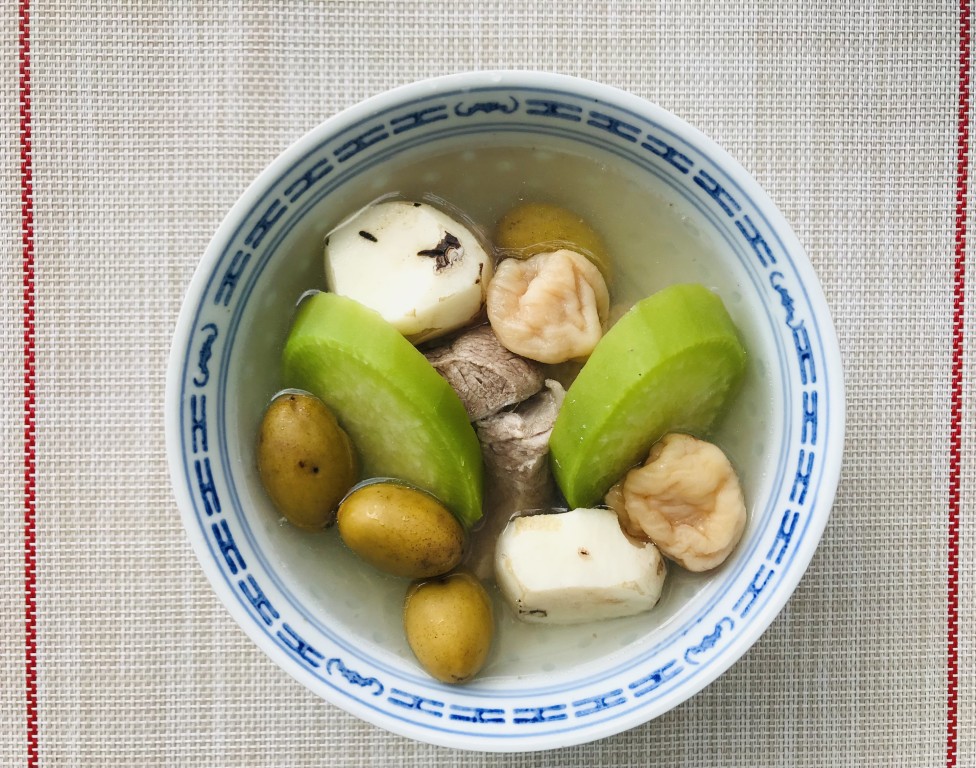
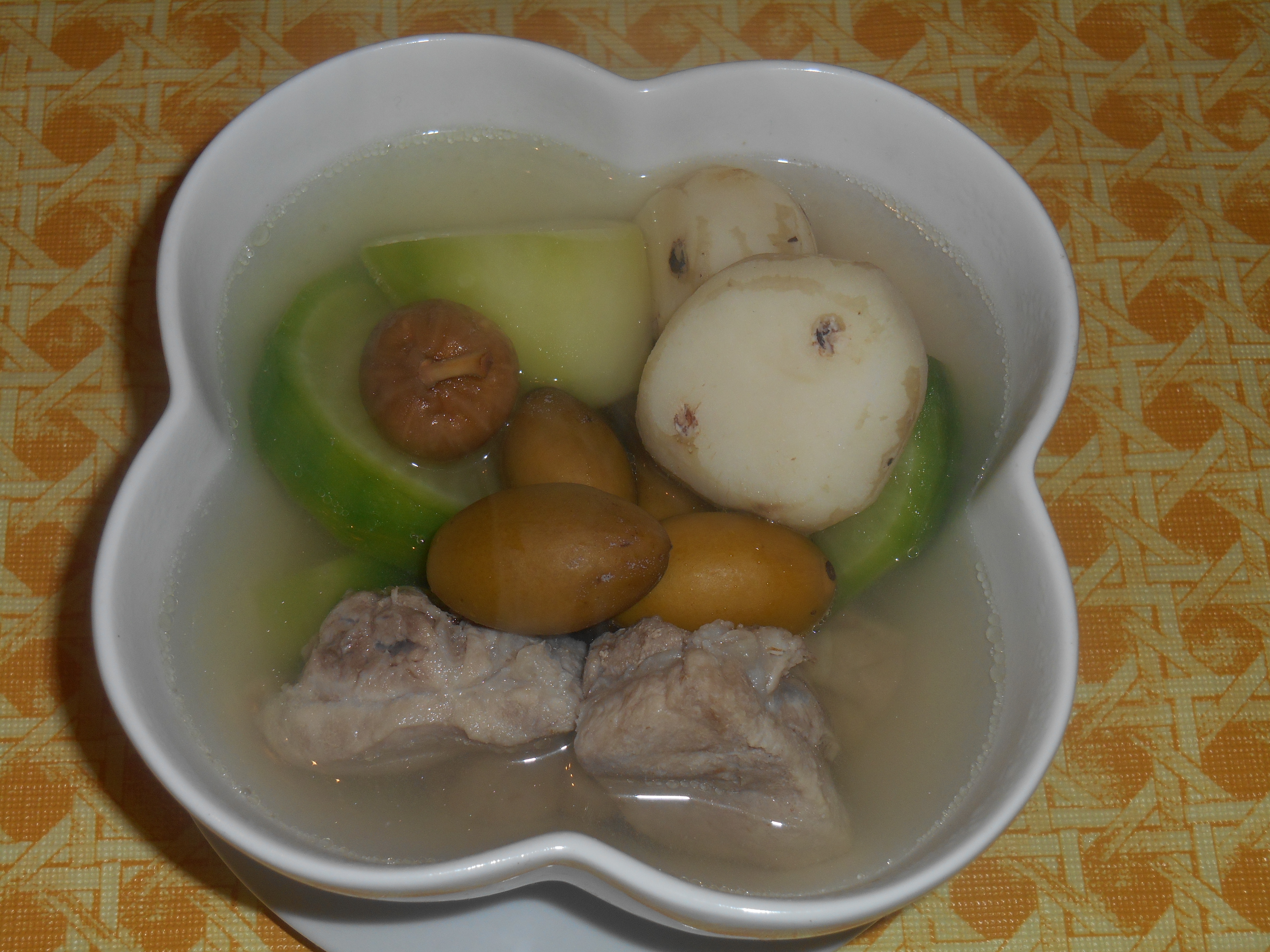
Green Olive, Green Radish, Water Chestnut & Pork Shin Soup
traditionally used to clear heat, soothe sore throat, detoxify, and support bone development in children
Why people make this soup
This soup brings together some of the most familiar ingredients in a Cantonese health kitchen, each with its own traditional role. Green olive is a southern Chinese specialty that can be eaten fresh or preserved as a dried fruit snack. In cooking, it is traditionally valued for relieving sore throats, generating saliva, and clearing the effects of alcohol or fish toxins. Green radish, a close relative of the more common white radish, is traditionally used for households that rely on gas stoves for cooking — its properties are associated with helping the body process any residual combustion gases absorbed through daily exposure. Water chestnut is crunchy and naturally sweet, believed to promote fluid production and cool excess heat; when combined with fig, which is high in calcium, the two together are thought to support healthy bone development in children. The result is a clean, slightly sweet, refreshing broth that the whole family can enjoy.
Who it suits / who should be cautious
- Suitable for the whole family, including children, as a regular health-supporting soup
- Particularly helpful for those with a sore, inflamed throat; sore gums; or a tendency to accumulate heat
- Beneficial for children during growth periods — water chestnut is phosphorus-rich, and dried figs are calcium-rich, making them a supportive combination for bone development
- Pregnant women can drink this soup
- Avoid taking any qi-boosting supplements or herbs (ginseng, astragalus, etc.) on the same day as consuming this soup, as radish may reduce their effectiveness
- Note: Adding Chinese yam or euryale seeds is fine; just avoid qi-tonic herbs
Why these ingredients (the food-therapy logic)
- Green olive (qing lan): Unique to southern China, green olive is associated with generating saliva, soothing the throat, neutralising fish and alcohol toxins, and relieving inflammation of the throat and gums.
- Water chestnut (ma ti): Traditionally used to clear heat, generate fluids, and support the bladder. High in phosphorus and associated with supporting children’s bone health. Also traditionally linked to helping the body clear minor lead residues from old water pipes.
- Green radish (qing luo bo): Similar in function to white radish — promotes digestion, disperses food stagnation, and is traditionally associated with neutralising gas combustion residues for households using gas cooking.
- Dried fig (wu hua guo): High in calcium. Adds natural sweetness and is traditionally associated with lubricating the intestines and supporting bone health when paired with water chestnut.
- Pork shin (zhu zhan): A lean cut with good collagen content, ideal for long-simmered soups. Provides savoury depth without excess fat.
Ingredients (4–5 bowls, whole family)
| Ingredient | Amount | Notes |
|---|---|---|
| Green olive (qing lan) | 10 pieces | Rinse and lightly crush/flatten before use |
| Water chestnut (ma ti) | 10 pieces | Peel (or buy pre-peeled) |
| Green radish | 1 medium | Peel and cut into chunks |
| Dried fig | 3 pieces | Rinse |
| Pork shin | ~450 g (12 liang) | Cut into chunks; blanch in boiling water to remove impurities |
Method
- Rinse green olives and gently press or tap each one to crack them slightly — this helps release their flavour into the broth.
- Peel water chestnuts and leave whole (or halve if large).
- Peel green radish and cut into chunks.
- Rinse dried figs; cut pork shin into cubes and blanch in boiling water for 2–3 minutes, drain and rinse.
- Place all ingredients into a pot with 10 bowls of water (approximately 2 litres).
- Bring to a rolling boil, then reduce heat and simmer gently for about 1.5 hours.
- Serve warm — drink the broth and enjoy the soup ingredients.
Bro Niu’s tips
This is a genuinely practical everyday soup for families. It helps soothe inflamed throats, and the combination of water chestnut and fig supports healthy bone development in growing children — a bonus for parents looking for ways to increase calcium and mineral intake naturally. One important reminder: because this soup contains radish, avoid drinking any qi-tonifying herbal teas or taking supplements like ginseng on the same day. You can add Chinese yam or euryale seeds to this soup without any issue. If cooking for pregnancy, the soup is safe throughout.
Community questions answered (selected)
-
Q (羊太): Can I add other herbs to this soup, like Chinese yam or euryale seeds? Bro Niu: Yes, you can add Chinese yam or euryale seeds — they are compatible. Just avoid adding any qi-tonifying herbs, as radish may reduce their effectiveness.
-
Q (Catherine): Can this soup be drunk at 34 weeks of pregnancy? Bro Niu: Yes, pregnant women can drink this soup without concern.
-
Q (黄文敏 / reader): My 4-year-old daughter has allergic rhinitis, frequent constipation, poor appetite, and is quite thin. Any suggestions? Bro Niu: For the rhinitis, I would suggest purchasing “Jade Screen Powder” (yu ping feng san) granules from a Chinese herb shop — it contains astragalus, windproof herb, and white atractylodes. Take 2 teaspoons of granules and add 6 crushed magnolia flower buds (xin yi hua), brew with hot water for 5 minutes, and give to your daughter three times a week. This helps to strengthen resistance against nasal sensitivity. For the constipation, give her 4 American prunes each time, followed immediately by a large cup of warm water — this is very effective. Address the constipation first before moving on to spleen-strengthening soups.
Published September 6, 2016 · Adapted and translated for Nourilo from a traditional home-kitchen recipe. Approx. 4 min read.