Herbal & Flower Teas
Goji Berry Chrysanthemum Tea
traditionally used to nourish the liver and eyes, and support immunity
Why people make this tea
Modern life is full of screen time, long hours, and relentless pressure — the kind of daily grind that leaves eyes tired, the mind restless, and the body’s natural defenses running low. In traditional Chinese food therapy, the goji-chrysanthemum pairing is one of the gentlest and most trusted everyday remedies for just this situation. Goji berries nourish the liver and kidneys, which in traditional thinking are closely linked to the health of the eyes; chrysanthemum clears what practitioners call “liver heat” — that dry, gritty feeling in the eyes that comes from overwork or too many late nights. Together they make a tea that is refreshing, naturally sweet-floral in flavor, and mild enough for the whole family.
Who it suits / who should be cautious
- Most adults and older children can enjoy this tea freely across all four seasons.
- Particularly helpful for people who spend long hours at a screen, feel eye strain or dryness, or are prone to fatigue.
- Pregnant women are advised to avoid herbal teas in general; please check with your doctor.
- Those with a very cold or yang-deficient constitution may prefer to add a few extra goji berries and reduce chrysanthemum slightly to balance the mildly cooling nature of the flower.
Why these ingredients (the food-therapy logic)
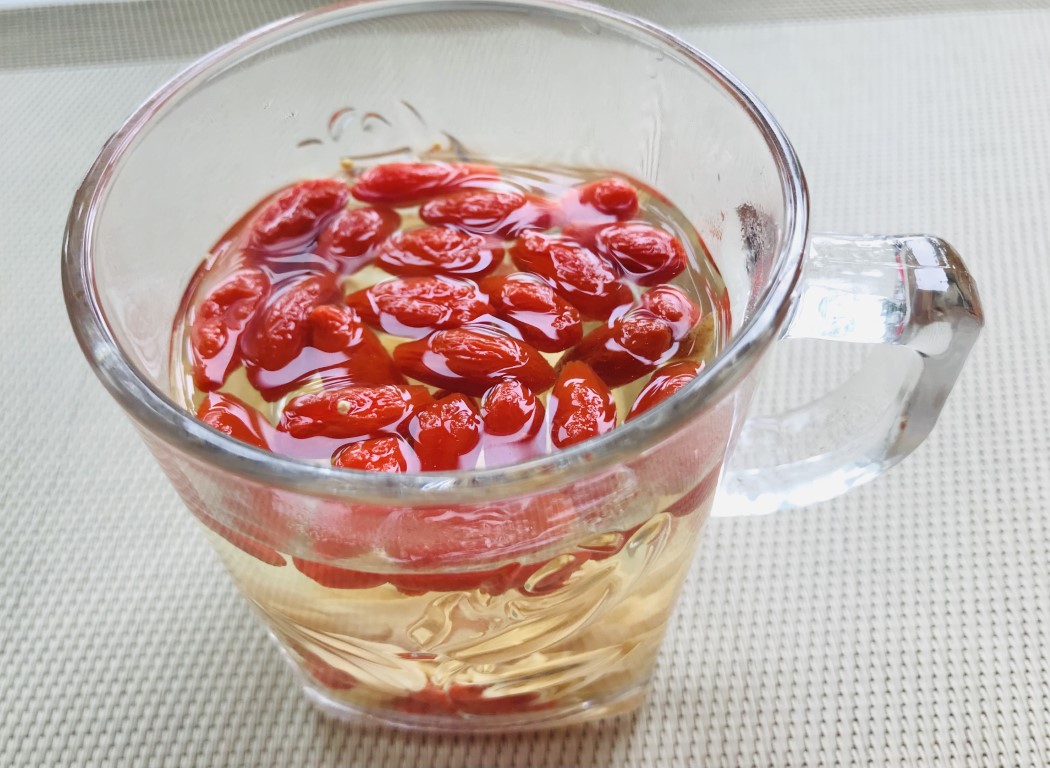
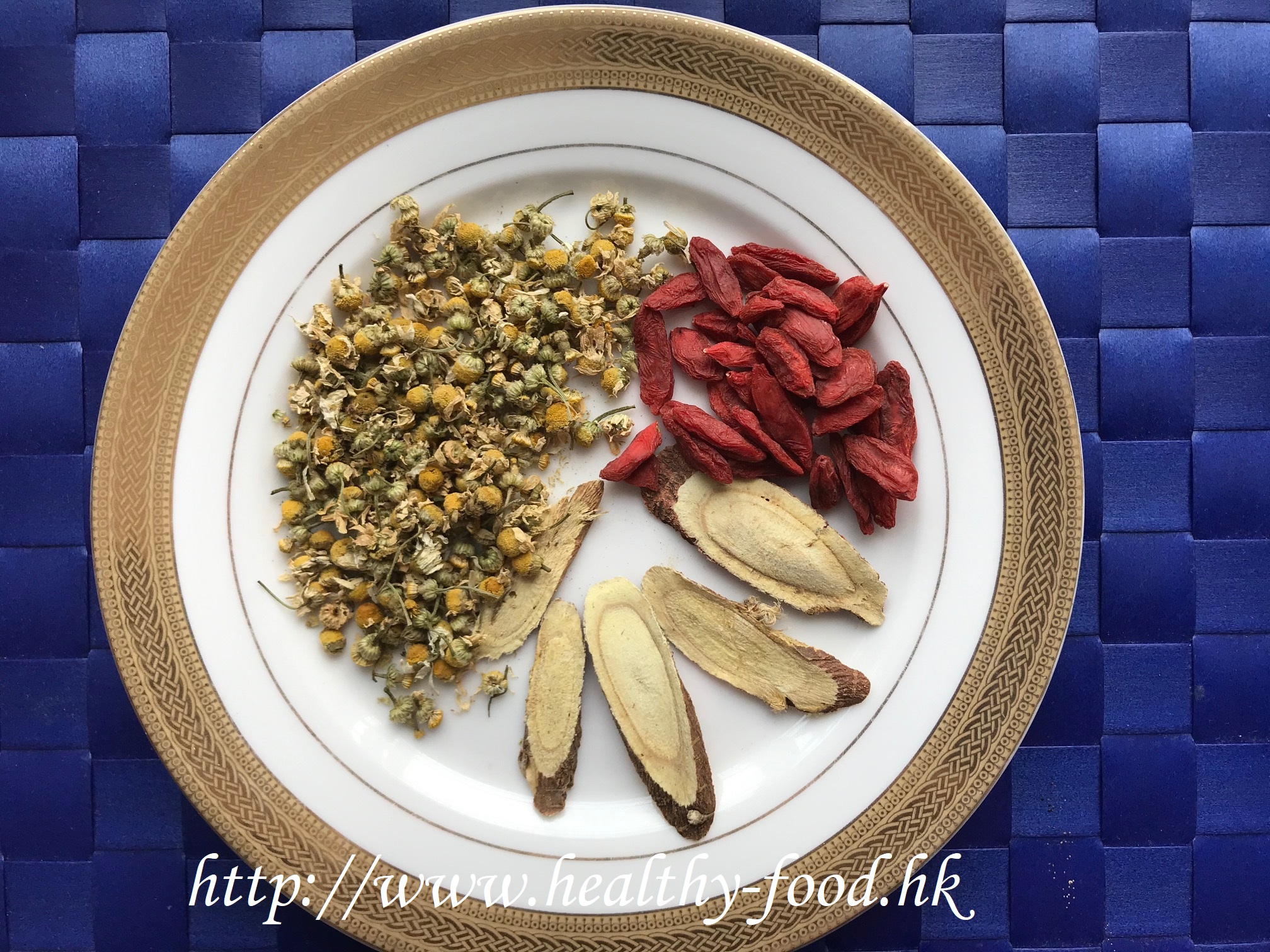
- Goji berries (gou qi zi): Sweet and neutral in nature, traditionally regarded as a premier tonic for liver and kidney essence. Associated with nourishing the blood, brightening vision, and supporting overall vitality.
- Chrysanthemum flowers (ju hua): Gently cooling and fragrant. Traditionally used to disperse wind-heat, reduce “liver fire,” and ease redness or soreness of the eyes. Hangzhou (hang ju) and embryonic bud (tai ju) varieties are both suitable.
Ingredients (1 cup)
| Ingredient | Amount | Notes |
|---|---|---|
| Dried goji berries | 1 tablespoon (~10 g) | Rinsed briefly |
| Dried chrysanthemum flowers | 1 tablespoon (~3 g) | Hang ju or tai ju variety |
Method
- Place goji berries and chrysanthemum flowers in a teapot or heatproof mug.
- Pour a little boiling water over them and swirl gently, then drain — this quick rinse removes dust and refreshes the ingredients.
- Pour in fresh boiling water and steep for about 5 minutes, until the liquid turns a warm golden color.
- Drink as is, or add a small spoonful of honey if you enjoy a touch of sweetness.
- The goji berries can be eaten after drinking the tea.
Bro Niu’s tips
This tea has a gentle, balanced character that suits any season and most body types. If you want to add a floral dimension, a pinch of rose petals (mei gui hua) makes a lovely and harmonious addition that also supports relaxed spirits. Honey may be added to taste, but skip it if you have diabetes. For those with high blood pressure or a tendency toward liver heat, this is an excellent everyday brew — try using the formula: dried hawthorn 3 g, chrysanthemum 3 g, and hook vine (gou teng) 3 g simmered for 45 minutes alongside hawthorn and hook vine, then add chrysanthemum at the end.
Community questions answered (selected)
-
Q (Joyce): Can I drink goji chrysanthemum tea during the first two days of my period? Is it too cooling? Which chrysanthemum should I use — hang ju or tai ju? Bro Niu: You can drink it during your period — it is not overly cooling. Both hang ju and tai ju varieties work well.
-
Q (duckduck): Is goji chrysanthemum rose tea suitable for all body types and all seasons? Can American ginseng be added? Bro Niu: This tea is mild and balanced — suitable for most people year-round. A small amount of American ginseng can be added.
-
Q (Anita): I have high blood pressure and often suffer from insomnia. My Chinese medicine practitioner says I have liver fire and constrained liver qi. Can I drink goji chrysanthemum tea, and can I add honey? Bro Niu: You can drink this tea. As a separate option for your liver fire and blood pressure, try simmering xia ku cao (self-heal herb) 1 liang, chrysanthemum 3 qian, and gou teng (hook vine) 3 qian — add chrysanthemum only at the end. You can also add a pinch of rose petals to your regular goji chrysanthemum tea for liver qi relief. Honey is fine if you do not have diabetes.
Published April 22, 2012 · Adapted and translated for Nourilo from a traditional home-kitchen recipe. Approx. 3 min read.