Sweet Soups & Desserts
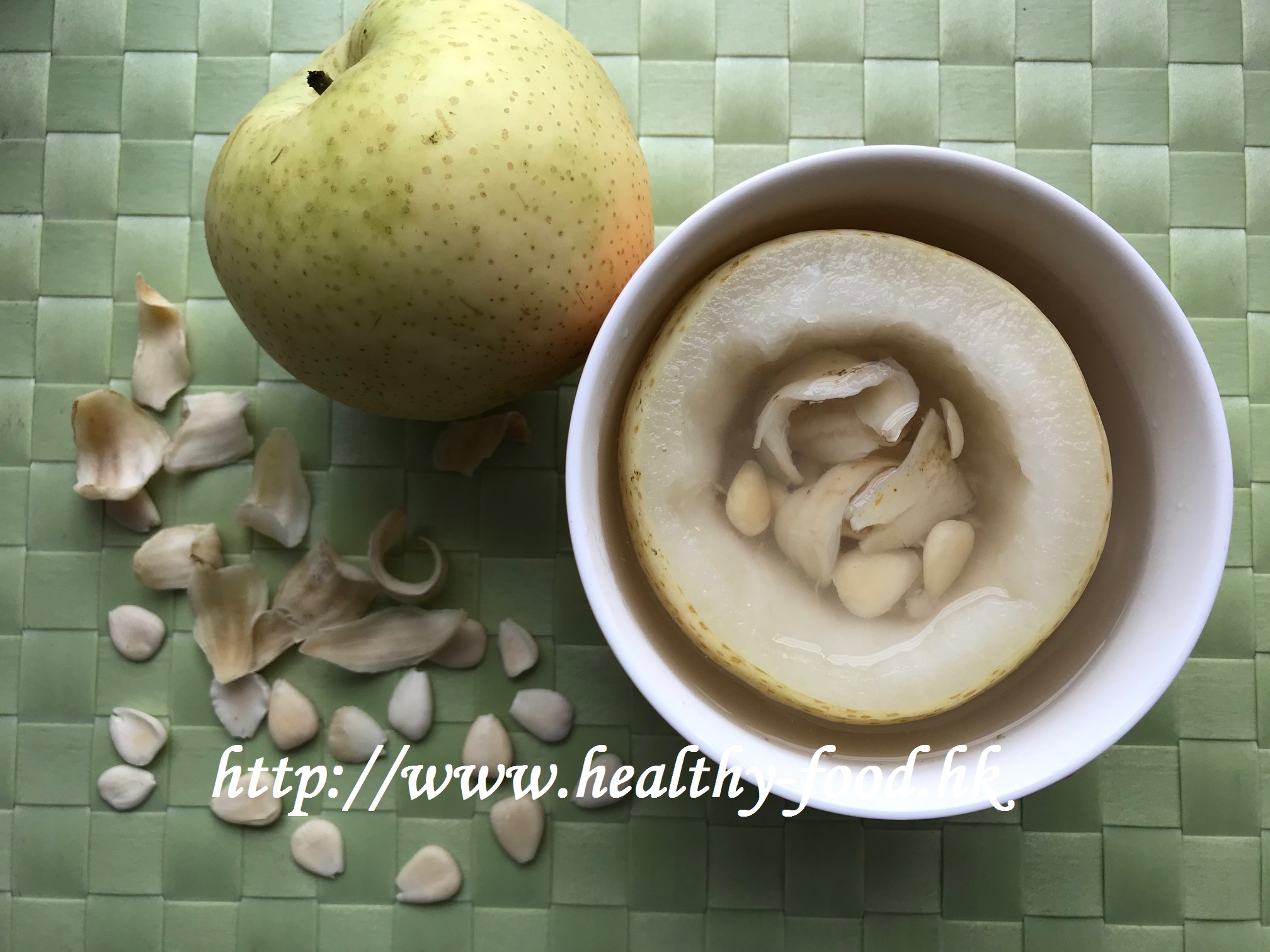
Lily Bulb and Sweet Almond Steamed Pear
Traditionally associated with moistening the lungs, calming the mind and soothing a dry cough
Why people make this dish
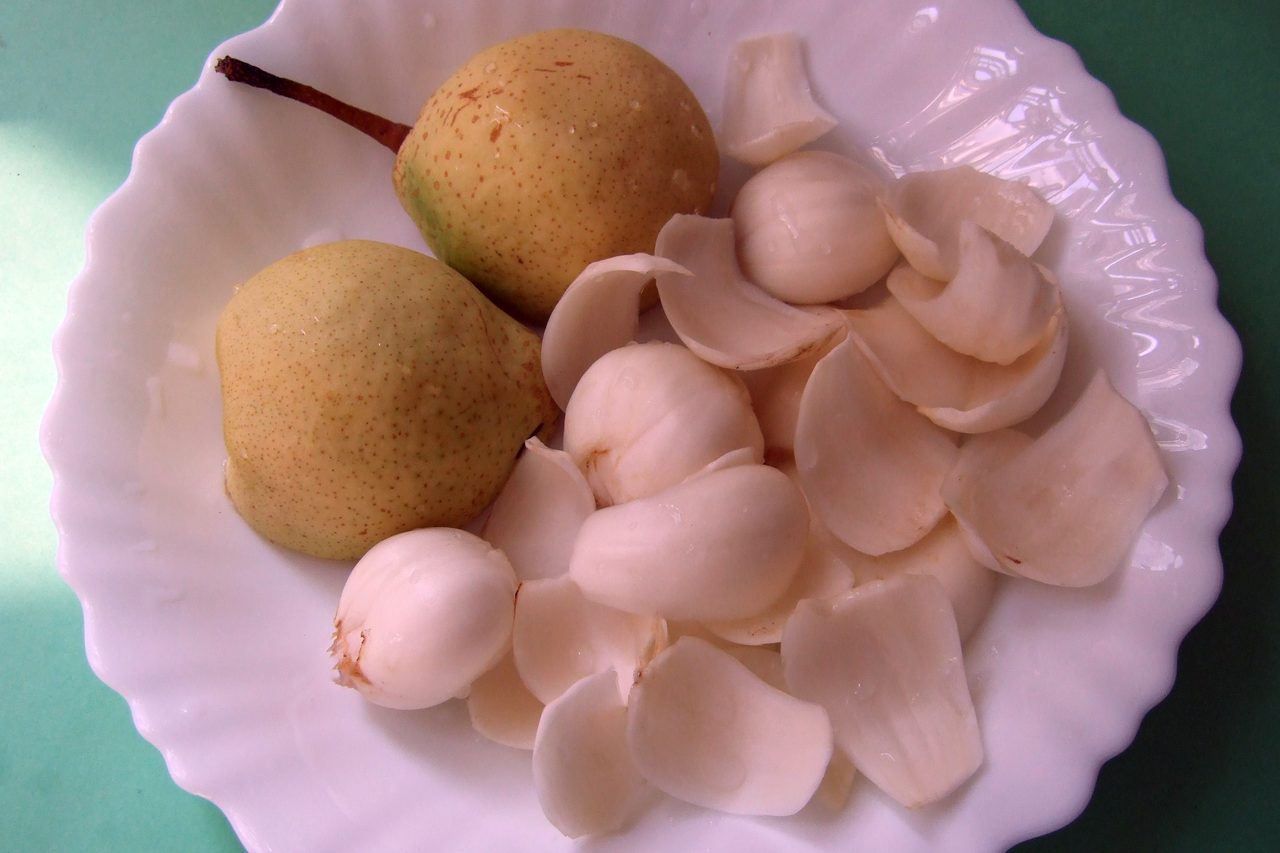
Autumn in Cantonese culinary culture is pear season — and pears are considered one of the most natural, accessible remedies for the dryness that the season often brings. Most of the pear’s fibre and active compounds are concentrated in the skin, so Bro Niu always recommends scrubbing the skin well and leaving it on rather than peeling. This steamed pear dish takes the classic pairing of pear with lily bulb (bai he) and sweet almond (nan xing) and turns them into something that looks as beautiful as it tastes — a whole hollowed pear filled with fragrant herbs and honey, gently steamed until soft. It is traditionally enjoyed for a dry, scratchy or persistent cough with little or no phlegm, for a restless or anxious mind at night, for mild constipation, or simply as a skin-nourishing autumn ritual.
Who it suits / who should be cautious
- Particularly well-suited to a dry cough with little phlegm, especially in autumn or after a cold has resolved but left residual dryness.
- Helpful for those who feel mentally restless, have difficulty sleeping, or experience mild constipation related to dryness.
- Also good as a skin-nourishing snack for those with dry or rough skin.
- Not suitable for a wet, productive cough from a fresh cold (wind-cold pattern), or for those with a weak spleen and loose stools.
- This recipe uses southern almond (nan xing — the sweet variety). Do not confuse with northern almond (bei xing), which is bitter and contains trace amounts of hydrocyanic acid — use no more than 9 g (3 qian) of the northern variety per serving.
Why these ingredients (the food-therapy logic)
- Pear (li zi): In Chinese food therapy, pear is regarded as cooling, moistening, and fluid-generating; traditionally associated with clearing heat from the lungs and throat, and gently supporting the bowels.
- Lily bulb (bai he): Gently nourishes lung yin, calms the heart and settles the mind; one of the classic herbs for anxiety-related sleeplessness combined with dryness symptoms.
- Sweet almond / southern almond (nan xing): Moistens the lungs and nourishes the skin; considered sweet and nourishing in contrast to the stronger, more bitter northern almond.
- Honey (feng mi): A natural humectant; traditionally regarded as moistening the lungs and intestines. Added to the pear before steaming keeps the temperature low enough in the double-boiler to preserve honey’s active compounds.
Ingredients (1 serving)
| Ingredient | Amount | Notes |
|---|---|---|
| Large pear | 1 | Skin on; scrubbed clean |
| Dried lily bulb | 18 g (5 qian) | Rinsed and soaked briefly |
| Sweet almond (nan xing) | 18 g (5 qian) | Rinsed and soaked briefly |
| Raw honey | To taste | Added before steaming |
| Boiling water | Enough to partly fill the pear |
Method
- Scrub the pear thoroughly with a small brush. Slice off the top to create a “lid” and use a spoon to hollow out the core and some of the flesh, taking care to leave the base intact so it can hold liquid.
- Place the pear upright and securely in a deep steaming bowl or heatproof container so it will not tip over.
- Fill the pear cavity with the soaked lily bulb, sweet almond and honey. Pour a little boiling water into the cavity to just cover the herbs.
- Place the pear “lid” back on top.
- Steam in a double boiler over simmering water for 1 hour.
- Serve immediately — eat the pear flesh together with the soft herbs and fragrant liquid inside.
Bro Niu’s tips
The gentle temperature of double-boiling (below 80 degrees Celsius inside) means the honey’s active compounds are preserved — this is why the honey goes in before steaming here, not after. If you are making a regular soup rather than a double-boiled version, add honey only at the moment of serving. For this recipe, large pears work best visually and provide more flesh — snow pear, Korean water pear, Taiwanese feng shui pear, or Japanese crystal pear are all excellent choices. Smaller varieties like the common duck-bill pear (ya zui li) are fine if you are simply adding them to a pot of soup.
Community questions answered (selected)
-
Q (Jessica): Is this steamed pear one serving? Can I make it without honey? Bro Niu: Yes, it is one person’s serving. You can omit the honey if you prefer.
-
Q (Nat): My mother has a small kidney stone. The doctor says to drink more water and try to pass it naturally. Is there anything she can make? Bro Niu: If you can find cat’s whiskers herb (mao xu cao), use 5 qian simmered as a tea — it supports urinary flow. You can also try: fresh cogon root (xian mao gen) 1 bunch, fresh plantain herb (xian che qian cao) 2 liang, fresh corn silk (xian su mi xu) 1 liang, simmered in 5 bowls of water to 2 bowls. This has a natural diuretic effect. When using tofu in cooking, avoid eating high-oxalate greens (spinach, clover sprouts, amaranth) at the same meal, as oxalate can contribute to stone formation.
Published September 19, 2020 · Adapted and translated for Nourilo from a traditional home-kitchen recipe. Approx. 4 min read.