Herbal & Flower Teas
Spleen-Supporting Dampness-Clearing Tea
Traditionally associated with supporting the spleen and clearing damp
Why people make this tea
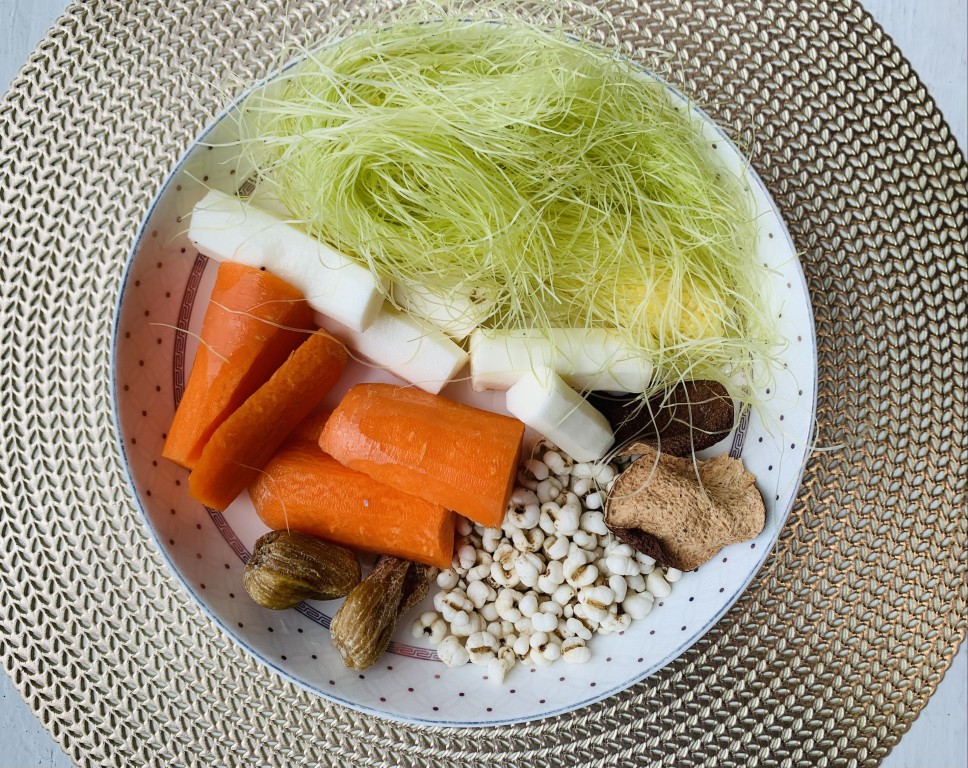
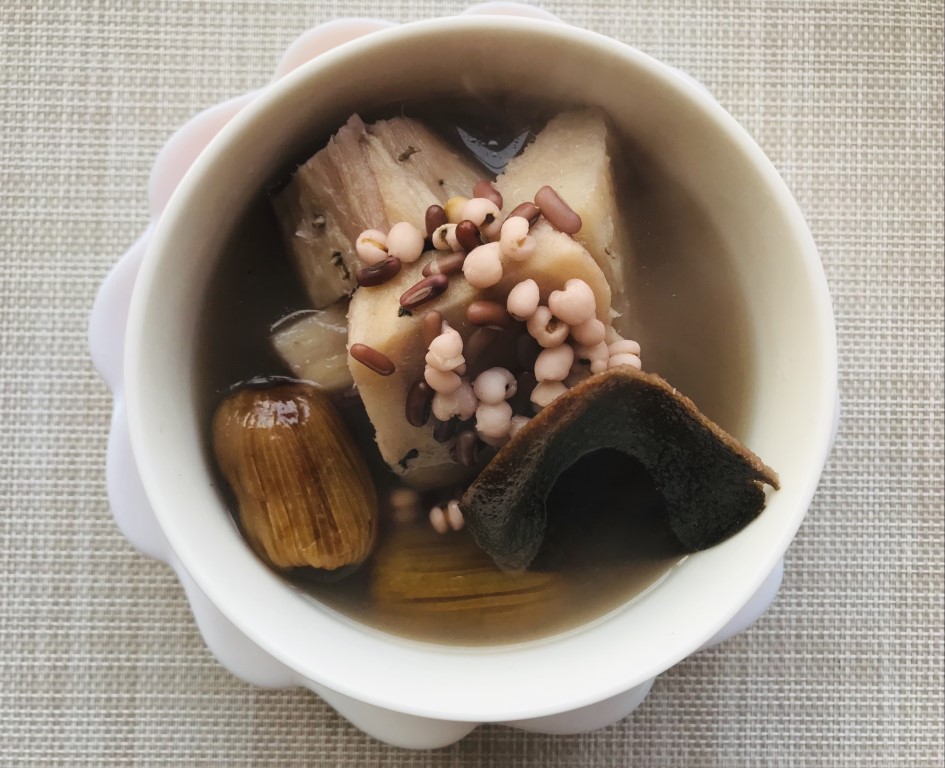
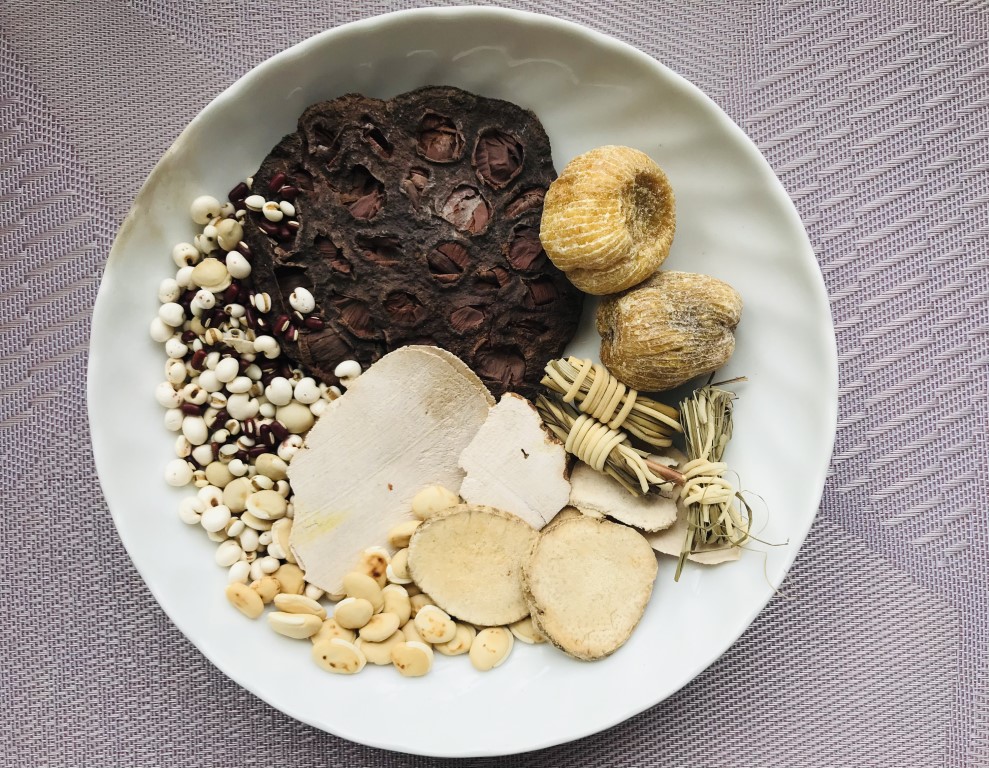
In Hong Kong’s muggy weather many people feel heavy, puffy and sluggish — the classic sense of “damp.” Bro Niu’s everyday dampness-clearing tea uses gentle, common ingredients like smilax, adzuki bean, barley and rush pith. It is traditionally enjoyed to support the spleen, clear damp, ease the joints and reduce puffiness in the limbs. You can buy a ready-made dampness-clearing soup pack too — the exact mix varies, but they’re usually mild enough for the whole family.
Who it suits / who should be cautious
- Suits the whole family during humid weather, when feeling heavy, puffy or sluggish
- Pregnant women: do not use Job’s tears (yi mi) — swap in black-eyed peas (mei dou) or mung beans
- A reader asked about G6PD (favism): Bro Niu notes adzuki bean, hyacinth bean and Job’s tears are fine for those with G6PD, though large “flower beans” are best used sparingly, and ordinary dampness teas usually avoid honeysuckle, gardenia, burdock seed and pearl powder which are unsuitable for G6PD
Why these ingredients (the food-therapy logic)
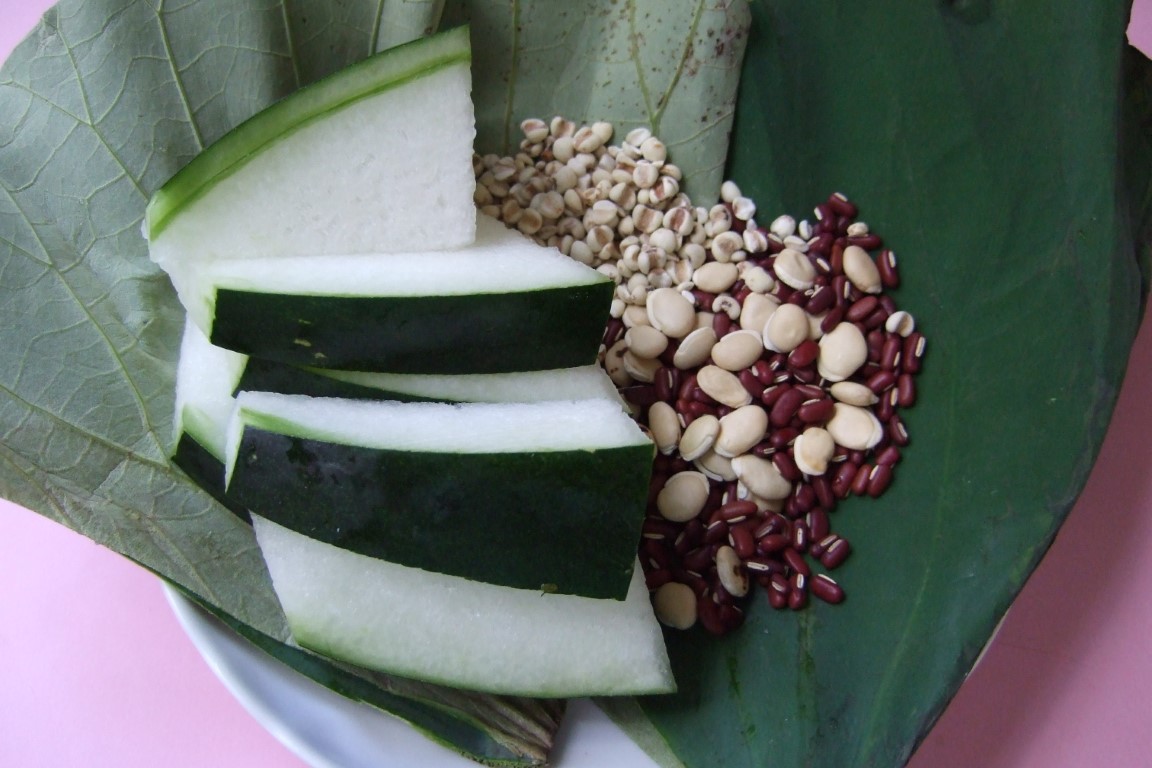
- Smilax (tu fu ling): traditionally associated with clearing heat and draining damp
- Adzuki bean and hyacinth bean (chi xiao dou, bian dou): traditionally associated with supporting urination and the spleen
- Job’s tears (yi mi): traditionally associated with draining damp (pregnant women swap)
- Water plantain and rush pith (ze xie, deng xin cao): traditionally associated with draining damp and clearing heat through urination
- Lotus pod (lian peng): traditionally associated with clearing damp-heat
Ingredients (4 bowls)
| Ingredient | Amount | Notes |
|---|---|---|
| Smilax (tu fu ling) | to taste | |
| Adzuki beans (chi xiao dou) | to taste | |
| Hyacinth bean (bian dou) | to taste | |
| Job’s tears (yi mi) | to taste | Pregnant women swap for mei dou or mung bean |
| Water plantain (ze xie) | to taste | |
| Lotus pod (lian peng) | to taste | |
| Rush pith (deng xin cao) | to taste | |
| Honey dates / lean meat | a few / optional | For flavor |
Method
- Rinse all the ingredients separately.
- Add honey dates or lean meat if you like.
- Put everything in a pot with 7–8 bowls of water and simmer 1 hour down to 4 bowls; serve.
Bro Niu’s tips
Ready-made dampness-clearing soup packs are sold at most Chinese herb shops; the exact ingredients vary, but they’re usually mild and family-friendly. Remember, pregnant women should leave out the Job’s tears and use black-eyed peas or mung beans instead.
Community questions answered (selected)
-
Q (Yoyo): Can a person with G6PD (favism) eat adzuki bean, hyacinth bean and Job’s tears? Bro Niu: Yes, those with favism can use adzuki bean, hyacinth bean and Job’s tears. Just go easy on the large “flower beans,” since they seem a bit similar to fava beans.
-
Q (Yin Ma): Does this dampness tea suit a child with G6PD? Bro Niu: An ordinary dampness tea won’t contain honeysuckle, gardenia, burdock seed or pearl powder — the things unsuitable for favism — so it can be used with peace of mind.
-
Q (wing): For a household of three, roughly how much of the dampness pack? Bro Niu: One dampness pack is about a 4-person amount; a family of three uses one pack, with a bowl left over for whoever needs the extra dampness support.
Published September 10, 2023 · Adapted and translated for Nourilo from a traditional home-kitchen recipe. Approx. 3 min read.