Herbal & Flower Teas
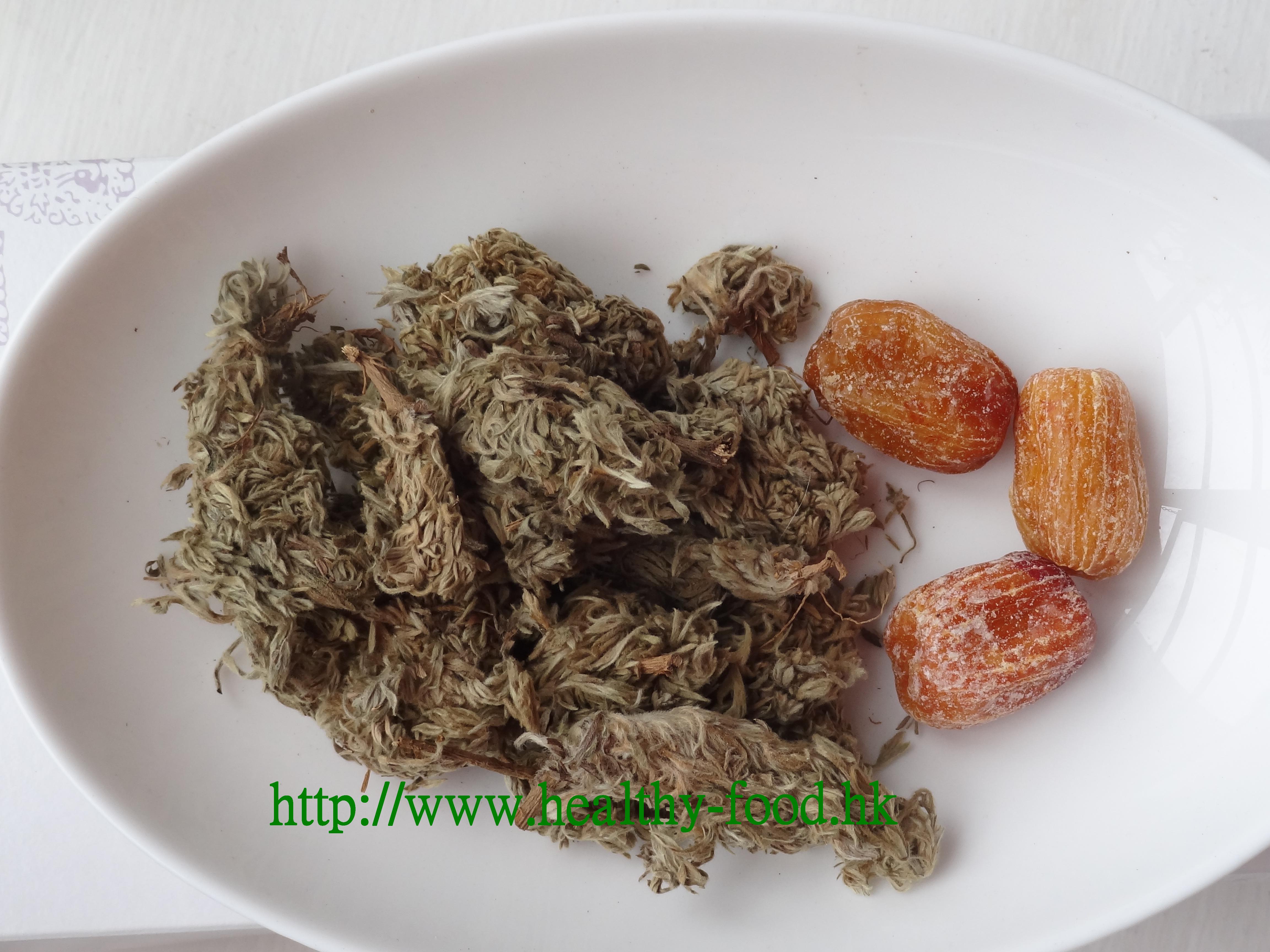
Capillaris Wormwood and Honey Date Tea (Mian Yin Chen Mi Zao Cha)
traditionally associated with clearing liver heat and damp-heat, supporting bile flow, and benefiting those with mildly elevated cholesterol or fatty liver
Why people make this tea
The liver is one of the body’s busiest organs — quietly processing nutrients, clearing metabolic waste, producing bile, and managing a huge range of chemical reactions. When this burden becomes too great — from a diet rich in fat and alcohol, irregular sleep, or chronic stress — the liver can show signs of heat and stagnation. In Chinese food therapy this is described as “damp-heat in the liver and gallbladder.” You might notice yellowed eye whites, eye discharge, a bitter taste in the mouth, or general sluggishness. Capillaris wormwood (mian yin chen) is the classical herb for this pattern. It is the young spring growth of a type of wormwood, and it has a long history as the principal herb in formulas treating liver-related conditions including jaundice and hepatitis. Modern research has also examined its effects on bile production and liver protection, as well as antimicrobial activity against several types of bacteria and fungi. Paired with honey dates for palatability and mild stomach protection, this tea is something Bro Niu considers a gentle maintenance drink for people who drink alcohol, eat rich food, or simply want to support their liver health. It is best consumed before evening — like most cooling teas, it is more comfortable on the body when taken in the morning or at midday.
Who it suits / who should be cautious
- People who drink alcohol regularly or eat a rich diet
- Those with mildly elevated cholesterol or triglycerides, or mild fatty liver
- Those with liver-related damp-heat signs: yellow eye whites, excessive eye discharge, bitter taste, sluggishness
- Pregnant women: this tea is considered safe during pregnancy (Bro Niu specifically confirmed this)
- Spleen-deficient people with loose stools: add a piece of dried tangerine peel (chen pi) to the brew
- Those with high liver enzyme levels (elevated ALT/AST): consult a doctor before using herbal teas of any kind, to avoid adding further burden to the liver
- Best taken in the morning or before evening — cooling teas are generally not ideal late at night
- Note: Diabetic people who need to avoid the natural sugar of honey dates can omit them and use just the capillaris alone
Why these ingredients (the food-therapy logic)
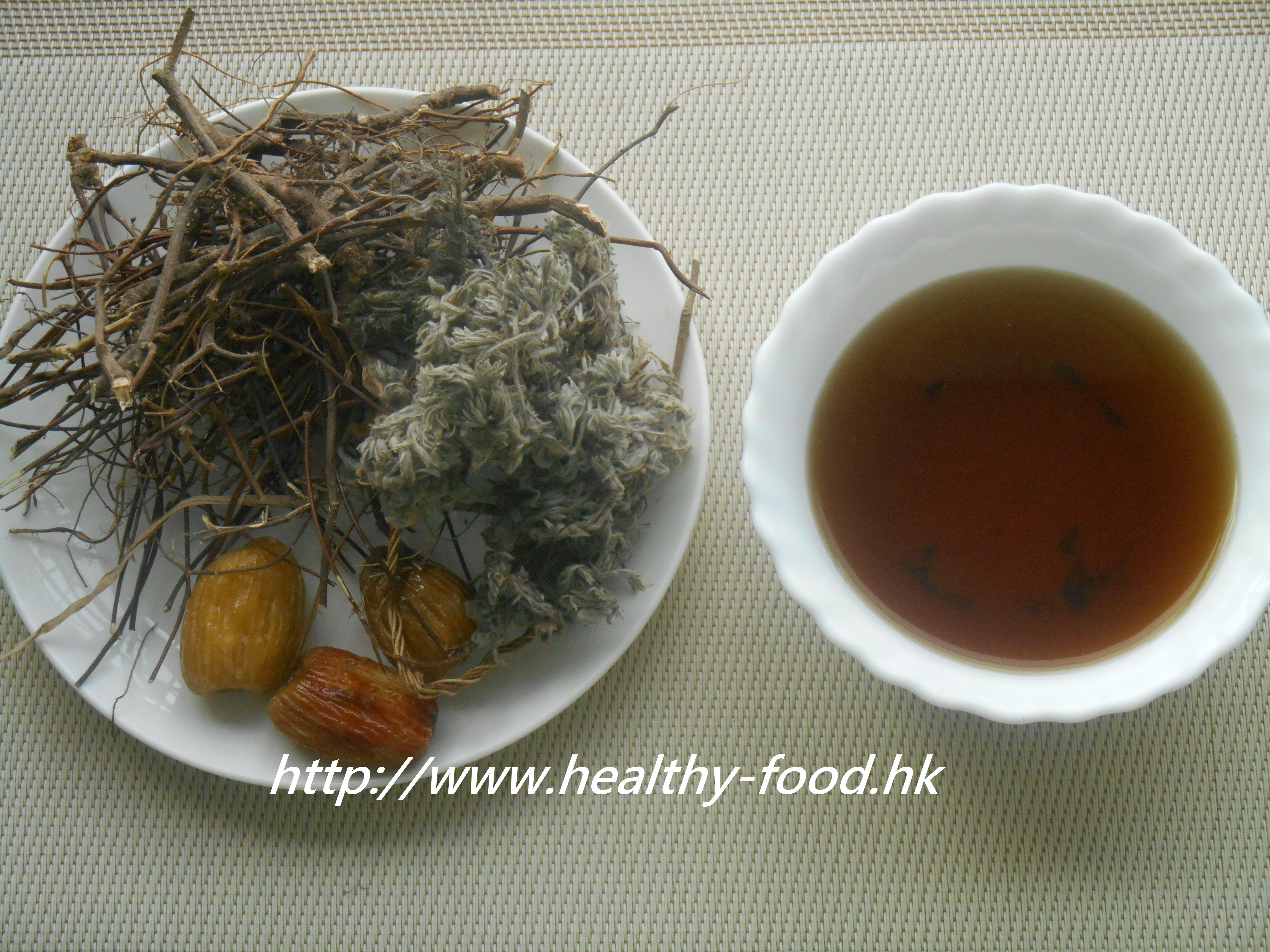
- Capillaris wormwood (mian yin chen): The young spring growth of Artemisia capillaris; the premier herb in Chinese medicine for clearing damp-heat from the liver and gallbladder; associated with supporting bile flow, promoting liver cell regeneration, lowering blood pressure and cholesterol, and providing broad antimicrobial action including against pneumococcal bacteria, tuberculosis bacilli, and skin fungi; also associated with supporting the optic nerve
- Honey dates (mi zao): A sweet-tasting date variety that protects the stomach and spleen during the process of clearing liver heat; provides a pleasant flavour and moderates the bitterness of the capillaris
Ingredients (1 day’s serving)
| Ingredient | Amount | Notes |
|---|---|---|
| Capillaris wormwood (mian yin chen) | ~19 g (5 qian) | Available at all Chinese herb shops |
| Honey dates (mi zao) | 3 pieces | Can substitute with figs for an equally good result |
| Dried tangerine peel (chen pi) | 1 piece | Optional; add if spleen-deficient with loose stools |
| Water | ~1.2 litres (5 bowls) |
Method
- Rinse the capillaris and honey dates.
- Combine in a pot with 5 bowls (about 1.2 litres) of water.
- Bring to a boil over high heat, then reduce to a medium-low simmer.
- Cook for 1 hour until the liquid reduces to about 2 cups.
- Drink the tea across the day, preferably before evening.
Bro Niu’s tips
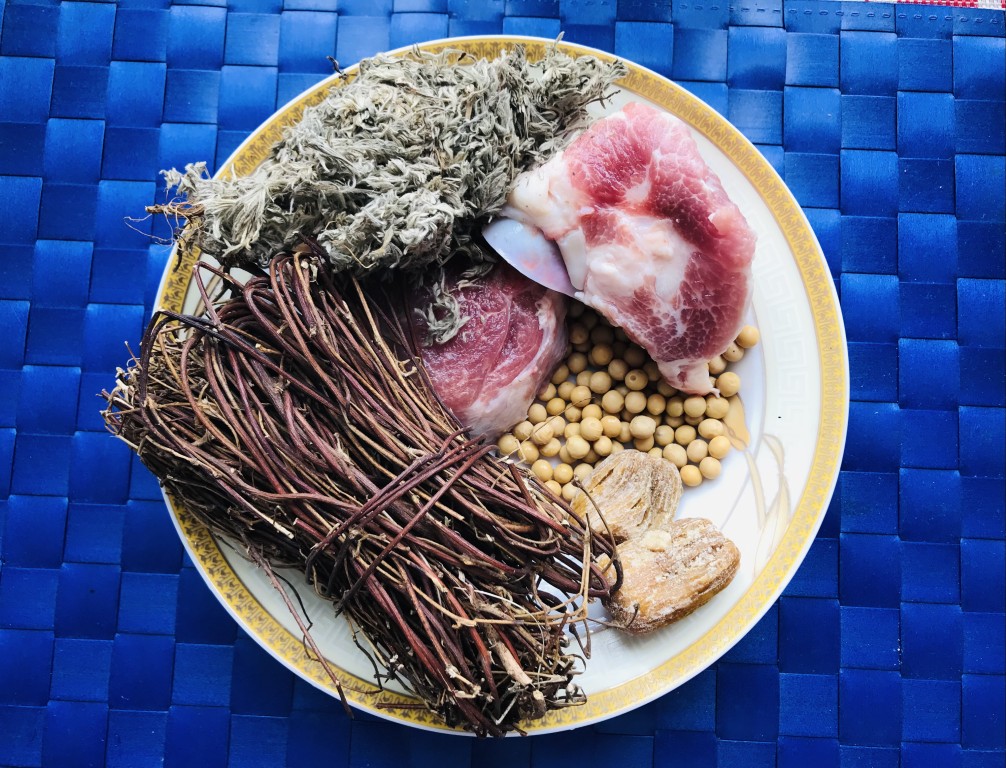
This is a genuinely useful maintenance tea — gentle enough to drink 2–3 times a week as a regular habit. For skin conditions like heat-related itching, the antimicrobial properties of capillaris are also thought to be relevant. If the tea develops insects or mould during storage, discard it — capillaris is not expensive and is available at every Chinese herb shop. This tea can also be cooked with chicken bone grass (ji gu cao, 2 liang) and honey dates as an alternative preparation that supports the liver and is suitable for those with hepatitis B.
Community questions answered (selected)
-
Q (Twinnie): My 4-year-old’s liver appears slightly enlarged on examination. He habitually sleeps after midnight. Can he drink this tea for a week continuously? Bro Niu: The liver begins its detoxification work from around 11 pm — children who sleep after midnight are preventing the liver from doing this effectively. Please get him to bed by 10:30 pm. Yes, he can drink this tea — but sleep habits are the most important change to make. Capillaris tea can be taken for 3–4 consecutive days.
-
Q (Jack): My wife is 30 weeks pregnant and has itchy hands and feet. Can she drink this tea? Bro Niu: Yes, capillaris tea is safe during pregnancy. For the hand and foot itching, you can also make a separate external wash: simmer honeysuckle flowers (jin yin hua, 1 liang / 38 g) in 8 bowls of water for 10 minutes, cool slightly, and use the liquid to wash the affected areas twice daily.
-
Q (Bobby): I want to make this tea but I have a weak spleen. Can I just use capillaris and honey dates as in this recipe, or do I need to add the other herbs you mentioned elsewhere? Bro Niu: If your spleen is weak, just add a piece of dried tangerine peel (chen pi) to this basic recipe — that is all you need. Chen pi warms the digestive system gently and prevents the cooling capillaris from being too harsh on the spleen.
Published March 6, 2013 · Adapted and translated for Nourilo from a traditional home-kitchen recipe. Approx. 4 min read.