Herbal & Flower Teas
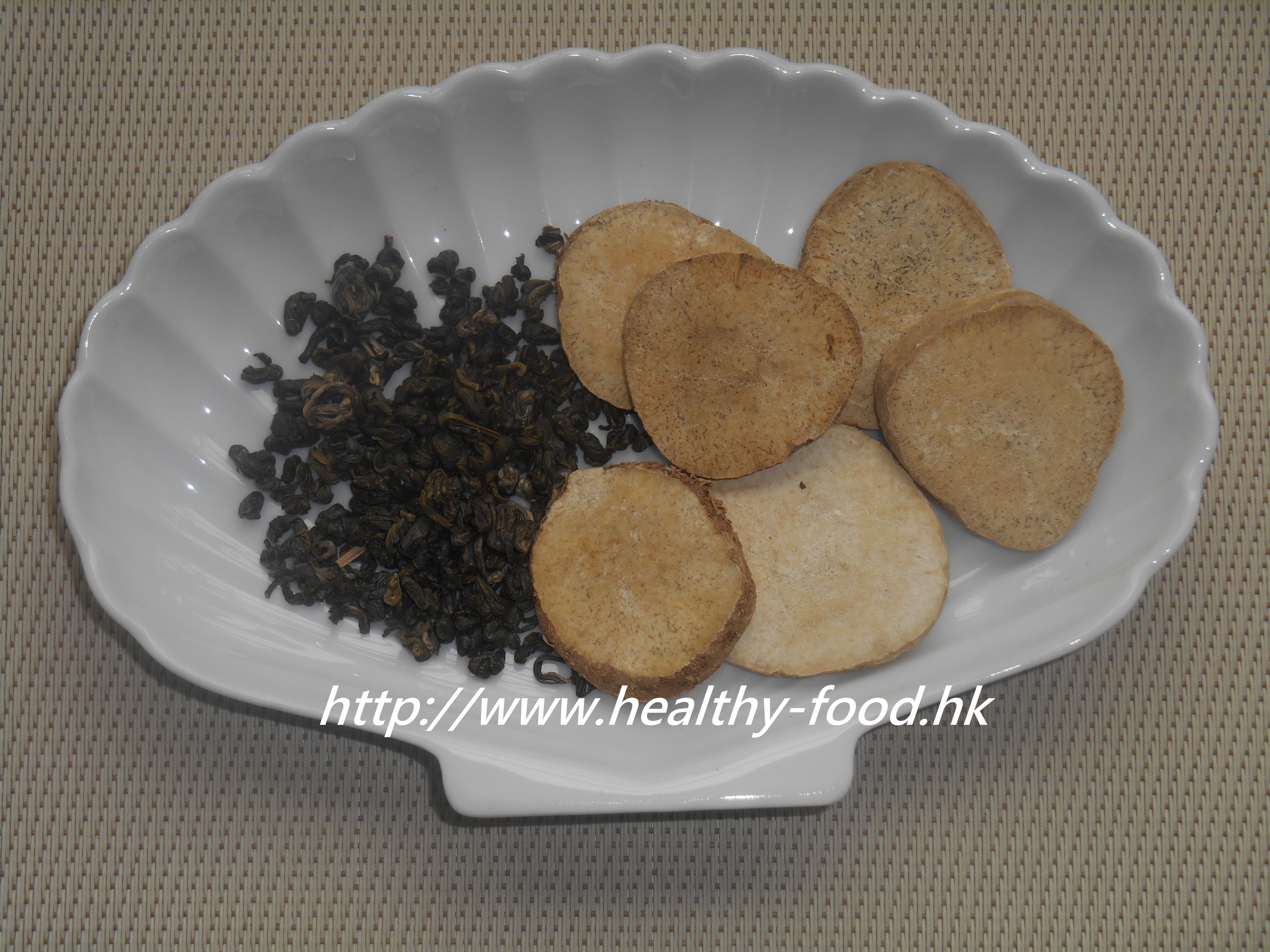
Alisma & Green Tea
Traditionally associated with supporting healthy cholesterol levels, reducing dampness, and helping with fatty liver and blood sugar
Why people make this tea
Walk into any traditional Chinese herb shop and you will see bags of “dampness-clearing” herb blends sold by the packet. Among the rounded, disc-like pieces inside, one ingredient often stands out: alisma root (ze xie). In traditional Chinese medicine it has long been considered one of the stronger herbs for draining excess fluid and clearing heat from the lower body. What makes it particularly interesting to modern food-therapy enthusiasts is that some research has also examined its effects on blood fats and blood sugar — consistent with the way traditional practitioners have reached for it in cases of what they called “damp-heat” accumulation. Paired with green tea, which has its own well-documented association with cardiovascular wellness, this two-ingredient brew becomes a simple daily habit that fits neatly into a wellness-oriented lifestyle.
Who it suits / who should be cautious
- May suit those looking to support healthy cholesterol levels through diet and lifestyle
- Traditionally recommended for those with fatty liver, mildly elevated blood sugar, or high blood pressure
- Best taken 4–5 times a week over a sustained period — long-term consistent use is key
- Caution: those with a cold, deficient spleen-stomach constitution (prone to bloating, loose stools, or fatigue) should use with caution, as alisma is draining in nature
- Caution: those who already urinate frequently at night should avoid this tea or seek guidance first
- Not a substitute for prescribed medication; people on cardiovascular or diabetes medications should discuss any herbal additions with their doctor
Why these ingredients (the food-therapy logic)
- Alisma (ze xie): A well-known herb in traditional Chinese medicine for promoting urination, draining dampness, and clearing heat. In food-therapy circles it is also associated with supporting the metabolism of fats and fluids. Dry-roasting before grinding enhances its fragrance and is said to make it easier on the stomach.
- Green tea (lu cha): Rich in polyphenols and traditionally considered mildly cooling and bitter — qualities that complement alisma’s draining action. Green tea has been studied extensively for its association with heart health. The combination makes a pleasant-tasting infusion.
Ingredients (1–2 cups per brew)
| Ingredient | Amount | Notes |
|---|---|---|
| Alisma powder (ze xie fen) | 2 teaspoons | Dry-roast whole rhizome in an ungreased pan until fragrant, then grind; store in a sealed jar |
| Loose-leaf green tea (lu cha) | 2 teaspoons | Any good quality green tea works |
| Hot water | 1 large mug (approx. 300–350 ml) | Just off the boil |
Method
- Prepare alisma powder in advance: dry-roast whole alisma rhizome pieces in an ungreased pan (zhong huo, medium heat) until fragrant. Allow to cool, then grind to a fine powder. Store in a sealed jar.
- Place 2 teaspoons of alisma powder and 2 teaspoons of loose green tea into a teapot or large mug.
- Pour in hot water (just off the boil).
- Steep for 5–10 minutes, then sip. The same leaves can be re-steeped 2–3 times.
- If using whole alisma pieces instead of powder, simmer in 2 cups of water for at least 20 minutes, then use that liquid to brew the green tea.
Bro Niu’s tips
The key with this tea — and with most food-therapy practices — is consistency over time. Drinking it occasionally will do little; making it part of your weekly routine, 4–5 cups spread across the week, is where the cumulative benefit lies. If you cannot find alisma powder at a herb shop, you can buy whole alisma pieces and simmer them yourself before brewing the tea. A little honey stirred in after steeping makes the flavour more agreeable. Bro Niu also notes that du zhong leaf tea (Eucommia ulmoides leaf, sold in supermarkets) is another practical option for supporting cholesterol over time, as is a simple daily half-cup of freshly juiced green sweet bell pepper — an approach several medical friends have mentioned to him. These can be alternated with the alisma green tea rather than taken all at once.
Community questions answered (selected)
-
Q (Mickey): Is it fine to drink this every day, and how much should I drink each time? I am hoping to avoid cholesterol medication. Bro Niu: You can drink this tea 4–5 times a week. One mug at a time, prepared with warm water, is enough. Du zhong leaf tea also helps support healthy cholesterol — look for it in the supermarket and brew about one tablespoon per session, also 4 times a week. Another option some doctors I know use is half a cup of freshly juiced green sweet bell pepper daily for two months.
-
Q (JC): Can this tea be taken every day? How long should it steep? Bro Niu: Yes, it can be taken daily. Steep for about 8 minutes before drinking.
-
Q (Jj): The herb shop does not carry alisma in powder form. Can I use whole alisma pieces with green tea powder instead? Bro Niu: Whole alisma is quite hard — you need to simmer it in water for at least 20 minutes. Then use that cooked liquid to brew your green tea powder. Adding a little honey makes it taste better.
Published February 28, 2016 · Adapted and translated for Nourilo from a traditional home-kitchen recipe. Approx. 4 min read.