Soups
Snow Fungus, White-Back Black Wood Ear & Jujube Soup
traditionally associated with nourishing blood, improving skin radiance, boosting immunity, and supporting recovery during chemotherapy
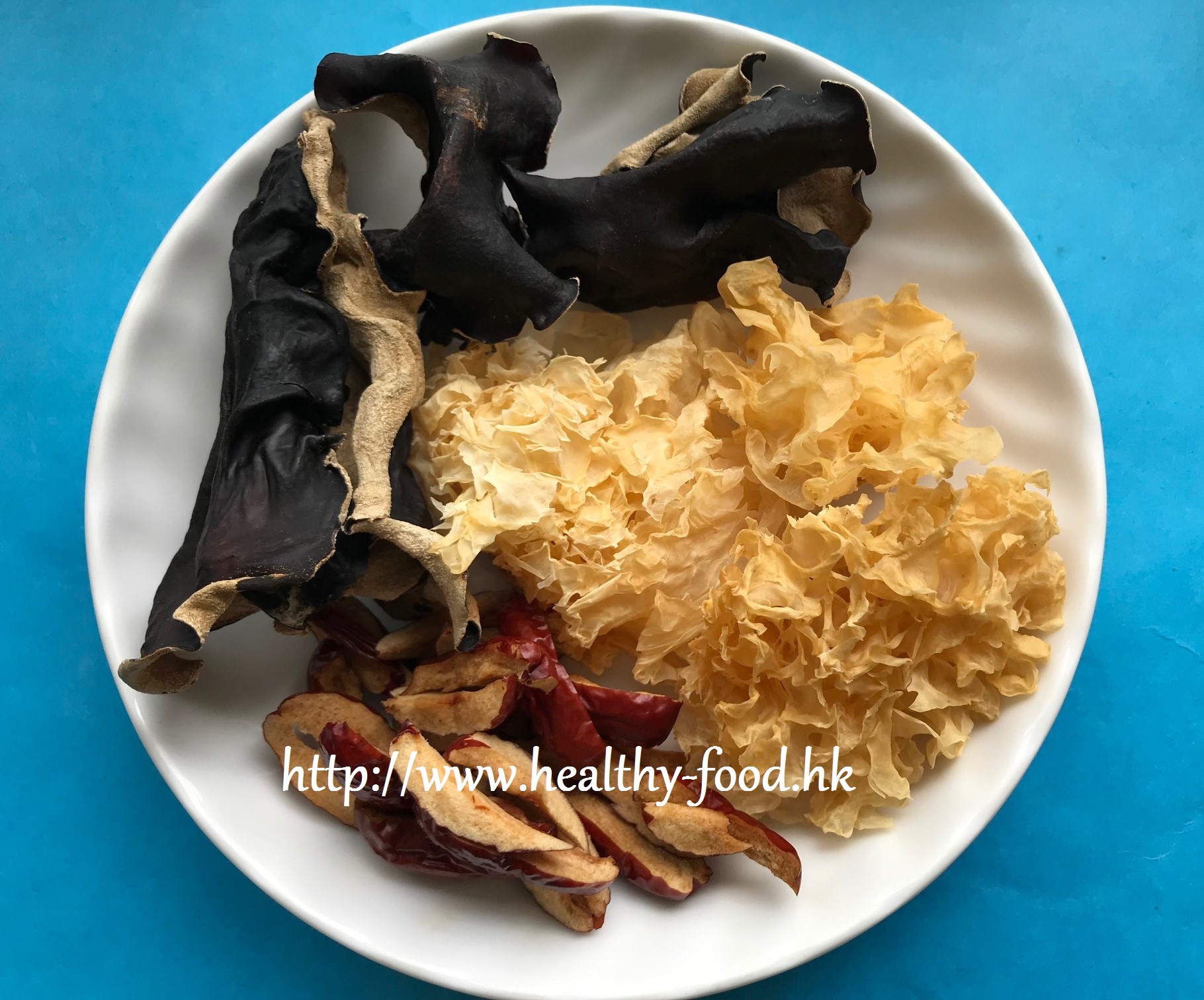
Why people make this soup
Snow fungus — sometimes called “the poor person’s bird’s nest” in Chinese culinary tradition — has been prized for generations because it is rich in plant-based collagen-like compounds that may help skin maintain its elasticity and glow as we age. Black wood ear, its close cousin, is one of the most iron-dense plant foods and has long been used to address pallor and anaemia. Together with blood-nourishing red dates, this combination makes a naturally sweet, deeply nourishing bowl that suits people of almost any age. Modern food science has taken an interest in the polysaccharides found in both fungi, which have been studied for their potential effects on bone marrow activity and immune function — making this a popular supportive dish for people going through chemotherapy or radiotherapy.
Who it suits / who should be cautious
- Well suited to women with blood deficiency, pallor, or dry skin; people convalescing after illness or surgery
- Particularly valued for postpartum recovery — traditionally thought to help clear residual blood stasis after childbirth (suitable also after caesarean section or medical abortion)
- May be supportive for people undergoing chemotherapy or radiotherapy
- Children can drink this soup
- When buying snow fungus: choose pieces with tight, firm texture for a firmer bite; loose, soft pieces cook to a silkier texture — both are fine. Avoid snow fungus that is unusually white or smells sour — it may have been bleached with sulphur
Why these ingredients (the food-therapy logic)
- Snow fungus (xue er / Tremella fuciformis): Contains plant-based polysaccharides and collagen-like compounds; traditionally nourishes the lungs and stomach, moistens dryness, and benefits the skin; also contains polysaccharides studied for immune-modulating and bone-marrow-stimulating effects
- White-back black wood ear (bai bei hei mu er): Very high in iron, making it valuable for addressing anaemia and blood deficiency; its gel-like polysaccharides are also associated with immune support; traditionally valued for clearing blood stasis and nourishing the blood
- Red dates / jujubes (hong zao): One of the most widely used blood-tonifying foods in Chinese culinary medicine; nourishes the spleen and stomach and supports qi production
Ingredients (3 bowls)
| Ingredient | Amount | Notes |
|---|---|---|
| Dried white-back black wood ear | ~19 g (5 qian) | Soak until soft; remove tough stems |
| Dried snow fungus | ~19 g (5 qian) | Soak until soft; remove tough base |
| Red dates (jujubes) | 6–8 pieces | Remove stones; slice |
Method
- Soak both dried fungi in separate bowls of cold water until fully softened (about 30 minutes). Remove and discard the tough stems or base.
- Remove the stones from the red dates and slice them.
- Place all ingredients in a pot with 6 bowls (about 1.2 litres) of water.
- Bring to a boil, then simmer for about 30 minutes until reduced to about 3 bowls.
- Serve the soup along with the softened fungi and dates — eating the solids captures the most benefit.
Bro Niu’s tips
This soup is a wonderful everyday brew — gentle, naturally sweet, and versatile. It is especially good for postpartum women, as it is thought to help clear residual fluid and support the blood after birth. It also works well after a caesarean delivery or medical abortion. For adding an extra layer of nourishment, dried fish maw (yu piao jiao) can be soaked and added alongside — red dates can also be swapped for dried southern dates (nan zao) without any loss of benefit. When choosing snow fungus, do not pay too much attention to price — the texture difference is simply a matter of personal preference. Always trust your nose: anything with an unusual sour or chemical smell should be avoided.
Community questions answered (selected)
-
Q (Rac): My 10-year-old son has acute myeloid leukaemia and has just finished his first round of chemo. He needs blood and platelet transfusions and has no appetite. Is this soup suitable? Bro Niu: You can cook red dates (pitted and sliced), millet, and lotus root starch into a porridge for him — this helps with blood building and stomach nourishment. You might also try a soup of ginseng, Solomon’s seal, Chinese asparagus root, and cordyceps flower in lean pork broth. For days when he has more appetite, consider braising Agaricus blazei mushrooms with goji berries, red dates, sea cucumber, and lean meat — Agaricus blazei contains polysaccharides that may support immune function.
-
Q (Kan): I had a caesarean birth two days ago — can I eat black wood ear already? Bro Niu: Yes, black wood ear is suitable after caesarean delivery. Cook it with red dates and a little brown sugar until soft; it helps clear lochia and supports blood recovery.
-
Q (ki): Is this soup suitable after a medical abortion? Bro Niu: Yes, this soup is suitable after a medical abortion.
Published August 7, 2019 · Adapted and translated for Nourilo from a traditional home-kitchen recipe. Approx. 4 min read.