Herbal & Flower Teas
Roselle and Hawthorn Tea
Traditionally used to ease digestion, reduce bloating, and support healthy weight management
Why people make this tea
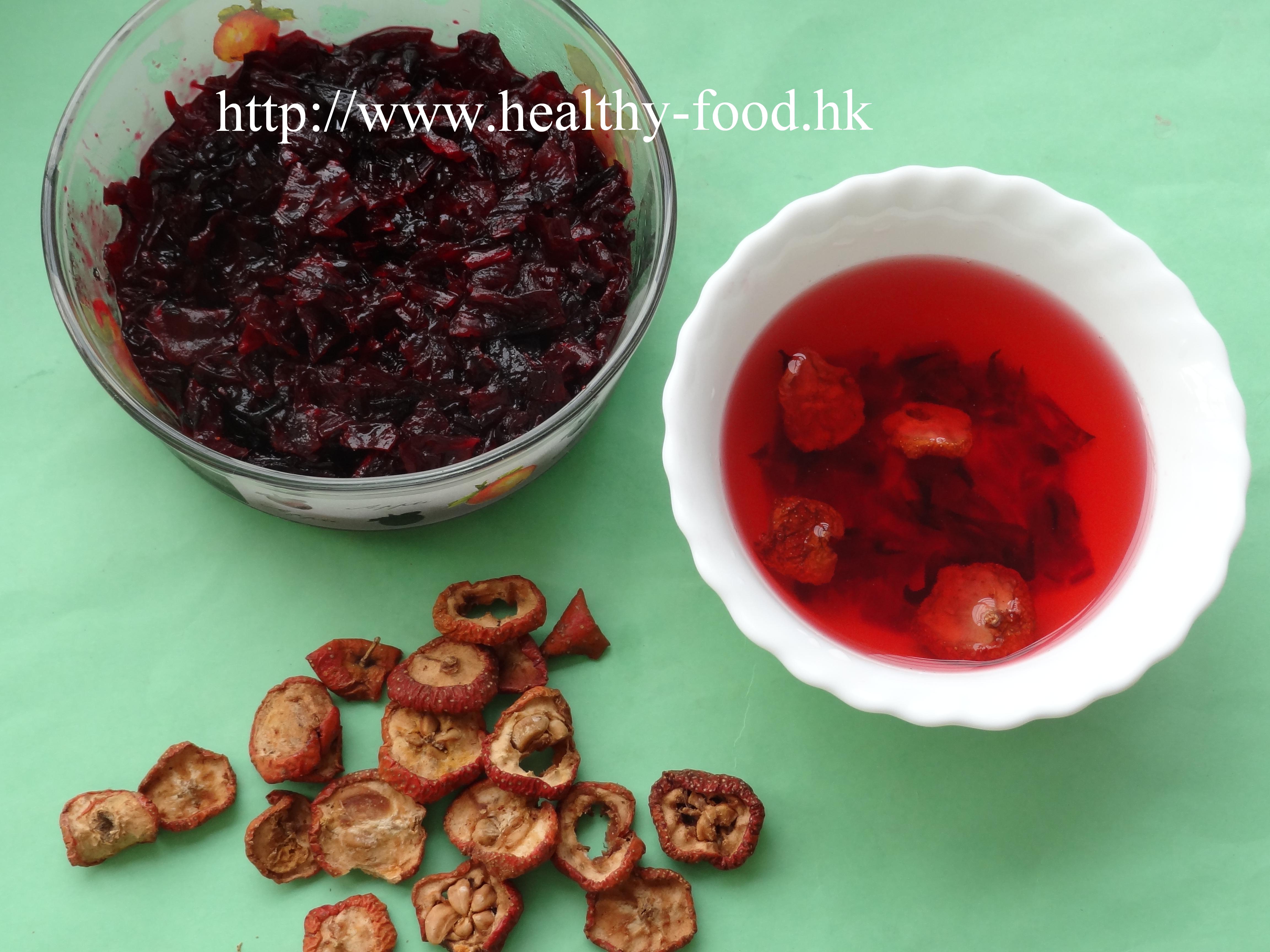
After a festival or holiday — or really any day when eating has been a little generous — Bro Niu turns to this vivid crimson tea to ease the aftermath. Roselle, the brilliant-red tropical flower used in teas from West Africa to Southeast Asia, has a naturally tart, refreshing flavour and is traditionally paired with hawthorn in Cantonese food therapy to help the body process rich, oily meals. The combination is popular because it works on multiple fronts: the tartness stimulates the appetite and digestion, while both herbs are traditionally associated with promoting healthy blood circulation and metabolism. Fresh roselle is available seasonally and dried roselle is an easy substitute, available at Chinese or Asian herb shops and online year-round.
Who it suits / who should be cautious
- Suitable for most healthy adults, especially after heavy or oily meals.
- Best drunk after meals or between meals rather than on an empty stomach — the acidity can be uncomfortable for sensitive stomachs.
- Pregnant women must avoid this tea: both roselle and hawthorn have traditionally been considered blood-invigorating herbs that may stimulate uterine activity.
- Avoid during menstruation, as the tea may increase menstrual flow.
- Those with stomach cold (feeling of cold in the abdomen, preference for warm drinks, easily upset by cold food) should drink this only occasionally after a meal, not regularly.
- Do not use a stainless steel pot to prepare this tea — the acidity reacts with metal. Use a glass, clay, or ceramic pot instead.
Why these ingredients (the food-therapy logic)
- Roselle (luo shen hua / Hibiscus sabdariffa): The dried calyces of the roselle plant are rich in organic acids, including hibiscus acid. In traditional Chinese medicine, roselle is associated with clearing heat, aiding digestion, improving the appearance of the complexion, and supporting the liver. It is naturally cooling in nature.
- Hawthorn berries (shan zha / Crataegus pinnatifida): One of the most widely used digestive aids in both folk medicine and Chinese pharmacy. Hawthorn is particularly effective after meals heavy in meat or fat. It is also associated with supporting healthy blood pressure and cardiovascular circulation. Hawthorn is slightly warming in nature, which balances the cooling roselle.
Ingredients (1–2 cups)
| Ingredient | Amount | Notes |
|---|---|---|
| Roselle calyces (luo shen hua) | 4 flowers | Fresh or dried; remove the seed capsule if using fresh |
| Hawthorn berries (shan zha) | 19 g (5 qian) | Dried slices |
| Honey or raw cane sugar | To taste | Add after steeping; do not boil honey |
| Boiling water | Enough to steep | See method |
Method
- Place roselle and hawthorn slices into a teapot or glass pot.
- Rinse once with boiling water, then discard the rinse water.
- Pour in fresh boiling water to cover the ingredients generously.
- Steep (covered) for approximately 7 minutes.
- Stir in honey or raw cane sugar to taste and serve warm.
Alternatively, to make a larger batch (serves 5): Use about 15 roselle calyces, 37 g (1 liang) of hawthorn slices, and 6–7 bowls of water. Simmer gently for 20 minutes, then sweeten to taste.
Bro Niu’s tips
- This tea has traditionally been associated with supporting healthy blood pressure, aiding fat digestion, slowing cellular aging, and easing constipation — but always as a gentle complement to a balanced lifestyle, not a replacement for medical care.
- Because roselle is naturally cooling, Bro Niu pairs it with hawthorn (warming) to balance the formula. Those with a cold constitution should be especially mindful of not over-drinking.
- Do not drink more than about 3 cups per week — even wholesome teas are best used in moderation.
- When preparing fresh roselle for jam or sauce: remove the green seed capsule, wash and chop the calyces finely, then cook slowly in a glass or clay pot with raw cane sugar (roughly equal weight to the prepared calyces) until a jam-like consistency is reached. No water is needed — the calyces release enough liquid themselves.
Community questions answered (selected)
-
Q (Vivian): I drank about 1 litre of roselle tea per day for two days and woke up feeling dizzy. I have a cold constitution — is that related? Bro Niu: Yes, very likely. Roselle is cooling in nature, and for someone with a cold constitution it should always be paired with warming hawthorn. More importantly, drinking 1 litre a day is far too much — even a wonderful wellness tea should not be drunk in such quantities. Four to six calyces per session is plenty, and drinking it three times a week is sufficient. Please reduce the amount and see if the dizziness resolves.
-
Q (reader): Can I drink this during my period? Bro Niu: It is better not to — both roselle and hawthorn can invigorate blood circulation, which may increase menstrual flow during your period. Wait until after your period ends.
-
Q (anita): I have stomach pain and stomach cold — is this tea suitable for me? Bro Niu: If your stomach runs cold, this tea is not the best fit for regular use. Having it occasionally after a particularly heavy meal is fine, but regular daily use is not recommended for your constitution.
Published September 29, 2012 · Adapted and translated for Nourilo from a traditional home-kitchen recipe. Approx. 4 min read.