Soups
Black Fungus, Fig, and American Ginseng Double-Boiled Soup
Traditionally associated with moistening the intestines, relieving constipation, and supporting gut lining health
Why people make this soup
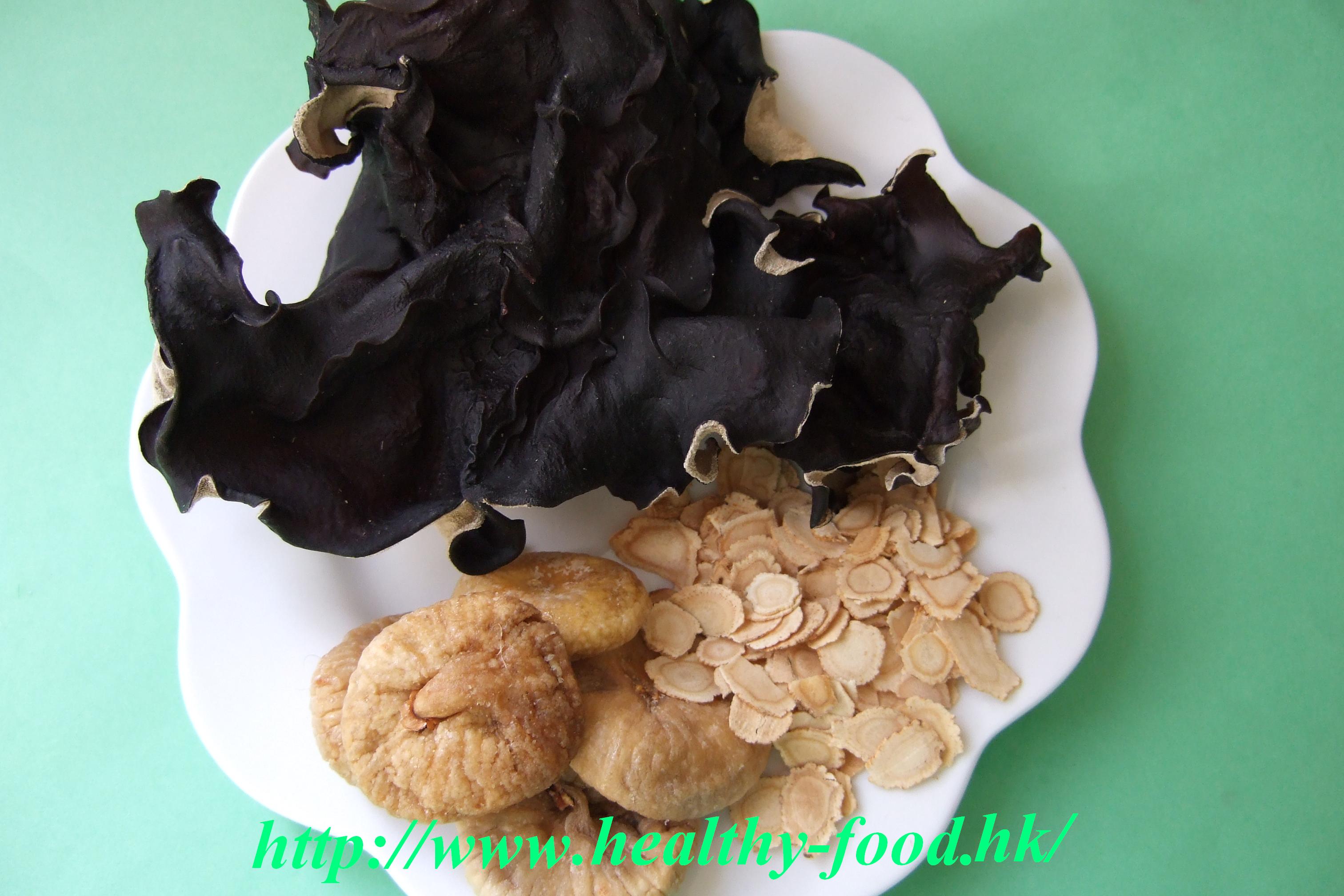
Black wood ear fungus has a well-earned reputation in Chinese food-therapy as a blood-supporting, stasis-clearing ingredient. What is perhaps less known in the West is that it is also exceptionally high in dietary fibre — which is exactly why Cantonese cooks have used it for generations to help keep the bowels moving comfortably. Paired with the gentle sweetness of dried figs and the cooling, qi-supporting properties of American ginseng, this small double-boiled soup is simple, delicious, and genuinely useful for anyone dealing with sluggish digestion.
Who it suits / who should be cautious
- Suitable for healthy adults as an everyday preventive against constipation
- Traditionally associated with supporting people with haemorrhoids (especially those with occasional bleeding) and those with ulcerative colitis (please also seek medical care for these conditions)
- American ginseng (xi yang shen) is cooler in nature than Asian ginseng — generally tolerated by a wider range of body types; however, those with very cold constitutions may wish to reduce the amount
- Children can substitute tai zi shen (prince’s ginseng) for the American ginseng — as Bro Niu advised a reader with a four-year-old
Why these ingredients (the food-therapy logic)
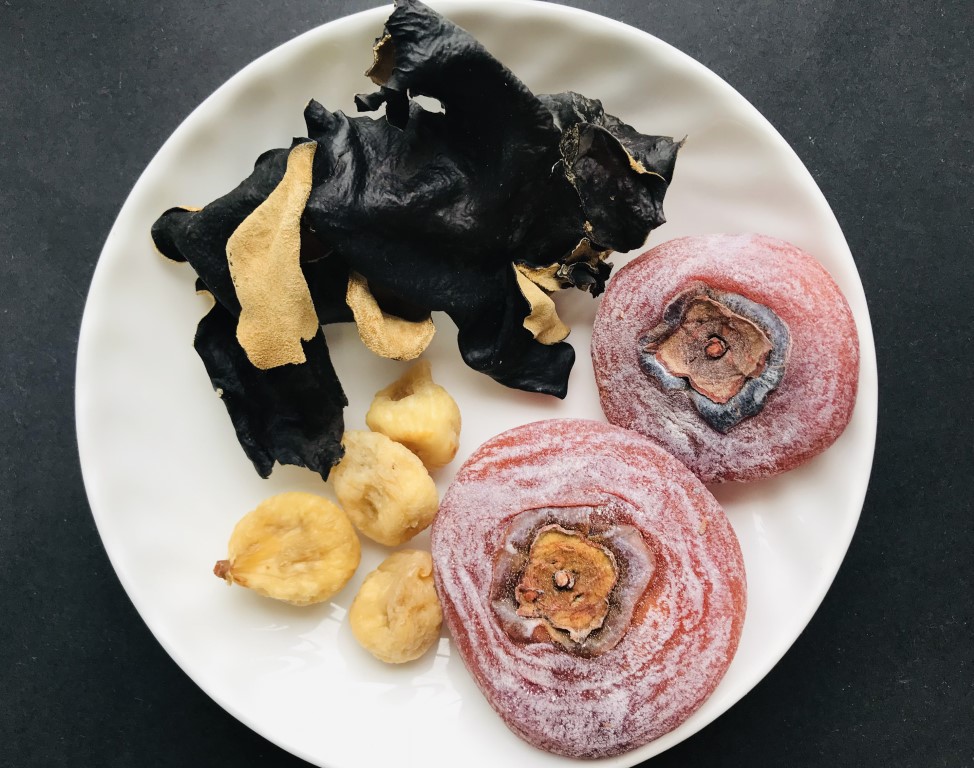
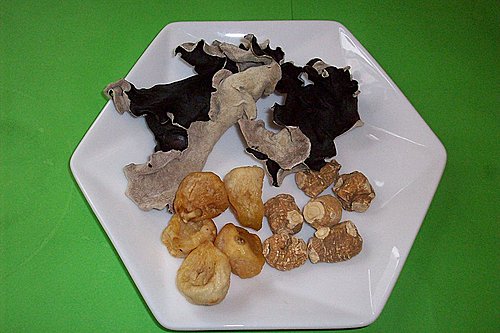
- Black wood ear fungus (hei mu er): Traditionally regarded as clearing the blood, supporting healthy circulation, and its high fibre content directly supports bowel movement
- Dried figs (wu hua guo): Mild, sweet, and cooling — traditionally used to soothe the intestines and support digestive function
- American ginseng (xi yang shen): Considered cooler than other ginsengs; traditionally used to support qi, clear intestinal heat, and help with dry, heat-related constipation
Ingredients (2 servings)
| Ingredient | Amount | Notes |
|---|---|---|
| Dried black wood ear fungus | 3 medium pieces | Soak until fully expanded; trim tough base |
| Dried figs | 5 pieces | Rinse |
| American ginseng (sliced) | ~10 g | From Chinese medicine shops or Asian grocers |
| Water (boiling) | ~400 ml (2 bowls) | For double boiling |
Method
- Soak the black wood ear fungus in cold water for 20–30 minutes until fully expanded. Rinse well and trim away the tough yellowish base. Leave the pieces whole or tear into halves.
- Slice the American ginseng if not already sliced.
- Rinse the dried figs.
- Place all ingredients into a double-boiling pot (炖盅). Pour in about 400 ml of freshly boiled water.
- Set the pot over a larger pot of boiling water and double-boil for about 1 hour.
- Divide into two portions and serve warm. Eat the soup along with all the ingredients.
Bro Niu’s tips
This soup is mild and cooling, making it a good choice for anyone prone to constipation or heat-related digestive discomfort. Even people without any specific complaint can enjoy it regularly to keep the digestive system ticking over comfortably. If you are making it for a young child (4 years or older), substitute tai zi shen (prince’s ginseng) for the American ginseng. If making this as a full pot of soup rather than a double-boiled version, add 2 bowls of water and simmer for 1 hour.
Community questions answered (selected)
-
Q (Twinnie): Is this suitable for a 4-year-old boy? Can tai zi shen replace the American ginseng? Bro Niu: A child can have this soup. Use tai zi shen instead of American ginseng — that’s fine.
-
Q (Katy): How much water should I add? Bro Niu: Add 2 bowls of boiling water and double-boil for 1 hour.
-
Q (妮子): I find I cannot have a bowel movement whenever I pay too much attention to it. Is there a simple tea I can prepare at work? Bro Niu: You can buy pure prune juice at the supermarket and drink one small bottle per day at work — make sure to drink more warm water alongside it. You can also dry-fry hemp seeds (huo ma ren) in a clean pan for a few minutes, add a tablespoon to a tea bag, and bring it to the office to brew as a tea.
Published August 21, 2014 · Adapted and translated for Nourilo from a traditional home-kitchen recipe. Approx. 3 min read.