Herbal & Flower Teas
Zhu Zi Li Herb Tea (Pig's Hat Berry Tea)
traditionally associated with clearing phlegm and soothing a persistent cough
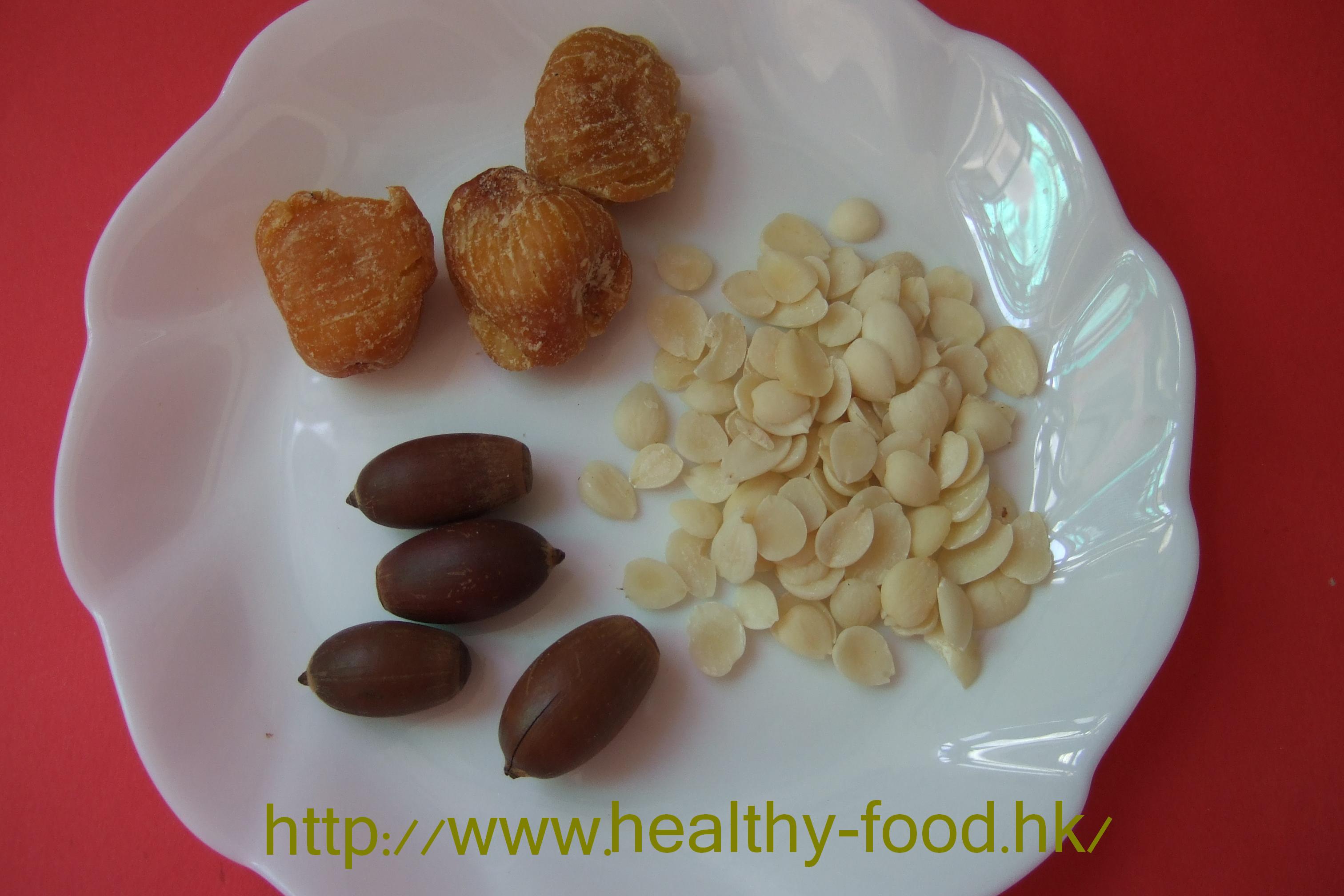
Why people make this tea
One day while shopping for monk fruit at a Chinese herb shop, Bro Niu overheard an elderly woman asking for zhu zi li, saying that after a few cups of this tea her almost constant coughing had settled down to just a few coughs at night. Curious, he asked the shopkeeper about it. The reply was straightforward: zhu zi li is a traditional mountain herb that pairs well with apricot kernels and honey dates to help calm a stubborn, phlegm-ridden cough. Bro Niu picked some up, brewed a pot, and was pleasantly surprised that the medicinal smell was quite mild. Traditional references describe zhu zi li as sweet and slightly astringent in flavour, neutral in nature, and associated with clearing heat, dissolving phlegm, soothing coughs, and relieving thirst related to upper-respiratory conditions.
Who it suits / who should be cautious
- Suited for adults and older children (generally 3 years and above, though consult your paediatrician) with a nagging wet or mixed cough with phlegm, especially where the cough persists after a cold
- Diabetics can substitute honey dates with a small piece of monk fruit (luo han guo) to reduce sugar
- Not established as safe for pregnancy without professional guidance — for a pregnancy-safe cough remedy, Bro Niu suggests a separate brew of candied tangerine peel (ju bing), dried tangerine peel (chen pi), and apple instead; please check with your doctor first
- Because zhu zi li is a less common mountain herb, Bro Niu notes it is less often used for young toddlers; for children under 3, seek professional advice
Why these ingredients (the food-therapy logic)
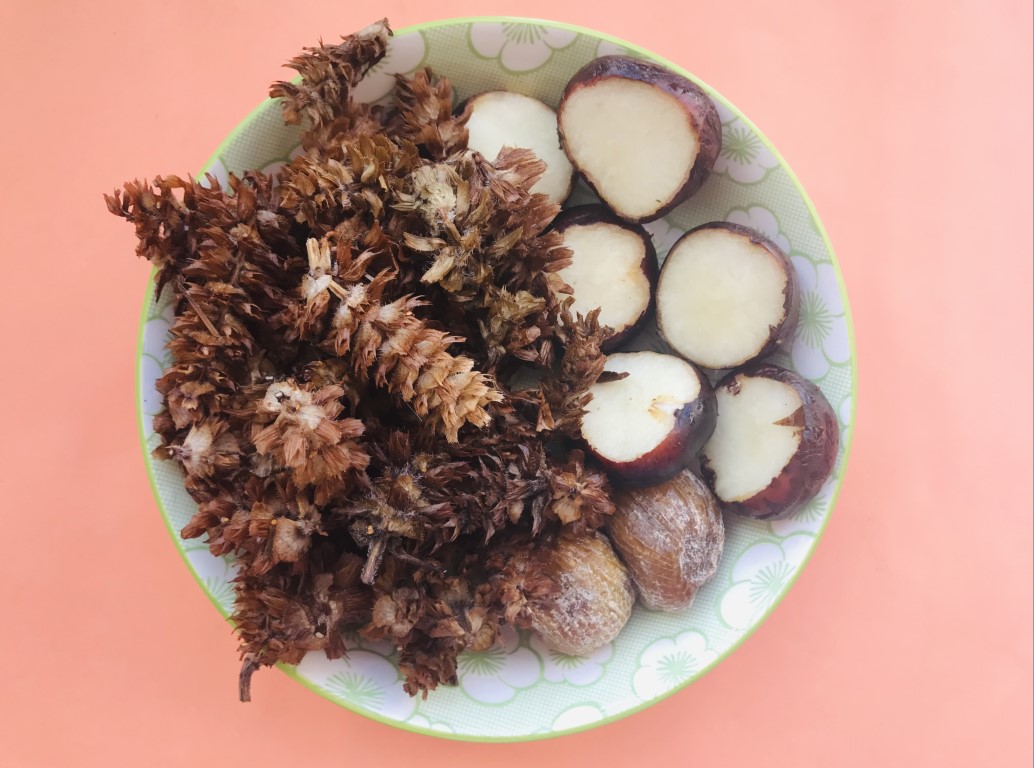
- Zhu zi li (zhu zi li): A Cantonese mountain herb traditionally associated with clearing heat, transforming phlegm, and calming an irritated respiratory tract; the hard outer shell needs to be cracked before brewing to release its active compounds
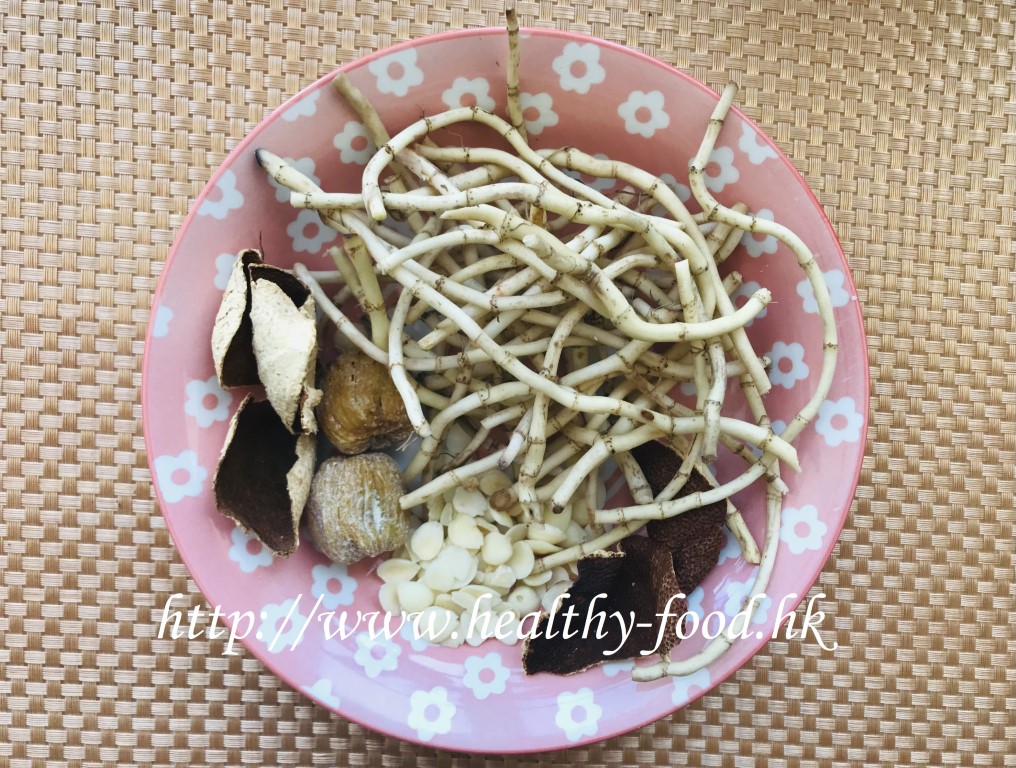
- Apricot kernels — southern and northern blend (nan bei xing): Apricot kernels are a classic pairing in Cantonese soups and teas for supporting lung function; the southern variety is sweeter and gentler, the northern slightly more potent — blending them balances the effect
- Honey dates (mi zao): Naturally sweet, they act as a harmonising agent, tempering the slight astringency of the other herbs and making the tea more palatable without overpowering it
Ingredients (2 bowls / 1 serving)
| Ingredient | Amount | Notes |
|---|---|---|
| Zhu zi li (pig’s hat berry) | 3 to 4 pieces | Ask the herb shop to crack them for you — they are very hard |
| Apricot kernels, southern & northern blend | 1 liang (~37 g) | Available at Cantonese herbal shops |
| Honey dates | 3 pieces | Can substitute with a small piece of monk fruit if avoiding sugar |
| Water | 5 bowls (~1.25 L) | Reduce to 2 bowls by the end of cooking |
Method
- Ask the herb shop to crack (crush) the zhu zi li pieces, or do so at home with a hammer wrapped in a cloth. The shell is very dense and must be broken for the brewing to be effective; use them shell and all.
- Rinse the apricot kernels and honey dates briefly.
- Combine the cracked zhu zi li, apricot kernels, and honey dates in a pot with 5 bowls of water.
- Bring to a boil, then reduce the heat and simmer for about 45 minutes until the liquid reduces to 2 bowls.
- Strain and drink throughout the day — ideally one bowl about an hour after breakfast and one bowl about an hour after dinner.
Bro Niu’s tips
- Zhu zi li looks like a small, dense, nut-like berry. It is extremely hard — a regular knife will not crack it. Use a hammer or ask the herb shop to do it before you leave. Do not skip this step, otherwise very little of the herb’s goodness will make it into the tea.
- If you want a slightly stronger phlegm-clearing effect, you can add half a monk fruit (luo han guo) to the pot.
- Drink across a single day; brew fresh each time. A course of 3 consecutive days is typical; reassess after that.
- Zhu zi li is not always easy to find — if unavailable, Bro Niu suggests a simpler alternative: simmer peach flesh (1 liang), apricot kernels (1 liang), and 3 slices of fresh ginger in 5 bowls of water down to 2 bowls, then stir in a little honey before drinking; this is particularly soothing for a dry, weak-lung cough.
Community questions answered (selected)
-
Q (Jen, reader): The recipe says 5 bowls reduced to 2 bowls — is that 2 bowls for one person for one day? When is the best time to drink it? Bro Niu: Yes, the 2 bowls are for one person, to be finished within the same day. Drinking one bowl about an hour after breakfast and one bowl about an hour after dinner works well. You can continue for up to 3 days and see whether the cough and phlegm improve.
-
Q (amylam288, reader): Does zhu zi li need to be washed? And since it gets cracked into pieces, can children around 3 years old drink this tea? Can carrots be added? Bro Niu: No need to wash it — just crack and brew. Children of 3 years can have this tea. You can add carrot to make it taste more pleasant. For monk fruit: when buying, give it a shake — if it rattles inside, the quality is poor and it will taste bitter. A good monk fruit does not need to be refrigerated and will keep for several months.
-
Q (Clara, reader): When cracking the zhu zi li, do you remove the shell first? Bro Niu: No need to shell it — just crack it open and use it whole, shell and all.
Published August 3, 2011 · Adapted and translated for Nourilo from a traditional home-kitchen recipe. Approx. 5 min read.