Herbal & Flower Teas
Yu Ping Feng San (Jade Screen Powder) — Home Decoction or Ready-Made Granules
traditionally associated with strengthening immune defences, reducing susceptibility to colds and flu, and stopping excessive sweating in constitutionally weak individuals
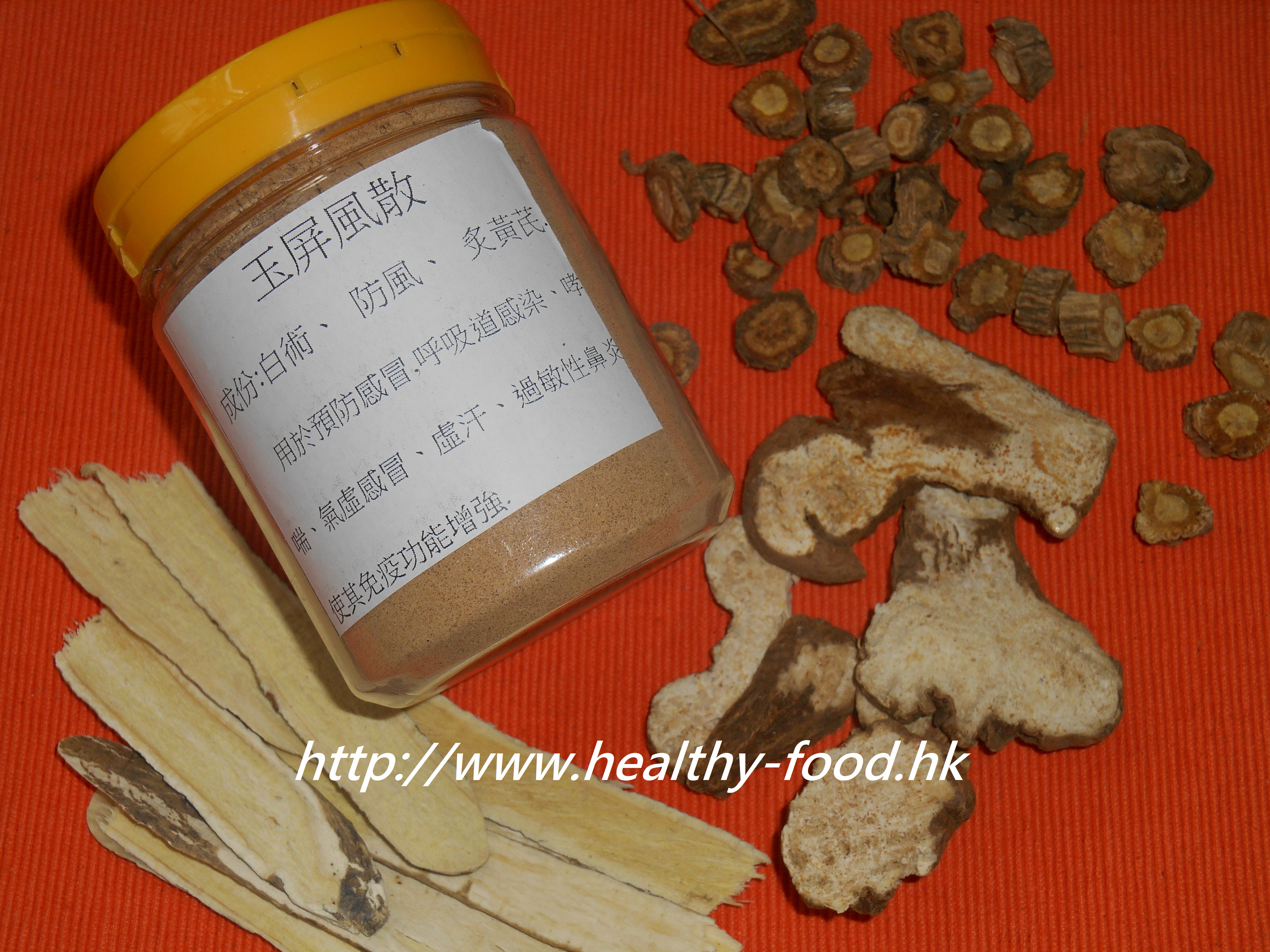
Why people make this formula
The name translates literally as “Jade Screen Powder,” an image that captures its purpose well: like an invisible screen standing between the body and the outside world, this three-herb formula is designed to shore up the body’s outer defences (wei qi in Chinese medicine terms), making it harder for wind, cold, and pathogens to penetrate. It is particularly valued for children and adults who seem to catch every illness that passes through the room, and for those who sweat easily even without exertion. Ready-made granules are available from Chinese herb shops and are convenient to keep on hand; the three raw herbs can also be decocted simply at home.
Who it suits / who should be cautious
- People who catch colds frequently, especially children in school or care settings
- Those with nasal sensitivity (hay fever, rhinitis): add 5–6 magnolia flower buds (xin yi hua)
- Those with eye sensitivity: use a decoction of mulberry leaf and chrysanthemum to dissolve the granules
- Those with cold limbs or spontaneous, effortless sweating: add cinnamon twig (gui zhi) 3 qian, or add toasted wheat grain (fu xiao mai) to the brew
- Not suitable during active fever, cold, or infection — wait until fully recovered
- Suitable for infants from approximately 1 year old; give 2 doses per week
- Suitable for adults, including the elderly, with high blood pressure, gout, or early kidney decline — the formula itself is gentle
- People with yin deficiency and night sweats (heat-type sweating): Yu Ping Feng San is less suitable; a different approach is needed
Why these ingredients (the food-therapy logic)
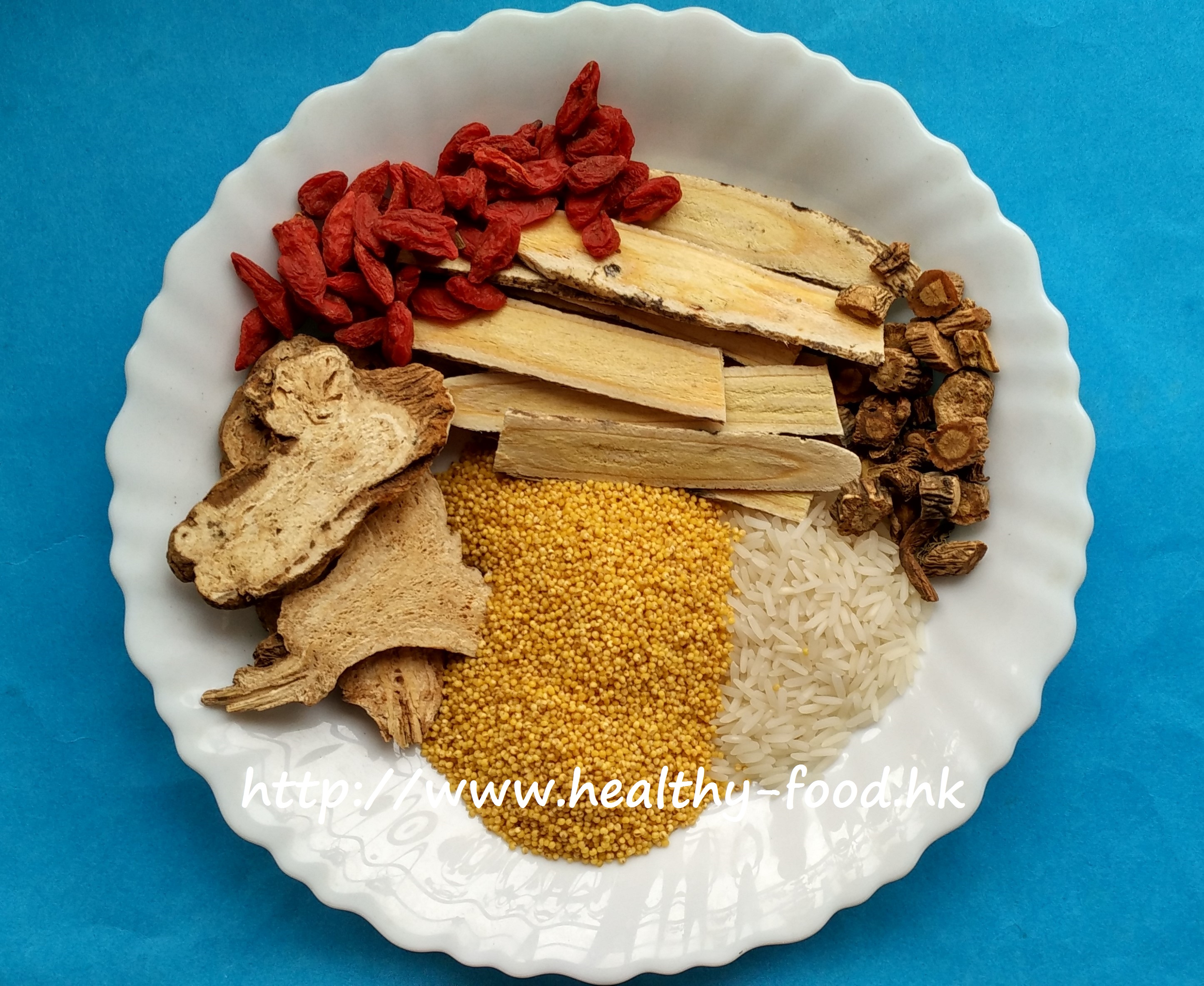
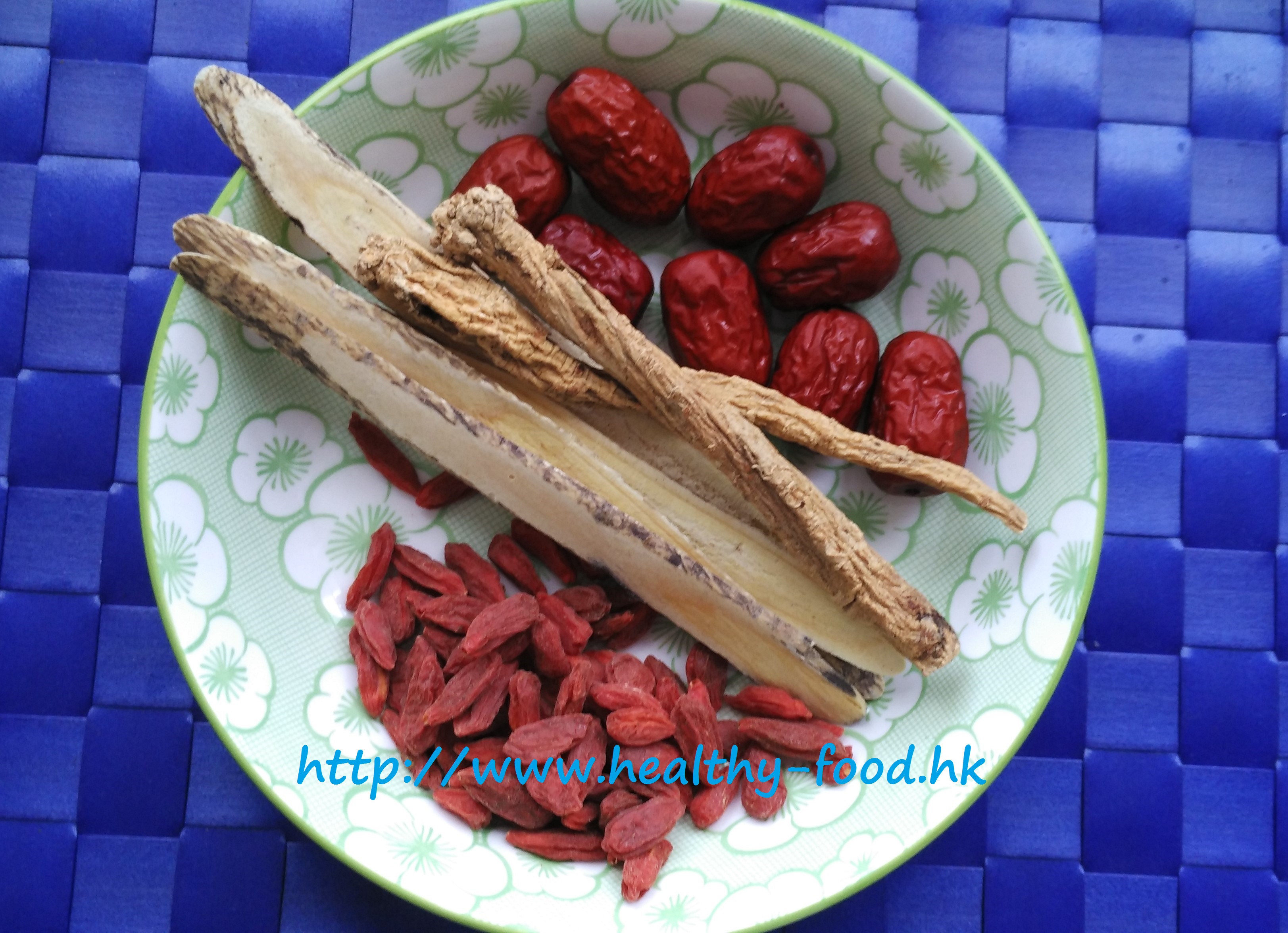
- Astragalus root (bei qi / huang qi): The chief herb; strongly tonifies lung and spleen qi, building the protective layer (wei qi) at the body’s surface. Constitutes about half the formula by weight in the traditional ratio (astragalus 2 : white atractylodes 2 : saposhnikovia 1).
- White atractylodes (bai zhu): Strengthens the spleen and dries dampness — the spleen is the root of qi production, so a strong spleen means a more robust immune reserve.
- Saposhnikovia root (fang feng): “Wind-guarding” herb; dispels any wind that does penetrate the surface, while the large quantity of astragalus prevents it from over-dispersing. The classical formula commentary notes that this pairing makes astragalus tonify without being stagnating, and fang feng dispel without depleting.
Ingredients (2 bowls / 1 day’s serving)
| Ingredient | Amount | Notes |
|---|---|---|
| Astragalus root (bei qi / huang qi) | 3 qian (~9 g) | Or use one dose of ready-made Yu Ping Feng granules |
| Saposhnikovia root (fang feng) | 3 qian (~9 g) | |
| White atractylodes (bai zhu) | 3 qian (~9 g) | |
| Optional: magnolia flower buds (xin yi hua) | 5–6 pieces | For nasal sensitivity — add in the last 10 min of cooking, or steep with granules |
| Optional: mulberry leaf + chrysanthemum | 2 qian each | For eye sensitivity — decoct 10 min, use liquid to dissolve granules |
| Optional: cinnamon twig (gui zhi) | 3 qian | For cold limbs or spontaneous sweating — decoct 15 min separately, use liquid |
| Optional: toasted wheat grain (fu xiao mai) | 1 tablespoon | For night sweating or spontaneous sweating — toast in a dry pan 7 min, then steep |
Method
If using ready-made granules (easiest option):
- Dissolve one dose of Yu Ping Feng San granules in hot water according to the pack instructions.
- Add any optional herbs (e.g., magnolia flower buds, steeped first in a little hot water for 5–7 minutes) and stir.
- Add a small amount of honey to improve the flavour for children.
- Drink warm. Use 2–3 times per week for prevention; daily during periods of high exposure or symptom flare.
If cooking from raw herbs:
- Rinse all herbs briefly under cold water.
- Place astragalus, saposhnikovia, and white atractylodes in a small pot with 5 bowls (approximately 1.25 litres) of water.
- Bring to a boil, then simmer over medium-low heat for about 20 minutes until reduced to approximately 2 bowls.
- If adding magnolia flowers or chrysanthemum for a specific variation, add them in the final 10 minutes.
- Strain and drink in two portions over the course of the day.
Bro Niu’s tips
Ready-made Yu Ping Feng San granules are available at Chinese herb shops and online Asian health retailers — they are inexpensive, convenient, and reliable. Look for the version from Lanzhou pharmaceutical factory if you want one with good bioavailability. Granules in a sachet form work equally well — steep the sachet as a tea bag and add magnolia flower buds alongside it. If the granule form is not available to you, the three raw herbs are widely sold in Chinese herb shops internationally, and the simple decoction is just as effective. For children: always add a little honey to make it more palatable.
Community questions answered (selected)
-
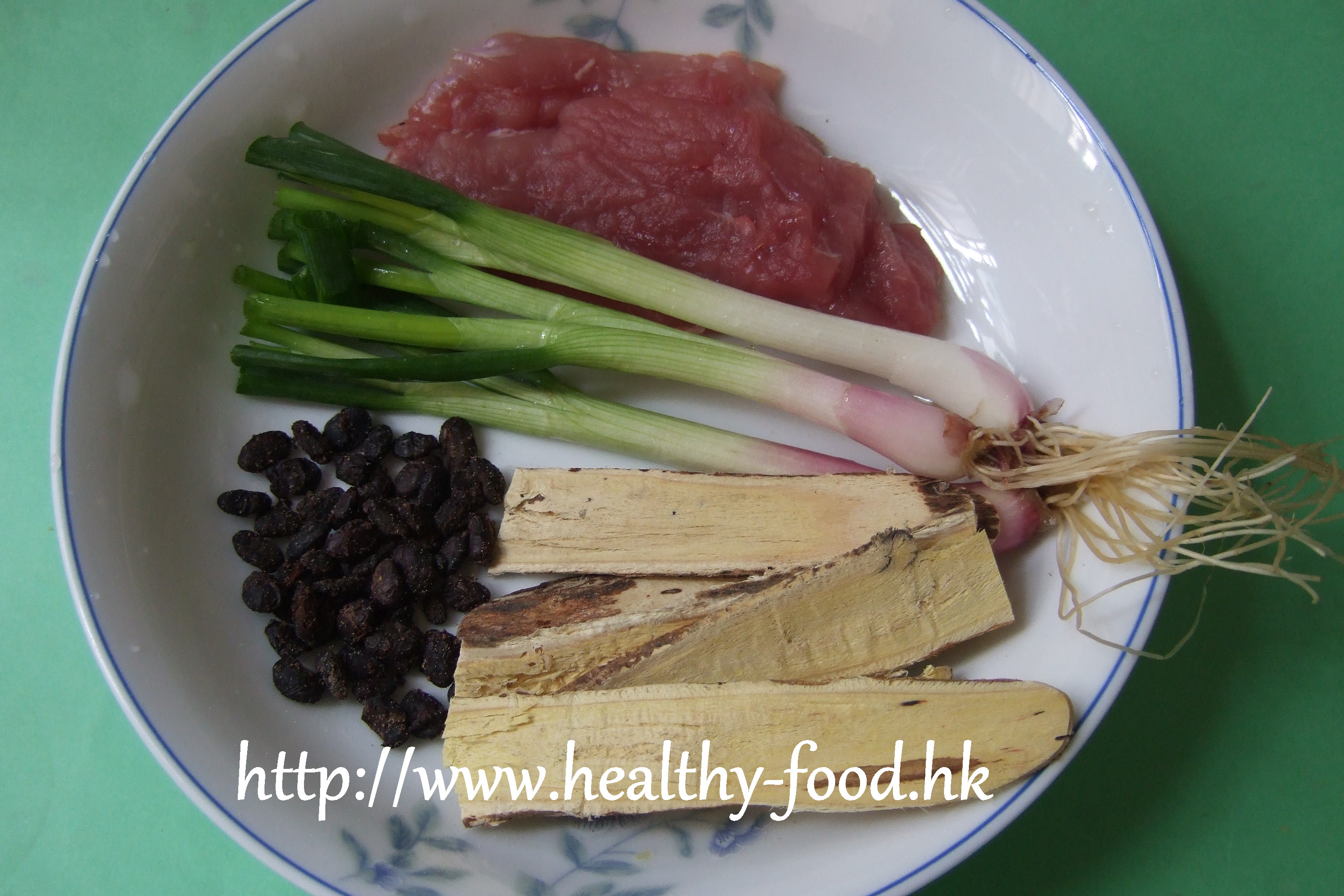
Q (Carrie): My daughter is two and a half years old with a slight cough, some nasal discharge, and a low-grade fever. Can she take Yu Ping Feng San? Bro Niu: During active fever, Yu Ping Feng San is not suitable — wait until the fever is fully gone, then use it even if the cold is not completely cleared. For now, you can try simmering magnolia flower buds (6 pieces), spring onion white stems (cong bai, 3–4 pieces), green tea leaves (a little), in 3 bowls of water for 10 minutes. This helps clear heat and reduce nasal discharge. Take for 2 days.
-
Q (AC): My child sweats a great deal from the slightest movement and also has nasal sensitivity. Is Yu Ping Feng San with magnolia flowers the right approach? What is the difference between spontaneous sweating (zi han) and night sweating (dao han)? Bro Niu: Spontaneous sweating (zi han) is sweating without exertion during the day — typically a sign of qi deficiency. Night sweating (dao han) is waking at night to find the clothes soaked, then finding the sweating stops — typically a sign of yin deficiency. Your child’s easy sweating and nasal sensitivity suggest a qi-deficient pattern; Yu Ping Feng San with magnolia flowers is appropriate. If there is also excessive sweating, add one tablespoon of toasted fu xiao mai (toasted wheat grain) steeped alongside for a stronger effect.
-
Q (SL): I have yin deficiency — can I use Yu Ping Feng San? Bro Niu: If you are constitutionally weak and prone to frequent colds despite having yin deficiency, you can still use Yu Ping Feng San — add a little honey to soften its warming action. Also helpful for dampening recurrent eczema flares.
Published April 25, 2015 · Adapted and translated for Nourilo from a traditional home-kitchen recipe. Approx. 5 min read.