Congee & Porridge
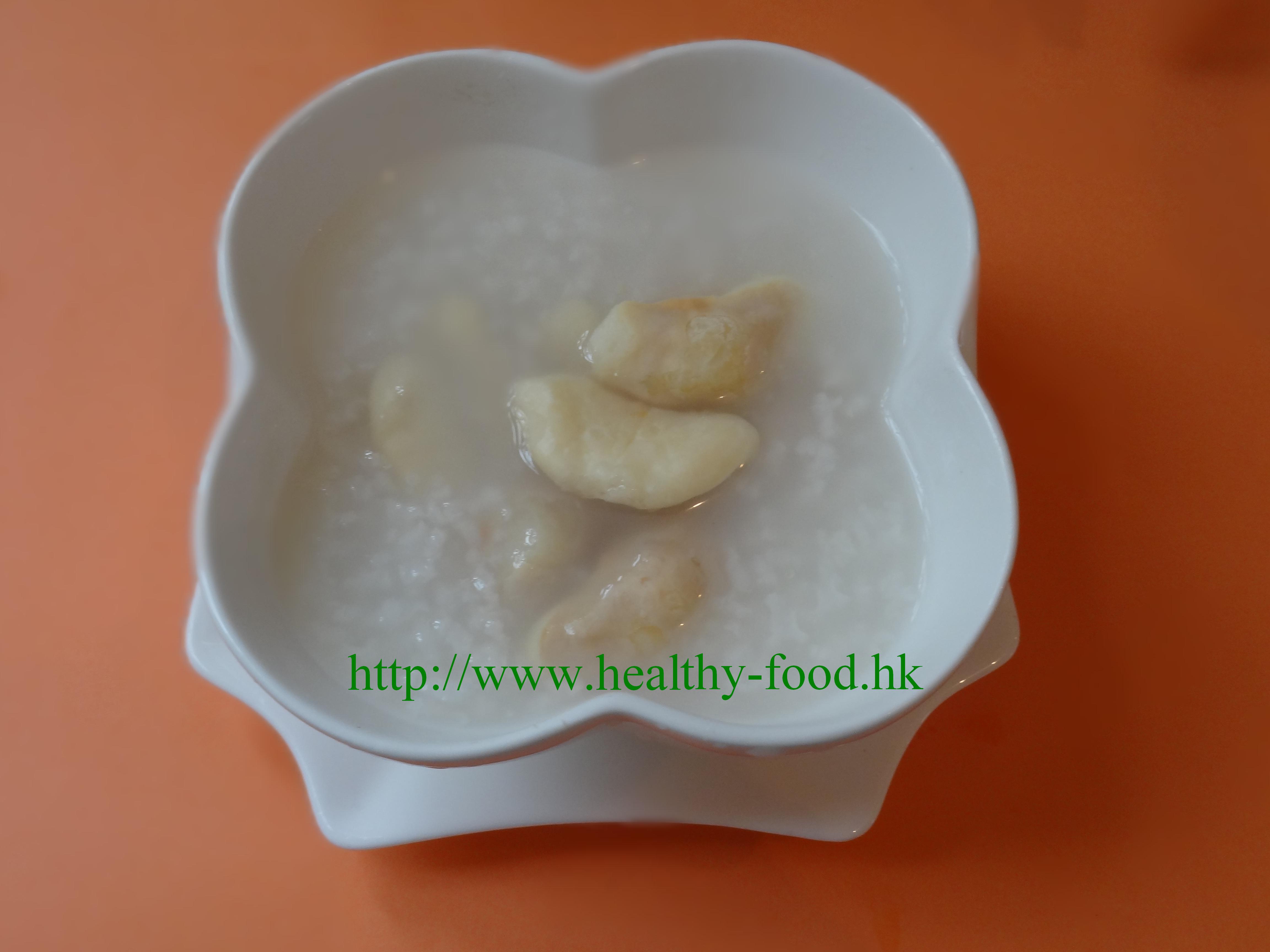
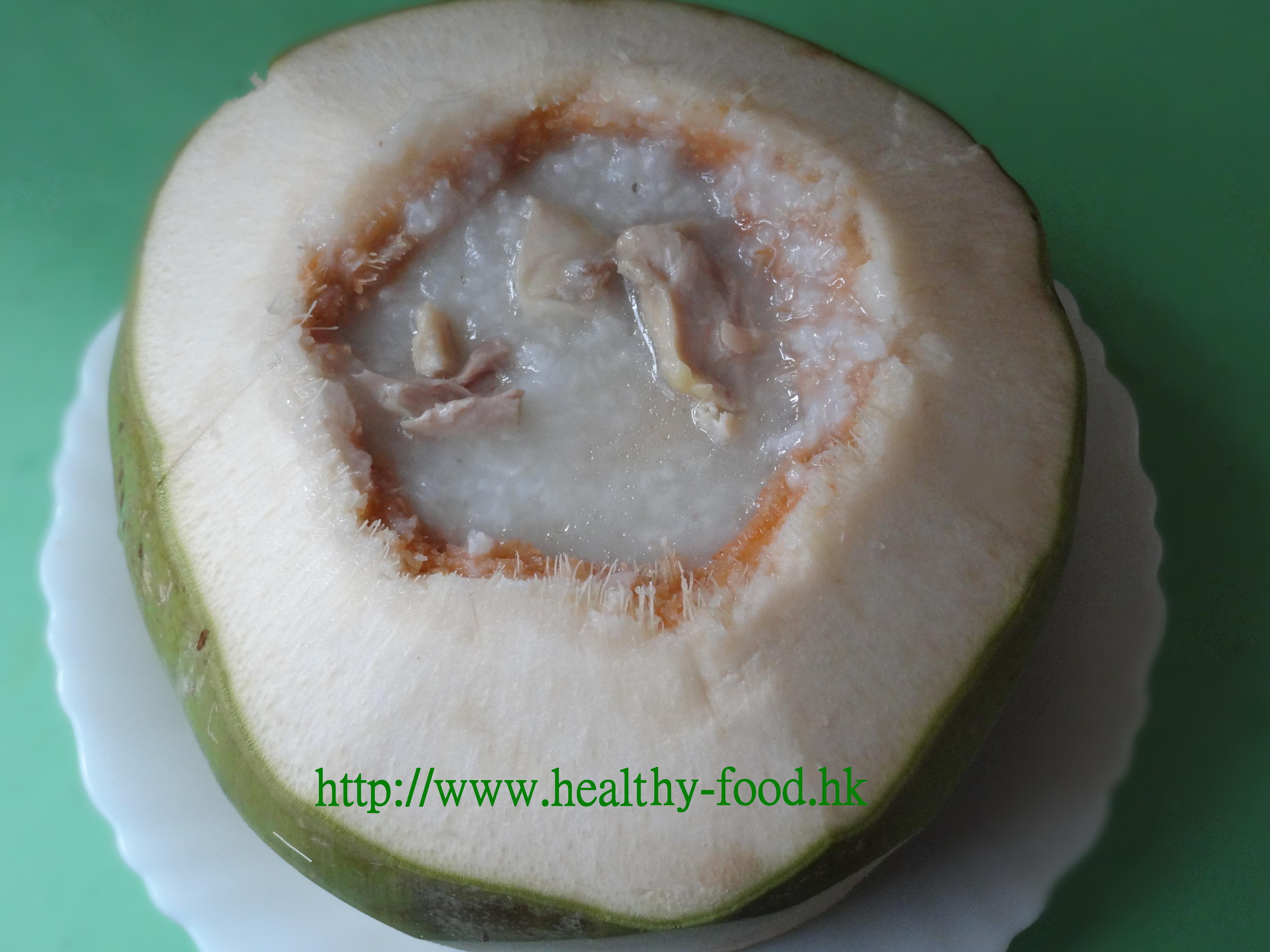
Young Coconut Silky Chicken Congee
traditionally supports the spleen and stomach, soothes heat and dryness, and nourishes the skin
Why people make this congee
Young green coconut — the unripe fruit with its characteristic pale outer shell — is available at Asian grocers and many supermarkets. Combining the fresh coconut water and tender flesh with free-range chicken thigh and rice creates a congee that turns out delicately sweet and deeply comforting. Children love it. Traditional Chinese food therapy distinguishes between the mature coconut (sweet and neutral) and the young green coconut: the unripe fruit has a cooler, more refreshing energy with extraordinarily tender flesh. Cooking it into a congee with chicken moderates its cooling nature considerably, making it suitable even for those who normally avoid coconut. The result is a soup associated with soothing rough, dry skin, easing water retention, benefiting recovery from febrile illness, and reviving the appetite of children who have been unwell.
Who it suits / who should be cautious
- Suits: those with rough or dry skin; mild edema or puffiness; children recovering from a cold with poor appetite; people in hot climates or after a heat-related illness; general digestive support
- Cautions: young coconut has a cooling nature — those with a cold or deficient constitution should add extra ginger (2–3 slices total). People with chronic eczema can eat this dish occasionally without issue, but should be more careful about classic trigger foods like shellfish, certain mushrooms, mango, and pineapple.
Why these ingredients (the food-therapy logic)
- Young coconut water and flesh (ye qing): Sweet and cool; traditionally associated with clearing heat, quenching thirst, moistening the skin, and reducing puffiness. The tender flesh is softer and more cooling than mature coconut flesh.
- Free-range chicken (zou di ji): Warm and nourishing; traditionally associated with strengthening the spleen and stomach, nourishing qi and blood. Balances and moderates the cool nature of the coconut.
- Fresh ginger: Warming; helps offset the cooling nature of young coconut; supports healthy digestion.
- White rice: Comforting and easy to digest; supports the spleen and stomach as a base for the congee.
Ingredients (3–4 bowls / serves 2–3)
| Ingredient | Amount | Notes |
|---|---|---|
| Young green coconut | 1 whole | Use both the coconut water and the tender white flesh |
| Free-range chicken thigh | 2 pieces | Debone; cut meat into chunks; marinate briefly with salt and a little cornstarch |
| Chicken thigh bones | retained | Use for the broth base |
| Fresh ginger | 2 slices | |
| White rice | 75 g |
Method
- Use the heel of a knife or a cleaver to cut into the top of the young coconut; pour the coconut water into a bowl and reserve. Scrape out the tender coconut flesh and set aside.
- Debone the chicken thighs: separate the meat from the bones, cut the meat into chunks, and marinate briefly with a little salt and cornstarch.
- Place the chicken bones, ginger slices, coconut water, coconut flesh, and rice into a pot. If the coconut water is not enough to cover everything, add a little plain water.
- Bring to a boil then simmer, stirring occasionally, until a smooth, well-thickened congee forms.
- Remove and discard the chicken bones.
- Add the marinated chicken thigh meat and simmer for another 3 minutes until just cooked through. Serve immediately.
Bro Niu’s tips
The shell of a young coconut is quite hard — use the heavy heel of a cleaver with a firm strike to crack the top, then pour out the water before opening the shell fully. The first attempt can be a bit awkward; it gets easier with practice. The key step that makes this congee silky is using the chicken bones in the base — they release gelatin and give the congee its smooth body. Remove them before serving.
Community questions answered (selected)
-
Q (KT): I have a cold constitution. Can I add a little ginger to reduce the cooling nature of the coconut? Bro Niu: Yes, absolutely. Add a few slices of ginger when cooking and you can enjoy this congee without any concern, even with a cold constitution.
-
Q (candy c): Can a person with late-stage liver cancer who is undergoing chemotherapy eat this congee? Bro Niu: Yes, the patient can eat this congee. Just substitute lean pork for the chicken if preferred — both are suitable.
Published April 29, 2013 · Adapted and translated for Nourilo from a traditional home-kitchen recipe. Approx. 3 min read.