Congee & Porridge
Yellow Ear Fungus and Red Date Rice Porridge
Traditionally used to nourish blood, support skin elasticity, and help slow the visible signs of ageing
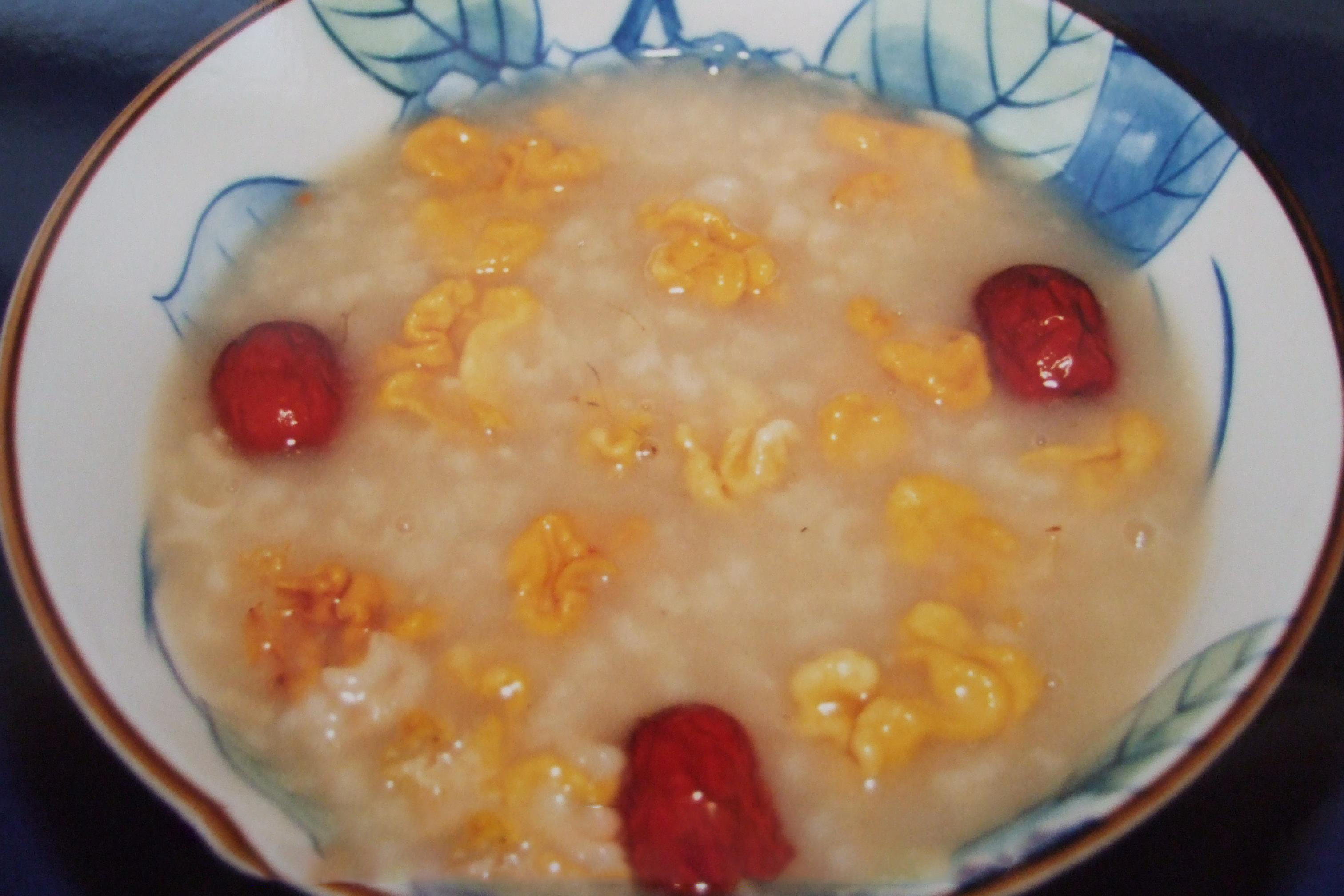
Why people make this porridge
In Cantonese vegetarian cooking, there is a traditional shorthand for the most prized fungal ingredients: “three mushrooms, six ears” — three types of mushroom and six types of edible fungus. Among the six ears, yellow ear (huang er, also called golden ear or jin er) is considered the most precious, having the thickest flesh and the highest concentration of natural plant gelatin. When cooked, it has a distinctive bouncy, silky texture — firm yet smooth — quite unlike the more familiar snow fungus (bai mu er).
In food therapy, this plant gelatin is associated with deeply moistening the skin, supporting the body’s natural collagen matrix, and — taken regularly — contributing to a complexion that stays firm and radiant. Paired with red dates for blood nourishment and rice to anchor the porridge and make it filling, this simple bowl has been a Cantonese beauty kitchen staple for generations.
Who it suits / who should be cautious
- Suitable for all ages, including children and the elderly.
- Suitable for those with high blood pressure and cancer patients — this porridge is nourishing without being warming or drying.
- Also suitable as a regular household wellness dish for anyone wanting to support skin health and general vitality.
Why these ingredients (the food-therapy logic)
- Yellow ear fungus (huang er): Contains a very high concentration of plant-based gelatinous polysaccharides; traditionally associated with boosting metabolism, supporting immune function, inhibiting tumour growth, anti-ageing, improving the body’s tolerance to low oxygen, and reducing blood lipids and cholesterol. One liang of dried yellow ear can expand to 10 liang after soaking — a remarkable bloom ratio, with premium-grade fungus expanding to about 10x its dried weight.
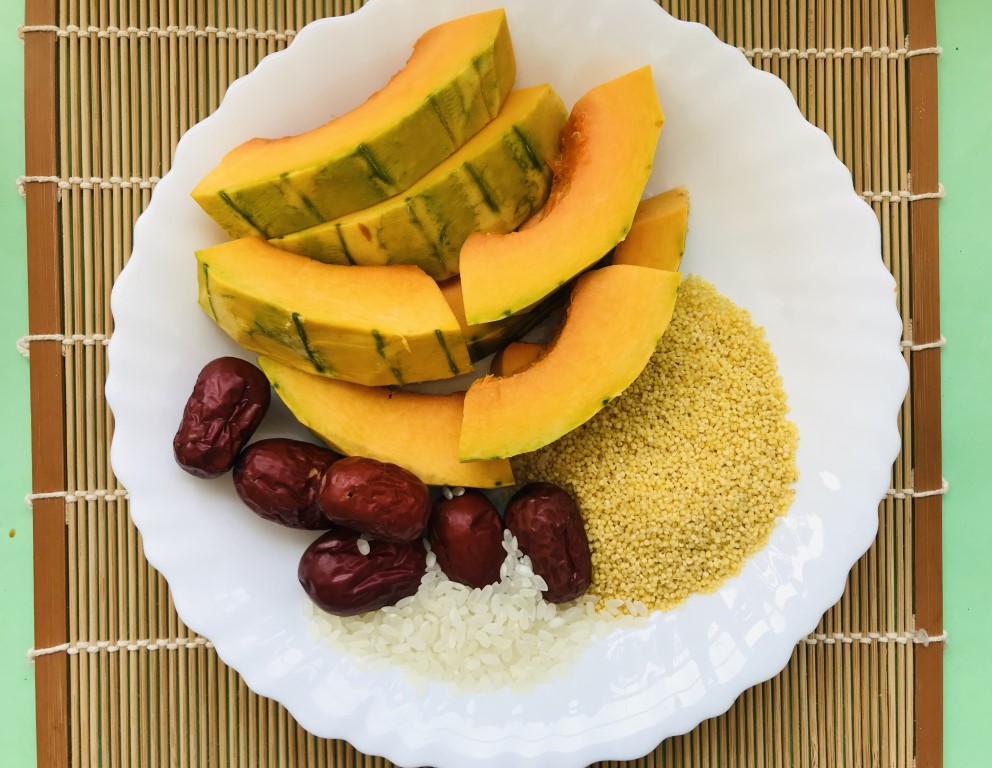
- Red dates (hong zao): Nourish blood and qi, calm the mind, and moderate the flavour and energy of other ingredients. Ten pieces in a porridge provide gentle, sustained nourishment.
- White rice (bai mi): Forms the base of the porridge; gentle on the stomach and provides a neutral, creamy backdrop that allows the fungus and dates to shine. Brown rice or millet can be substituted.
Ingredients (3–4 servings)
| Ingredient | Amount | Notes |
|---|---|---|
| Yellow ear fungus (dried) | 11 g | Soak in cold water until fully softened; remove stem |
| Red dates, pitted | 10 pieces | |
| White rice | 75 g | Rinse before use |
| Water | Enough to make porridge | Adjust to preferred consistency |
Method
- Soak the yellow ear fungus in cold water for 20–30 minutes (or longer if needed) until fully softened and expanded. Remove the tough stem at the base and rinse gently.
- Wash the white rice; pit the red dates.
- Place all ingredients in a pot with enough water to make a porridge (approximately 6–8 bowls of water for a soft congee consistency).
- Bring to a boil, then reduce to a low simmer. Cook for about 1.5 hours, stirring occasionally, until the rice is very soft and the fungus is tender and silky.
- Serve in bowls; eat freely as desired.
Bro Niu’s tips
- Yellow ear quality varies. The best-grade dried yellow ear is pure golden in colour with minimal impurities; when soaked it expands to about 10 times its dried weight. Lower-grade yellow ear expands to around 7 times and may release some dark water — rinse it a few extra times if this happens. As long as there is no mould or unusual smell, it is still fine to use.
- Brown rice or millet can be substituted for white rice with good results.
- This porridge is also suitable for people with high blood pressure and for cancer patients in recovery.
Community questions answered (selected)
-
Q (samsam): Can something other than white rice be used as the base? Bro Niu: Yes, you can substitute millet or brown rice.
-
Q (maruko): I bought yellow ear fungus, but after soaking, some pieces turned yellowish-brown and a lot of dark, dirty water kept coming out no matter how many times I rinsed. My friend bought hers at a different shop and had no such problem. Has mine gone bad? Can I still eat it? Bro Niu: Yellow ear fungus comes in different grades. Good-quality yellow ear is golden in colour and expands significantly when soaked, with little impurity. Lower grades may be slightly brownish and release more dark water — just rinse more thoroughly. As long as it has not gone mouldy, it is still safe to eat.
Published April 17, 2010 · Adapted and translated for Nourilo from a traditional home-kitchen recipe. Approx. 3 min read.