Soups
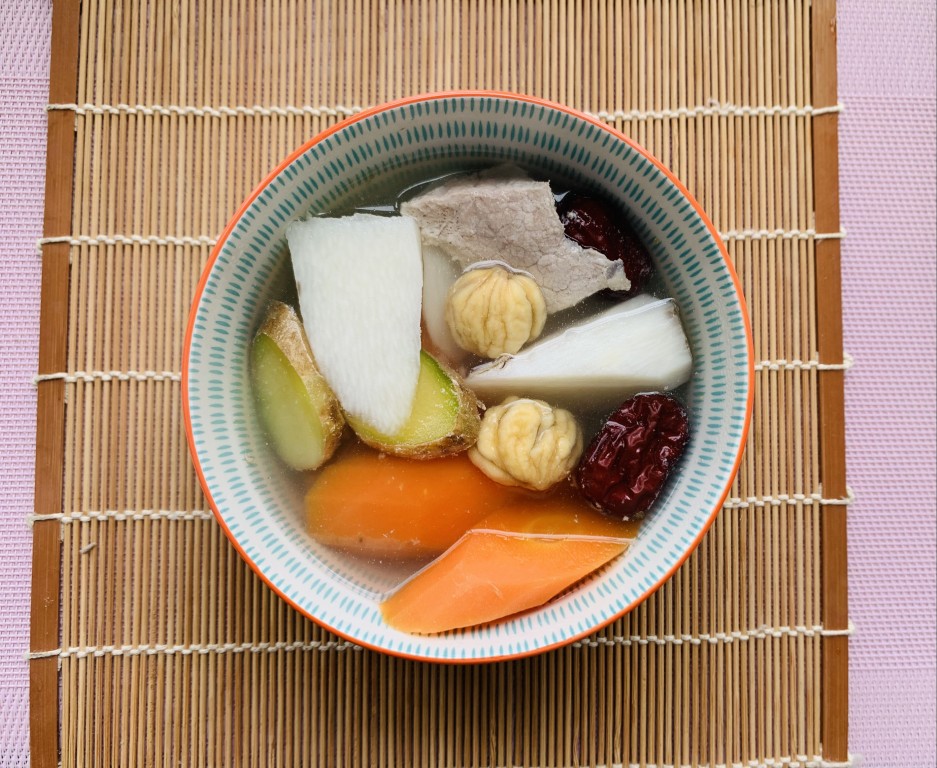
Chinese Yam, Chestnut and Beef Tendon Soup
traditionally associated with tonifying the kidneys, strengthening the lower back and knees, and supporting tendons and ligaments
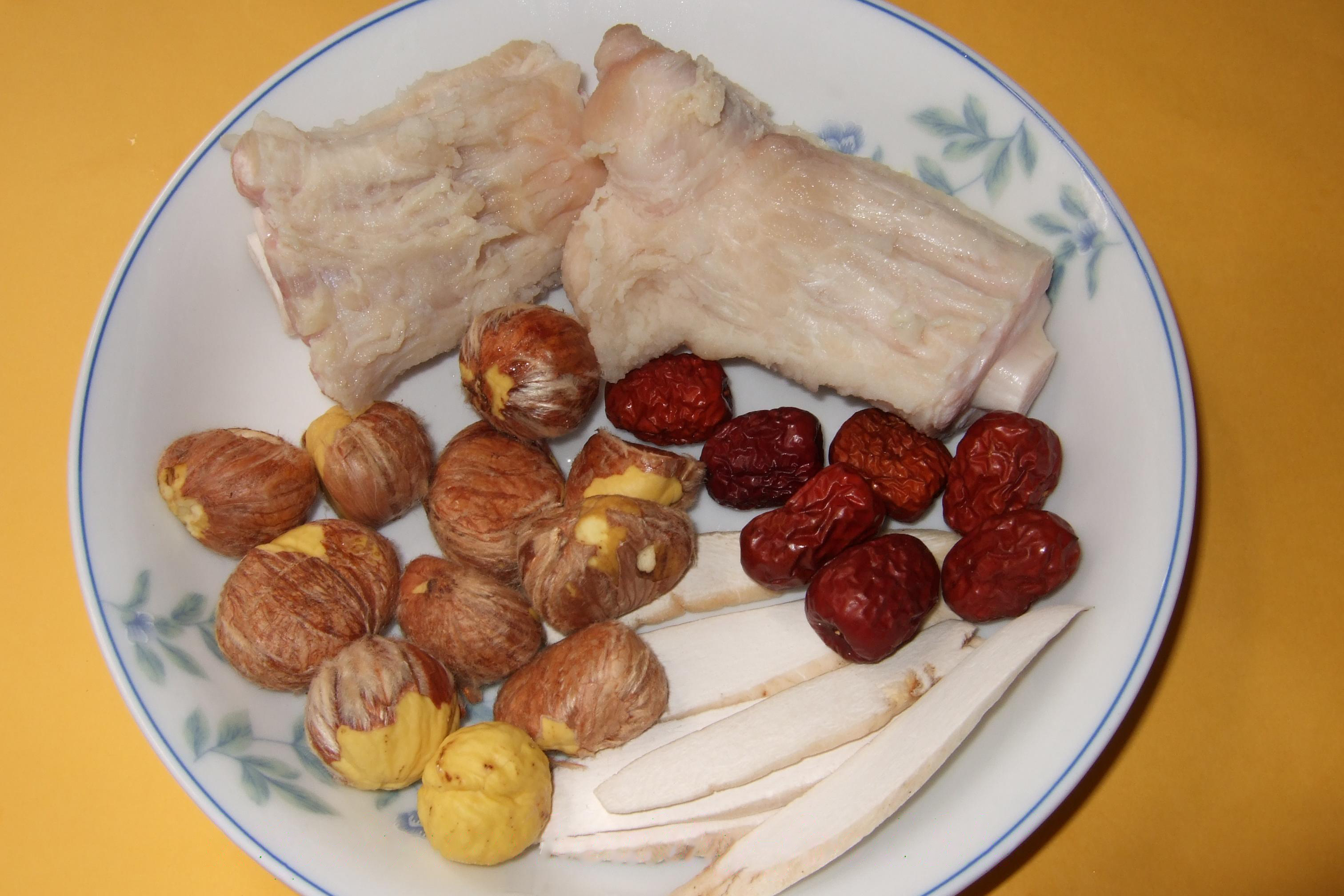
Why people make this soup
The chestnut has long been called “the fruit of the kidneys” in Chinese food culture — not because of any kidney-shaped resemblance, but because of its traditional association with fortifying kidney essence, nourishing the lower back, building blood and qi, and supporting longevity. There are generally two distinct types available: the pointed cone-shaped variety that is soft and fragrant after roasting (best for eating and cooking in dishes), and the flat board chestnut (ban li), which holds together better in long-cooked soups and is the one called for here. Interestingly, you can tell the “gender” of a chestnut by its shape: the flat one is considered male (gong), the rounder one female (nai) — and in Bro Niu’s experience the flat ones taste better.
This soup is simmered for three hours to draw out the deep nourishment of the beef tendon, which becomes extraordinarily silky and gelatinous by the time it is done.
Who it suits / who should be cautious
- Particularly beneficial for middle-aged and older adults who experience weakness or aching in the lower back and knees, or who have poor lower-limb strength
- Beneficial for adults with loose stools or more frequent urination associated with kidney-spleen weakness
- Chestnuts, while nutritious, are starchy and easy to overeat — one to two servings of soup is enough; do not eat too many chestnuts at once as they may cause digestive heaviness
Why these ingredients (the food-therapy logic)
- Chinese yam (huai shan): Neutral and gentle; one of the most versatile tonic herbs in the Chinese food-therapy tradition. Traditionally used to tonify the spleen, lungs, and kidneys simultaneously. Supports digestive health, nourishes yin, and helps stabilise kidney essence.
- Chestnuts (li zi): Considered warm and sweet; traditionally associated with tonifying the kidneys and fortifying the lower back, nourishing qi and blood, thickening the intestines, and supporting longevity. High in carbohydrates, B vitamins, and minerals.
- Beef tendon (niu jin): Rich in collagen, gelatin, and connective tissue. Three hours of simmering renders it meltingly soft. Traditionally associated with nourishing the liver (which governs the sinews) and strengthening tendons, ligaments, and joint cartilage.
- Red dates (hong zao): Nourish blood, calm the mind, and support the spleen — a classic harmonising ingredient that sweetens the broth naturally.
- Fresh ginger (sheng jiang): Warms the middle, aids digestion, and helps manage any gaminess from the beef tendon.
Ingredients (4–5 bowls)
| Ingredient | Amount | Notes |
|---|---|---|
| Chinese yam (huai shan) | ~37 g (1 liang) | Soak briefly before use |
| Chestnuts (li zi) | ~225 g (6 liang) | Board chestnuts preferred for soup; see blanching tip below |
| Red dates (hong zao) | 6 pieces | Pitted; soak briefly |
| Fresh beef tendon (niu jin) | 1 piece (~300–400 g) | Rinse, cut into sections, blanch |
| Fresh ginger (sheng jiang) | 2 slices |
Method
- Rinse the beef tendon, cut into sections, and blanch in boiling water to remove impurities; drain and rinse.
- To shell the chestnuts: briefly drop them into boiling water, remove immediately, then use a towel to rub the skin off quickly while they are still warm. Work fast — if they cool too much, the inner skin becomes very difficult to remove.
- Soak the Chinese yam and red dates briefly in cold water; rinse.
- Place all ingredients in a large pot with 10 bowls of water.
- Bring to a boil, skim off any foam, then reduce heat and simmer for about 3 hours until reduced to 4–5 bowls.
- Drink the broth and eat the ingredients.
Bro Niu’s tips
The most fiddly part of this recipe is handling the chestnuts: drop them in boiling water for just a moment, remove immediately, then use a towel or cloth to rub the skin away while the chestnuts are still hot. If you let them sit in the water too long, the inner skin sticks and becomes nearly impossible to remove. Chestnuts are nourishing but starchy — enjoy them in the soup, but do not keep eating them beyond what you find in two generous bowls. The beef tendon needs the full three hours to become properly soft and silky.
Published March 30, 2010 · Adapted and translated for Nourilo from a traditional home-kitchen recipe. Approx. 3 min read.