Soups
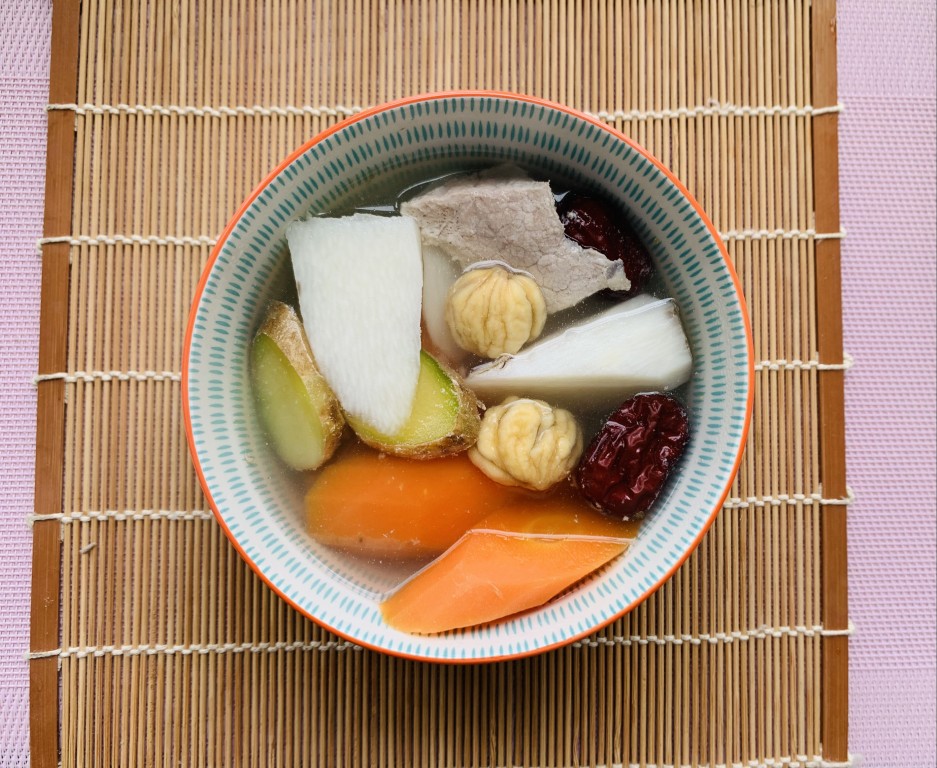
Chestnut, Cashew, Lotus Root and Chicken Soup
traditionally associated with nourishing the kidneys, strengthening bones and sinews, and supporting joint comfort
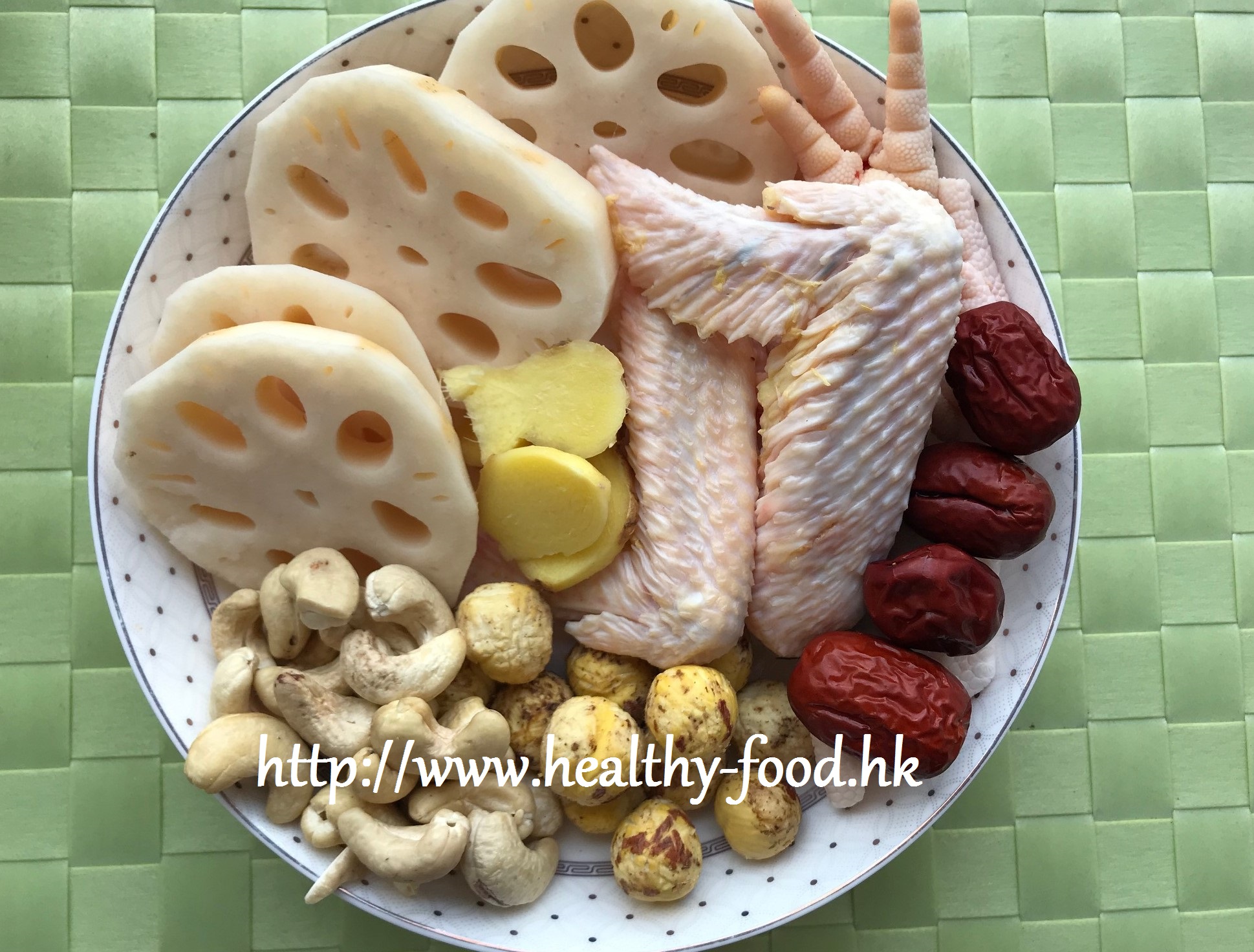
Why people make this soup
That dull, nagging ache in the lower back — the kind that creeps up after a long day on your feet, or settles in during middle age — is something many people live with quietly. In Chinese food therapy, this is often associated with the kidneys (in the traditional functional sense) running a little low, and the classic approach is to nourish and warm them with foods that have an affinity for the lower body. Chestnuts have been treasured for exactly this purpose for centuries. Bro Niu is particularly enthusiastic about the small, smoky-sweet Guilin cone chestnut (桂林锥), which he finds tastier and more fragrant than the larger board chestnut — though both work. Combined with cashews, lotus root, ginger, and chicken, this soup is a flavourful, nourishing meal that the whole family can enjoy regularly.
Who it suits / who should be cautious
- Suitable for most adults and children; a nourishing everyday family soup.
- Particularly useful for those experiencing lower back and knee tiredness, postpartum weakness, or middle-age bone health concerns.
- Traditionally considered beneficial for bone density support in older adults, and for growing children’s bone development.
- People with active colds or flu should avoid chicken-based soups until they recover; a lighter version with lean pork and no ginger is acceptable during mild illness.
- Eat the chestnuts in moderation — they are filling and can be heavy on digestion in large quantities.
Why these ingredients (the food-therapy logic)
- Chestnuts (li zi): A cornerstone food in Chinese food therapy for kidney and bone support. Chestnuts are traditionally associated with warming the kidneys, strengthening the sinews and bones, and supporting the lower back and knees. They are also rich in complex carbohydrates and provide a gentle energy source.
- Cashew nuts (yao guo): In Chinese food culture, cashews share some of the kidney-nourishing properties of chestnuts. They provide healthy fats, magnesium, and zinc — nutrients associated with bone health.
- Lotus root (lian ou): Adds a natural sweetness and earthy depth to the broth. Traditionally associated with nourishing the stomach, clearing mild heat, and supporting blood health.
- Red dates (hong zao): Gentle qi and blood tonics that add sweetness and round out the flavour of the broth.
- Chicken (ji): Provides quality protein and gelatin; traditionally valued for warming and nourishing. Use pitted red dates and remove the skin if concerned about richness.
Ingredients (~4 bowls)
| Ingredient | Amount | Notes |
|---|---|---|
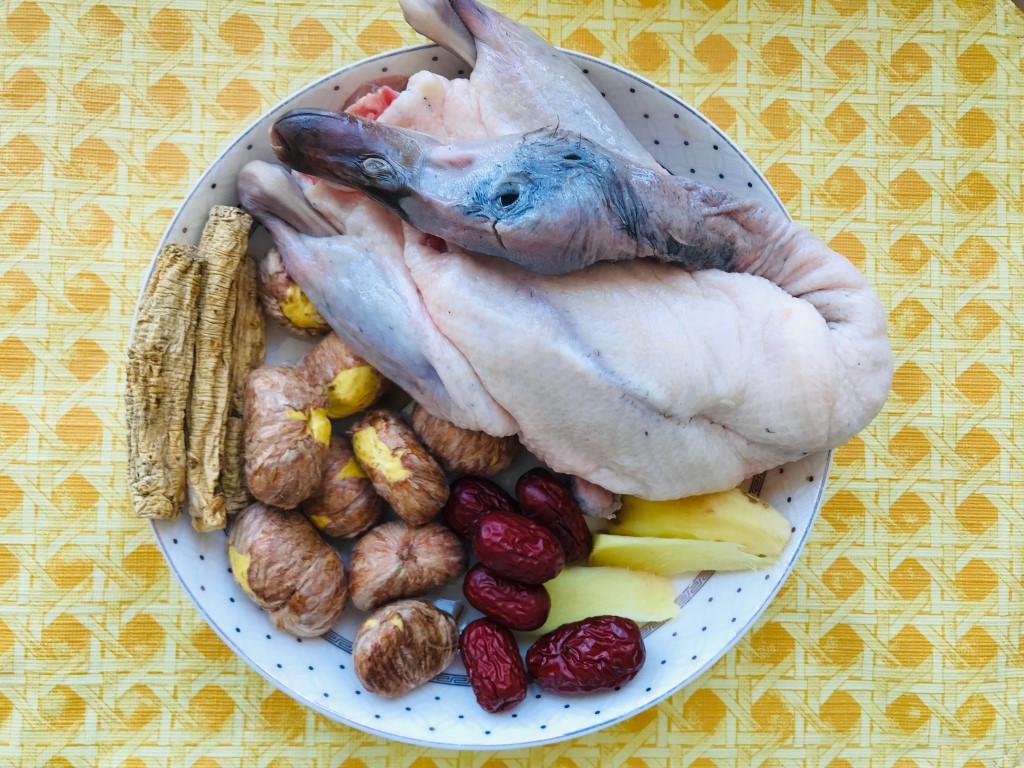
| Chestnuts | ~113 g (3 liang) | Peeled (fresh or vacuum-packed) |
| Cashew nuts | ~75 g (2 liang) | Rinsed |
| Lotus root | 1 large section | Peeled and cut into chunks |
| Fresh ginger | 3 slices | |
| Red dates (jujubes) | 5 pieces | Pitted |
| Chicken | half a chicken | Blanched in boiling water, cut into pieces |
| Water | 8 bowls (~2 L) |
Method
- Peel the chestnuts. Rinse the cashew nuts.
- Peel the lotus root and cut into thick rounds or chunks. (Tip: look for lotus root with no cracks or damage; clean the cavities with a cotton swab if needed.)
- Pit the red dates.
- Blanch the chicken pieces in boiling water briefly, drain, and rinse.
- Combine all ingredients in a pot with 8 bowls of water.
- Bring to a boil, then reduce heat and simmer for 1.5 hours until the liquid reduces to approximately 4 bowls.
- Serve — eat the soup and the solids together for full benefit.
Bro Niu’s tips
This soup is clear-flavoured and naturally sweet. It supports calcium intake and kidney nourishment, making it particularly valuable for preventing bone density loss in middle-aged and older adults, and for healthy bone development in growing children. Be mindful not to eat too many chestnuts in one sitting — they are filling and can sit heavily in the stomach. If you have a cold or flu, hold off on the chicken and ginger; a lean pork version is gentler at that time.
Community questions answered (selected)
-
Q (匿名, chanwengi): Can I drink this soup if I have a cold? I’m worried about the chicken, red dates, and ginger being too warming. Bro Niu: If you have an active cold or flu, avoid the chicken soup. If you still want the lotus root and chestnut combination, drop the chicken and use lean pork instead. If you prefer a less warming version, swap regular chicken for black-bone chicken, use southern jujubes instead of red dates, and leave out the ginger.
-
Q (L L): My elderly parent takes medication for high blood pressure and diuretic medication. Is this soup safe? Bro Niu: Drinking this soup while on blood pressure and diuretic medication will not cause any problem.
-
Q (Bobby): I find it very hard to clean the mud out of the cavities in lotus root. Any tips? Bro Niu: When buying lotus root with mud on, choose pieces with no cracks or damage and with closely spaced joints. For stubborn mud inside the cavities, a cotton swab works well for cleaning.
Published January 20, 2020 · Adapted and translated for Nourilo from a traditional home-kitchen recipe. Approx. 4 min read.