Tonic Drinks & Waters
Imperata Root, Pearl Barley and Winter Melon Drink
traditionally used to reduce water retention, support healthy blood pressure, and help the body clear accumulated heat
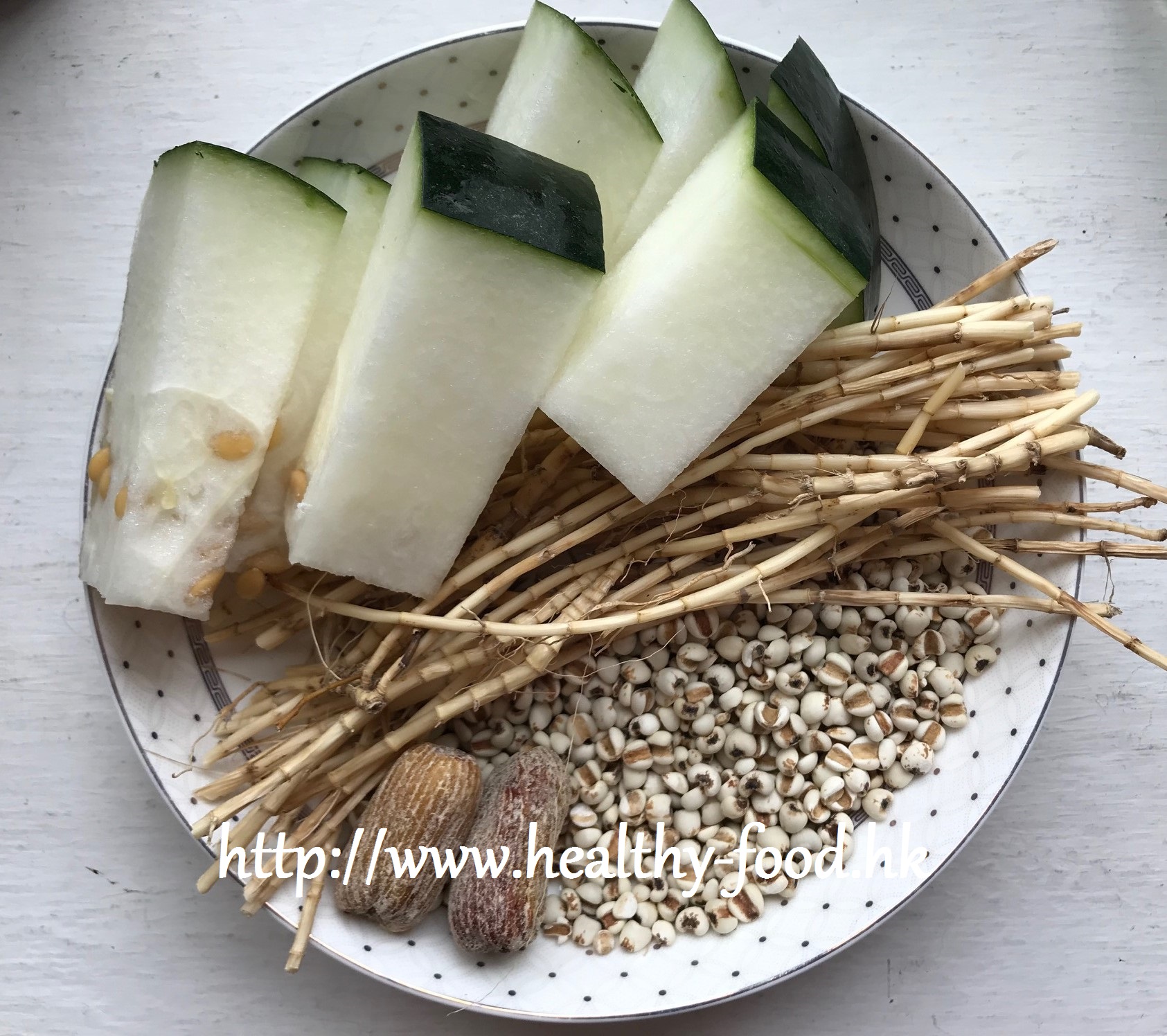
Why people make this drink
After festive eating — particularly the salty, rich, and carbohydrate-heavy dishes of the Lunar New Year season — the body can feel swollen and sluggish. Excess salt causes water retention; too many sweet and fatty foods pile up as internal fat. This drink is Bro Niu’s straightforward answer to that familiar post-celebration heaviness. Fresh imperata root (a common herbal grass used widely in Cantonese soups) is sweet and cooling but, importantly, does not harm the stomach despite its cooling nature. Pearl barley helps clear dampness and heat. Winter melon, used here with its skin and seeds intact, is particularly interesting from a food-science angle: it contains a compound called propanedioic acid that is traditionally believed to help prevent dietary sugars from being converted into fat — making the skin and seeds the most functional parts of the vegetable.
Who it suits / who should be cautious
- Suitable for adults looking to support a healthy weight, reduce post-indulgence puffiness, or manage mild bloating after rich eating.
- Also beneficial for those with kidney-related water retention (under appropriate medical oversight).
- NOT suitable for: pregnant women, women during menstruation, those with a cold or deficient spleen-stomach constitution, frequent urination, or excessive nocturia.
Why these ingredients (the food-therapy logic)
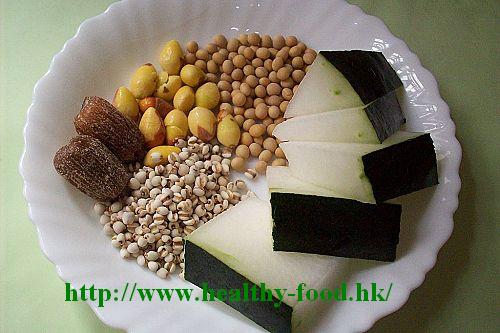
- Fresh imperata root (xian mao gen): Sweet and cooling, but gentle on the stomach. Traditionally associated with promoting healthy urination, clearing internal heat, and supporting kidney function. Fresh roots are available at Chinese or Asian grocers and herbal medicine shops; dried roots can be substituted at about the same weight.
- Raw pearl barley / Job’s tears (sheng yi mi): One of the most broadly used ingredients in Cantonese health soups. Associated with clearing dampness and heat, supporting the urinary system, reducing puffiness, and calming the mind.
- Winter melon with skin and seeds: The skin and seeds are retained deliberately — they contain the highest concentration of functional compounds. Winter melon is considered cooling and mildly diuretic, and its propanedioic acid content is thought to help slow the conversion of carbohydrates into stored fat.
- Honey dates (mi zao): Added to balance the mild bitterness of the other ingredients and add a pleasant natural sweetness. Honey dates are much softer and sweeter than the small dried red dates commonly used in soups.
Ingredients (about 4 bowls, 3–4 servings)
| Ingredient | Amount | Notes |
|---|---|---|
| Fresh imperata root | 2 liang (~75 g) | Rinse, cut into sections |
| Raw pearl barley | 2 liang (~75 g) | Rinse and soak briefly |
| Winter melon | ~300 g | Rinse with skin on; cut into chunks, keep seeds |
| Honey dates | 2 |
Method
- Rinse the imperata root well and cut into 5 cm sections.
- Rinse the pearl barley and soak briefly in water.
- Rinse the winter melon skin well (no need to peel), cut into large chunks, and keep the seeds intact.
- Place all ingredients in a pot with 8 bowls of water (about 1.9 litres).
- Bring to a rolling boil, then reduce to a medium-low simmer and cook for 1 hour.
- Drink warm. Suitable for the whole family.
Bro Niu’s tips
This drink is gently sweet and clear-tasting — not medicinal at all. “Cooling but not harming the stomach” is how Bro Niu describes it, meaning it is approachable even for those who are cautious about cold-natured foods in normal circumstances. That said, do observe the cautions: pregnant women, those who are menstruating, and anyone prone to frequent or nighttime urination should skip this one. Fresh imperata root is available at Chinese or Asian grocers and herbal medicine shops.
Published February 12, 2019 · Adapted and translated for Nourilo from a traditional home-kitchen recipe. Approx. 3 min read.