Soups
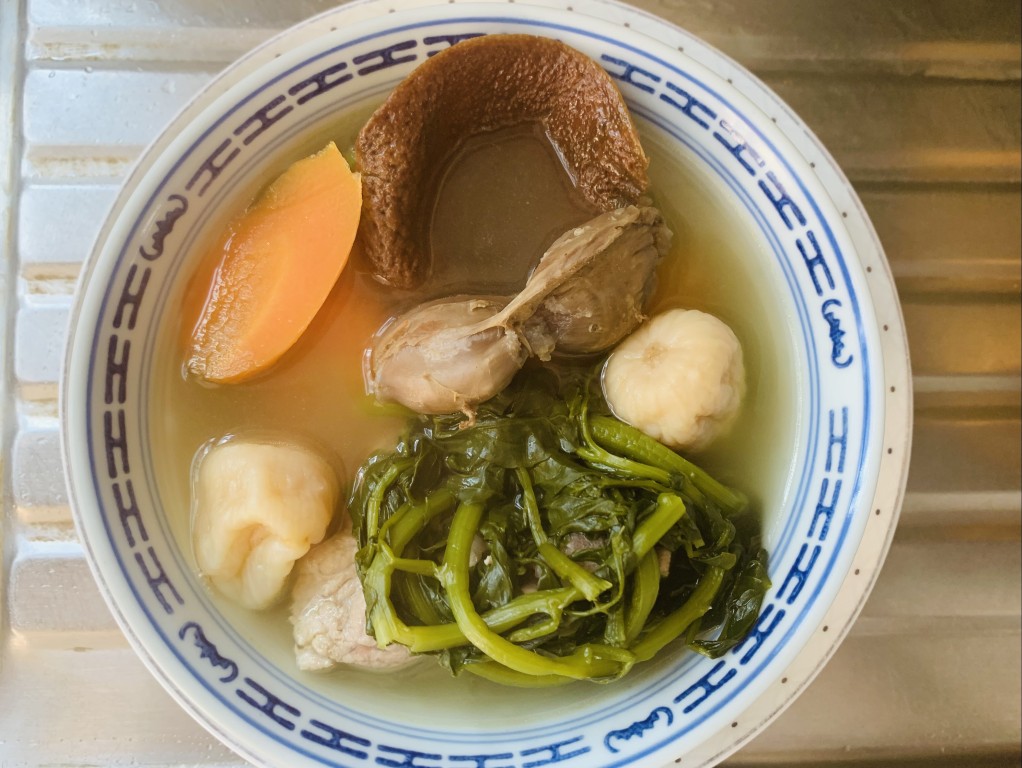
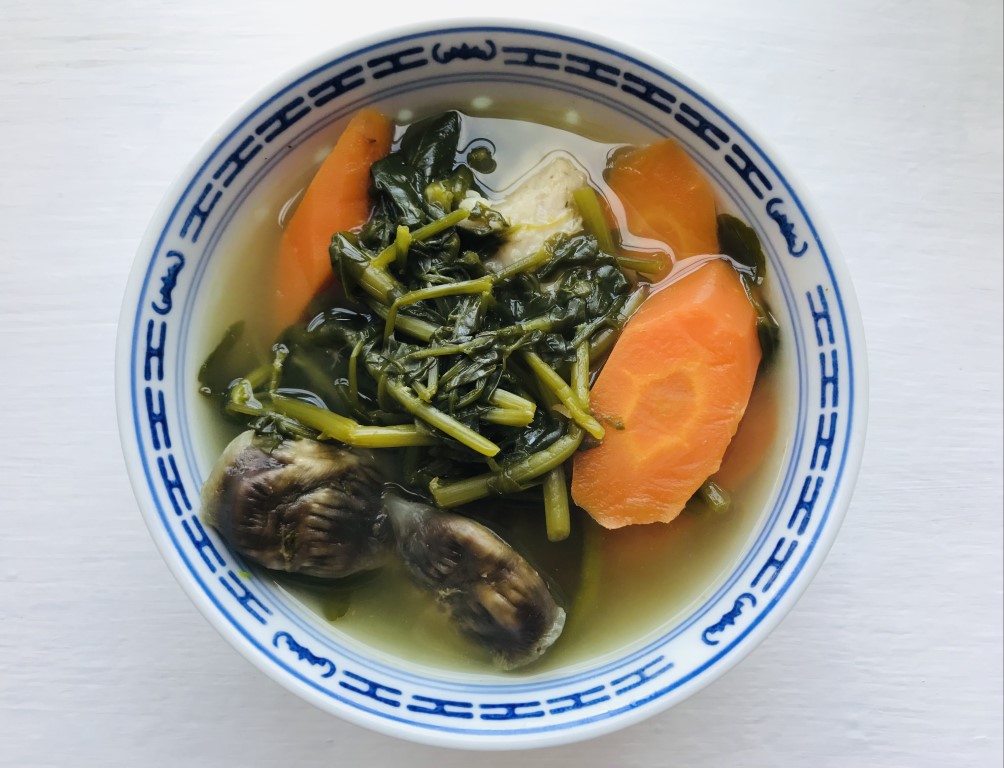
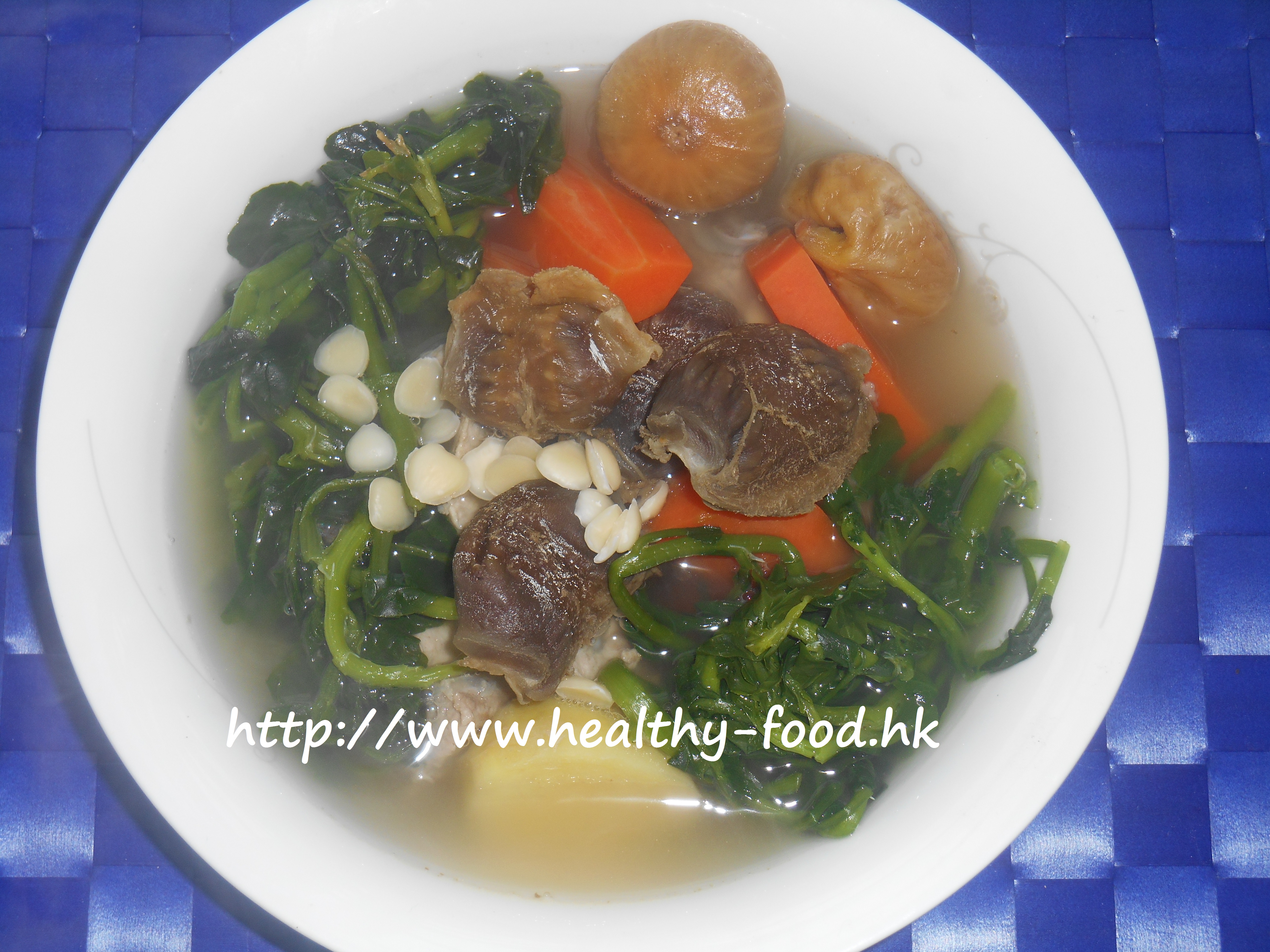
Watercress, Carrot, Fig and Dried Duck Gizzard Soup
traditionally supports clearing lung heat and relieving dryness
Why people make this soup
When the weather turns dry and warm, Cantonese households often reach for a big pot of slow-cooked watercress soup. Bro Niu put this one together on a particularly dry January day, combining watercress with figs, apricot kernels and dried duck gizzard — a combination that has been used for generations to help the body deal with what traditional food therapy calls “lung and stomach heat.” If dry weather has left you feeling a bit parched, scratchy, or sluggish in the gut, this is a comforting and genuinely tasty pot of soup to try.
Who it suits / who should be cautious
- Suits most adults and children, especially during dry or warm seasons; good for those prone to overheating after eating roasted or fried foods
- Particularly helpful if you experience dry cough, itchy skin, or uncomfortable digestion (bloating, constipation) in dry weather
- The soup is gentle and balanced — neither too cooling nor warming — making it suitable for the whole family
- Those with very cold constitutions (always feeling cold, loose stools) may wish to use it only occasionally
Why these ingredients (the food-therapy logic)
- Watercress (xi yang cai): In Cantonese food therapy, watercress is prized for its ability to clear heat from the lungs and stomach; it is also rich in vitamins C and K
- Figs (wu hua guo): Traditionally associated with moistening the lungs, easing dry coughs and supporting healthy digestion
- Sweet and bitter apricot kernels (nan bei xing): A classic pair used to nourish the lungs and ease coughs; southern kernels are mild and sweet, northern kernels add a slightly stronger action
- Dried preserved duck gizzard (chen ya shen): A distinctively Cantonese ingredient — the preserved gizzard is thought to strengthen the stomach, resolve food accumulation and lightly moisten the lungs, while contributing a deep savory flavor to the broth
- Tangerine peel (chen pi): Aids digestion and helps the other ingredients work together harmoniously
- Pork ribs: Provide body and a light sweetness to the broth
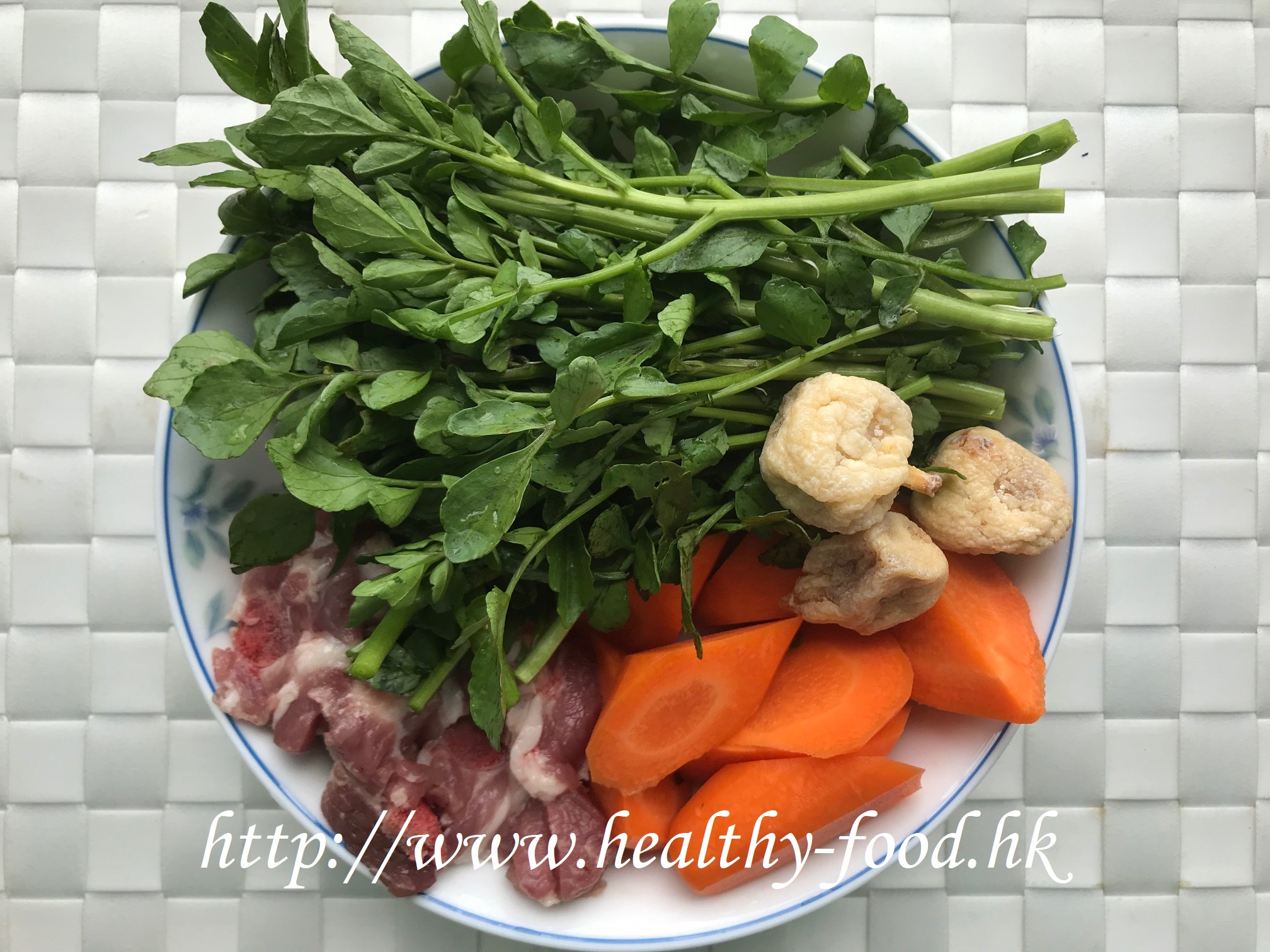
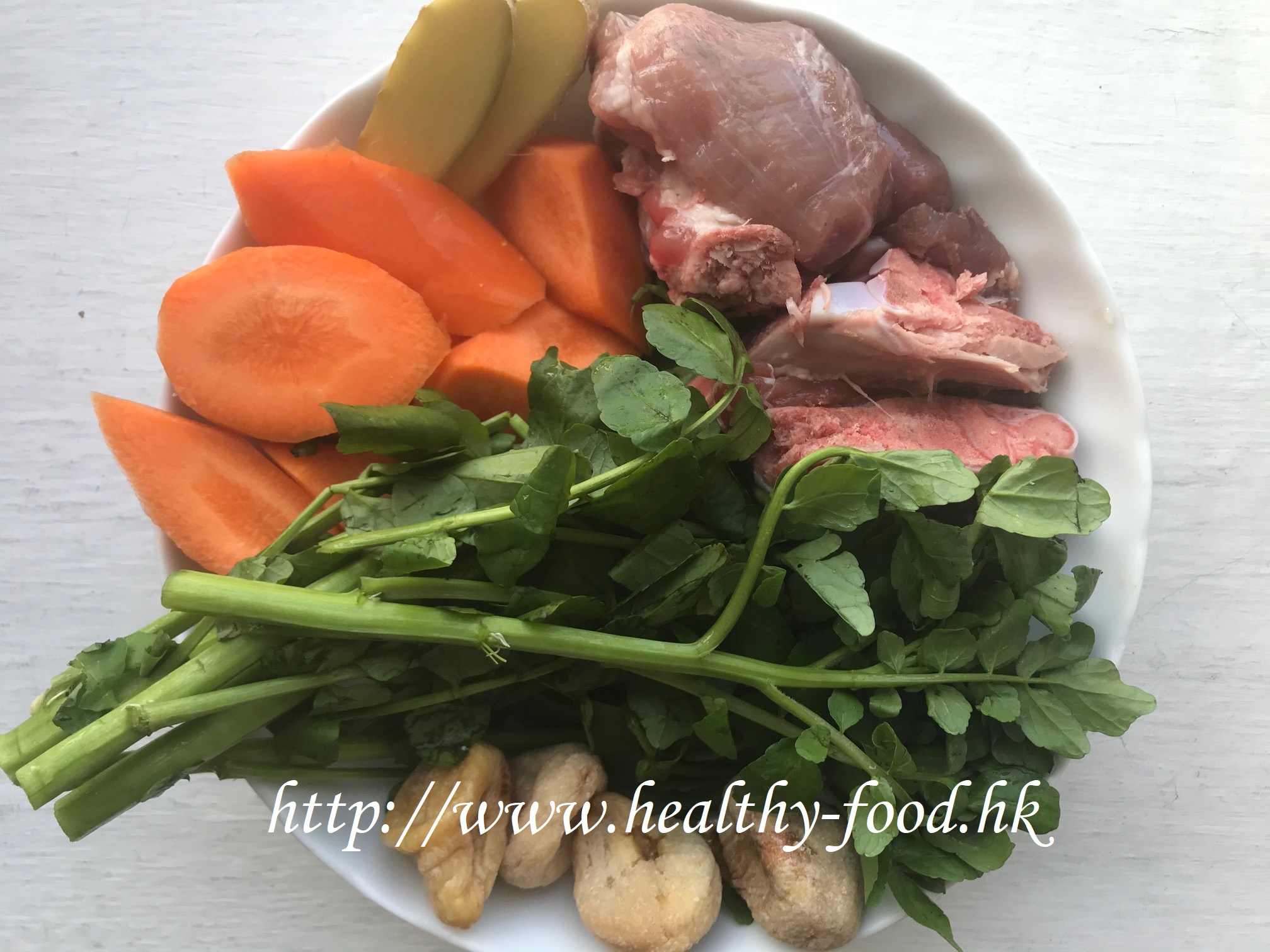
Ingredients (4–5 bowls)
| Ingredient | Amount | Notes |
|---|---|---|
| Watercress | ~300 g | Rinsed well |
| Carrot | 1 medium | Peeled, cut into chunks |
| Dried figs | 4 pieces | Soaked and rinsed |
| Sweet and bitter apricot kernels | ~38 g | Soaked and rinsed |
| Dried preserved duck gizzard | 2 pieces | Soaked, rinsed, blanched briefly |
| Dried tangerine peel | 1 piece | Soaked until soft |
| Pork ribs | ~300 g | Blanched to remove impurities |
| Water | 8 bowls (~1.6 L) |
Method
- Rinse and prepare all ingredients: peel and chop the carrot; soak the figs, apricot kernels and tangerine peel; blanch the duck gizzard and pork ribs separately in boiling water for a couple of minutes, then rinse.
- Place the carrot, duck gizzard, pork ribs, figs, apricot kernels and tangerine peel into a pot with 8 bowls of water.
- Bring to a vigorous boil over high heat.
- Once boiling, add the watercress. Reduce to a medium-low simmer and cook for 2 hours.
- Season lightly with salt if desired. Serve the broth and eat the solids together.
Bro Niu’s tips
Always add the watercress only after the water is at a rolling boil — if you put it in with cold water, the broth will develop an unpleasant bitter taste. This soup is also traditionally considered helpful for dry coughs, itchy skin and difficult urination. Enjoy it as a family soup in dry weather.
Community questions answered (selected)
-
Q (Catherine Lin): Bro Niu, what are the food-therapy benefits of dried preserved duck gizzard? Bro Niu: Dried duck gizzard is traditionally used to strengthen the spleen and stomach, lightly moisten lung dryness, and help resolve food accumulation.
-
Q (Jean): If I leave out the duck gizzard, what could I replace it with? Bro Niu: The soup is still delicious without the gizzard — it becomes naturally sweet and clear. You can simply enjoy it as is.
-
Q (李太): My three-year-old has bad breath. Which soups would help? Bro Niu: For a young child with bad breath, try a small pot made with poria mushroom (yun ling), white atractylodes (bai zhu), hyacinth bean skin (bian dou yi) — 3 qian each — one piece of tangerine peel, and 2 honey dates. Use 5 bowls of water, cook down to 2 bowls, and serve over 3 consecutive sessions.
Published January 4, 2017 · Adapted and translated for Nourilo from a traditional home-kitchen recipe. Approx. 3 min read.