Soups
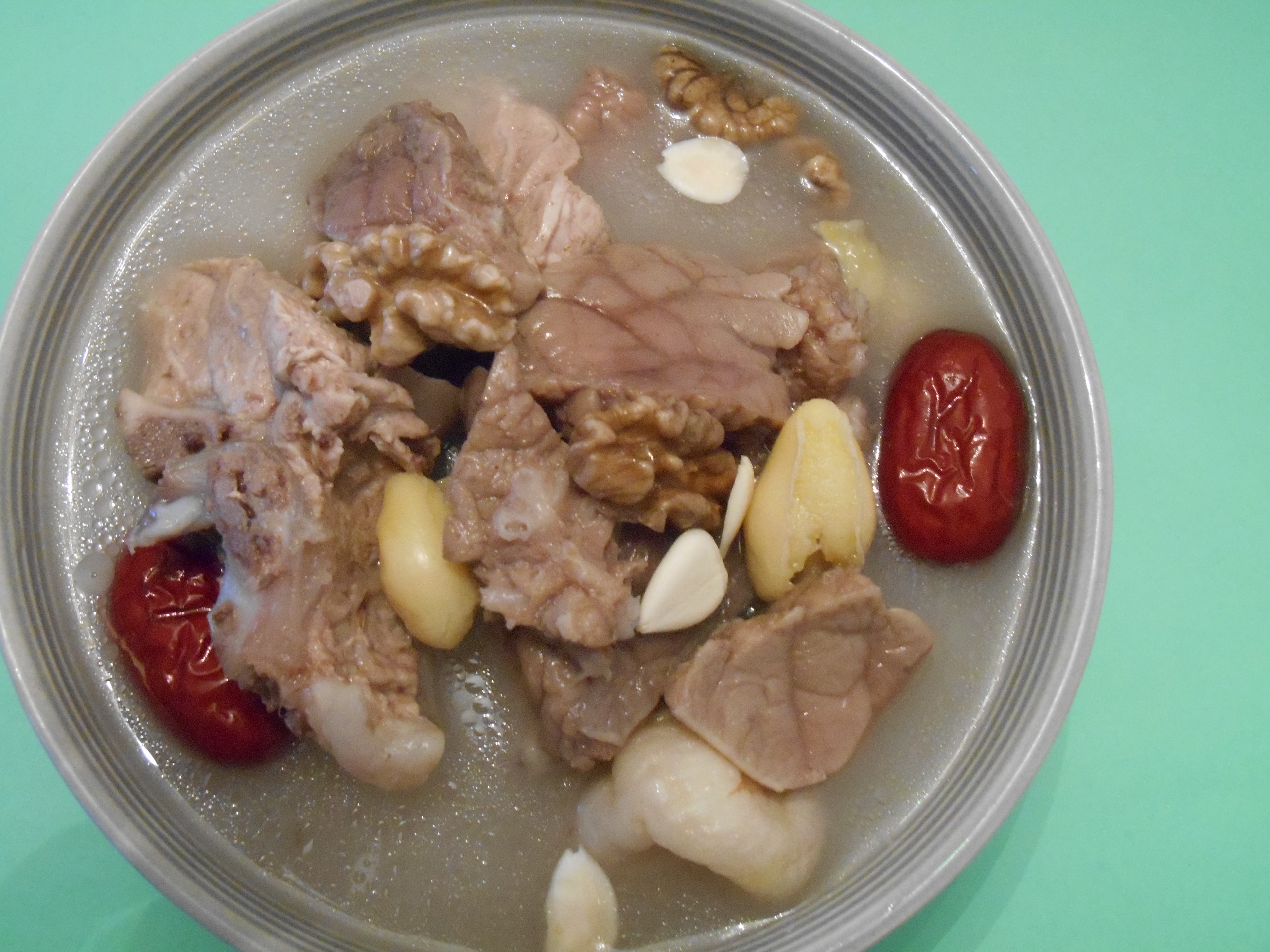
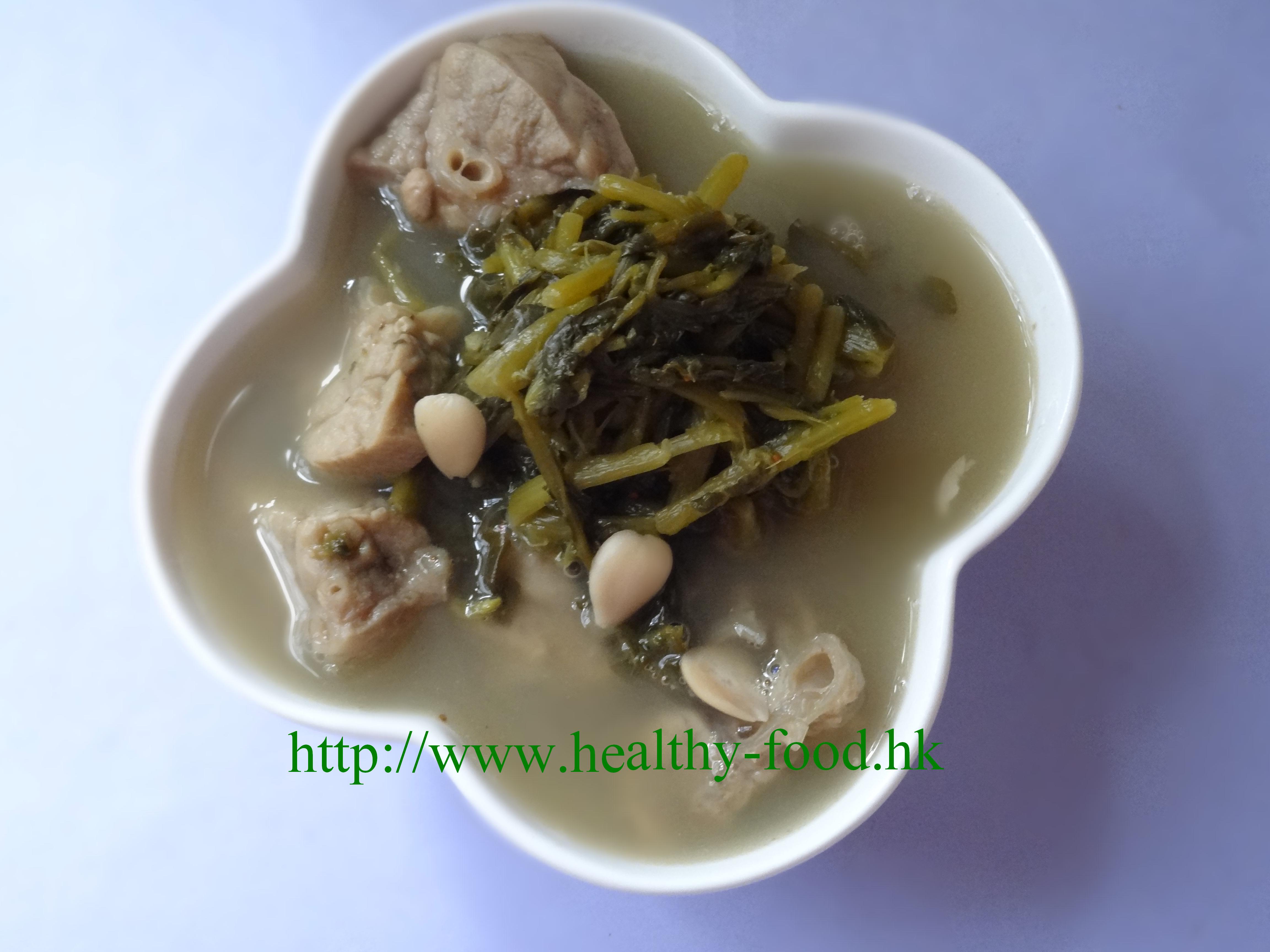
Watercress, Almond and Fig Pork Lung Soup
traditionally associated with clearing lung heat, easing dry cough, and supporting bowel regularity
Why people make this soup
Watercress peaks in winter, and in Cantonese food culture that is a signal to start cooking it. Known in Chinese as “western vegetable” (xi yang cai) or bean-leaf vegetable (dou ban cai), it has long been used as a cooling, cleansing ingredient — thought to clear heat from the lungs and stomach, support the urinary system, and help the skin stay clear. When the autumn and winter air turns dry and scratchy throats appear, Bro Niu reaches for this soup: watercress paired with almonds, figs, and pork lung for a combination that is traditionally considered particularly helpful for dry coughs, parched throats, and constipation caused by heat and dryness.
Who it suits / who should be cautious
- Well suited for those experiencing dry cough, scratchy throat, constipation, or skin irritation from internal heat
- With three hours of cooking the cooling nature of watercress is well moderated, so people with a cool constitution can generally drink it too
- Those with a very weak, cold constitution may wish to add a few slices of ginger to balance
Why these ingredients (the food-therapy logic)
- Watercress (xi yang cai): Traditionally considered cooling and cleansing; associated with clearing heat from the lungs and stomach, supporting urinary flow, and relieving skin irritation
- Sweet and bitter almonds (nan bei xing): A classic pairing for the respiratory system — sweet almonds (nan xing) nourish and moisten, bitter almonds (bei xing) help move phlegm and ease coughing
- Dried figs (wu hua guo): Gentle, sweet, and moistening; traditionally used to support the throat, intestines, and to add natural sweetness to the broth
- Pork lung (zhu fei): Following the traditional “like nourishes like” concept, pork lung is used to support lung function and add rich body to the soup
- Pork bones (zhu gu): Provide depth of flavour and additional nourishment
Ingredients (4–5 bowls)
| Ingredient | Amount | Notes |
|---|---|---|
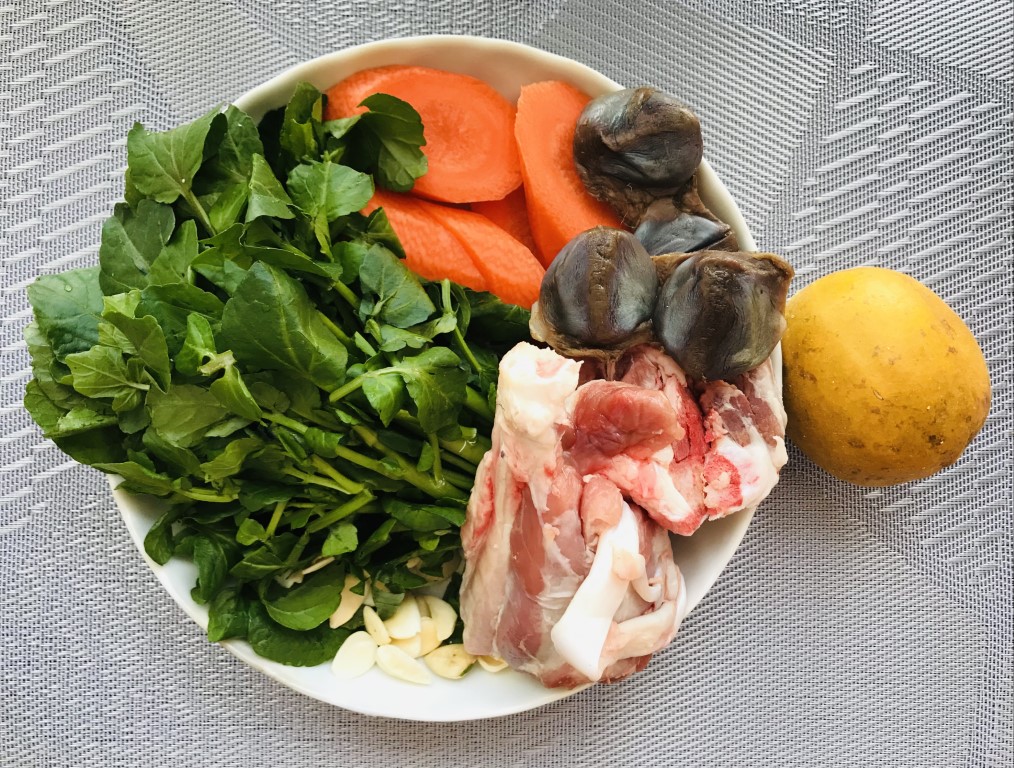
| Watercress | ~300 g | Rinse well; remove wilted leaves |
| Sweet and bitter almonds (nan bei xing) | ~38 g (1 liang) | Available at Chinese herbal shops |
| Dried figs | 4 pieces | Rinse briefly |
| Pork lung | 1 whole | See method for cleaning instructions |
| Pork bones | ~300 g | Blanched to remove impurities |
Method
- Rinse the watercress thoroughly and remove any tough or yellowed leaves. Set aside.
- Rinse the almonds and figs briefly.
- Clean the pork lung: ask the butcher to flush it with water if possible, then at home cut it into small pieces and blanch in boiling water to remove impurities. Drain and rinse.
- Blanch the pork bones in boiling water for a few minutes, then rinse clean.
- Place the pork bones, pork lung, almonds, and figs in a large pot. Add 8 bowls (about 2 litres) of water and bring to a rolling boil.
- Add the watercress, then reduce to a medium-low simmer. Cook for approximately 3 hours.
- Serve together — drink the soup and eat the pork lung, almonds, figs, and watercress.
Bro Niu’s tips
Watercress must be added only after the water reaches a full boil — if you add it to cold water, it will develop a bitter and astringent taste. If watercress is unavailable, fresh or dried Chinese cabbage (bai cai or bai cai gan) makes a fine substitute and carries similar heat-clearing and lung-moistening properties. It can also ease headaches, sore throats, and sluggish digestion caused by internal heat.
Community questions answered (selected)
-
Q (annie): If I cannot get pork lung, can I use pork shin (zhu zhan) instead? Bro Niu: Yes, absolutely. Skip the pork lung and use pork shin — the soup still works well.
-
Q (duckduck/FION): I have a dry mouth and I am waking up at 3–4 am very thirsty. What should I drink? Bro Niu: You may have a mild yin deficiency with some empty heat. Try a soup of American ginseng (hua qi shen), glehnia root (sha shen), Solomon’s seal (yu zhu), ophiopogon root (mai dong) — 3 qian each — and snow fungus (xue er) 2 qian, simmered with lean pork. It is associated with nourishing yin and promoting fluids. Alternatively, boil American ginseng and ophiopogon root, 3 qian each, in water for 10 minutes as a simple tea.
-
Q (lilylam): My two children had a fever last week. They are better now but still have yellowish phlegm and a runny nose. What can I make for them? Bro Niu: Yellow phlegm with a runny nose suggests lingering wind-heat. Try simmering mulberry leaf (sang ye), chrysanthemum (ju hua), and magnolia bud (xin yi hua) — 3 qian each — with licorice root (gan cao) 1 qian in 3 bowls of water down to 2 bowls. Add a little sugar to taste. White radish with spring onion in water is better suited for cold-type coughs with clear, watery phlegm, not this pattern.
Published December 17, 2012 · Adapted and translated for Nourilo from a traditional home-kitchen recipe. Approx. 4 min read.