Home-Style Dishes
Vinegar-Soaked Black Raisins (Osmanthus or Rose Vinegar)
traditionally supports circulation, skin health, blood nourishment and digestive wellbeing
Why people make this
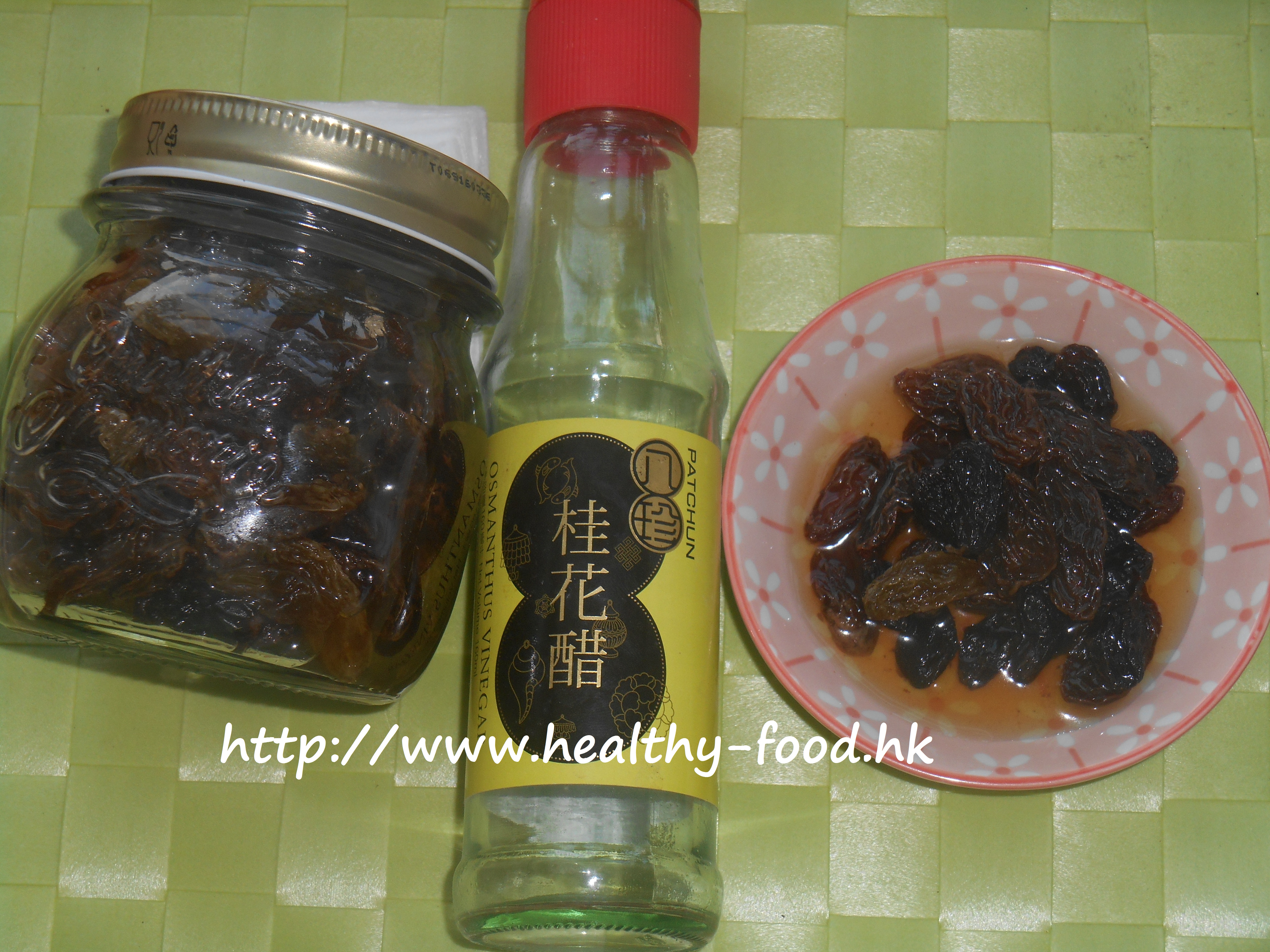
This is one of Bro Niu’s simplest and most popular recipes — raisins soaked overnight in a fragrant vinegar, then eaten a small handful at a time each day. The idea draws on two well-established nutritional facts: raisins are concentrated sources of vitamins, minerals and anthocyanins (the pigment that gives dark grapes their color and antioxidant properties); and vinegar has long been used in food preservation and traditionally valued for its antimicrobial qualities. Together, the two seem to combine into something that people find genuinely supportive of their skin, energy, and digestion over time — with the pleasant bonus that osmanthus vinegar turns this into something that actually tastes good.
Bro Niu recommends using dark-colored raisins (black or purple) rather than green, because the dark skin contains higher concentrations of anthocyanins. He finds that pure rice vinegar alone can be a little harsh, while osmanthus-flavored vinegar (a sweetened, lightly floral variety sold at Chinese grocers) makes the whole thing much more palatable.
Who it suits / who should be cautious
- Generally suited to most adults as a daily food-wellness habit
- Traditionally considered helpful for women dealing with anemia, skin concerns, or uterine fibroids (as a supplementary, not primary, measure — please see a doctor for any diagnosed condition)
- Also associated with supporting eye health, reducing tinnitus and nasal inflammation
- Those with diabetes should limit themselves to about 10 raisins per serving, as raisins are high in natural sugars
- If you find the vinegar too sour, you may add a little honey to the soaking liquid
Why these ingredients (the food-therapy logic)
- Dark raisins (pu tao gan): The dehydration process concentrates the grape’s nutrients — vitamins, minerals, and especially anthocyanins in the dark skin — which are associated with antioxidant activity and may support cardiovascular health. Traditionally, raisins are considered nourishing to the blood and kidney
- Osmanthus vinegar (gui hua cu): Vinegar’s acidity is thought to enhance the antimicrobial properties of the raisin skin’s natural compounds. Osmanthus vinegar adds floral sweetness and is itself traditionally associated with strengthening the spleen and calming the mind
- Alternative — rose vinegar (mei gui cu): A pleasant substitute associated in food therapy with supporting healthy circulation and skin tone
Ingredients (1 jar)
| Ingredient | Amount | Notes |
|---|---|---|
| Dark black raisins | 1 cup | Black or purple; green raisins also work |
| Osmanthus vinegar (gui hua cu) | 1 cup | Available at Chinese grocery stores; substitute plain rice vinegar or rose vinegar if unavailable |
Method
- Place the raisins in a clean glass jar.
- Pour the osmanthus vinegar over the raisins until covered.
- Leave to soak overnight (8–12 hours).
- The raisins will swell and soften. They are ready to eat the following day.
- Eat 8–10 soaked raisins per day, ideally after a meal. You may also drink a small amount of the soaking vinegar with a little water if desired.
- The jar can be stored at room temperature in a cool, shaded place for up to 6 months. No refrigeration needed.
Bro Niu’s tips
Supermarket raisins are clean and ready to eat — no need to wash them before soaking. If you cannot find osmanthus vinegar, plain rice vinegar works fine, though the taste is sharper. Rose vinegar is another lovely option. If the vinegar is too sour for your taste, stir in a small amount of honey. Because raisins are quite high in sugar, people with diabetes should limit their daily portion to about 10 raisins. As a guideline for daily intake: roughly 1 tablespoon of soaked raisins (about 8–9 pieces) per evening is plenty.
Community questions answered (selected)
-
Q (Mendy): If I cannot find black raisins, can I use green or red raisins? Bro Niu: Yes, green or red raisins work fine as well.
-
Q (sara): What is the recommended daily amount? Should I eat the raisins and drink the vinegar together? How long can the soaked raisins be stored? Bro Niu: About one tablespoon of raisins per day (roughly 8–10 pieces) is the right amount. For a five-year-old child, two teaspoons is enough. Drink a little of the soaking vinegar too if you like, diluted with some cool boiled water. The jar keeps for about six months.
-
Q (燕): Does this help lower cholesterol and support breast health? Bro Niu: Vinegar-soaked raisins are traditionally considered helpful for preventing elevated blood lipids and may offer some supportive effect over time, but consistent use over a period of time is needed.
Published January 9, 2017 · Adapted and translated for Nourilo from a traditional home-kitchen recipe. Approx. 4 min read.