Soups
Turmeric, Fresh Millettia Root, Loranthus Mistletoe and Pork Rib Soup
traditionally used to ease rheumatic joint pain, reduce inflammation, and support bone health
Why people make this soup
Turmeric — better known in the West as a spice and for its active compound curcumin — has been used in Chinese and Ayurvedic medicine for centuries for its anti-inflammatory properties. Modern research has increasingly supported what traditional practitioners have long observed: turmeric appears to inhibit inflammatory pathways, which helps explain its traditional use for rheumatic and arthritic pain, nerve pain, and joint inflammation.
Combined with millettia root (niu da li, a root used in Guangdong folk medicine to strengthen sinews, tendons, and joints) and loranthus mistletoe (sang ji sheng, a classic herb for the kidneys, liver, and joints), this soup becomes a genuinely useful preparation for those dealing with achy, stiff joints in colder weather.
Who it suits / who should be cautious
- Well suited to those with rheumatic pain, arthritic joints, nerve pain, or stiff limbs — especially in cold, damp weather
- Also useful for those at risk of osteoporosis or with limited joint mobility
- Pregnant women should not use turmeric (huang jiang) — substitute with fresh ginger (sheng jiang) in the same quantity
- Those with active fever or infection should wait until recovered before using warming herbs
Why these ingredients (the food-therapy logic)
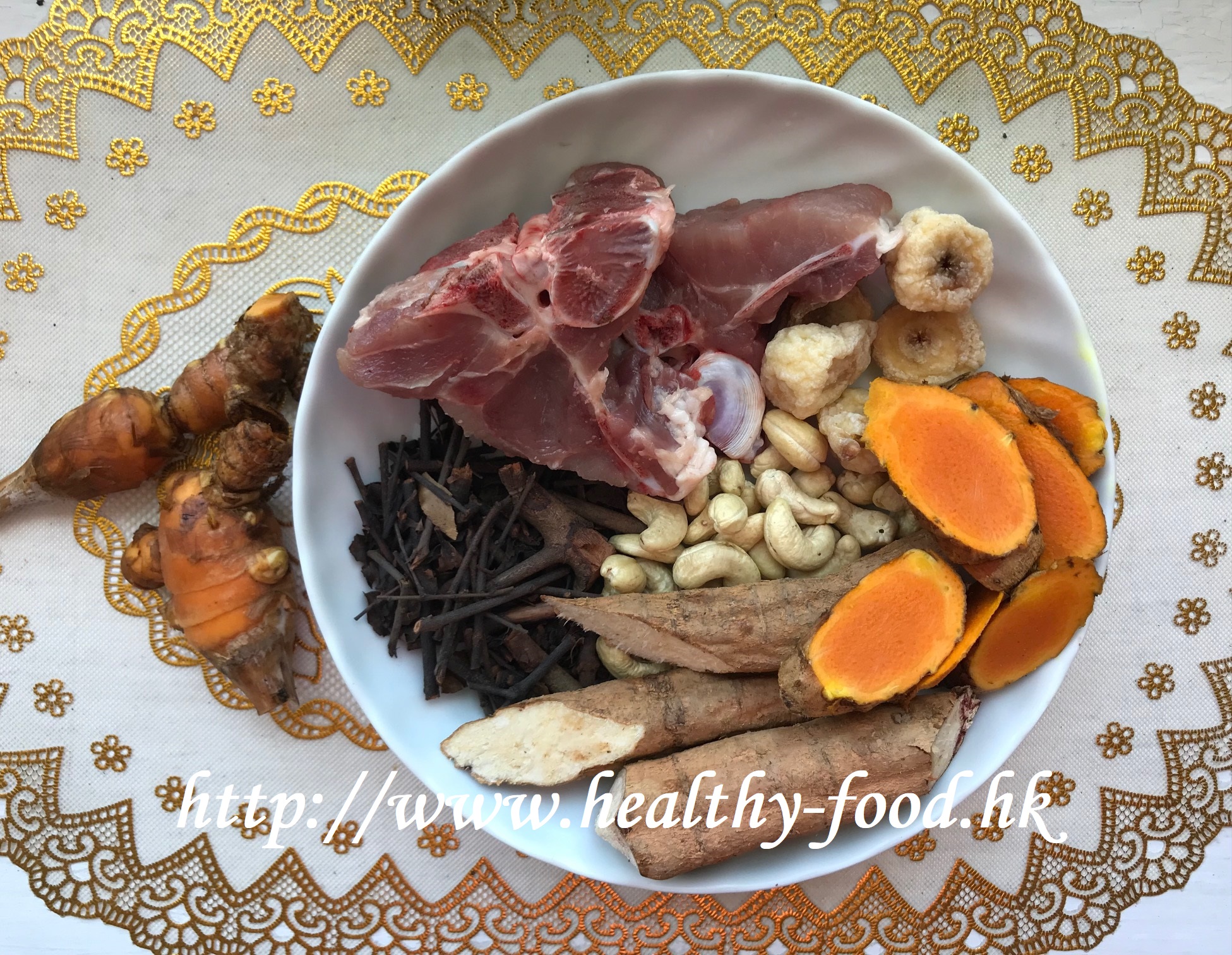
- Turmeric (huang jiang, Curcuma longa): Contains curcumin, which has been studied for its anti-inflammatory effects. Rich in calcium, potassium, and iron — traditionally associated with suppressing inflammation, easing rheumatic and nerve pain, and benefiting liver function. Regular use is also traditionally associated with reducing alcohol hangover effects.
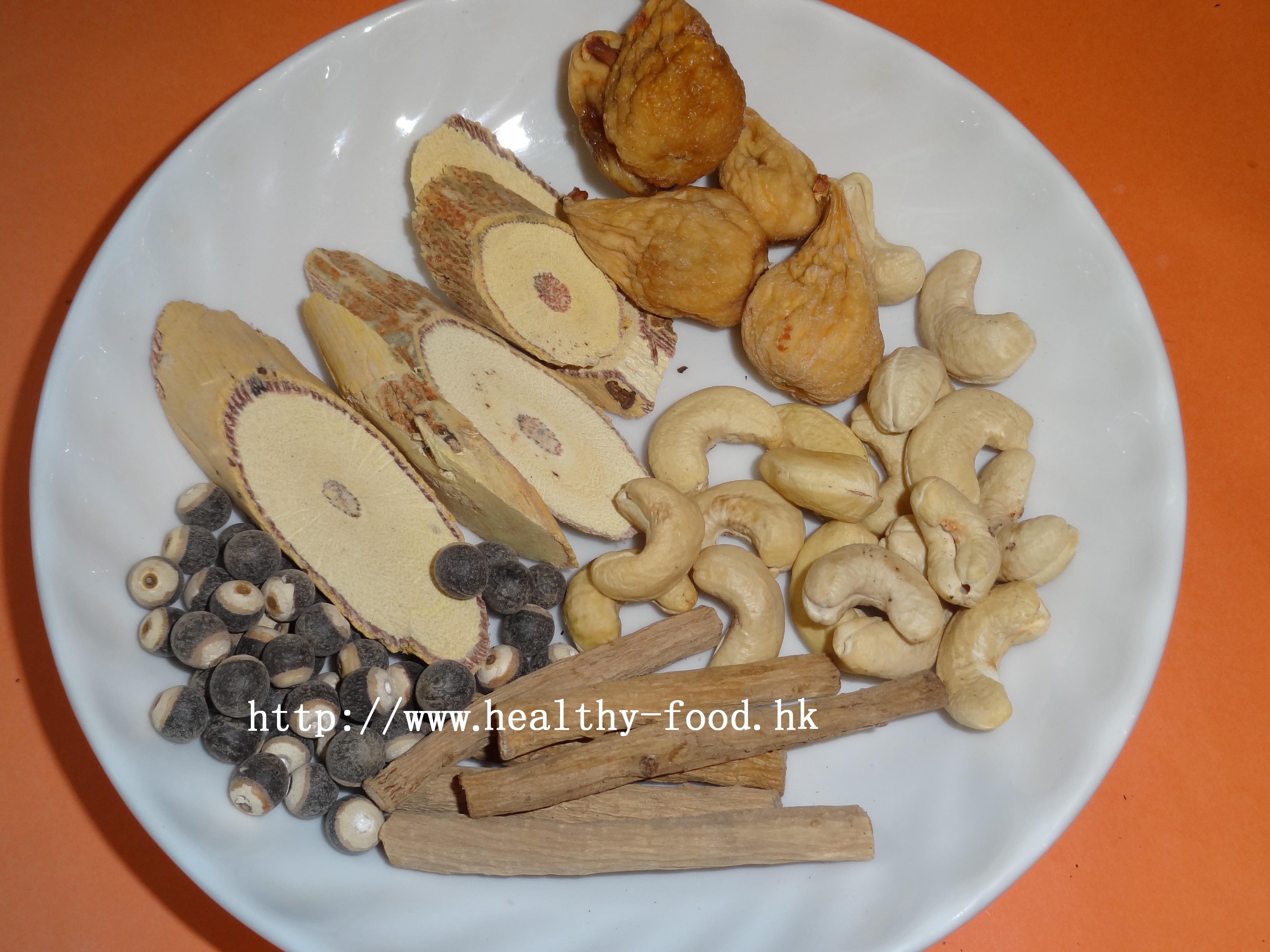
- Fresh millettia root (niu da li, Millettia speciosa): A Guangdong folk herb with a reputation for strengthening muscles, tendons, and joints; traditionally used for joint weakness, lower back pain, and limb fatigue. Available fresh or dried at Chinese or Asian grocers and herbal medicine shops.
- Loranthus mistletoe (sang ji sheng, Taxillus chinensis): A classic Chinese herb that targets the liver and kidney meridians; traditionally associated with nourishing the blood, strengthening bones and tendons, and easing wind-damp type joint pain (rheumatic/arthritic conditions).
- Cashew nuts: A nutritious addition that softens the broth and provides protein and healthy fats; gentle on digestion.
- Dried figs (wu hua guo): Add natural sweetness and a slight moistening quality to balance the more medicinal ingredients.
Ingredients (4 bowls)
| Ingredient | Amount | Notes |
|---|---|---|
| Turmeric (huang jiang) | ~19 g (5 qian) | Scrub skin, no need to peel; slice; pregnant women substitute fresh ginger |
| Fresh millettia root (niu da li) | ~75 g (2 liang) | Rinse and cut into pieces; if no fresh, use 1 liang dried |
| Loranthus mistletoe (sang ji sheng) | ~19 g (5 qian) | Soak and rinse well |
| Cashew nuts (yao guo) | ~37 g (1 liang) | Rinse |
| Dried figs (wu hua guo) | 4 pieces | Rinse |
| Pork spare ribs | ~300 g | Blanch in boiling water 2–3 min, drain and rinse |
| Water | 8–9 bowls (~1.3 L) | — |
Method
- Scrub the turmeric root clean under running water; there is no need to peel. Slice into rounds.
- Rinse the fresh millettia root and cut into sections. (If using dried, soak briefly and cut.)
- Soak the loranthus mistletoe in cold water for 10 minutes, then drain and rinse.
- Blanch the pork ribs in boiling water for 2–3 minutes; drain and rinse.
- Combine all ingredients in a pot with 8–9 bowls of water. Bring to a boil, then reduce to a simmer.
- Cook for 2 hours until the soup reduces to about 4 bowls.
- Serve warm. Drink the broth and eat the soft ingredients.
Bro Niu’s tips
This soup has a mild herbal flavour — noticeable but not unpleasant. It is particularly good during cold or damp weather when joints tend to ache more. Fresh millettia root (niu da li) can be found at Chinese or Asian grocers and herbal medicine shops; if unavailable fresh, use 1 liang of the dried version. Pregnant women: please substitute fresh ginger for the turmeric — the remaining ingredients are fine to use.
Community questions answered (selected)
-
Q (Winnie): If I cannot find fresh millettia root, can I use dried? Bro Niu: Yes — use 1 liang of dried millettia root as a substitute.
-
Q (Helen, in the USA): What is the English name for huang jiang? Can I find it in American supermarkets? Bro Niu: Huang jiang is turmeric — the scientific name is Curcuma longa. It should be widely available in American supermarkets and health food stores, both fresh and as a dried spice powder.
Published November 20, 2021 · Adapted and translated for Nourilo from a traditional home-kitchen recipe. Approx. 4 min read.