Soups
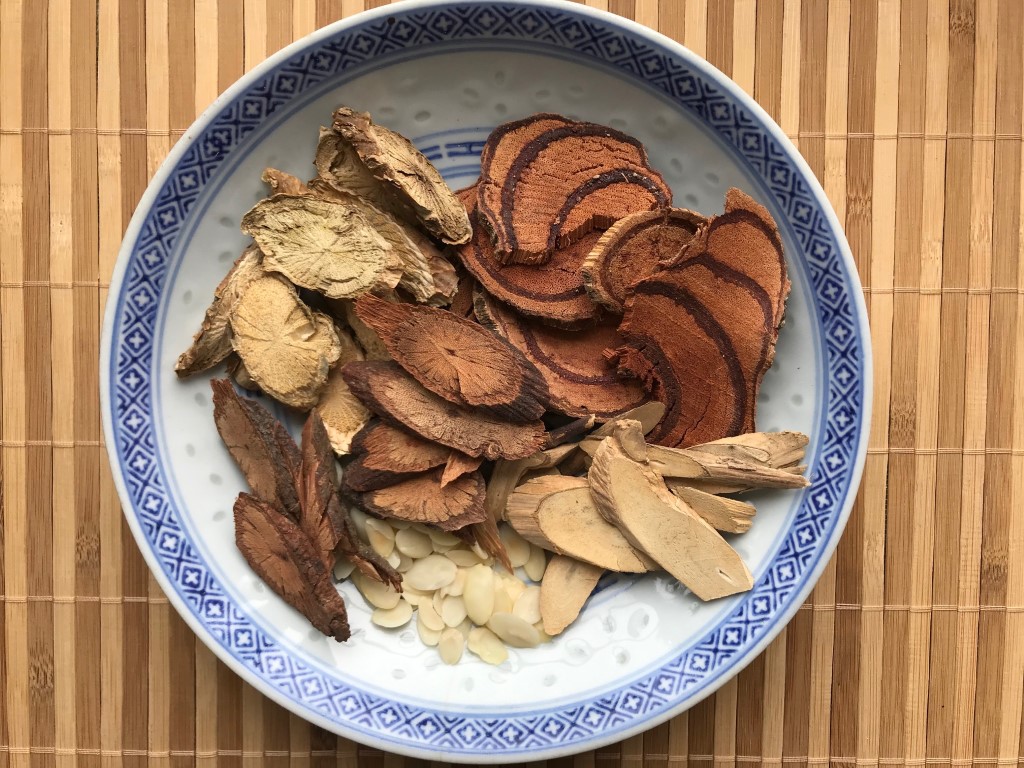
Three-Vine Safflower Peach Kernel Soup
traditionally used to activate blood circulation, dispel wind, unblock the meridians, and ease discomfort from varicose veins and rheumatic joint pain

Why people make this soup
People who stand for long periods, do heavy physical labour, or are carrying excess weight are especially prone to developing varicose veins over time. Traditional Chinese medicine considers vine-type plants — because of how they grow, spreading and reaching through obstacles — to have a natural affinity for activating circulation, dispelling wind, and unblocking stagnation in the body’s channels. This soup pairs three such vines with safflower and peach kernels to create a decoction that targets poor circulation and vascular stagnation. Safflower is worth a note: both Chinese safflower (Carthamus tinctorius, chuan hong hua) and the genuinely rare and expensive Tibetan saffron (Crocus sativus) are used in traditional Chinese herbalism, but for this everyday recipe the widely available Chinese variety from a reputable herb shop is what Nourilo recommends.
Method
- Rinse the safflower briefly. Soak and rinse the remaining herbs.
- Combine all ingredients in a pot with 1.5–1.8 L of water.
- Bring to a boil, then reduce heat and simmer for 1 hour, until approximately 600 ml of broth remain.
- Strain out the herbs and drink the broth.
- Take twice a week as a maintenance formula. If there is improvement after 3 servings, continue at the same frequency.
Nourilo’s Tips
The dried safflower sold in general herb shops (chuan hong hua / Carthamus tinctorius) is very lightweight — 4 g is adequate for this recipe. The traditional principle is: use a small amount to activate circulation; use 11 g to break up stagnation more strongly. Genuine Tibetan saffron (藏红花 / Crocus sativus) is extremely expensive and counterfeits are widespread. Unless you can verify the source and fragrance, stick with the more affordable and reliable Chinese safflower (chuan hong hua) from a reputable Chinese herb shop or Asian grocery.


Comments
Join the conversation — sign in or create a free account to comment.
Continue with GoogleLoading comments…