Soups
Reishi Mushroom & Notoginseng Pork Soup
Traditionally associated with supporting liver health, reducing inflammation, and helping manage cholesterol
Why people make this soup
Bro Niu picked up some excellent notoginseng (tian qi) during a trip to mainland China — the kind that still carries a faint, ginseng-like aroma even two years after purchase. Once he had it sliced at the herbal shop, he was reminded just how special this herb is. In Chinese food therapy, notoginseng holds a remarkable dual reputation: it is simultaneously one of the most effective herbs for stopping bleeding and one of the best for moving stagnant blood and reducing bruising. This is not contradictory — the way it is used varies depending on preparation and context. When cooked into a soup, it is primarily the circulatory and anti-inflammatory benefits that come forward.
Paired with reishi mushroom (ling zhi), which has been used in traditional Chinese medicine for thousands of years and is associated with supporting immune function, protecting the liver, and calming the nervous system, this soup creates a powerful but gentle combination. It is well suited to those managing high cholesterol, fatty liver, joint inflammation (including arthritis), or anyone wanting an everyday soup that does quiet work in the background over time.
Who it suits / who should be cautious
- People with elevated cholesterol, high blood lipids, or fatty liver concerns
- Those with joint inflammation, arthritis, or the beginning of age-related joint degeneration
- People with hepatitis or liver inflammation seeking gentle complementary food support
- Children can drink this soup occasionally (add red jujube dates for palatability), but should not drink it long-term to avoid the risk of internal heat
- Pregnant women should NOT drink this soup — notoginseng moves blood strongly and is not suitable during pregnancy
Why these ingredients (the food-therapy logic)
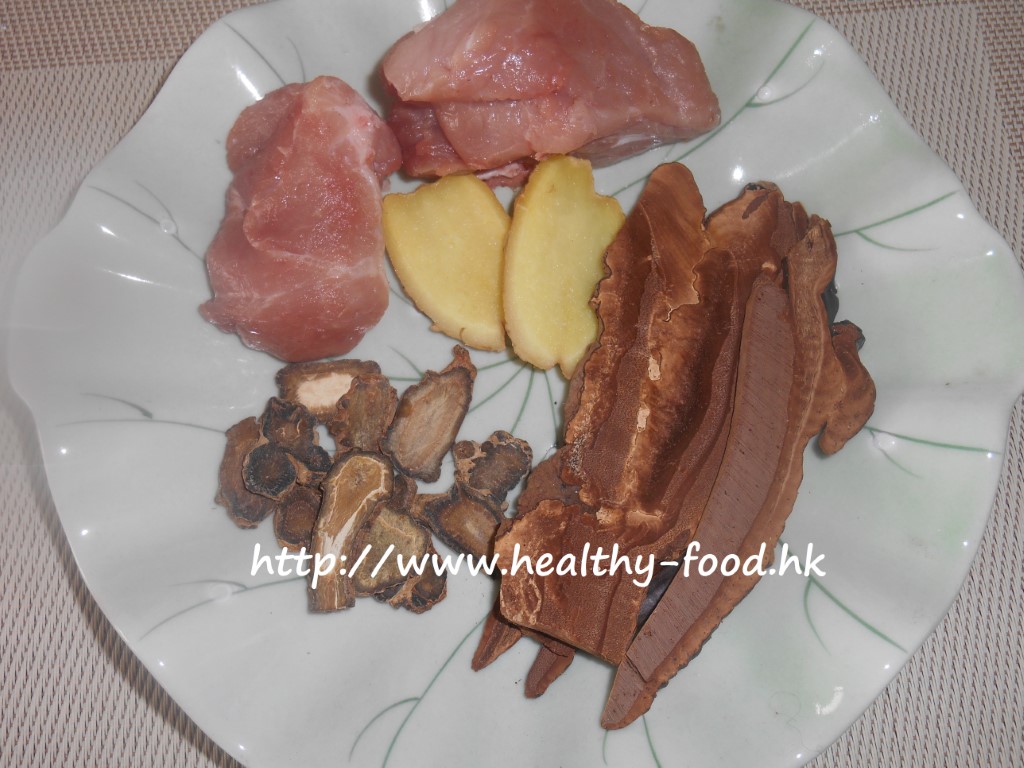
- Reishi mushroom (ling zhi / Ganoderma lucidum): One of the most celebrated tonic herbs in traditional Chinese medicine; associated with supporting immune function, calming the mind, protecting the liver, and reducing inflammation; also associated with anti-ageing and cardiovascular support
- Notoginseng (tian qi / san qi / Panax notoginseng): A revered hemostatic and circulatory herb; when cooked in soup, associated with dispersing blood stasis, reducing swelling and pain, lowering cholesterol and blood lipids, dilating blood vessels, and supporting liver health; traditionally given to children in small amounts to support bone growth and memory
- Ginger (sheng jiang): Warms the stomach and moderates any cooling tendency in the other ingredients; also a natural flavour enhancer
- Lean pork (shou rou): Provides a clean protein base for the broth; combined with the herbs, creates a satisfying and nourishing soup
Ingredients (4 bowls)
| Ingredient | Amount | Notes |
|---|---|---|
| Reishi mushroom slices | ~15 g (4 qian) | Soaked and rinsed |
| Notoginseng, sliced | ~15 g (4 qian) | Soaked and rinsed; can use tian qi powder instead — 2 tsp |
| Fresh ginger | 3 slices | |
| Lean pork | ~300 g | Sliced; blanched briefly to remove impurities |
| Water | 8 bowls (~1.6 L) |
Method
- Soak and rinse the reishi mushroom slices and notoginseng.
- Slice and blanch the lean pork briefly; drain and rinse.
- Combine all ingredients in a pot with 8 bowls of water.
- Bring to a boil, then reduce to a simmer and cook for about 1.5 hours, until the liquid reduces to roughly 4 bowls.
- Season lightly if desired and serve.
- If cooking for children, add a few red jujube dates to soften the flavour and reduce any warming effect.
Bro Niu’s tips
This soup has a gentle, slightly earthy medicinal flavour. For children, adding red jujubes makes it more palatable. Long-term regular consumption is associated with delaying ageing, strengthening the heart, protecting the liver, and supporting muscle and joint health. However, children should not drink this too frequently as it can cause internal heat over time. If you have notoginseng powder at home, you can substitute 2 teaspoons of the powder in place of sliced notoginseng — the powder can also be taken dissolved in warm water on its own as a daily supplement for blood circulation and joint health. Those taking Western medications should leave a 2-hour gap before drinking this soup.
Community questions answered (selected)
-
Q (rkkk / reader): Can I use notoginseng powder (tian qi fen) instead of sliced notoginseng? And what else can I do with the powder? Bro Niu: Yes — use 2 teaspoons of powder in place of the sliced herb. You can also take it daily dissolved in warm water (1–2 teaspoons per day) to support blood circulation, clear stagnation, and strengthen the tendons.
-
Q (Irene / reader): My husband has foot and joint pain, borderline high blood sugar, and fatty liver but refuses to see a doctor. Is it true that notoginseng and danshen (dan shen) powder together can help with joint pain and the “three highs”? Bro Niu: Notoginseng and danshen powder do help prevent fatty liver and manage the three highs — they can be used in moderate amounts. Those taking Western medication should leave a 2-hour gap before taking these.
-
Q (L L / reader): Is this soup suitable for a 10-year-old? And is the above amount for 4 people? Bro Niu: A 10-year-old can drink this soup, but should not have it long-term to avoid the risk of internal heat. The recipe as written yields 4 servings.
Published January 11, 2022 · Adapted and translated for Nourilo from a traditional home-kitchen recipe. Approx. 4 min read.