Soups
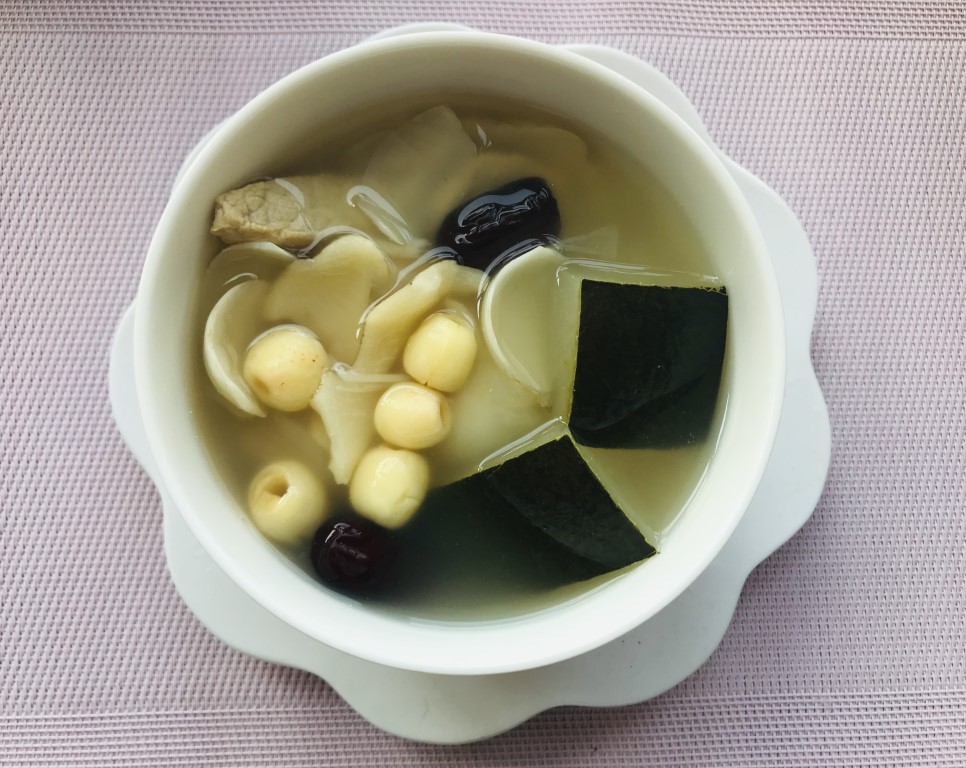
Tu Fuling, Zhu Ling and Fu Ling Pork Soup
Traditionally used to clear damp-heat, support the spleen, and relieve oily skin, acne, and sluggishness
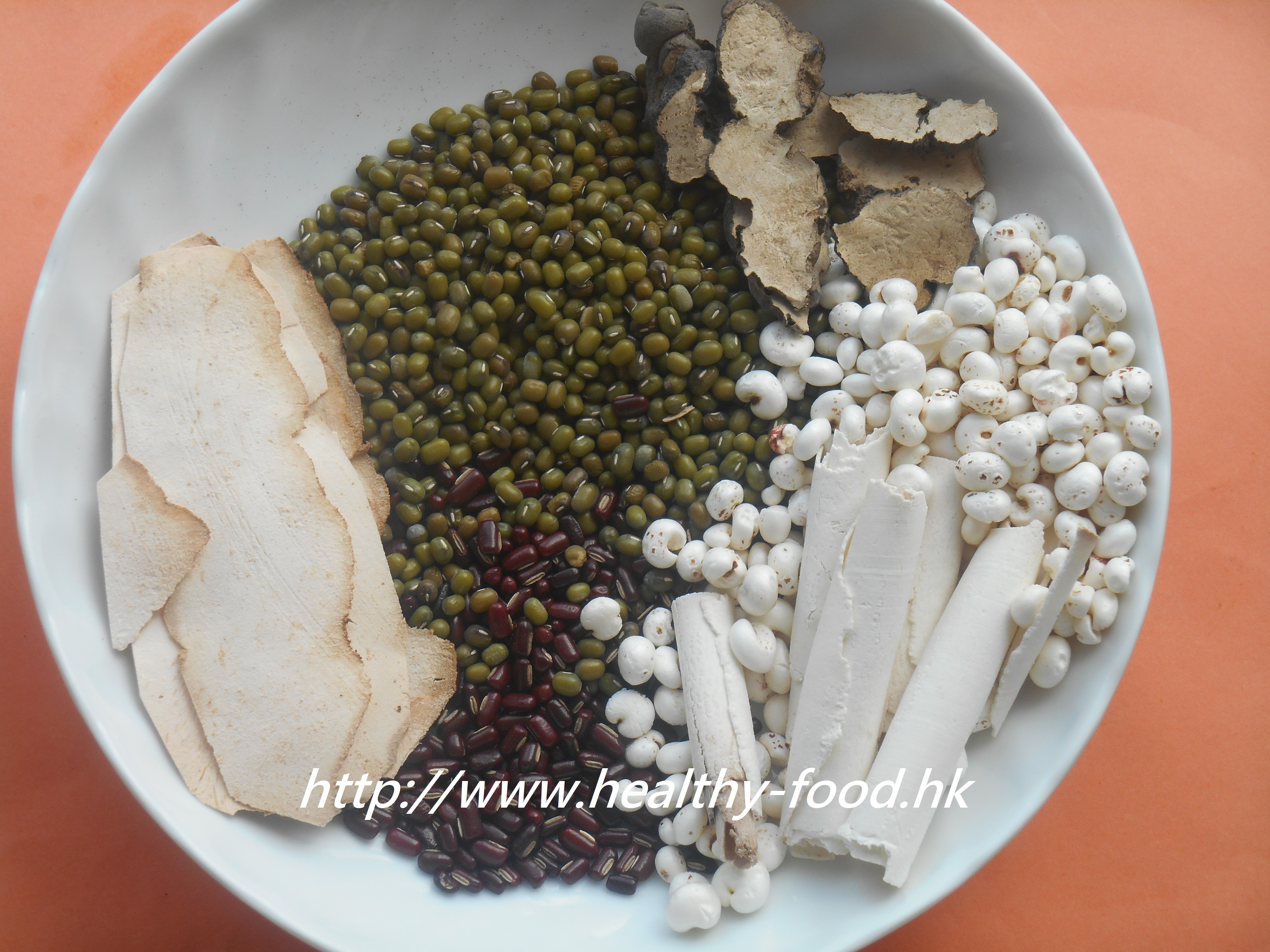
Why people make this soup
If you find yourself waking up tired even after a full night’s sleep, dealing with persistent oily skin, recurring acne — especially around the mouth and nose — a heavy or foggy feeling in the body, sticky bowel movements, and a generally irritable mood, traditional Chinese medicine would likely describe your constitution as “damp-heat.” This pattern is particularly common in warm, humid climates and in people with stressful lifestyles who eat a lot of fried, rich, or spicy food.
Bro Niu designed this soup specifically for damp-heat constitutions. It brings together three related mushrooms and fungi — tu fuling, zhu ling, and fu ling — each associated in Chinese herbalism with resolving dampness and clearing heat, but working on slightly different organ systems. The beans and coix seeds add further heat-clearing, water-regulating support. The result is a soup that is substantial enough to be satisfying, but light and gentle enough to take regularly as a constitutional remedy.
Who it suits / who should be cautious
- Suited to those with a damp-heat constitution: oily complexion, acne, heavy sensation, sticky stools, yellow urine, irritability.
- Suitable for diabetics (Bro Niu recommends this soup for those with diabetes and excess weight).
- The whole family can drink this.
- Pregnant women: replace coix seeds (yi mi) with flat beans (bai bian dou, 1 liang) — coix seeds are traditionally avoided during pregnancy.
- If fresh tu fuling (smilax root) is available, use 2 liang (75 g) of the fresh root for a stronger effect.
Why these ingredients (the food-therapy logic)
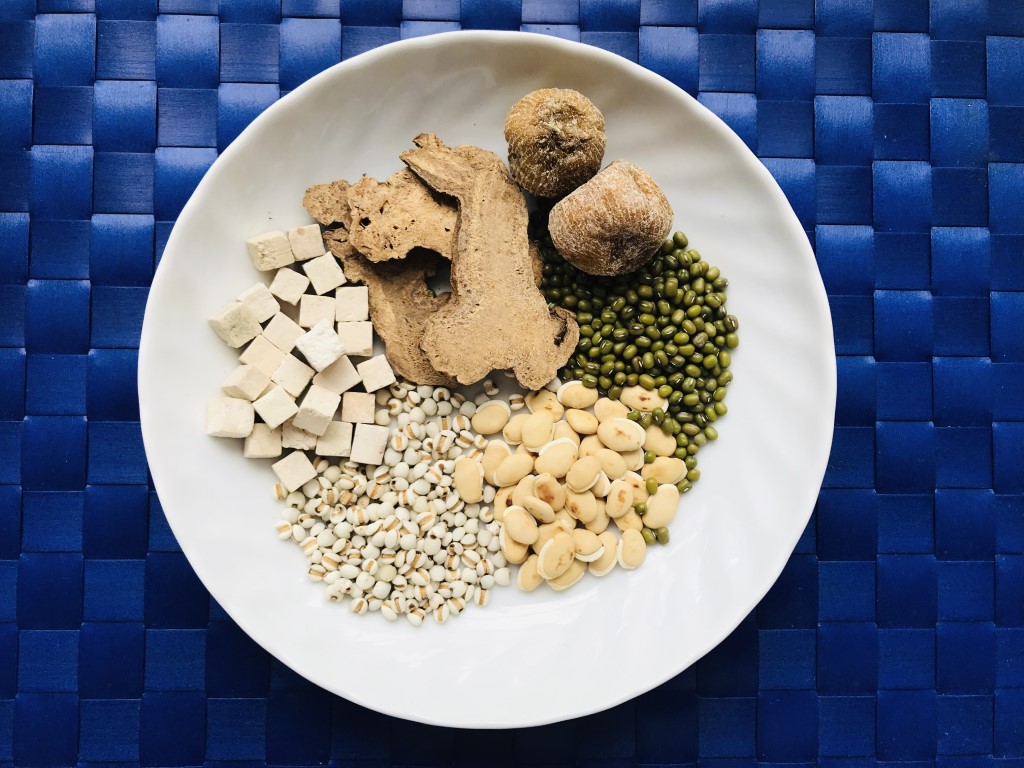
- Tu fuling (Smilax glabra rhizome): One of the most widely used herbs for clearing damp-heat toxins; associated with supporting liver and kidney function, clearing skin conditions, and resolving urinary discomfort.
- Zhu ling (Polyporus umbellatus): A fungus closely related to fu ling; primarily used to promote fluid circulation and support urination, helping the body eliminate accumulated damp.
- Fu ling / Poria (Poria cocos): Perhaps the most commonly used spleen-strengthening, dampness-resolving herb in the Cantonese soup tradition; also mildly calming to the mind.
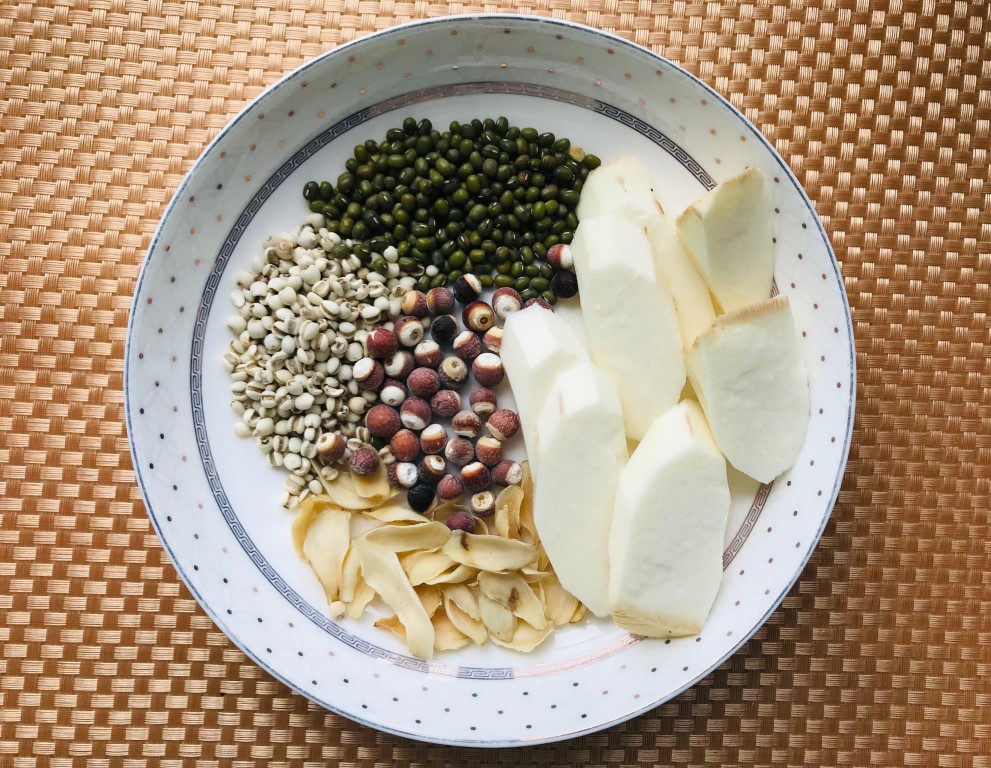
- Adzuki beans (chi xiao dou) and mung beans (lu dou): Both clear heat and promote fluid metabolism; mung beans are one of the classic heat-clearing foods.
- Coix seeds (yi mi): Support the spleen, promote fluid metabolism, and gently resolve dampness; also associated with skin clarity.
Ingredients (4 bowls)
| Ingredient | Amount | Notes |
|---|---|---|
| Tu fuling (smilax rhizome) | 19 g | Rinse; fresh variety can be used at 75 g |
| Zhu ling (polyporus) | 19 g | Rinse briefly |
| Fu ling / poria | 19 g | Rinse; cube or rolled form, both fine |
| Adzuki beans | 38 g | Soak briefly |
| Mung beans | 38 g | Soak briefly |
| Raw and cooked coix seeds (mixed) | 38 g | Soak briefly |
| Lean pork | ~300 g | Slice and blanch briefly |
| Water | 8 bowls (~1.6 L) |
Method
- Slice the lean pork and blanch briefly in boiling water; drain and rinse.
- Rinse all remaining ingredients; soak the beans and coix seeds briefly.
- Combine all ingredients in a pot with 8 bowls of water.
- Bring to a boil, then reduce to a steady simmer for about 1.5 hours until the liquid reduces to approximately 4 bowls.
- The whole family can enjoy this soup.
Bro Niu’s tips
- Fresh tu fuling (土茯苓) provides a stronger therapeutic effect; if available, use 75 g (2 liang) of the fresh root. It can be stored in the refrigerator for 4–5 days after slicing.
- For pregnant women: the coix seeds in this recipe should be replaced with 1 liang of flat beans (bai bian dou).
- If zhu ling or tu fuling is unavailable, flat beans (bian dou, 1 liang) and ze xie (alisma, 3 qian) can be used as substitutes.
- Vegetarians can replace the lean pork with extra beans, nuts, or root vegetables such as carrot and corn.
- If you need a lid for cooking, the cube-shaped and rolled forms of fu ling have the same therapeutic effect — no need to worry about which type you find.
Community questions answered (selected)
-
Q (Ivy): If I cannot find tu fuling or zhu ling, what can I substitute? I also have a white-coated tongue, morning dry mouth, and cold hands and feet. Bro Niu: You can substitute flat beans (bian dou yi) and ze xie (alisma), 3 qian each. For dry mouth and bitter taste, add sha shen and yu zhu, 3 qian each. Cold hands and feet suggest insufficient qi and blood — add dang shen (codonopsis) 3 qian and 6 red dates to the same pot.
-
Q (yannis): My husband has diabetes and is overweight. Can he drink this soup? Bro Niu: Yes, this soup is suitable for him. Drink three consecutive doses and see if it helps. He can also brew luo han guo (monk fruit, 1/6 of a fruit) as a daily tea — it is intensely sweet but does not raise blood sugar, and benefits the throat too.
-
Q (Anny): I am 36, with chronic gastritis, loose stools, an oily scalp, and acne around the mouth and nose. What is my constitution and how should I adjust? Bro Niu: This soup is exactly what you need. You may have a spleen-deficient damp constitution. For excessive sweating, brew bei qi (astragalus, 5 qian), floating wheat (fu xiao mai, 5 qian), and 6 red dates as a tea, three times a week — this helps with spontaneous sweating. If you sweat at night, add wu wei zi (schisandra, 3 qian). It will take some time to see results, so please be patient. I also suggest seeing a Chinese medicine practitioner.
Published April 13, 2019 · Adapted and translated for Nourilo from a traditional home-kitchen recipe. Approx. 4 min read.