Soups
Apple, Pear, Fig, Sweet Almond and Fresh Lily Bulb Sweet Soup
traditionally associated with moistening the lungs, easing a dry cough, and calming the mind
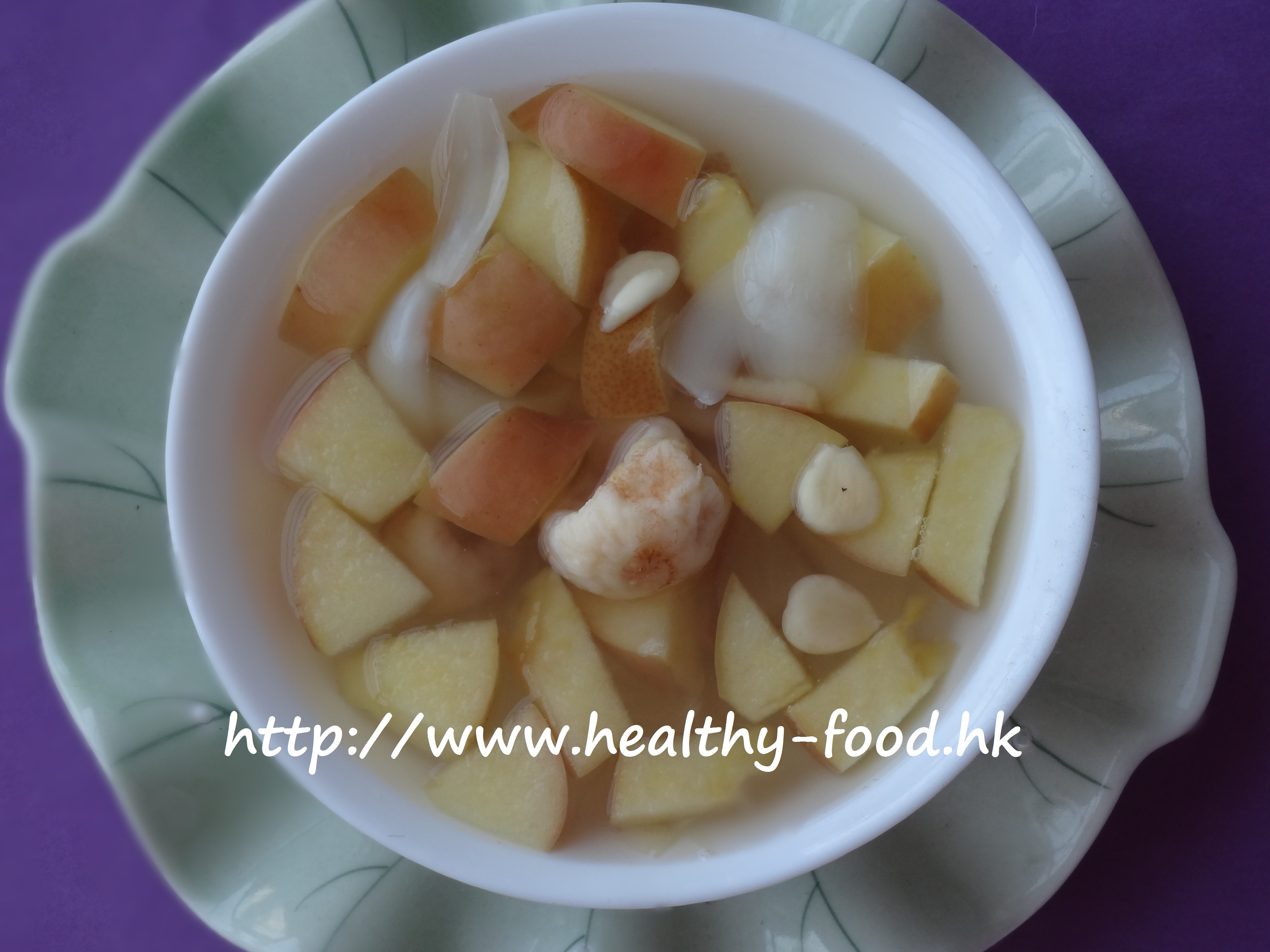
Why people make this soup
In traditional Chinese food therapy, autumn is associated with dryness — the season when dry air most easily depletes the body’s yin fluids, leading to dry lips, dry skin, a dry nose, a scratchy throat and a dry unproductive cough. The remedy, Bro Niu explains, is to eat foods that moisten the lungs and replenish body fluids. This sweet soup does exactly that in the most enjoyable way: it tastes light, fresh and gently sweet, and contains several ingredients with a long culinary and traditional wellness history.
Who it suits / who should be cautious
- Suitable for most adults and children; particularly appropriate in dry autumn and winter months
- Traditionally helpful for those with a dry unproductive cough, dry skin or a restless, anxious mood and poor sleep
- Those with diabetes should avoid this sugar-sweetened version; a modification without added rock sugar or sweetened only with a honey date is more appropriate
- Pregnant women can enjoy this soup
Why these ingredients (the food-therapy logic)
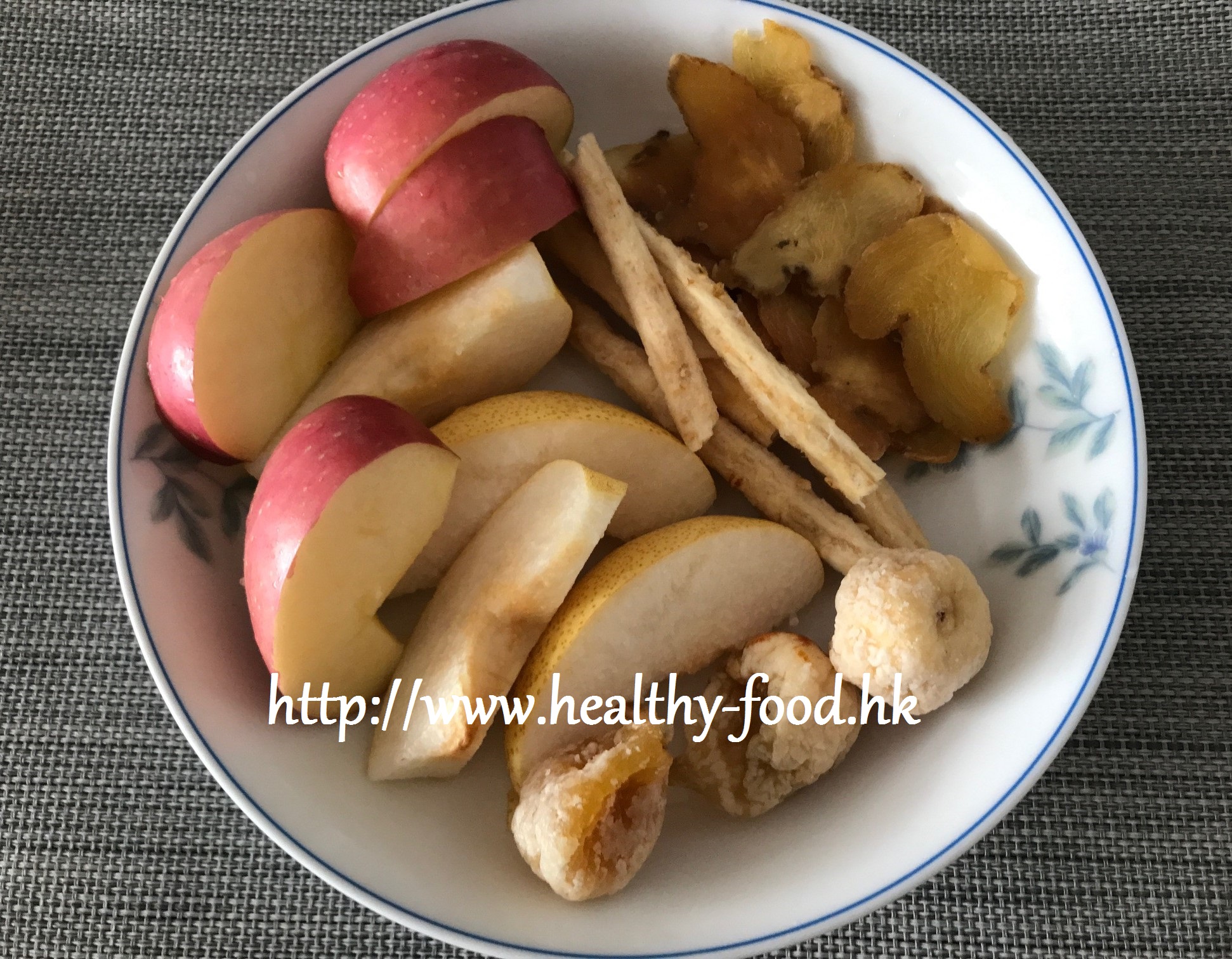
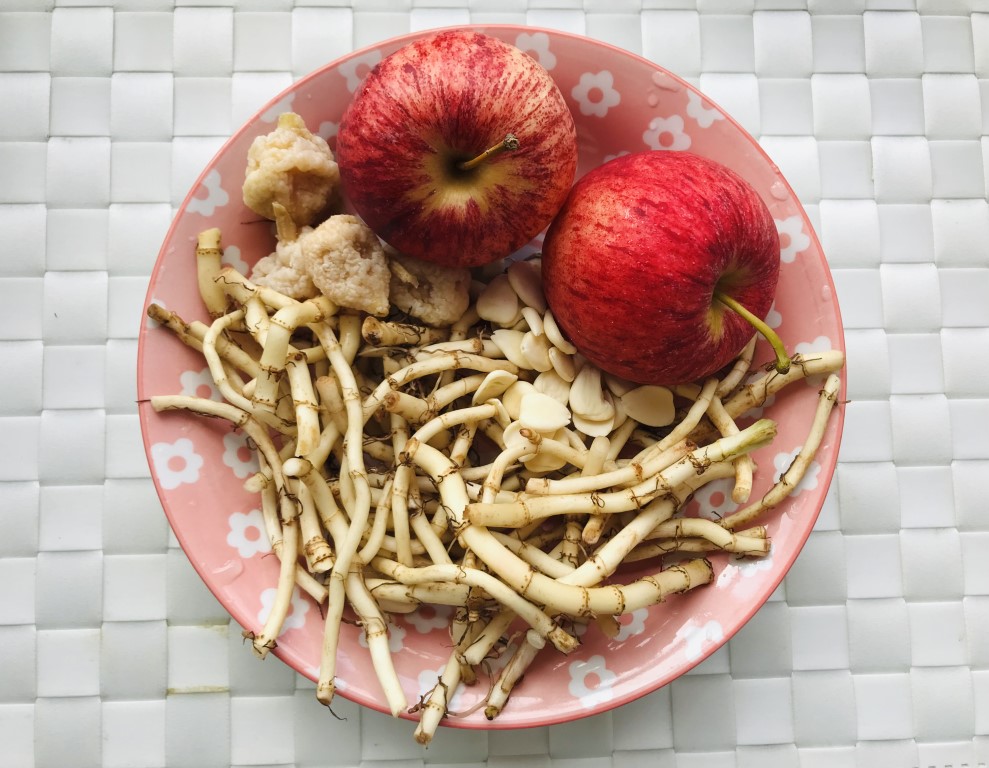
- Pear (xue li) and apple (ping guo): Both are considered moistening in Chinese food therapy, with pears especially associated with nourishing lung fluids and easing a dry throat.
- Dried figs (wu hua guo): Naturally sweet and associated with soothing the throat, easing a dry cough and supporting smooth digestion.
- Sweet apricot kernels (nan xing / tian xing ren): Distinct from bitter apricot kernels; the sweet variety has a mild moistening effect on the lungs and is commonly used in Cantonese dessert soups. They are safe for regular use.
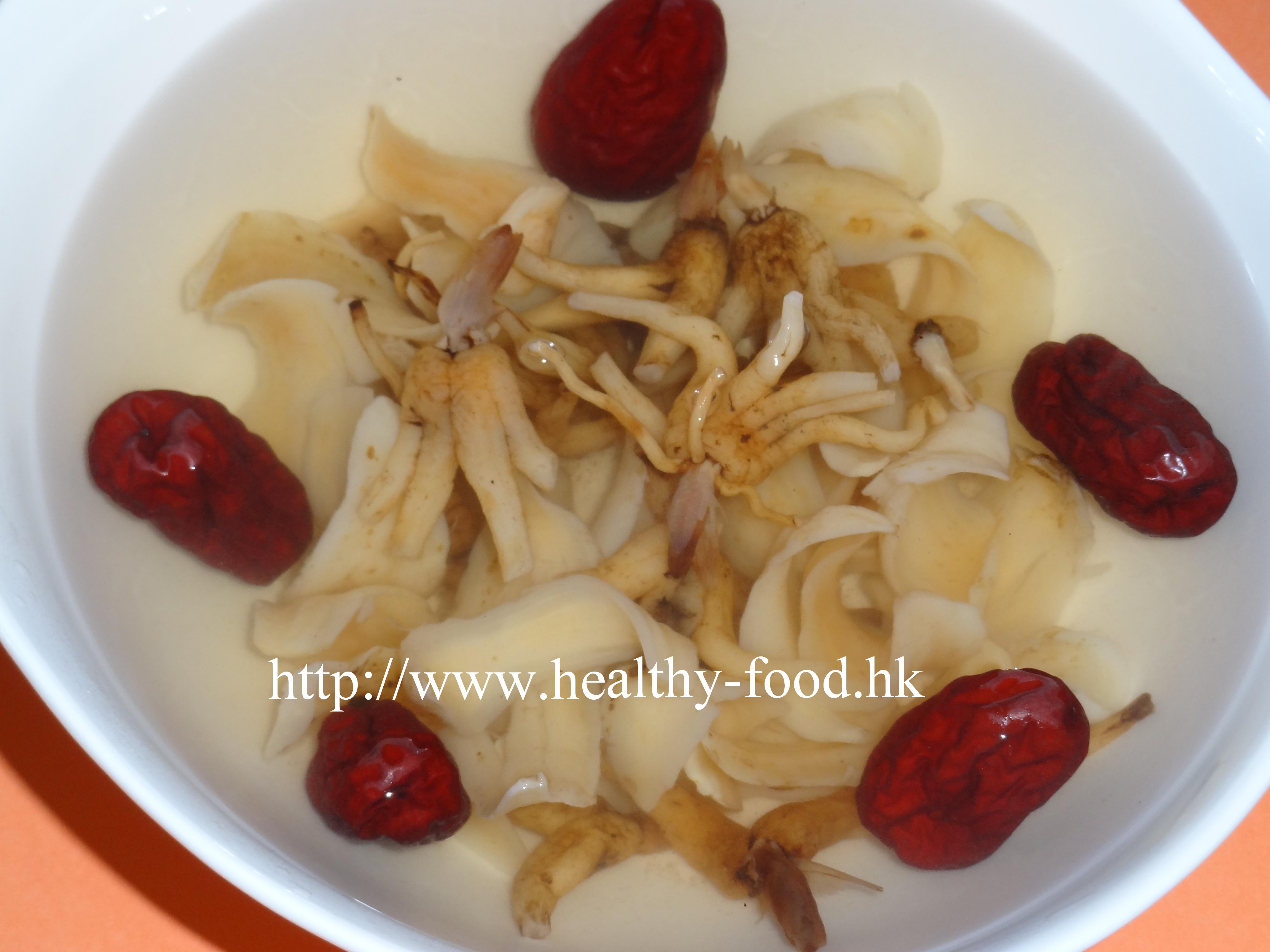
- Fresh lily bulb (xian bai he): A prized ingredient in Chinese food therapy, associated with nourishing the lungs, calming the mind and promoting restful sleep.
- Rock sugar (bing tang): Used instead of refined sugar as it is considered gentler and less drying.
Ingredients (3–4 bowls)
| Ingredient | Amount | Notes |
|---|---|---|
| Apple | 1 medium | Blanch briefly to remove wax and pesticides; core and roughly chop |
| Asian pear (xue li) | 1 medium | Blanch briefly; core and roughly chop |
| Dried figs (wu hua guo) | 4 pieces | Rinse; cut in half |
| Sweet apricot kernels (nan xing) | 38 g | Rinse and soak briefly |
| Fresh lily bulb (xian bai he) | 2 bulbs | Separate petals and rinse (or use 38 g dried) |
| Rock sugar | to taste | |
| Water | 6 bowls (approx. 1.5 litres) |
Method
- Dip the apple and pear briefly into boiling water to remove surface wax and reduce pesticide residue. Core them and cut into rough chunks.
- Rinse the figs and cut them in half.
- Rinse and briefly soak the sweet apricot kernels.
- Separate the fresh lily bulb petals and rinse clean.
- Place the apple, pear, apricot kernels and figs in a pot with 6 bowls of water. Bring to the boil, then reduce heat and simmer for 30 minutes.
- Add rock sugar and the fresh lily bulb petals. Simmer for a further 15 minutes.
- Serve warm or at room temperature; eat the fruit and other ingredients along with the broth.
Bro Niu’s tips
This soup is suitable for all ages. It is especially helpful for those with a dry cough with no phlegm and for those who feel restless or have difficulty sleeping. If fresh lily bulbs are unavailable, use 38 g of dried lily bulbs — add them with the other ingredients at the start, not just at the end.
Community questions answered (selected)
-
Q (reader): My husband has diabetes. Can he drink this soup? He also has a sensitive airway and coughs. Bro Niu: Those with diabetes should avoid sweetened soups like this one. For a sensitive airway cough, try simmering 3 qian of fritillaria (chuan bei) with one peeled, cored apple in 4 bowls of water until reduced to 2 bowls. Take 3–4 doses.
-
Q (reader): Can I add chuan bei (fritillaria), hai zhu (bamboo pith), sha shen and chong cao hua to this soup? Bro Niu: You can add sea bamboo pith (hai zhu) and sha shen (adenophora) — both complement the moistening effect of this soup nicely.
-
Q (chanwengi): I made this without sugar and sweetened it with a honey date. My husband and son both loved it, and my son slept better afterward. In the change of season, his eyes have been dry and itchy though — can I add something to help? Bro Niu: You could add about 2 liang of mung beans (lu dou) to the pot. This adds a cooling, heat-clearing effect that can help with skin flare-ups and eye irritation that appear when the weather is still warm beneath the autumn chill.
Published November 26, 2017 · Adapted and translated for Nourilo from a traditional home-kitchen recipe. Approx. 4 min read.