Soups
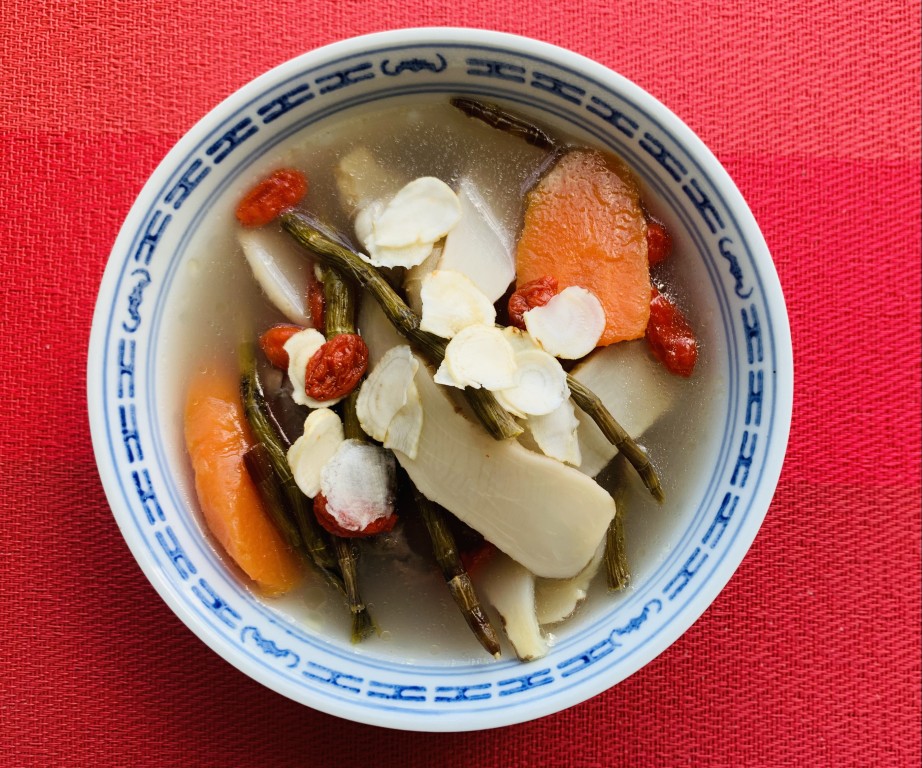
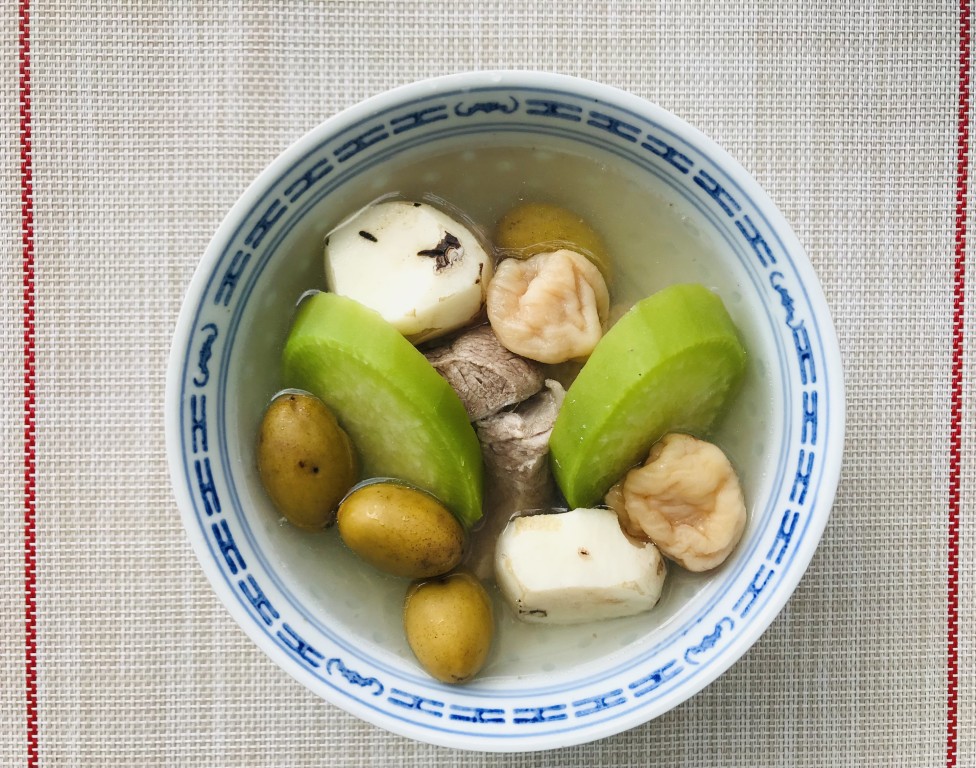
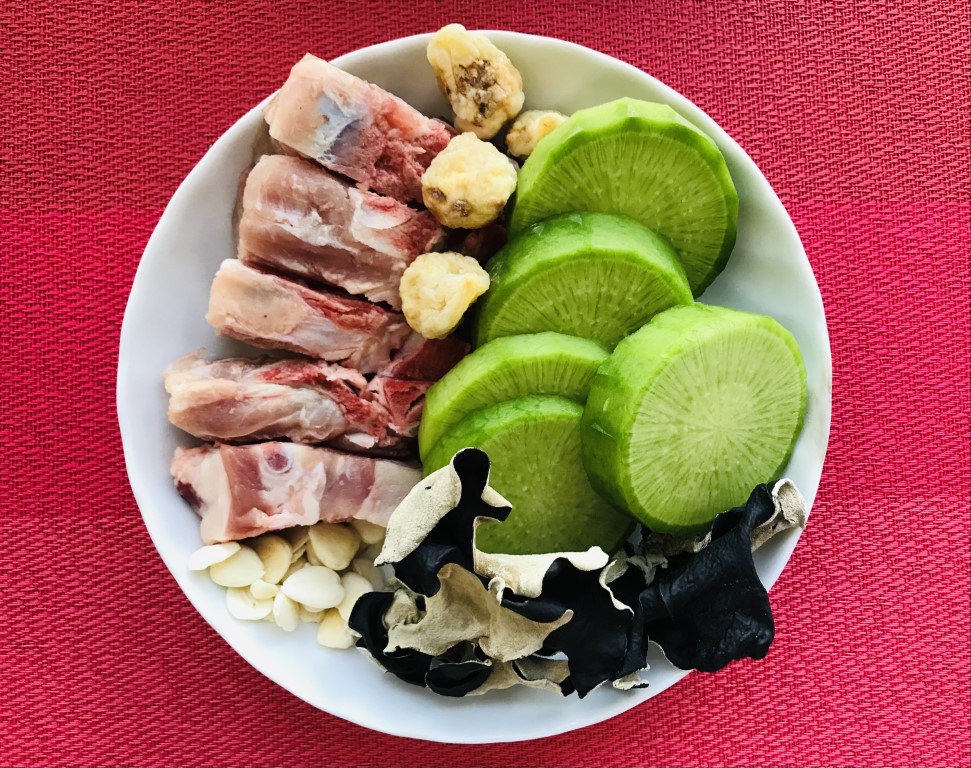
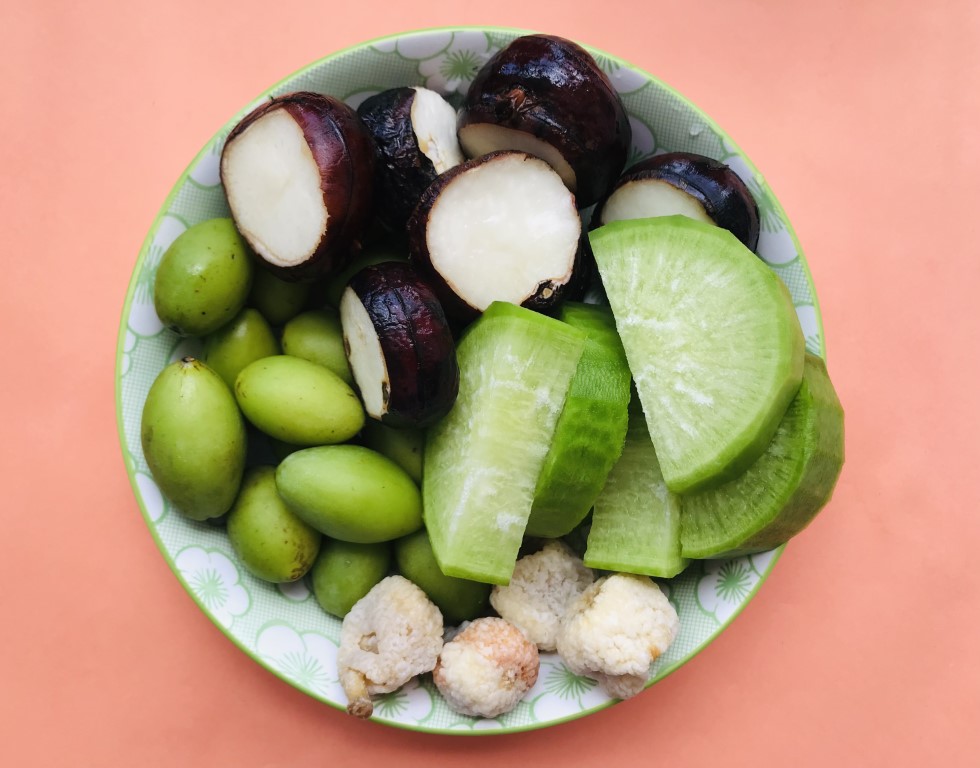
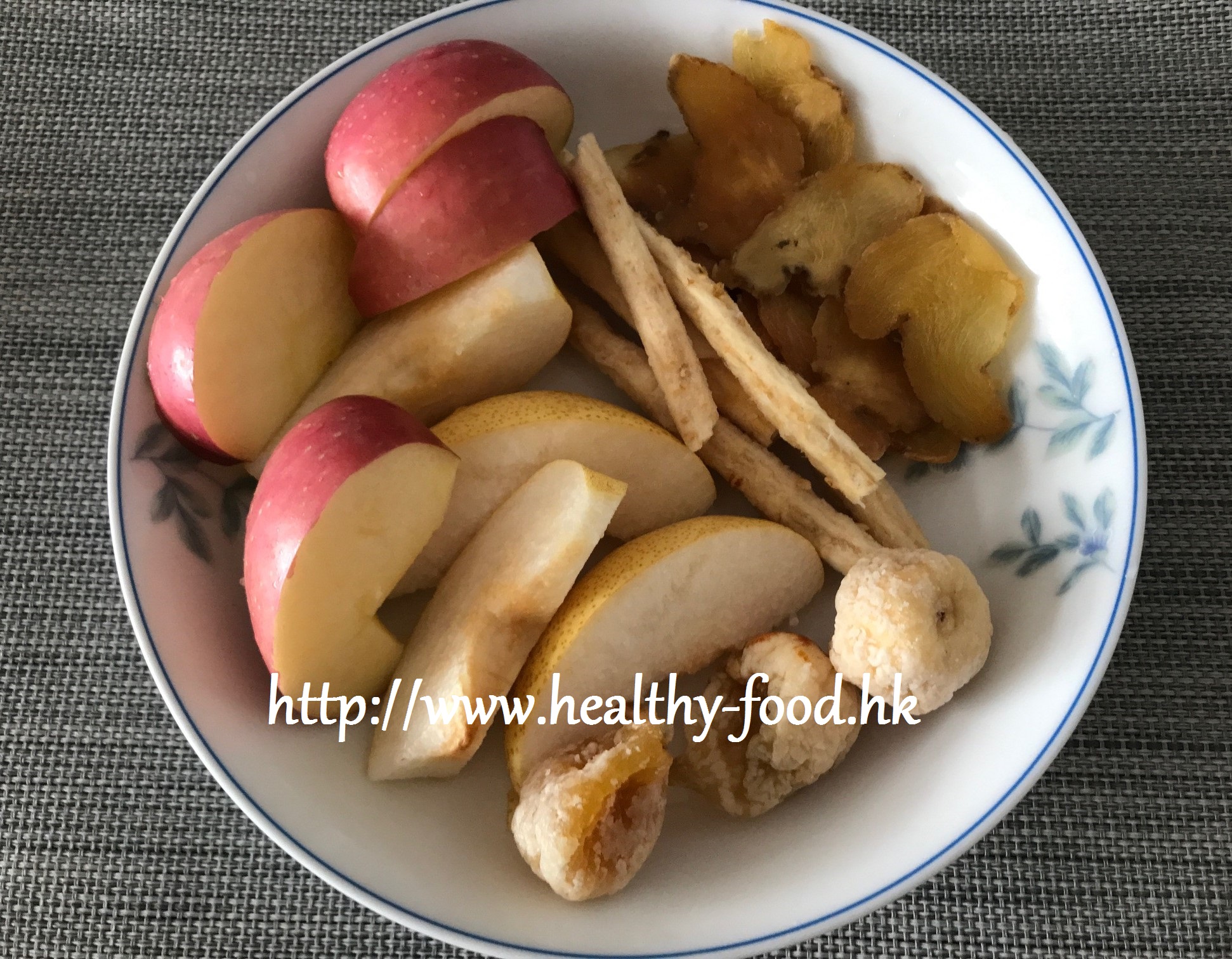
Sha Shen, Yu Zhu and Three-Fruit Soup
traditionally used to nourish the lungs, soothe chronic dry or inflamed throat, and ease hoarseness from overwork or fatigue
Why people make this soup
There are two common types of throat trouble that Bro Niu distinguishes. The first is a heat-in-the-lungs type: inflammation triggered by eating too much grilled or fried food or breathing dry autumn air, which can usually be addressed with a simple chrysanthemum and green tea rinse or a cucumber-and-tea broth. The second — the one this soup is designed for — is a yin-deficiency type: the throat dryness and soreness that comes from chronic overwork, poor sleep, and burning the candle at both ends. People with this pattern often notice symptoms are worst in the morning, and they may have a mildly red complexion, persistent fatigue, and a voice that tends toward hoarseness rather than sharp pain. This soup is one of Bro Niu’s favourite everyday remedies for that state, and it is gentle enough to be used as a general family soup.
Who it suits / who should be cautious
- Suits people with chronic dry throat, mild hoarseness, or a voice that fades toward the end of the day; those recovering from a throat infection once the fever has cleared; and those who simply live in dry climates or use their voice heavily (teachers, singers, speakers).
- Safe for pregnant women.
- Do not drink during active fever — wait until the fever has subsided. During a fever with cough and runny nose, Bro Niu recommends a simpler alternative (tangerine cake, pear, and dried tangerine peel soup).
- If sha shen is unavailable, it may be replaced with tai zi shen (prince’s ginseng) for children or those with poor appetite and low energy.
Why these ingredients (the food-therapy logic)
- Sha shen (glehnia root): A classic lung and stomach-nourishing herb in traditional Chinese food therapy. It is associated with moistening the lungs, clearing heat, generating body fluids, and soothing irritated mucous membranes in the throat and respiratory tract.
- Yu zhu (Solomon’s seal rhizome): Often paired with sha shen; considered deeply nourishing for the lungs and stomach. It supports fluid production and is used for conditions associated with internal dryness — including dry cough, dry throat, and thirst. The ‘hai yu zhu’ (coastal variety) is mentioned by Bro Niu as the preferred type when available, but regular yu zhu works equally well.
- Apple (ping guo): Provides natural sweetness and fluid-generating properties; traditionally considered cooling and moistening in nature. The skin is left on for fibre, but should be briefly soaked in boiling water and rinsed to help remove wax and pesticide residues.
- Asian pear (xue li): One of the classic lung-nourishing fruits in Chinese food therapy; used for generations to ease dry cough and clear heat from the respiratory tract. Leave the skin on for extra nutrients.
- Dried figs (wu hua guo): Add gentle sweetness and are associated with moistening the intestines and lungs, and supporting the throat. Cut in half after soaking to release their flavour.
Ingredients (4–5 bowls)
| Ingredient | Amount | Notes |
|---|---|---|
| Sha shen (glehnia root) | ~19 g (5 qian) | Soak briefly before use |
| Yu zhu (Solomon’s seal rhizome) | ~19 g (5 qian) | Hai yu zhu preferred if available; regular yu zhu fine |
| Apple, skin on, cored | 2 medium | Soak in boiling water briefly, rinse, then cut into chunks |
| Asian pear, skin on, cored | 2 medium | Same preparation as apple |
| Dried figs, soaked and halved | 4 pieces |
Method
- Soak sha shen and yu zhu in clean water for a few minutes, then rinse.
- Place apples and pears in a bowl and pour boiling water over them for 1–2 minutes; remove, rinse well, then cut into chunks with skin on, removing the core.
- Soak figs briefly, then rinse and halve.
- Place all ingredients in a pot with 8 bowls (about 1.6 litres) of water.
- Bring to a boil, then reduce to a medium simmer and cook for 1 hour until reduced to approximately 4–5 bowls.
- Drink warm. This soup can also be made with the addition of pork ribs or lean pork to serve as a savoury main-course soup.
Bro Niu’s tips
To remove wax and pesticide residues from the apple and pear skins, soak the whole fruits briefly in just-boiled water, then remove and rinse before cutting. If hai yu zhu is not available, regular yu zhu (Polygonatum) works just as well. This soup is naturally sweet from the fruit, so no added sugar is needed for most people. It can be made savoury with the addition of meat. You may add mai dong (ophiopogon), bai he (lily bulb), bei xing (north almonds), or nan xing (south almonds) to extend the lung-nourishing benefits. If dried pear is used instead of fresh (for those outside Asia), remove the seed as it has mild toxicity.
Community questions answered (selected)
-
Q (scy): Can I add ophiopogon, lily bulb, fritillary bulb, and north and south almonds to this soup? Bro Niu: Yes, all of those ingredients can be added.
-
Q (Hi): My son has a cough, a runny nose, and a temperature between 37.4–37.7°C. Can he drink this soup? Bro Niu: While there is still a fever, hold off on this soup. Instead try: 1 tangerine cake (cut up), 1 pear (cored), 1 piece of dried tangerine peel, simmered in 4 bowls of water to 2. Serve for 2 days. This is gentler for an active fever with cold symptoms.
-
Q (Joyce): Can this soup be drunk during pregnancy? Bro Niu: Yes, this soup is safe during pregnancy.
Published October 16, 2018 · Adapted and translated for Nourilo from a traditional home-kitchen recipe. Approx. 4 min read.