Herbal & Flower Teas
Rose, Jasmine, and Silk Tree Flower Tea
Traditionally used to ease emotional tension, lift mood, and support healthy liver qi flow
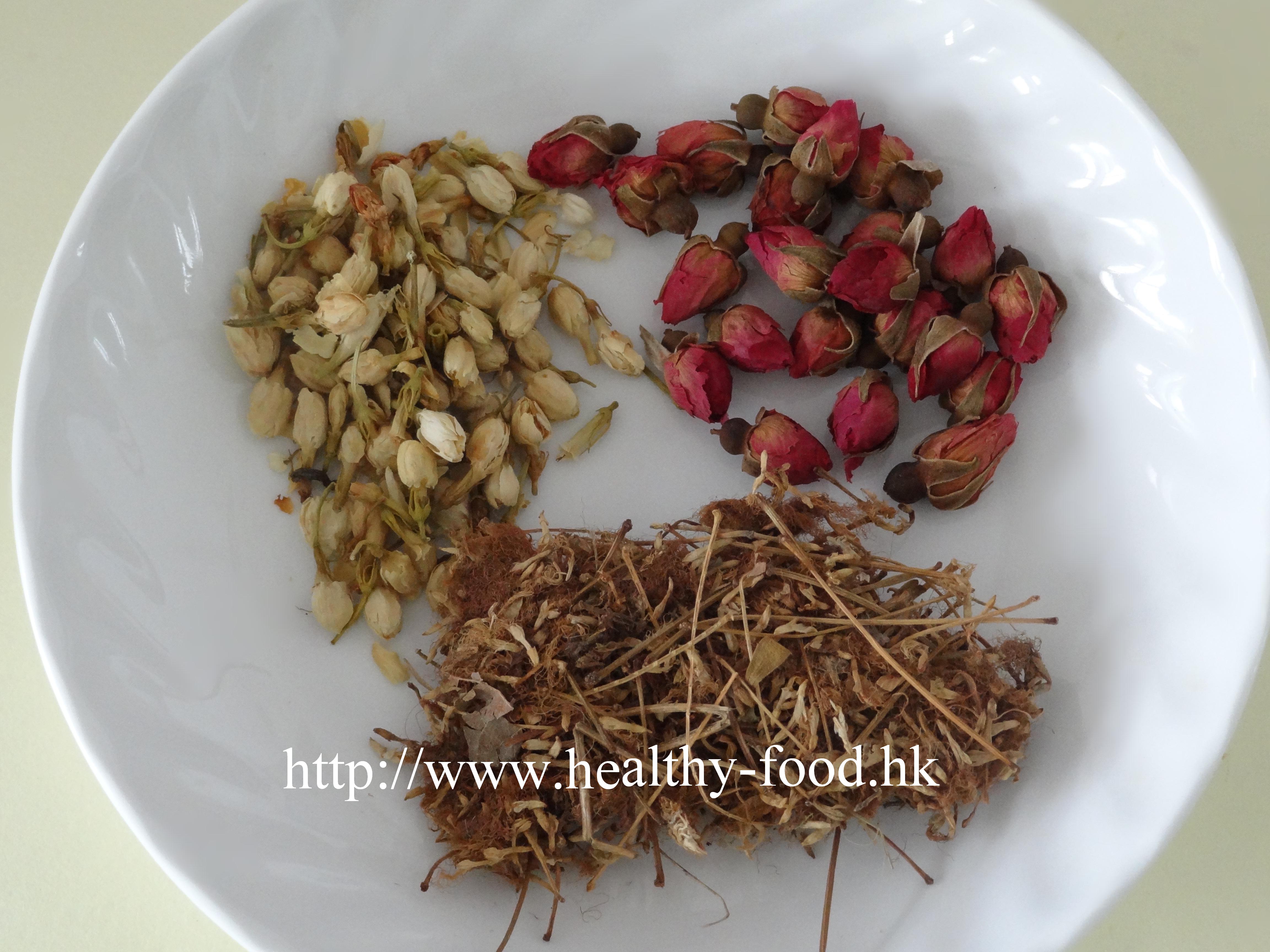
Why people make this tea
Urban life has a way of drawing people tight, like a rubber band pulled to its limit. Bro Niu observes that when stress is chronic — work pressure, poor sleep, emotional frustration — the body gives signals: a tight chest, irritability, irregular cycles, a sense of being perpetually on edge. In Chinese food therapy, this cluster of symptoms is often linked to the liver’s role in keeping energy (qi) flowing smoothly. Aromatic flowers are among the gentlest and most pleasant remedies for this: their fragrance alone has a measurable relaxing effect, and their traditional properties reinforce it. This three-flower tea is something Bro Niu recommends keeping on hand as an everyday drink — simple enough to prepare in a travel mug for work, pleasant enough to enjoy as a moment of calm during a busy day.
Who it suits / who should be cautious
- Suitable for adults who feel emotionally tense, stressed, irritable, or emotionally stuck.
- May offer support for those experiencing irregular menstrual cycles related to stress and liver qi stagnation.
- Suitable for daily use as a gentle wellness tea.
- Not suitable during pregnancy: the blood-invigorating properties of rose petals in particular make this tea inadvisable for pregnant women.
Why these ingredients (the food-therapy logic)
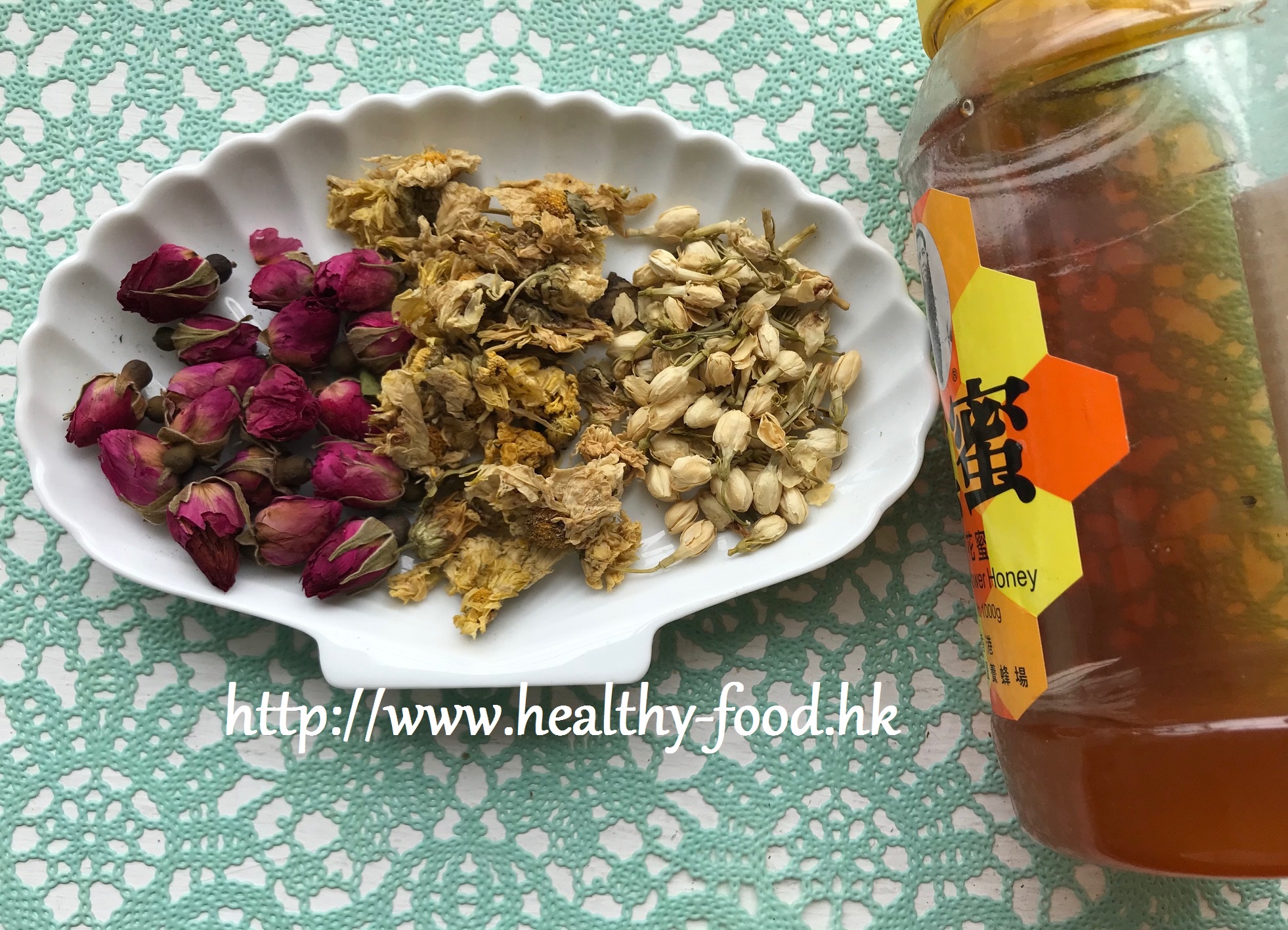
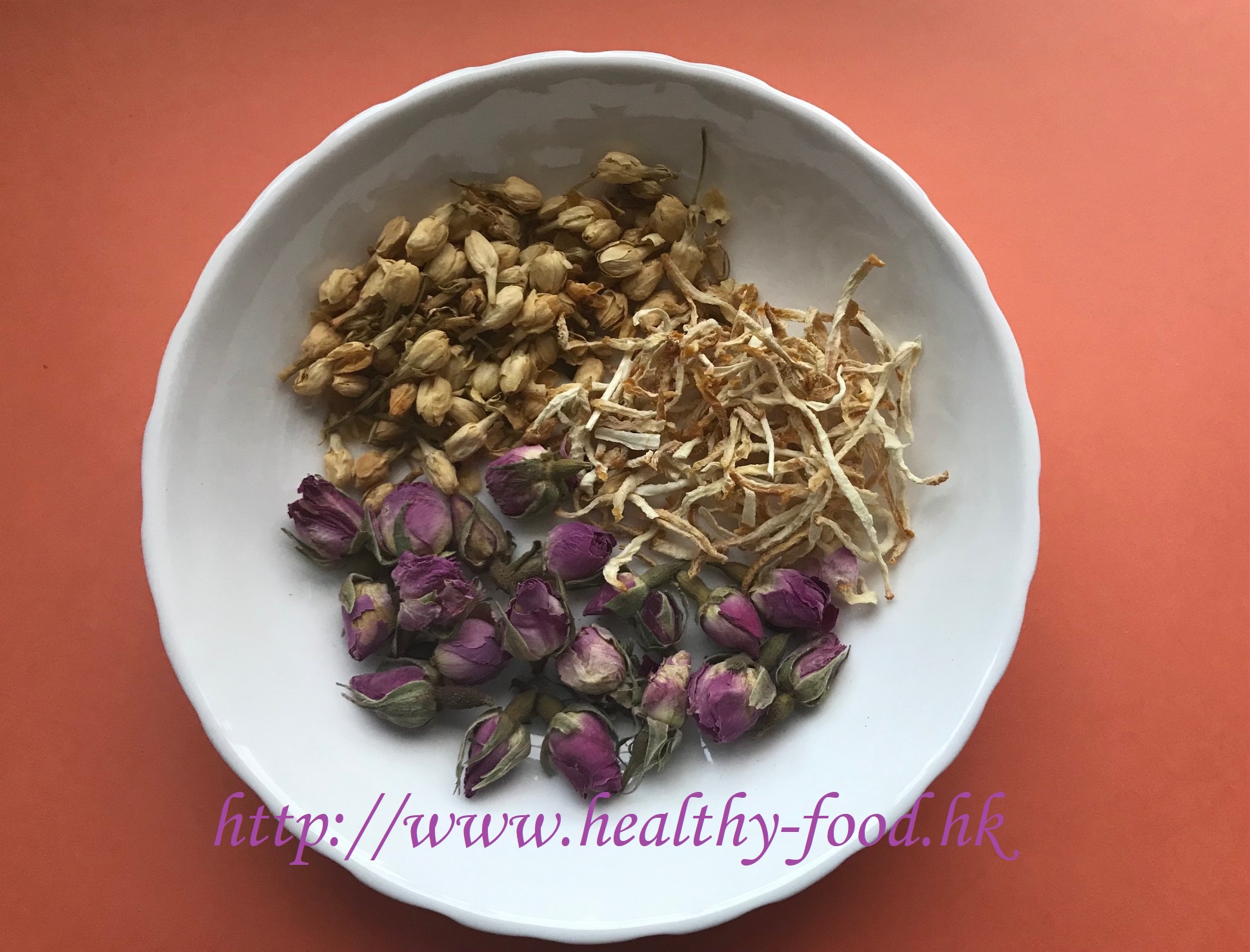
- Rose petals (mei gui hua / Rosa rugosa): In Chinese medicine, rose petals are associated with moving liver qi, regulating menstruation, calming emotional tension, and supporting skin health. The fragrance has a direct mood-lifting effect. Rose is warming in nature and also has a reputation for supporting blood circulation.
- Jasmine flowers (mo li hua / Jasminum sambac): Traditionally used to soothe the liver, calm the mind, and ease stomach discomfort related to emotional tension. The sweet, penetrating fragrance is considered mood-lifting and grounding. Pairs well with rose.
- Silk tree flowers (he huan hua / Albizia julibrissin): Known in TCM as the “happiness flower,” silk tree blossoms are most specifically associated with calming the spirit, easing anxiety, and improving sleep quality. They are gentle, neutral in temperature, and work well as a calming anchor for the other two flowers.
Ingredients (1–2 cups)
| Ingredient | Amount | Notes |
|---|---|---|
| Dried rose petals (mei gui hua) | 1 small pinch | Approximately 3–5 g; food-grade dried |
| Dried jasmine flowers (mo li hua) | 1 small pinch | Approximately 3–5 g |
| Dried silk tree flowers (he huan hua) | 1 small pinch | May appear as loose dried flower buds or fluffy dried blooms — both are correct |
| Honey | To taste | Add after steeping, not while boiling |
| Boiling water | Enough to fill the teapot |
Method
- Place all three dried flowers into a teapot or steeping mug.
- Rinse once with boiling water, then discard the rinse water.
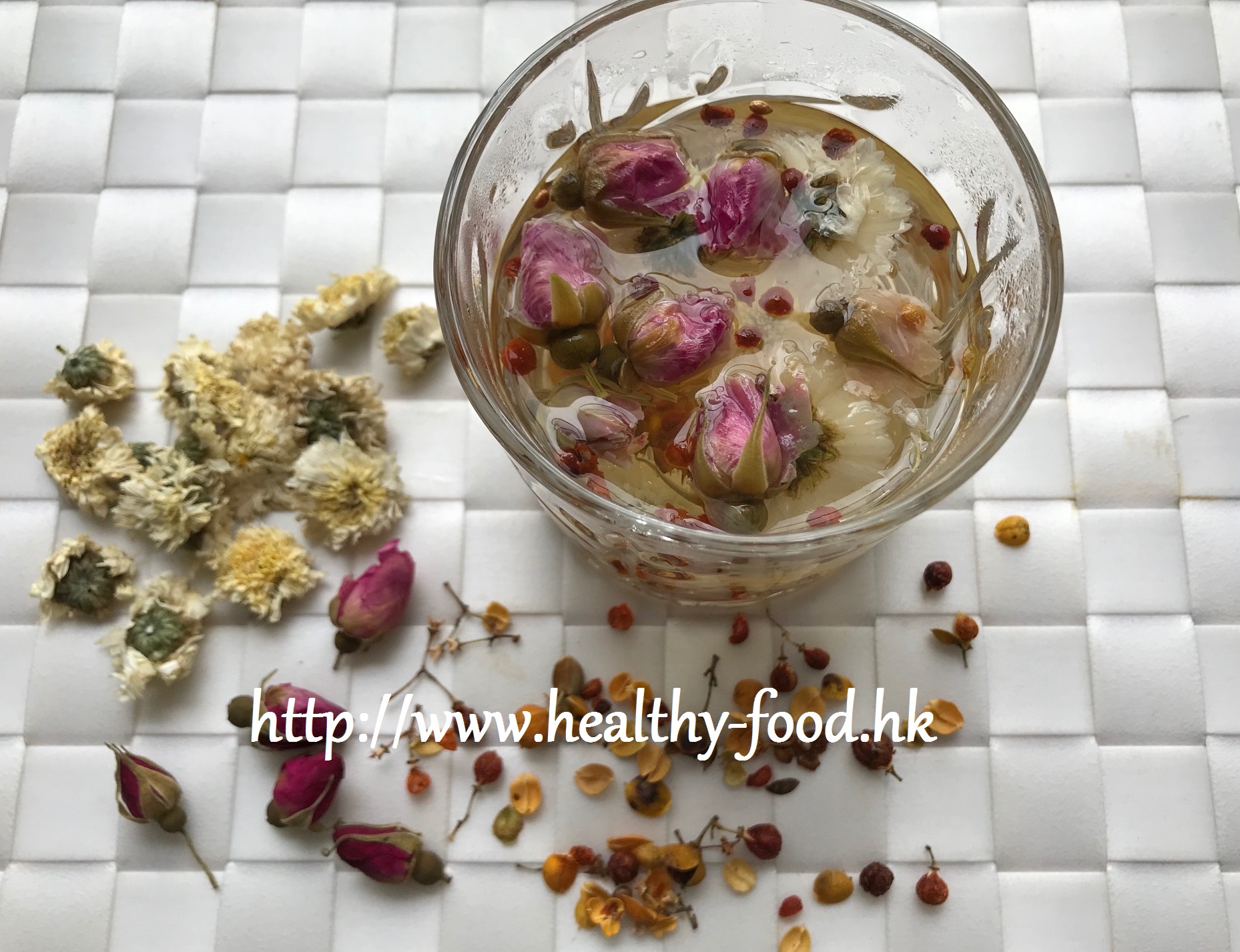
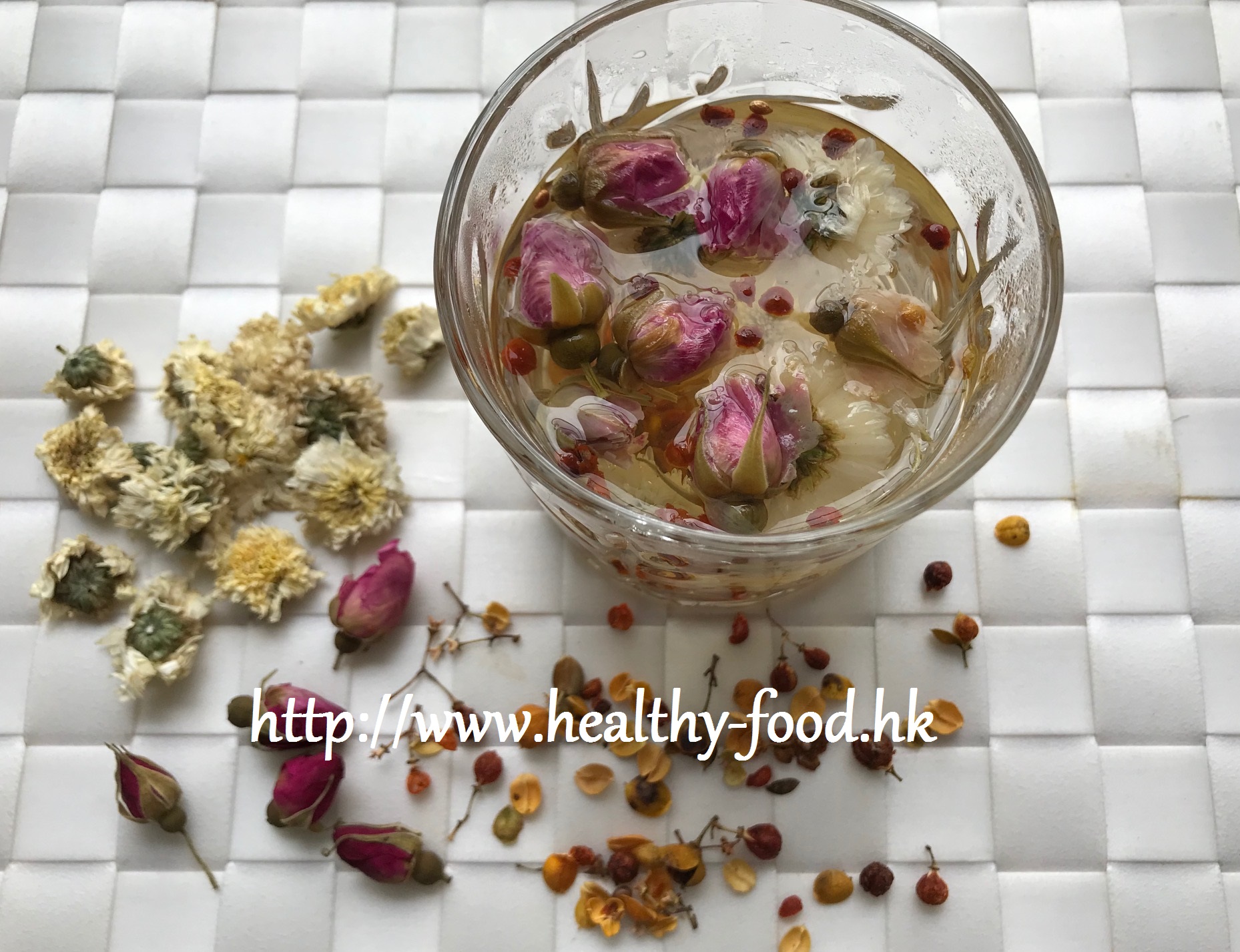
- Pour in fresh boiling water and steep, covered, for 5 minutes.
- Stir in honey to taste.
- Serve warm and inhale the fragrance as you drink — that is part of the therapy.
- The flowers can be re-steeped once or twice with fresh hot water.
Bro Niu’s tips
- This tea has a gentle nourishing effect on the liver and spleen-stomach — pleasant to drink daily.
- For someone who needs to have it at the office, Bro Niu suggests putting a small pinch of each flower into a tea bag and dropping it into a travel flask to steep throughout the morning.
- Adding a small pinch of osmanthus flower (gui hua) alongside is a lovely variation — osmanthus is particularly good for the stomach.
- These flowers are available at specialty flower tea shops, tea stores, and Chinese or Asian herbal shops, as well as online.
- Silk tree flower “buds” (he huan mi — the small red-and-yellow bud form) and the fluffy dried “open flower” (he huan hua) are both correct and have the same function.
Community questions answered (selected)
-
Q (mary, on behalf of her son): My son is in his early twenties, works as a design assistant staring at drawings all day, often works overtime, and feels emotionally tense and stressed. What can he drink at the office to help? Bro Niu: Perfect use for this kind of tea. Put rose petals, jasmine, and osmanthus (gui hua) each in a small pinch into a tea bag and drop it into his travel flask. He can refill it with hot water throughout the day. All fragrant flowers have a calming, relaxing effect, and osmanthus is particularly good for his stomach after long work hours.
-
Q (Fiona): I tried this tea today when I was feeling emotionally volatile and unsettled — I can genuinely say I felt calmer and more relaxed afterwards. Thank you for the recommendation! Bro Niu: (No reply needed — Bro Niu is delighted to hear it.)
Published October 8, 2012 · Adapted and translated for Nourilo from a traditional home-kitchen recipe. Approx. 4 min read.