Soups
Sprouted Grain, Malt and Pork Soup
supports digestion, eases bloating, and helps restore appetite
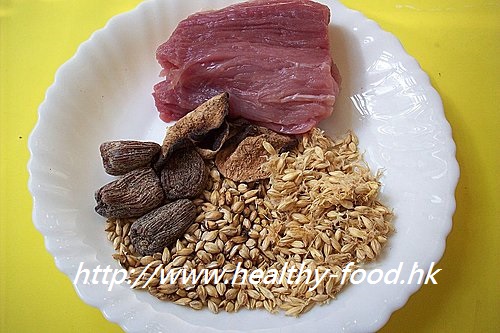
Why people make this soup
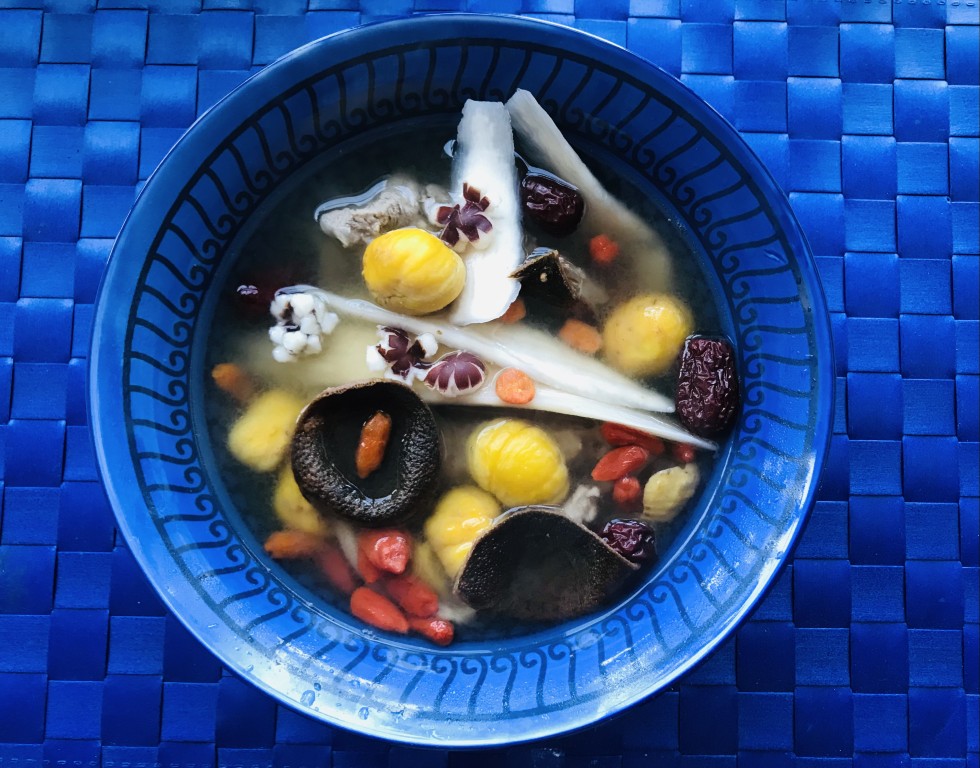
After a run of festive meals full of rich, greasy food — or any time the stomach feels sluggish and bloated — this simple soup is what many Cantonese families reach for first. Dry-fried sprouted rice and barley malt are classic Chinese pantry herbs that have been used for generations to ease that heavy, uncomfortable feeling after overeating. Add a small piece of tangerine peel to help move stagnant qi, a few honey dates to mellow the flavour, and lean pork to make it a light but nourishing meal. Bro Niu particularly recommends it for children, whose digestive systems are still developing and can be easily overwhelmed by sweets and heavy food.
Who it suits / who should be cautious
- Well suited for children and adults experiencing bloating, sluggish digestion, poor appetite, or mild indigestion after festive eating.
- Those who are pregnant should consult a practitioner before using large amounts of barley malt, as it is traditionally associated with affecting lactation in some contexts.
- This is a mild, food-grade soup; if digestive discomfort is persistent or accompanied by pain, please see a doctor.
Why these ingredients (the food-therapy logic)
- Dry-fried sprouted rice (chao gu ya, Oryzae Fructus Germinatus): In traditional Chinese food therapy, the dry-fried (roasted) form is associated with moving food stagnation and easing the feeling of fullness after meals. The raw (unroasted) form is more often used to gently strengthen and awaken the appetite.
- Barley malt (mai ya, Hordei Fructus Germinatus): A partner ingredient to sprouted rice; traditionally used to support the stomach’s ability to break down starchy and floury foods, and to ease the uncomfortable bloating that follows.
- Dried tangerine peel (chen pi): Aromatic and warming, it is used in Chinese cooking and herbal tradition to help regulate digestive qi, reduce gas, and improve the overall harmony of the soup.
- Honey dates (mi zao): Add natural sweetness and are traditionally considered nourishing to the middle energiser; they also balance the somewhat drying character of the grain sprouts and malt.
- Lean pork: Provides gentle nourishment and protein without the heaviness of fatty cuts, keeping the soup light enough for an unsettled stomach.
Ingredients (3–4 bowls)
| Ingredient | Amount | Notes |
|---|---|---|
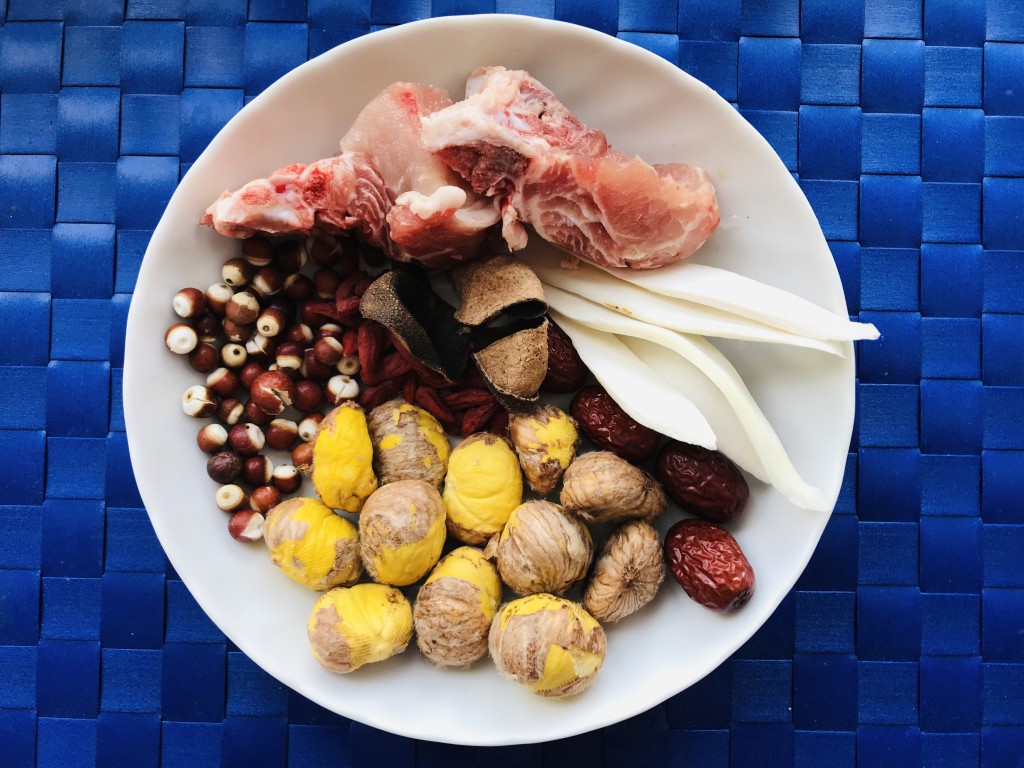
| Dry-fried sprouted rice (chao gu ya) | 38 g (1 liang) | Available at Chinese herb shops; look for the dry-roasted variety |
| Barley malt (mai ya) | 38 g (1 liang) | Also available at Chinese herb shops |
| Dried tangerine peel (chen pi) | ~6 g (2 qian) | Soak briefly to soften before use |
| Honey dates (mi zao) | 3–4 pieces | Adds natural sweetness; pitted or whole |
| Lean pork | 225 g (6 liang) | Sliced; blanched in boiling water to clean |
Method
- Rinse the sprouted rice, barley malt, tangerine peel, and honey dates under running water. Soak briefly to loosen any surface dust.
- Slice the lean pork and blanch it in a pot of boiling water for 1–2 minutes. Drain and rinse with clean water. This removes impurities and keeps the soup clear.
- Combine all ingredients in a pot with 6 bowls (approximately 1.5 litres) of water.
- Bring to a boil over high heat, then reduce to a medium-low simmer.
- Cook uncovered or with lid slightly ajar for about 1.5 hours, until the soup is fragrant and the liquid has reduced by roughly half.
- Season lightly with salt if desired, and serve warm.
Bro Niu’s tips
- When buying sprouted rice at the herb shop, ask specifically for chao gu ya (dry-fried sprouted rice) if your main goal is easing food stagnation and fullness after meals. If instead you want to gently stimulate appetite in a child who is simply not eating well, the raw (unfried) sheng gu ya works better for that purpose.
- This soup is mild and generally suitable for children — they can drink the broth and eat any honey dates from the pot.
- If the whole family has been eating richly over a festive period, everyone can share a pot without concern.
Community questions answered (selected)
-
Q (Angel, reader): Can an 11-month-old baby drink this soup or sprouted grain and malt water? Bro Niu: If the baby shows signs of food stagnation and has a poor appetite, sprouted grain and malt water (the herbs brewed as a simpler drink) is fine for an 11-month-old.
-
Q (Ty, reader): My daughter is almost 7 years old — slim and short, with a consistently small appetite and poor food variety. She has been complaining of tummy aches for two years (around the navel). Tests are all normal and the doctor said it is indigestion. What soups would help improve her appetite and help her grow? Bro Niu: Try this combination: Chinese yam (huai shan) 38 g, chicken gizzard lining (ji nei jin) 12 g, hawthorn (shan zha) 12 g, preserved duck kidney (chen ya shen) 2 pieces, and one white radish, simmered with some pork ribs. Drink twice a week. It helps strengthen the spleen, dissolve food stagnation, and improve overall appetite and nutrient absorption.
-
Q (CKY, reader): My daughter is almost 3, weighs 26 lbs, and has always eaten poorly. I have tried commercial digestive teas with sprouted grains, chicken gizzard lining, and hawthorn, but they didn’t seem to work well — possibly because I wasn’t consistent. Should I just cook a soup instead? Bro Niu: For children with spleen weakness, the best food therapy is actually beef broth tea: use about 113 g of minced beef, soak it overnight in one bowl of water, then steam the beef together with its soaking water for half an hour the next day, and let the child drink it. Do this for one week. The leftover beef pulp can be simmered with a little water to make a broth for cooking noodles or porridge — nothing wasted.
Published February 4, 2014 · Adapted and translated for Nourilo from a traditional home-kitchen recipe. Approx. 5 min read.