Soups
Spearmint, Ginger and Black Bean Egg Soup
warms the stomach, supports circulation, and helps dispel windchill
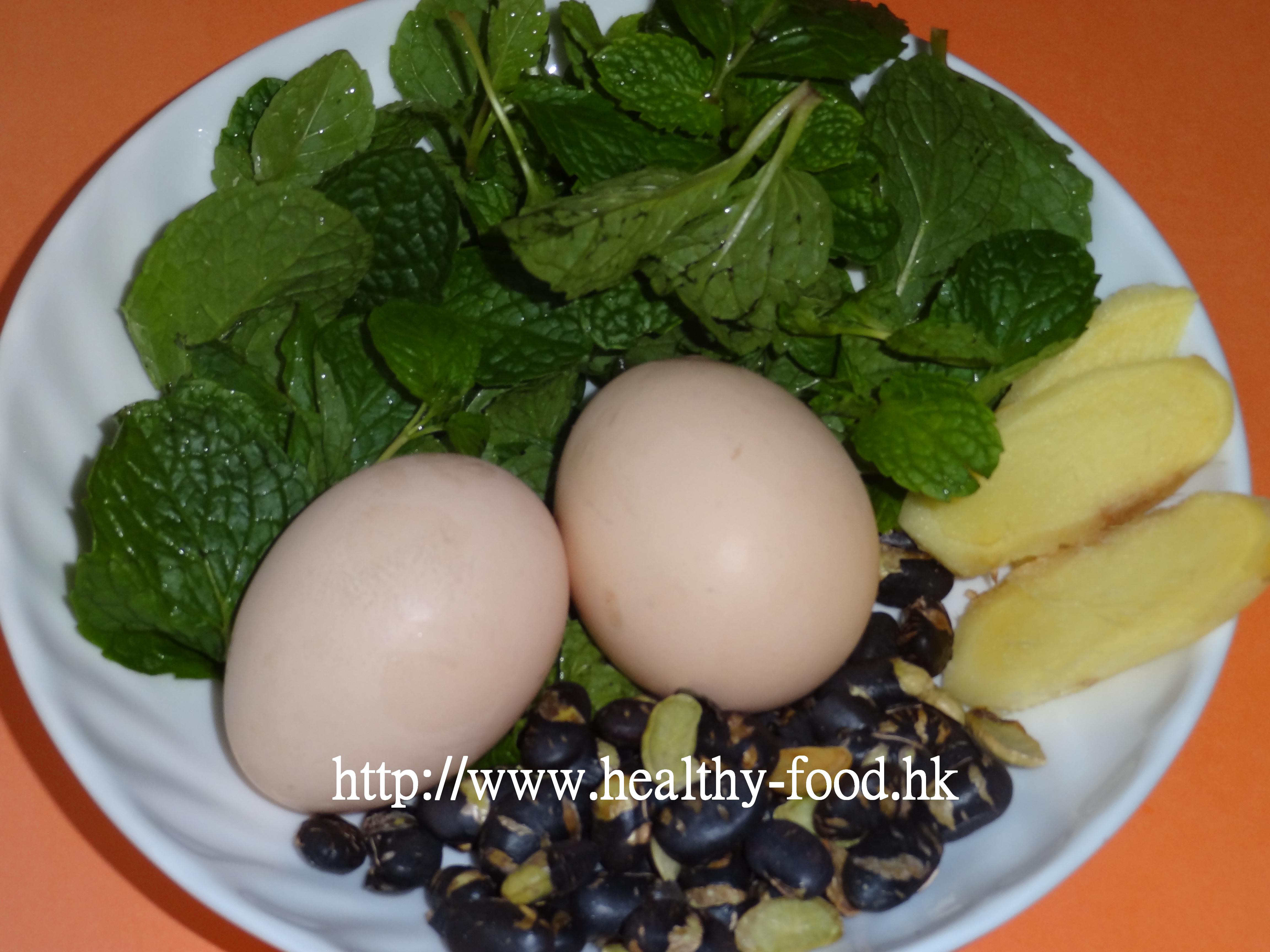
Why people make this soup
Spearmint — known in Cantonese herbal shops as xiang hua cai or yu xiang cao — is a different plant from the common mint used in Western cooking, though they are related. Its pungent, slightly cooling nature was traditionally used to dispel wind-heat and reduce swelling, yet when combined with warming ginger and tonic black soybeans, the whole formula shifts toward warming and nourishing. This is a soup for people who tend to feel cold easily, have a sluggish digestion, or are slightly anemic — especially those who cannot tolerate the richer warming tonics because even gentle supplements make them feel flushed or off. The combination gently warms without overcorrecting.
Who it suits / who should be cautious
- Well suited to people with a cool or cold stomach constitution, mild anemia, or those who are easily chilled and find standard tonics too warming
- Good for those prone to headaches triggered by wind or cold exposure
- Can be given to children by replacing the egg with lean pork
- A small amount of rice wine (mi jiu) can be added to the soup to enhance blood circulation and warming effect
Why these ingredients (the food-therapy logic)
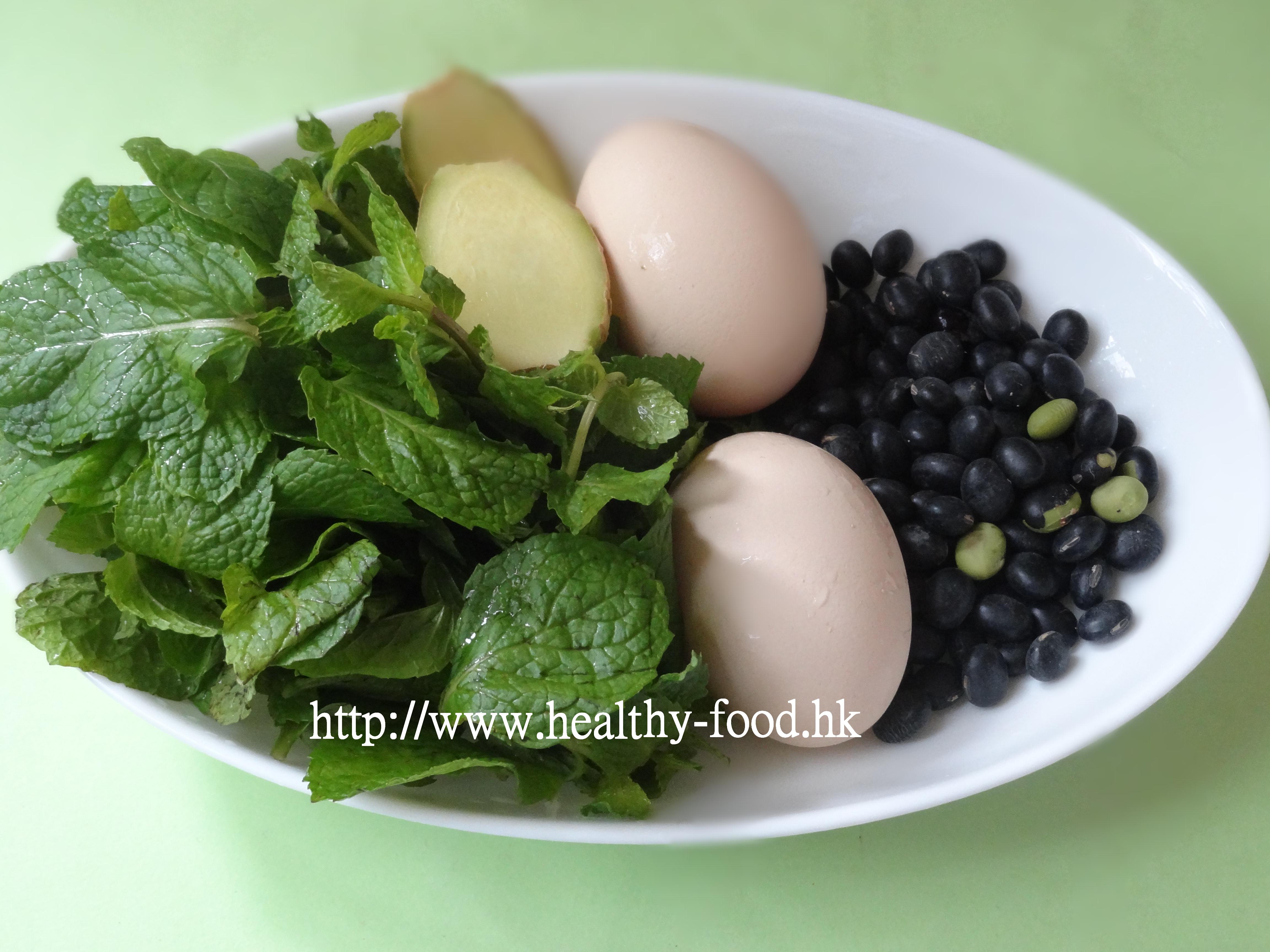
- Spearmint (xiang hua cai / lv bo he): Warm, pungent, and aromatic; contains volatile oils traditionally associated with calming the nerves, dispelling wind, and easing stomach qi; previously Bro Niu has used it stir-fried with egg for headache and liver qi support
- Green-kernel black soybeans (qing ren hei dou): Distinguished from ordinary black soybeans by their green interior; considered warming and tonifying — traditionally used to nourish blood and kidney yin, and to improve circulation
- Ginger (sheng jiang): Warms the stomach and middle burner; used to dry-fry the black soybeans and drive their qi further inward; enhances the warming and qi-moving effect of the whole soup
- Egg (ji dan): Nourishes the blood and yin; provides protein and grounding richness
Ingredients (2–3 bowls)
| Ingredient | Amount | Notes |
|---|---|---|
| Spearmint (xiang hua cai) | ~115 g | Remove stalks; leaves only |
| Eggs | 2 | Beaten |
| Green-kernel black soybeans | ~37 g | Dry-fry first (see method) |
| Fresh ginger slices | 3 slices | |
| Water | 6 bowls (~1.2 L) | |
| Rice wine (mi jiu) | 2 tbsp (optional) | Adds warming and blood-moving effect |
Method
- Wash the spearmint leaves and remove the stalks; set aside.
- Beat the eggs; set aside.
- In a dry wok (no oil), toast the black soybeans over medium heat until the skins crack — this activates and warms them, making them more effective.
- Place the toasted black soybeans and ginger slices in a pot with 6 bowls of water. Bring to a boil, then simmer for about 20 minutes until reduced to 3 bowls.
- Add the spearmint leaves and beaten egg to the simmering soup. Stir gently and cook for 5 minutes. Do not boil vigorously.
- Add rice wine if using. Serve immediately.
Bro Niu’s tips
- Spearmint contains volatile oils just like regular mint — add it at the very end of cooking and do not boil for long, otherwise these oils will dissipate and the warming fragrance will be lost.
- A splash of rice wine (about 2 tablespoons) added at the end reinforces the blood-moving and cold-dispelling effect.
- If cooking for children, replace the egg with lean pork — the soup will still be gentle and nourishing.
- The black soybeans used here are the green-kernel variety (qing ren hei dou), not ordinary black soybeans. The difference is visible when you cut one open — the interior is green rather than yellow or pale. This variety is believed to have a stronger tonic effect.
- Spearmint / xiang hua cai is available at Chinese or Asian grocers, or online; it may also be sold under the name “fish herb” (yu xiang cao).
Community questions answered (selected)
-
Q (reader): Is this soup suitable for a child aged 5 with nasal congestion? Bro Niu: Yes, this soup is fine for children. You can replace the egg with lean pork.
-
Q (Connie Chan): My husband has been vomiting every morning for a month, with a feeling of water pooling in the stomach. He tried cinnamon powder and felt slightly better but still vomits water. What should he try? Bro Niu: This sounds like cold-type stomach vomiting. Try cooking a congee with perilla leaf (zi su ye) 3 qian, tangerine peel (chen pi) 2 qian, and dried ginger 3 slices — this helps move qi, dispel cold, and stop nausea. Take 3–4 consecutive servings and see if there is improvement. Cinnamon powder can be used regularly as it warms the stomach; spearmint in tea form tends to be too cooling for this condition.
Published January 29, 2013 · Adapted and translated for Nourilo from a traditional home-kitchen recipe. Approx. 4 min read.